

 Vorschau anzeigen
 Versenden
 Teilen
 Details anzeigen

 Herunterladen
 Ähnliche Objekte
 Röntgenaufnahme
 Diashow
 Statistiken
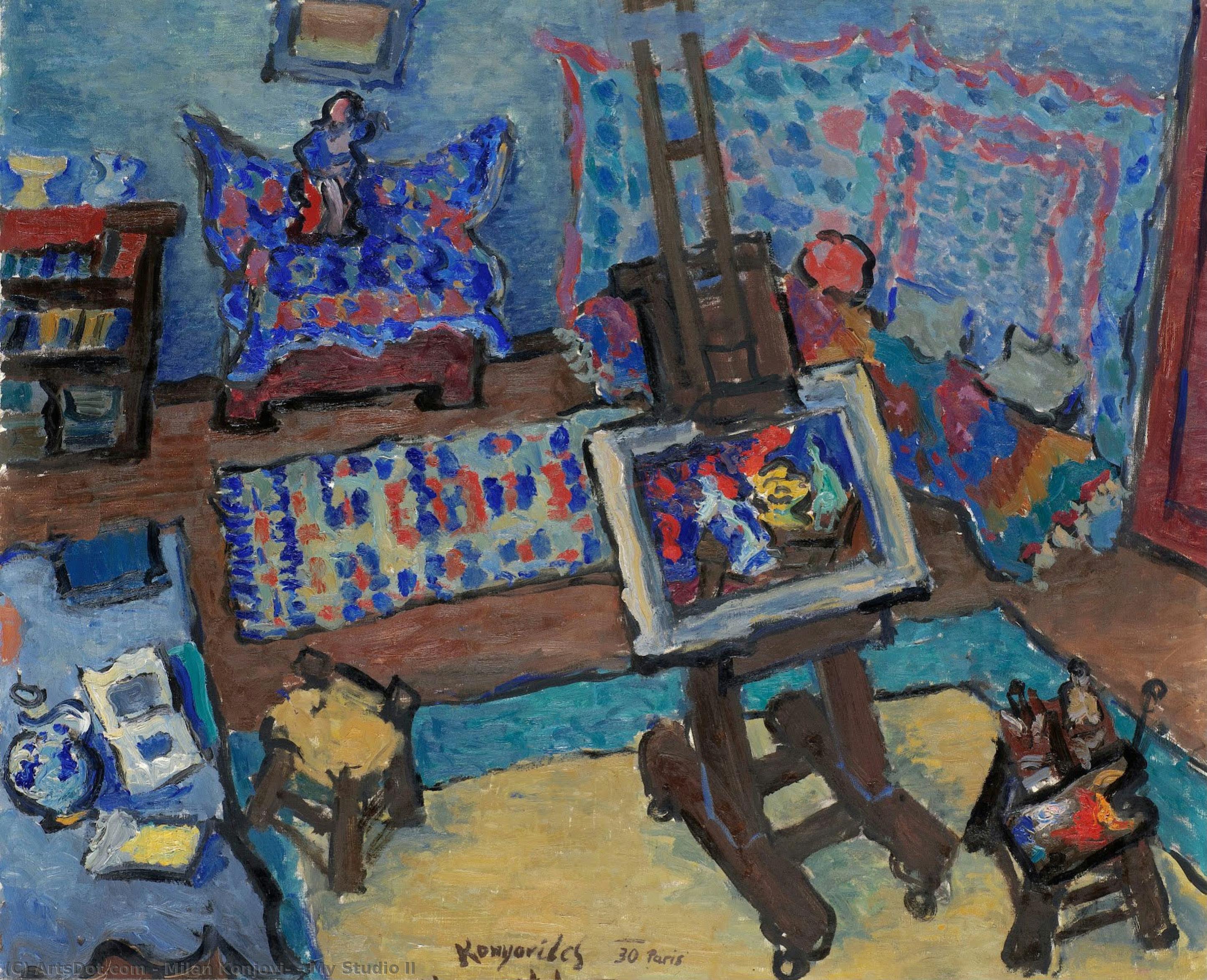
My Studio II
 Oil On Canvas
- WallArt
- Modernism
 1930
1930- Modern
 114.0 x 93.0 cm
 Die Pavle Beljanski Denkmal Sammlung
 Weiterlesen
Erwerben Sie ein hochauflösendes, optimiertes digitales Bild, das der Online-Vorschau weit überlegen ist.
Jede Datei wird von unseren hauseigenen Spezialisten mit modernsten Werkzeugen und fachmännischer manueller Retusche sorgfältig vorbereitet. Wir stellen sicher, dass jedes Bild eine außergewöhnliche Klarheit, präzise Farbgenauigkeit und feinste Details aufweist.
Die endgültige Datei wird innerhalb von 72 Stunden per E-Mail zugestellt und ist für den sofortigen Einsatz in professionellen, redaktionellen und Druckumgebungen optimiert. Es handelt sich um dieselbe Qualität, der führende Designstudios, Verlage und Galerien vertrauen.
Digitales Bild
Laden Sie eine hochauflösende Datei für die persönliche Präsentation, den Druck und kreative Projekte herunter. ( Zu Druck wechseln Handgemalte Reproduktion bestellen)
In jeder Bestellung digitaler Bilder enthalten
Professionelle digitale Bereitstellung, garantiert
Wenn Sie sich für ArtsDot.com entscheiden, erhalten Sie nicht nur ein Bild – Sie erhalten ein professionell aufbereitetes digitales Kunstwerk, das mit höchster Präzision erstellt und durch eine Zufriedenheitsgarantie abgesichert wird. Hier ist alles, was automatisch mit Ihrer Bestellung geliefert wird:

Schnelle E-Mail-Zustellung
Ihre hochauflösende digitale Bilddatei wird Ihnen innerhalb von 72 Stunden nach der Bestellung per E-Mail zugestellt – bereit zur sofortigen Verwendung.

KI-optimierte digitale Datei
Ihre Kunstwerke werden professionell mithilfe fortschrittlicher KI-Tools und manueller Bearbeitung optimiert, um maximale Detailtreue, Klarheit und Farbgenauigkeit zu gewährleisten.

Lebenslanger kostenloser Neudruckservice
Datei versehentlich gelöscht oder verloren? Keine Sorge – wir senden sie Ihnen jederzeit kostenlos erneut zu.

Keine Einfuhrgebühren – jemals
Genießen Sie Ihr Kunstwerk sofort ohne Zollgebühren, Einfuhrabgaben oder Versandkosten – digitale Downloads sind immer steuerfrei.

Garantierte Farbtreue
Wir garantieren, dass Ihr digitales Bild mithilfe professioneller Werkzeuge und Farbmanagement die Originalfarben so präzise wie möglich wiedergibt.

100-Tage-Zufriedenheitsgarantie
Wenn Sie mit Ihrem digitalen Bild nicht zufrieden sind, werden wir es überarbeiten oder 100% innerhalb von 100 Tagen erstatten – ohne Wenn und Aber.

100% Geld-zurück-Garantie
Nicht zufrieden? Erhalten Sie innerhalb von 100 Tagen nach Erhalt Ihrer digitalen Datei eine vollständige Rückerstattung – ohne Wenn und Aber.

Rabatte bei Großbestellungen
3 Bilder kaufen, 10% sparen – 5 Bilder kaufen, 15% sparen – Ab 10 Bildern 20% sparen. Ideal für kreative Projekte, Galerien und Agenturen.
A Masterpiece of the Blue Period
In the annals of Serbian modernism, few works capture the intimate tension of the creative soul as profoundly as Milan Konjović’s My Studio II. Painted in 1930, this commanding canvas stands as the undisputed jewel of the artist’s celebrated "blue period," a transformative era spanning from 1930 to 1933. The painting serves as a window into a moment of profound artistic maturation, a time when Konjović was navigating the vibrant, often turbulent, art scene of interwar Paris. As he moved through the legendary galleries of Rue La Boëtie, his brushwork began to absorb the experimental energies of Montparnasting, yet he maintained a unique, grounded strength that prevented him from dissolving into the era's fleeting trends. The work is not merely a depiction of a room; it is an atmospheric exploration of the sanctuary where thought meets pigment.
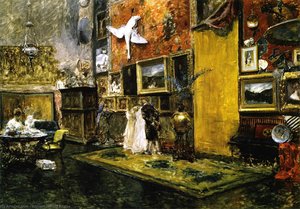
The composition invites the viewer to step into a lived-in, cluttered, and deeply personal space. Within this interior, we encounter a scene of quiet, domestic drama: a figure reclines upon a couch while another stands nearby, their presence adding a layer of human narrative to the stillness of the studio. The room is an evocative tapestry of objects—scattered books that hint at intellectual pursuit, a delicate vase, and the casual placement of bottles that suggest the passage of time and the rhythms of daily life. Through this arrangement, Konjović transforms a mundane setting into a stage for psychological depth, where the boundaries between the artist's physical environment and his internal landscape begin to blur.
Technique, Color, and the Power of Light
To behold My Studio II is to witness a masterclass in the application of color and texture. The painting is renowned for its "powerful and well-applied" sections of pigment, a quality noted by the eminent critic Maurice Raynal. Konjović utilizes a palette that balances heavy, confident strokes with a sensitive touch, creating a sense of weight and presence in every object depicted. The interplay of light across the furniture—the soft contours of the bed, the structural lines of the chair, and the shadows pooling beneath the couch—demonates an extraordinary command over tonal values. This technique does more than define form; it creates a palpable atmosphere, one that feels both heavy with history and luminous with possibility.
For the discerning collector or interior designer, this piece offers an unparalleled emotional resonance. The painting possesses a "painterly action" that is both confident and balanced, making it a sophisticated focal point for any high-end collection. Its larger-than-usual format allows the textures of the oil on canvas to command attention, providing a sense of grandeur that works harmoniously in expansive, curated spaces. Whether placed in a contemporary gallery or a classic study, the work radiates an aura of intellectual prestige and timeless elegance.
A Legacy of Artistic Resilience
The historical significance of this work is inextricably linked to Konjović’s journey through the heart of European modernism. Having exhibited alongside other giants of the era in Paris, Konjović brought a "force which remained intact" back to Yugoslavia, enriching his homeland with the sophisticated techniques of the French avant-garde without losing his essential identity. The provenance of My Studio II is equally storied, having been acquired by the legendary patron Pavle Beljanski, a man whose eye for talent helped shape the cultural landscape of the Balkans.
Owning a high-quality reproduction of this masterpiece allows one to invite this specific historical gravity into their own environment. It is an opportunity to surround oneself with the spirit of 1930s Paris and the enduring legacy of a painter who found beauty in the "small dramatic conflicts" of everyday life. This painting remains a testament to the idea that art is not just something we look at, but a space we inhabit—a sanctuary of color, memory, and profound human connection.
Ähnliche Kunstwerke
Biografie des Künstlers
early life and education
Milan Konjović Милан Коњовић (1898 - 1993) was born in Sombor, Serbia. His artistic journey began with studies in various countries abroad, which laid the foundation for his diverse style. He finished elementary and secondary school in Sombor between 1904 and 1916. In 1914 he had his first exhibition featuring around fifty of his works painted in nature. In 1919 he enrolled at the Academy of Fine Arts in Prague, in the class of Vlaho Bukovac. After two semesters he continued his studies independently. Avant-garde Czech painter Jan Zrzavý recommends him to study Leonardo, while later he leaves first to Vienna, followed by study trips to Munich, Berlin and Dresden in 1923. He arrived to Paris in May 1924 with Ema Maštovska, his future wife he met in Prague in 1924, remaining in the city until 1932, when he returned to Sombor to stay. In Paris, he achieved notable success in independent exhibitions and taking part in the Paris salon exhibitions. This is where his “blue phase” emerges (1929 - 1933). He followed the red period from 1934-1940 and gray period from 1945 to 1952. Konjović participated in several Parisian exhibitions and exhibits in 1931 in Bing & Co. gallery and in 1932 at the Van Leer gallery. Then he exhibited in 1937 at the Galerie Mouradian- Vallotton. His works are presented in numerous exhibitions around the world, including New York, London, Moscow and Prague.artistic periods and recognition
Konjović’s works can be divided into six distinct periods of artistic style, reflecting his eclectic approach to art. This long life's work earned him many recognitions as well as a place in the Serbian Academy of Sciences and Arts (Srpska akademija nauka i umetnosti, SANU). His style, though varied, often incorporates elements of modernism, reflecting the artistic currents of his time. He studied in many countries abroad, which laid the foundation for his diverse style.parisian influence (1924-1932)
Living in Paris from 1924 to 1932, Konjović was exposed to the vibrant art scene, which significantly influenced his work. This period is marked by a shift towards more expressive and experimental pieces. Avant-garde Czech painter Jan Zrzavý recommends him to study Leonardo, while later he leaves first to Vienna, followed by study trips to Munich, Berlin and Dresden in 1923. He arrived to Paris with Ema Maštovska, his future wife he met in Prague in 1924, remaining in the city until 1932, when he returned to Sombor to stay. In Paris, he achieved notable success in independent exhibitions and taking part in the Paris salon exhibitions. This is where his “blue phase” emerges (1929 - 1933).notable works and style
His medium of choice was oil on board and oil on canvas, showcasing his versatility. He followed the red period from 1934-1940 and gray period from 1945 to 1952. Konjović participated in several Parisian exhibitions and exhibits in 1931 in Bing & Co. gallery and in 1932 at the Van Leer gallery. Then he exhibited in 1937 at the Galerie Mouradian- Vallotton. His works are presented in numerous exhibitions around the world, including New York, London, Moscow and Prague. He was called “the last of the wild” because of his expressive style and his palette of bright colors.legacy and remembrance
Milan Konjović Милан Коњовић (1898 - 1993) was a Serbian painter of the School of Paris. He began his studies at the Academy of Fine Arts in Prague in 1919 in the class of Vlaho Bukovac and then he decided to continue by himself. His long life's work earned him many recognitions as well as a place in the Serbian Academy of Sciences and Arts (Srpska akademija nauka i umetnosti, SANU). He took part in more than 300 independent and around 700 group exhibitions in the country and abroad. He was appointed a regular member of Vojvodina Arts and Sciences Academy in 1979, a corresponding member of Yugoslav Academy of Arts and Sciences in 1986, and regular member of Serbian Academy of Sciences and Arts in 1992. His contributions to the SANU serve as a testament to his enduring legacy.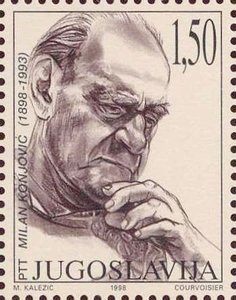
Milan Konjović
1898 - 1993 , Serbien
Kurzinfos
- Artistic Movement Or Style: Modernismus
- Artists Or Movements Influenced By This Artist: ['Expressionismus']
- Artists Who Influenced This Artist: ['Gustav Klimt']
- Date Of Birth: Januar 28, 1898
- Date Of Death: Oktober 20, 1993
- Full Name: Milan Konjović
- Nationality: Serbien
- Notable Artworks:
- Ernte
- Mein Atelier II
- Place Of Birth: Sombor, Serbien