

 Vorschau anzeigen
 Versenden
 Teilen
 Details anzeigen

 Herunterladen
 Ähnliche Objekte
 Röntgenaufnahme
 Diashow
 Statistiken
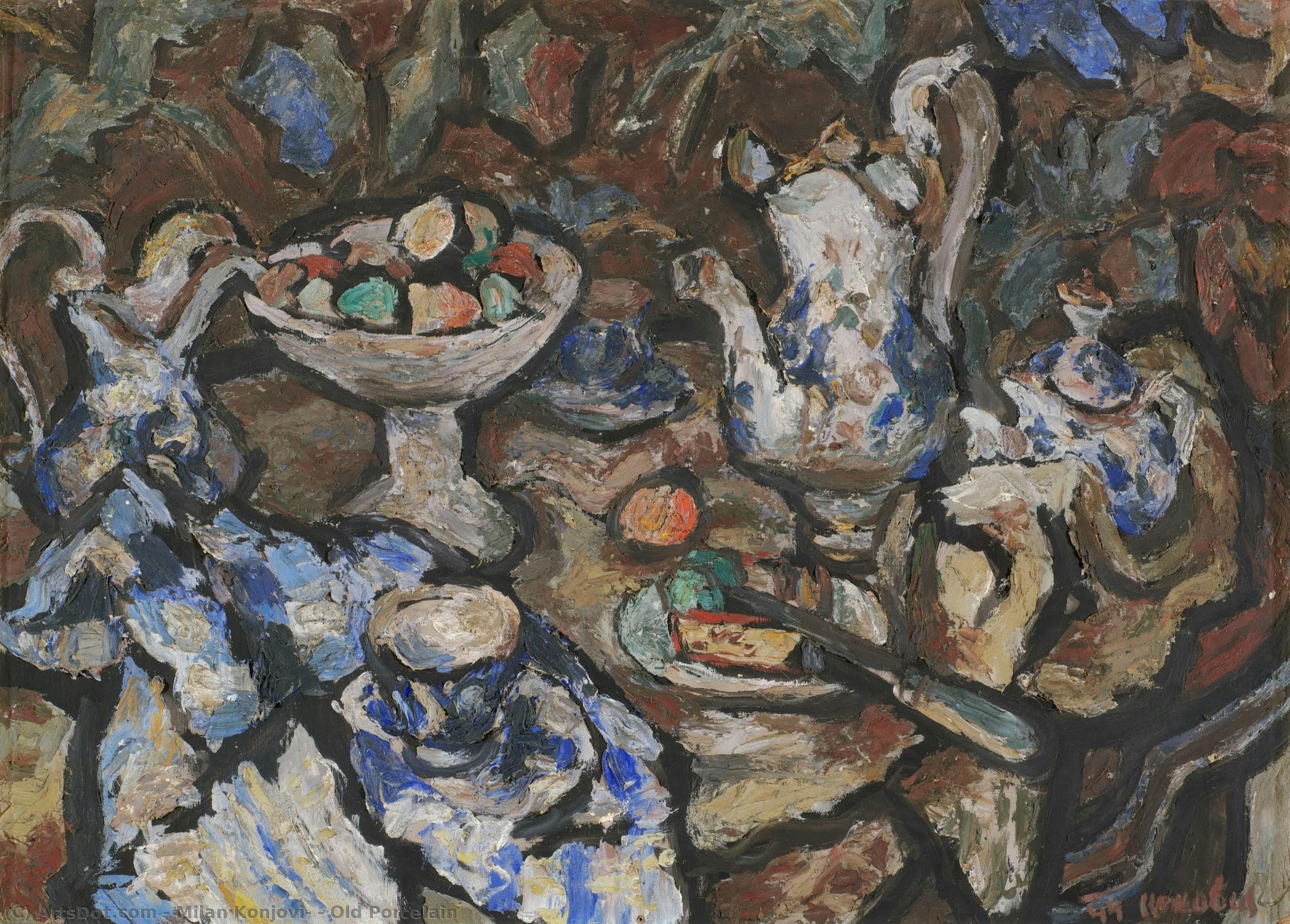
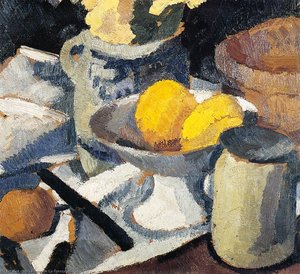
Old Porcelain
 1944
1944 99.0 x 71.0 cm
 Die Pavle Beljanski Denkmal Sammlung
 Weiterlesen
Giclée / Kunstdruck
Giclée- oder Leinwanddruck in Museumsqualität mit schneller Produktion und flexiblen Veredelungsoptionen. ( Handgemalte Reproduktion bestellen Zum digitalen Bild wechseln)




































Wählen Sie aus unseren vordefinierten Formaten, die den ursprünglichen Proportionen des Kunstwerks entsprechen.

Sie können Ihre eigenen Maße eingeben, um ein bestimmtes Format oder einen speziellen Platz einzupassen. Wenn das von Ihnen gewählte Format nicht den Proportionen des Originalbildes entspricht, werden wir das Kunstwerk entweder beschneiden oder das Bild mit einem gespiegelten oder einfarbigen Rand erweitern. Ein digitaler Entwurf wird Ihnen zur Genehmigung zugesandt, bevor die Produktion beginnt.
Bitte beachten Sie, dass die Vorschau auf dem Bildschirm nicht den tatsächlichen Zuschnitt oder die Erweiterung widerspiegelt. Nur der Entwurf zeigt die endgültige Komposition präzise an.
Obwohl Sondermaße verfügbar sind, empfehlen wir die Auswahl eines Maßes aus der vordefinierten Liste, um die ursprünglichen Proportionen zu bewahren.
Weltweiter Versand () innerhalb von 2 Wochen statt der üblichen 4/5 Wochen. (9 September)

Kostenloser weltweiter Expressversand

Hochwertige Leinenleinwand

Umfassender Versicherungsschutz beim Versand

Zollgebühren-Rückerstattungsgarantie

Garantie für exakte Farbtreue

100-Tage-Rückgaberecht (nur bei Mängeln)

100% Geld-zurück-Garantie

Mengenrabatt verfügbar
 Die Glasoption ist nur für Größen unter 110 cm verfügbar.

Old Porcelain
Giclée / Kunstdruck
Format der Reproduktion
-


Gesamtpreis
$ 62
Ähnliche Kunstwerke





Über den Künstler
early life and education
Milan Konjović Милан Коњовић (1898 - 1993) was born in Sombor, Serbia. His artistic journey began with studies in various countries abroad, which laid the foundation for his diverse style. He finished elementary and secondary school in Sombor between 1904 and 1916. In 1914 he had his first exhibition featuring around fifty of his works painted in nature. In 1919 he enrolled at the Academy of Fine Arts in Prague, in the class of Vlaho Bukovac. After two semesters he continued his studies independently. Avant-garde Czech painter Jan Zrzavý recommends him to study Leonardo, while later he leaves first to Vienna, followed by study trips to Munich, Berlin and Dresden in 1923. He arrived to Paris in May 1924 with Ema Maštovska, his future wife he met in Prague in 1924, remaining in the city until 1932, when he returned to Sombor to stay. In Paris, he achieved notable success in independent exhibitions and taking part in the Paris salon exhibitions. This is where his “blue phase” emerges (1929 - 1933). He followed the red period from 1934-1940 and gray period from 1945 to 1952. Konjović participated in several Parisian exhibitions and exhibits in 1931 in Bing & Co. gallery and in 1932 at the Van Leer gallery. Then he exhibited in 1937 at the Galerie Mouradian- Vallotton. His works are presented in numerous exhibitions around the world, including New York, London, Moscow and Prague.artistic periods and recognition
Konjović’s works can be divided into six distinct periods of artistic style, reflecting his eclectic approach to art. This long life's work earned him many recognitions as well as a place in the Serbian Academy of Sciences and Arts (Srpska akademija nauka i umetnosti, SANU). His style, though varied, often incorporates elements of modernism, reflecting the artistic currents of his time. He studied in many countries abroad, which laid the foundation for his diverse style.parisian influence (1924-1932)
Living in Paris from 1924 to 1932, Konjović was exposed to the vibrant art scene, which significantly influenced his work. This period is marked by a shift towards more expressive and experimental pieces. Avant-garde Czech painter Jan Zrzavý recommends him to study Leonardo, while later he leaves first to Vienna, followed by study trips to Munich, Berlin and Dresden in 1923. He arrived to Paris with Ema Maštovska, his future wife he met in Prague in 1924, remaining in the city until 1932, when he returned to Sombor to stay. In Paris, he achieved notable success in independent exhibitions and taking part in the Paris salon exhibitions. This is where his “blue phase” emerges (1929 - 1933).notable works and style
His medium of choice was oil on board and oil on canvas, showcasing his versatility. He followed the red period from 1934-1940 and gray period from 1945 to 1952. Konjović participated in several Parisian exhibitions and exhibits in 1931 in Bing & Co. gallery and in 1932 at the Van Leer gallery. Then he exhibited in 1937 at the Galerie Mouradian- Vallotton. His works are presented in numerous exhibitions around the world, including New York, London, Moscow and Prague. He was called “the last of the wild” because of his expressive style and his palette of bright colors.legacy and remembrance
Milan Konjović Милан Коњовић (1898 - 1993) was a Serbian painter of the School of Paris. He began his studies at the Academy of Fine Arts in Prague in 1919 in the class of Vlaho Bukovac and then he decided to continue by himself. His long life's work earned him many recognitions as well as a place in the Serbian Academy of Sciences and Arts (Srpska akademija nauka i umetnosti, SANU). He took part in more than 300 independent and around 700 group exhibitions in the country and abroad. He was appointed a regular member of Vojvodina Arts and Sciences Academy in 1979, a corresponding member of Yugoslav Academy of Arts and Sciences in 1986, and regular member of Serbian Academy of Sciences and Arts in 1992. His contributions to the SANU serve as a testament to his enduring legacy.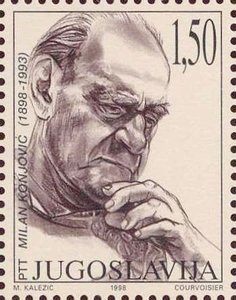
Milan Konjović
1898 - 1993 , Serbien
Kurzinfos
- Artistic Movement Or Style: Modernismus
- Artists Or Movements Influenced By This Artist: ['Expressionismus']
- Artists Who Influenced This Artist: ['Gustav Klimt']
- Date Of Birth: Januar 28, 1898
- Date Of Death: Oktober 20, 1993
- Full Name: Milan Konjović
- Nationality: Serbien
- Notable Artworks:
- Ernte
- Mein Atelier II
- Place Of Birth: Sombor, Serbien