

 Vorschau anzeigen
 Versenden
 Teilen
 Details anzeigen

 Herunterladen
 Ähnliche Objekte
 Röntgenaufnahme
 Diashow
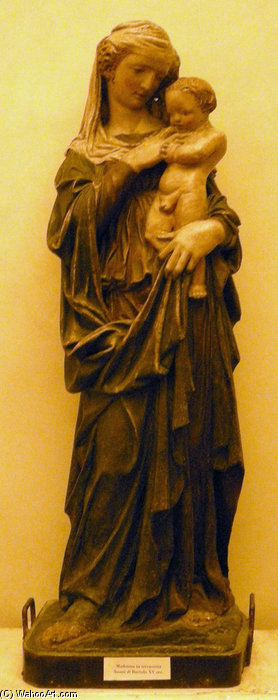
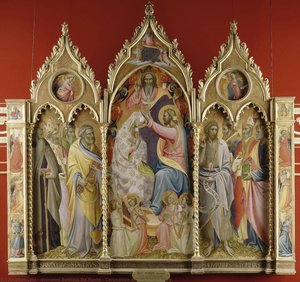
Cenacolo Di Ognissanti, Anni Di Bartolo, Madonna Col Bambino
 Weiterlesen
Erwerben Sie ein hochauflösendes, optimiertes digitales Bild, das der Online-Vorschau weit überlegen ist.
Jede Datei wird von unseren hauseigenen Spezialisten mit modernsten Werkzeugen und fachmännischer manueller Retusche sorgfältig vorbereitet. Wir stellen sicher, dass jedes Bild eine außergewöhnliche Klarheit, präzise Farbgenauigkeit und feinste Details aufweist.
Die endgültige Datei wird innerhalb von 72 Stunden per E-Mail zugestellt und ist für den sofortigen Einsatz in professionellen, redaktionellen und Druckumgebungen optimiert. Es handelt sich um dieselbe Qualität, der führende Designstudios, Verlage und Galerien vertrauen.
Digitales Bild
Laden Sie eine hochauflösende Datei für die persönliche Präsentation, den Druck und kreative Projekte herunter. ( Druck bestellen Handgemalte Reproduktion bestellen)
In jeder Bestellung digitaler Bilder enthalten
Professionelle digitale Bereitstellung, garantiert
Wenn Sie sich für ArtsDot.com entscheiden, erhalten Sie nicht nur ein Bild – Sie erhalten ein professionell aufbereitetes digitales Kunstwerk, das mit höchster Präzision erstellt und durch eine Zufriedenheitsgarantie abgesichert wird. Hier ist alles, was automatisch mit Ihrer Bestellung geliefert wird:

Schnelle E-Mail-Zustellung
Ihre hochauflösende digitale Bilddatei wird Ihnen innerhalb von 72 Stunden nach der Bestellung per E-Mail zugestellt – bereit zur sofortigen Verwendung.

KI-optimierte digitale Datei
Ihre Kunstwerke werden professionell mithilfe fortschrittlicher KI-Tools und manueller Bearbeitung optimiert, um maximale Detailtreue, Klarheit und Farbgenauigkeit zu gewährleisten.

Lebenslanger kostenloser Neudruckservice
Datei versehentlich gelöscht oder verloren? Keine Sorge – wir senden sie Ihnen jederzeit kostenlos erneut zu.

Keine Einfuhrgebühren – jemals
Genießen Sie Ihr Kunstwerk sofort ohne Zollgebühren, Einfuhrabgaben oder Versandkosten – digitale Downloads sind immer steuerfrei.

Garantierte Farbtreue
Wir garantieren, dass Ihr digitales Bild mithilfe professioneller Werkzeuge und Farbmanagement die Originalfarben so präzise wie möglich wiedergibt.

60-Tage-Zufriedenheitsgarantie
Sollten Sie mit Ihrem digitalen Bild nicht zufrieden sein, werden wir es überarbeiten oder Ihnen innerhalb von 60 Tagen 100% erstatten – ohne Wenn und Aber.

100% Geld-zurück-Garantie
Nicht zufrieden? Erhalten Sie innerhalb von 60 Tagen nach Erhalt Ihrer digitalen Datei eine vollständige Rückerstattung – ohne Angabe von Gründen.

Rabatte bei Großbestellungen
3 Bilder kaufen, 10% sparen – 5 Bilder kaufen, 15% sparen – Ab 10 Bildern 20% sparen. Ideal für kreative Projekte, Galerien und Agenturen.
Ähnliche Kunstwerke
Biografie des Künstlers
The Redheaded Master of the Early Renaissance
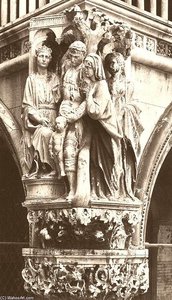
In the vibrant, competitive atmosphere of the early 15th-century Italian Renaissance, few figures possess a legacy as intriguing yet enigmatic as Nanni di Bartolo. Known to art historians by the evocative moniker "il Rosso"—a tribute to his distinctive auberm hair—this Florentine sculptor navigated the shifting tides of artistic innovation with remarkable grace. While his precise birthdate remains shrouded in the mists of history, scholarly consensus places his emergence around 1419. He was a man of profound connections, born as the son of a Friar Bartolo, and his early years were shaped by the rigorous traditions of sculpture that were then transforming the landscape of Tuscany.
The artistry of Nanni di Bartolo cannot be understood without acknowledging the shadow of the great Donatello. As a younger contemporary of the maestro, Nanni’s early career was deeply intertwined with the revolutionary currents flowing through Florence. He honed his skills under the tutelage of Giovanni di Pietro Sculorso, a sculptor who had himself been shaped by Donatello's pioneering spirit. This lineage is palpable in Nanni’s work, particularly in his collaborative endeavors for the Duomo Campanile. Working alongside Donatello on these monumental figures of prophets and saints, Nanni embraced a new language of anatomical precision and expressive dynamism, helping to bridge the gap between the lingering elegance of the International Gothic style and the burgeoning humanism of the Renaissance.
A Journey Through Florence and Venice
Despite his deep roots in the Florentine tradition, Nanni’s career was marked by a significant geographical and stylistic evolution. Historical records suggest that around 1424, perhaps driven by the pressures of debt or a desire to seek new horizons beyond the intense competition of Florence, he departed the city. This period of wandering led him into the Venetian territories and northern Italy, where his role became that of a cultural emissary. In these regions, Nanni performed a delicate balancing act: he spread the sophisticated Florentine style while simultaneously adapting his technique to satisfy the local preference for the graceful, decorative elements of the Gothic tradition.
This synthesis of styles allowed him to leave a lasting imprint on the sculptural landscape of Northern Italy. His output during these years was characterized by a mastery of diverse materials, most notably terracotta and plaster. These mediums allowed for an intimacy and detail that stone often precluded, enabling him to create emotive reliefs and busts of the Virgin Mary and various saints. His ability to breathe life into clay—capturing the soft folds of drapery and the subtle nuances of facial expression—ensured that his work resonated with both the spiritual devotion and the aesthetic sensibilities of a wide audience.
Legacy and Artistic Significance
The historical significance of Nanni di Bartolo lies in his role as a vital link in the chain of Renaissance development. While he may not have reached the singular, world-altering heights of Donatello, his contributions were essential to the dissemination of Florentine innovation across the Italian peninsula. His work serves as a testament to the era's transition, embodying the tension between the old and the new.
Reflecting on his body of work, several key elements define his artistic identity:
- Stylistic Versatility: The ability to merge the structural rigor of Florentine sculpture with the lyrical beauty of the International Gothic.
- Material Mastery: An exceptional command over terracotta and plaster, which allowed for a more accessible and expressive form of religious narrative.
- Cultural Diffusion: Acting as a bridge between the artistic epicenters of Florence and the burgeoning markets of Venice and Northern Italy.
- Humanist Influence: A commitment to the emerging Renaissance ideals of anatomical accuracy and emotional depth in sacred subjects.
Though his life ended in 1451, leaving behind a fragmented biographical record, the echoes of "il Rosso" remain etched in the very fabric of Italian art history. Through his sculptures, we glimpse a world in transition—a period where the divine was being reimagined through the lens of human experience and classical revival.
nanni di bartolo
1419 - 1451
Kurzinfos
- Artistic Movement Or Style: Early Renaissance
- Artists Or Movements Influenced By This Artist:
- International Gothic
- Venetian Art
- Artists Who Influenced This Artist:
- Donatello
- Lorenzo Ghiberti
- Date Of Death: 1451
- Full Name: Nanni di Bartolo
- Nationality: Italian
- Notable Artworks:
- Judgment of Solomon
- Madonna Ghibertiana
- Sacrifice of Isaac
- Brenzoni Monument
- Annunciation fresco
- Place Of Birth: Florence

