

 Vorschau anzeigen
 Versenden
 Teilen
 Details anzeigen

 Herunterladen
 Ähnliche Objekte
 Röntgenaufnahme
 Diashow
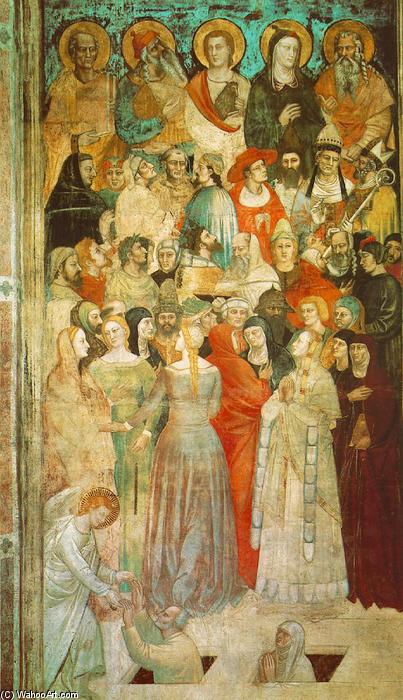
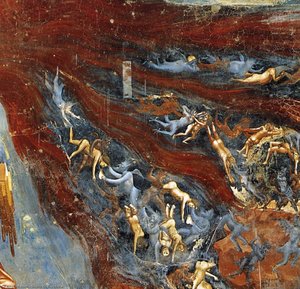
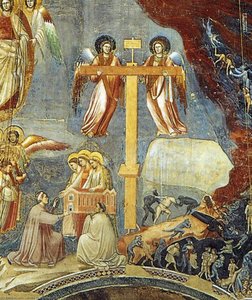
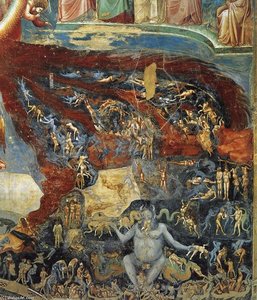
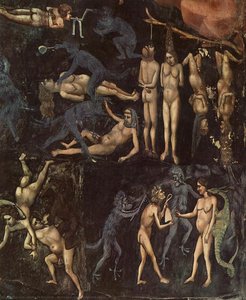
Last Judgment (detail)


 Weiterlesen
Handgefertigte Ölreproduktion
Handgemaltes Ölgemälde auf Leinwand in Ihrer Wunschgröße und mit Rahmen, auf Bestellung von unseren Künstlern angefertigt. ( Druck bestellen Bild kaufen)




































Wählen Sie aus unseren vordefinierten Formaten, die den ursprünglichen Proportionen des Kunstwerks entsprechen.

Sie können Ihre eigenen Maße eingeben, um einen bestimmten Rahmen oder Platz auszufüllen. Wenn die gewählte Größe nicht den Proportionen des Originalbildes entspricht, werden wir das Kunstwerk entweder beschneiden oder das Gemälde durch zusätzliche, handgemalte Elemente erweitern. Ein digitales Mockup wird Ihnen zur Genehmigung zugesandt, bevor die Produktion beginnt.
Bitte beachten Sie, dass die Bildschirmvorschau nicht die tatsächliche Beschneidung oder Erweiterung widerspiegelt. Nur das Mockup zeigt die endgültige Komposition exakt an.
Obwohl Sondermaße verfügbar sind, empfehlen wir, eine Größe aus der vordefinierten Liste zu wählen, um die ursprünglichen Proportionen beizubehalten.
Nach der Bestellung wird das ArtsDot.com-Team dem Kunden Anweisungen per E-Mail zusenden und eine Mockup-Vorschau bereitstellen.
Weltweiter Versand () in nur 3 bis 4 Wochen statt der üblichen 5 Wochen. (24 August). Keine Kompromisse bei der Qualität.

Kostenloser weltweiter Expressversand

Hochwertige Leinenleinwand

Umfassender Versicherungsschutz beim Versand

Zollgebühren-Rückerstattungsgarantie

Garantie für exakte Farbtreue

60 Tage Rückgaberecht (nur bei Mängeln)

100% Geld-zurück-Garantie

Mengenrabatt verfügbar
 Die Glasoption ist nur für Größen unter 110 cm verfügbar.

Last Judgment (detail)
Art der Reproduktion
Format der Reproduktion
-


Gesamtpreis
$ 463
Ähnliche Kunstwerke
![Scrovegni - Jüngstes Gericht (detail) [05] — Giotto Di Bondone, Proto-renaissance](/media/artworks/images-thumb/10/e1/10e11ccb0696a6f917c823521b6f0cd2.jpg)

Über den Künstler
The Poet Painter of Florence: The Lyrical Legacy of Nardo di Cione
In the golden, turbulent era of fourteenth-century Florence, amidst the burgeoning shadows of the early Renaissance, there emerged a voice of profound tenderness and chromatic brilliance. Nardo di Cione, often whispered of in art historical circles as "the poet painter," was much more than a mere practitioner of the Florentine guild; he was a master of emotional resonance. While his contemporaries often sought to capture the monumental and the rigid, Nardo possessed an unparalleled sensitivity to form and a lyrical vein that allowed him to breathe life into the divine. Born around 1320, he was part of a formidable artistic dynasty, working alongside his brothers, the renowned Orcagna (Andrea di Cione) and Jacopo di Cione. Together, they formed a collaborative studio that acted as a crucible for innovation, shaping the visual language of Florence during its most formative years.
Nardo’s artistic foundation was built upon a rigorous understanding of both the tactile and the ethereal. His early training under Maestro Piero Bargellini, a distinguished sculptor and painter, provided him with a unique dual perspective. This apprenticeship instilled in him a deep reverence for sculptural volume, which he would later translate into painting through soft modeling and subtle differentiation of tone. This ability to marry the structural weight of sculpture with the fluid grace of painting is what truly distinguishes his hand. His work does not merely sit upon the surface; it possesses a rhythmic, breathing quality that suggests a profound human sympathy, even when depicting the most celestial subjects.
A Symphony of Devotion and Color
The zenith of Nardo’s collaborative achievements can be found within the hallowed walls of the Cappella Strozzi in Santa Maria Novella. Here, the Di Cione brothers undertook a monumental decorative program that remains a testament to their shared vision. While Orcagna focused on the central altarpiece, Nardo was entrusted with the profound narrative weight of the frescoes depicting The Last Judgment, Paradise, and Hell. In these works, Nardo’s mastery of color theory shines through; he utilized a rich palette to guide the viewer's soul from the terrifying depths of the inferno to the luminous, Byzantine-inspired splendor of paradise. His use of color was never merely decorative but served as a spiritual tool—a means of creating an otherworldly atmosphere that could evoke both dread and ecstasy.
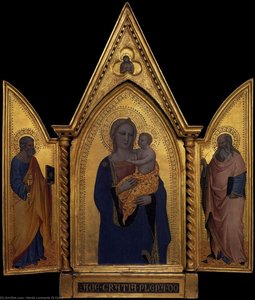
Beyond these grand frescoes, Nardo’s independent works reveal a more intimate, devotional side of his genius. His Crucifixion, currently housed in the Uffizi Gallery, serves as a breathtaking example of Gothic elegance. Through the meticulous application of gold leaf and intricate detailing, he captures an intense emotionality that transcends the wooden panel. Similarly, his Standing Madonna with Child, created in the wake of the devastating bubonic plague of 1348, speaks to the historical necessity of art as a vessel for spiritual relief. In this piece, one sees the artist's ability to offer comfort through beauty, creating icons that served as anchors for a grieving Florentine populace.
Historical Significance and Artistic Spirit
The significance of Nardo di Cione lies in his ability to bridge the gap between the rigid traditions of the medieval period and the burgeoning humanism of the Renaissance. His work embodies a transition—a movement from the symbolic toward the emotive. To study Nardo is to witness the evolution of the Florentine spirit:
- Technical Versatility: The seamless integration of sculptural depth with painterly fluidity.
- Emotional Depth: A unique "poetic" approach that prioritized human sympathy and soft, expressive modeling.
- Chromatic Mastery: The use of vibrant, symbolic colors to navigate complex theological narratives.
nardo leonardo di cione
1320 - 1366
Kurzinfos
- Artistic Movement Or Style: Renaissance Painting
- Artists Or Movements Influenced By This Artist: ['Late Gothic']
- Artists Who Influenced This Artist: ['Andrea di Cione']
- Date Of Death: c. 1366
- Full Name: Nardo di Cione
- Nationality: Italian
- Notable Artworks:
- Crucifixion
- Madonna and Child with Sts Peter and John the Evangelist
- Place Of Birth: Florence
Ähnliche Artikel

Giotto di Bondone: Die 25 Meisterwerke des Frührenaissance – Kunst für Ihr Zuhause
Entdecken Sie die 25 Meisterwerke von Giotto di Bondone! Erleben Sie die Frührenaissance, religiöse Kunst & ikonische Fresken wie in der Scrovegni Kapelle. Hochwertige Kunstdrucke online bei ArtsDot.com – für zeitlose Eleganz in Ihrem Zuhause.
Leonardo da Vinci: Die 25 Meisterwerke für Ihr Zuhause | ArtsDot
Entdecken Sie die 25 Meisterwerke von Leonardo da Vinci! Erfahren Sie faszinierende Geschichten hinter Gemälden wie der Mona Lisa & Das letzte Abendmahl. Hochwertige Reproduktionen für Ihr Zuhause – jetzt bei ArtsDot entdecken!

Das Familienerbe an die Wand bringen: Wandgemälde als Generationenschatz
Verwandeln Sie Ihre Familiengeschichte in ein beeindruckendes Wandgemälde! Expertenrat & hochwertige Handwerkskunst für einzigartige Kunstwerke, die Generationen verbinden. Entdecken Sie jetzt!
Meisterwerke der Fresko-Kunst: 10 Gemälde, die Kunstgeschichte schrieben | ArtsDot
Entdecken Sie die 10 legendärsten Fresken der Kunstgeschichte! Von Michelangelo bis Raffael – erfahren Sie die Geschichten hinter den Meisterwerken, Techniken & Farben. Hochwertige Kunstreproduktionen für Ihr Zuhause finden Sie auf ArtsDot.com.

The Enduring Legacy of Fresco Painting: Techniques, History & Contemporary Relevance
Explore the rich history & enduring artistry of fresco painting – from Giotto to Michelangelo! Discover techniques, conservation efforts, & modern applications. Learn how ArtsDot brings this timeless art form to your home.

