- Startseite

- Digitales Bild
- National Park Service, Eastern Museum Laboratory, Albert Mcclure (1903-1986), Lee Roland Warthen (1893-1949)
 Vorschau anzeigen
 Versenden
 Teilen
 Details anzeigen

 Herunterladen
 Ähnliche Objekte
 Röntgenaufnahme
 Diashow
Publicity Image,


 Weiterlesen
Erwerben Sie ein hochauflösendes, optimiertes digitales Bild, das der Online-Vorschau weit überlegen ist.
Jede Datei wird von unseren hauseigenen Spezialisten mit modernsten Werkzeugen und fachmännischer manueller Retusche sorgfältig vorbereitet. Wir stellen sicher, dass jedes Bild eine außergewöhnliche Klarheit, präzise Farbgenauigkeit und feinste Details aufweist.
Die endgültige Datei wird innerhalb von 72 Stunden per E-Mail zugestellt und ist für den sofortigen Einsatz in professionellen, redaktionellen und Druckumgebungen optimiert. Es handelt sich um dieselbe Qualität, der führende Designstudios, Verlage und Galerien vertrauen.
Digitales Bild
Laden Sie eine hochauflösende Datei für die persönliche Präsentation, den Druck und kreative Projekte herunter. ( Druck bestellen Handgemalte Reproduktion bestellen)
In jeder Bestellung digitaler Bilder enthalten
Professionelle digitale Bereitstellung, garantiert
Wenn Sie sich für ArtsDot.com entscheiden, erhalten Sie nicht nur ein Bild – Sie erhalten ein professionell aufbereitetes digitales Kunstwerk, das mit höchster Präzision erstellt und durch eine Zufriedenheitsgarantie abgesichert wird. Hier ist alles, was automatisch mit Ihrer Bestellung geliefert wird:

Schnelle E-Mail-Zustellung
Ihre hochauflösende digitale Bilddatei wird Ihnen innerhalb von 72 Stunden nach der Bestellung per E-Mail zugestellt – bereit zur sofortigen Verwendung.

KI-optimierte digitale Datei
Ihre Kunstwerke werden professionell mithilfe fortschrittlicher KI-Tools und manueller Bearbeitung optimiert, um maximale Detailtreue, Klarheit und Farbgenauigkeit zu gewährleisten.

Lebenslanger kostenloser Neudruckservice
Datei versehentlich gelöscht oder verloren? Keine Sorge – wir senden sie Ihnen jederzeit kostenlos erneut zu.

Keine Einfuhrgebühren – jemals
Genießen Sie Ihr Kunstwerk sofort ohne Zollgebühren, Einfuhrabgaben oder Versandkosten – digitale Downloads sind immer steuerfrei.

Garantierte Farbtreue
Wir garantieren, dass Ihr digitales Bild mithilfe professioneller Werkzeuge und Farbmanagement die Originalfarben so präzise wie möglich wiedergibt.

60-Tage-Zufriedenheitsgarantie
Sollten Sie mit Ihrem digitalen Bild nicht zufrieden sein, werden wir es überarbeiten oder Ihnen innerhalb von 60 Tagen 100% erstatten – ohne Wenn und Aber.

100% Geld-zurück-Garantie
Nicht zufrieden? Erhalten Sie innerhalb von 60 Tagen nach Erhalt Ihrer digitalen Datei eine vollständige Rückerstattung – ohne Angabe von Gründen.

Rabatte bei Großbestellungen
3 Bilder kaufen, 10% sparen – 5 Bilder kaufen, 15% sparen – Ab 10 Bildern 20% sparen. Ideal für kreative Projekte, Galerien und Agenturen.
Ähnliche Kunstwerke
Biografie des Künstlers
The Dioramas of a Nation: National Park Service, Eastern Museum Laboratory & the Art of Public Engagement
The story of the National Park Service’s (NPS) early foray into museum work, specifically through the efforts of the Eastern Museum Laboratory and artists like Albert Mcclure and Lee Roland Warthen, is a fascinating chapter in American art history—one often overshadowed by more traditional narratives. It speaks to a deliberate effort during the New Deal era to connect citizens with their national heritage, not through grand monuments alone, but through intimate, meticulously crafted dioramas that brought landscapes and historical scenes directly into the heart of Washington D.C. This wasn’t simply about display; it was about constructing a national identity, fostering appreciation for conservation, and making the vastness of America accessible to all. The genesis of this initiative lies with Harold L. Ickes, Secretary of the Interior in 1935. Recognizing that the Department's growing responsibilities were poorly understood by the public, he envisioned a museum within the new headquarters building as a tool for “government public relations.” The Eastern Museum Laboratory, established in Morristown, New Jersey, became the workshop where this vision took shape. Ned J. Burns, recruited as superintendent, assembled a team of skilled preparators, carpenters, and curators to translate complex ideas into tangible exhibits. This wasn’t about showcasing existing collections; it was largely about *creating* those collections—building miniature worlds that captured the essence of America's natural and historical treasures.Crafting Miniature Realities: The Work of Mcclure & Warthen
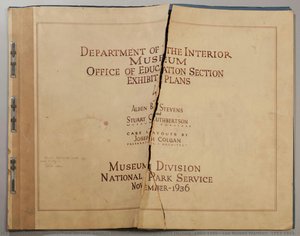
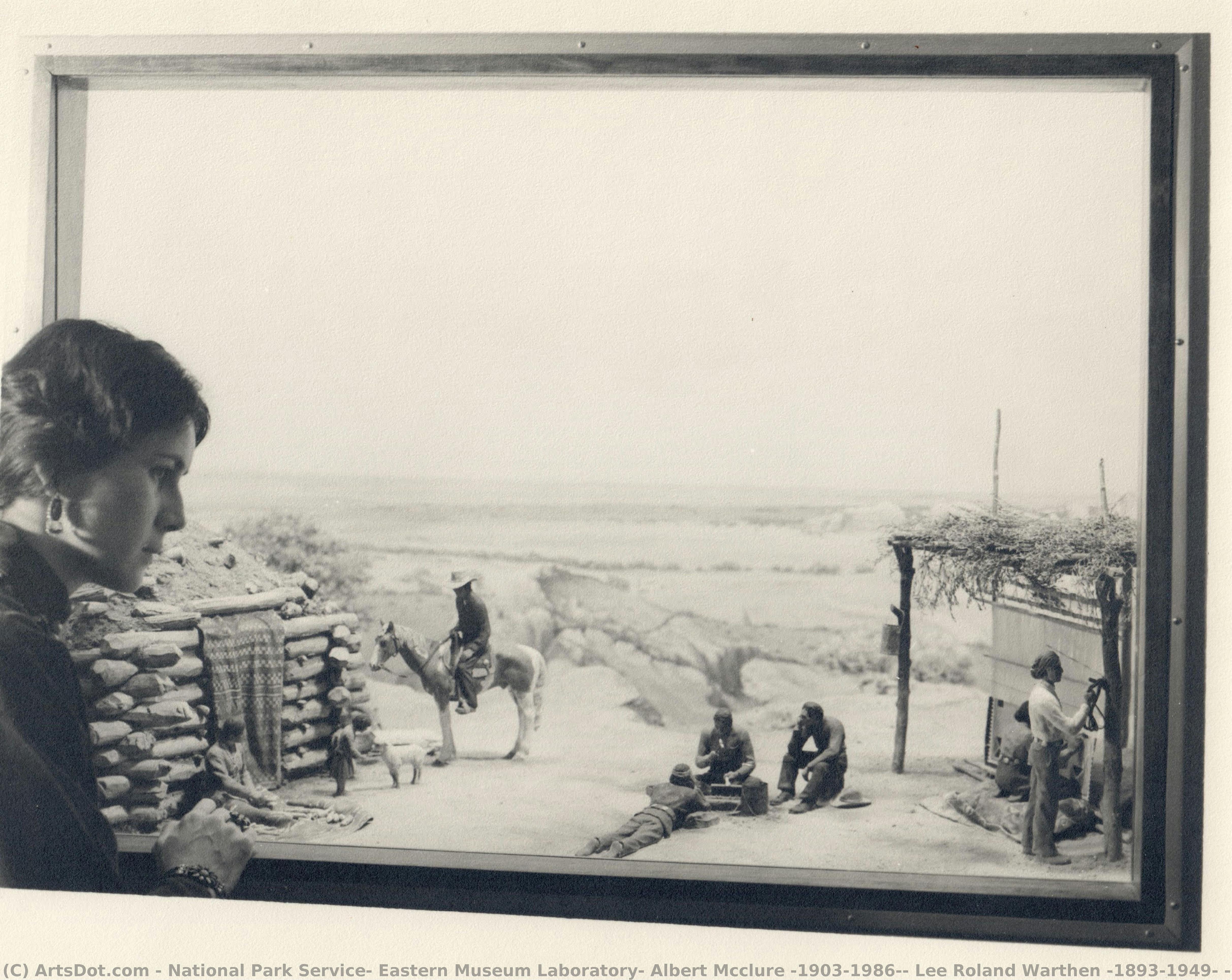
Albert Mcclure (1903-1986) and Lee Roland Warthen (1893-1949), though their individual biographies remain somewhat elusive, were central figures in this endeavor. Their work wasn’t about personal artistic expression in the traditional sense; it was a collaborative process deeply rooted in documentary precision and pedagogical intent. The dioramas they helped create weren't simply pretty scenes—they were meticulously researched reconstructions of specific environments and moments in time. Warthen, with his experience in museum work, likely played a key role in the initial planning and conceptualization of exhibits. Mcclure’s expertise seems to have focused on the technical execution – bringing these plans to life through detailed modeling, painting backdrops, and incorporating realistic elements. The surviving photographs reveal scenes ranging from military life to domestic interiors, all rendered with a remarkable attention to detail. A 1938 publicity photo showcases Betty Buzzard amidst a formal scene of military & domestic life, capturing a slice of American society during that period. Another exhibit plan details the meticulous assembly of components in November 1936, highlighting the painstaking effort involved. These weren’t just static displays; they were designed to tell stories—to evoke a sense of place and time, and to connect viewers with the people and events that shaped the nation. The use of black and white photography further lends a documentary feel, emphasizing authenticity and historical accuracy.Influences & Techniques: A Blend of Art Forms
The dioramas produced by the Eastern Museum Laboratory drew upon a diverse range of artistic influences. Traditional landscape painting provided a foundation for creating realistic backdrops and capturing atmospheric effects. The techniques employed in theatrical set design informed the construction of three-dimensional environments, while documentary photography emphasized accuracy and detail. There’s also a clear influence from scientific illustration—a desire to accurately represent natural forms and ecological systems.- Landscape Painting: The use of perspective, light, and shadow to create depth and realism in the backdrops.
- Theatrical Set Design: Techniques for constructing three-dimensional environments and creating a sense of immersion.
- Documentary Photography: Emphasis on accuracy, detail, and capturing authentic moments in time.
- Scientific Illustration: A desire to accurately represent natural forms and ecological systems.