

 Vorschau anzeigen
 Versenden
 Teilen
 Details anzeigen

 Herunterladen
 Ähnliche Objekte
 Röntgenaufnahme
 Diashow
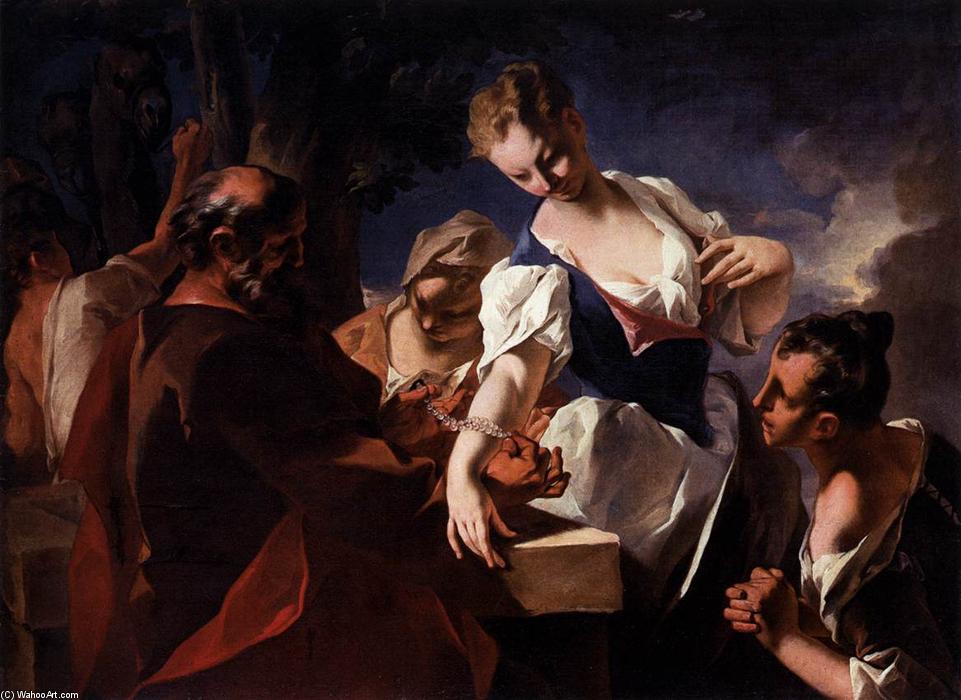
Rebecca at the Well
 1720
1720 120.0 x 155.0 cm
 San Francesco della Vigna
 Weiterlesen
Handgefertigte Ölreproduktion
Handgemaltes Ölgemälde auf Leinwand in Ihrer Wunschgröße und mit Rahmen, auf Bestellung von unseren Künstlern angefertigt. ( Druck bestellen Bild kaufen)




































Wählen Sie aus unseren vordefinierten Formaten, die den ursprünglichen Proportionen des Kunstwerks entsprechen.

Sie können Ihre eigenen Maße eingeben, um einen bestimmten Rahmen oder Platz auszufüllen. Wenn die gewählte Größe nicht den Proportionen des Originalbildes entspricht, werden wir das Kunstwerk entweder beschneiden oder das Gemälde durch zusätzliche, handgemalte Elemente erweitern. Ein digitales Mockup wird Ihnen zur Genehmigung zugesandt, bevor die Produktion beginnt.
Bitte beachten Sie, dass die Bildschirmvorschau nicht die tatsächliche Beschneidung oder Erweiterung widerspiegelt. Nur das Mockup zeigt die endgültige Komposition exakt an.
Obwohl Sondermaße verfügbar sind, empfehlen wir, eine Größe aus der vordefinierten Liste zu wählen, um die ursprünglichen Proportionen beizubehalten.
Nach der Bestellung wird das ArtsDot.com-Team dem Kunden Anweisungen per E-Mail zusenden und eine Mockup-Vorschau bereitstellen.
Weltweiter Versand () in nur 3 bis 4 Wochen statt der üblichen 5 Wochen. (22 August). Keine Kompromisse bei der Qualität.

Kostenloser weltweiter Expressversand

Hochwertige Leinenleinwand

Umfassender Versicherungsschutz beim Versand

Zollgebühren-Rückerstattungsgarantie

Garantie für exakte Farbtreue

60 Tage Rückgaberecht (nur bei Mängeln)

100% Geld-zurück-Garantie

Mengenrabatt verfügbar
 Die Glasoption ist nur für Größen unter 110 cm verfügbar.

Rebecca at the Well
Art der Reproduktion
Format der Reproduktion
-


Gesamtpreis
$ 263
Beschreibung des Kunstwerks
The Painting's Composition
The scene depicts a woman dressed in white with blue accents seated at a well, her hand extended towards a man who appears to be offering her water from a pitcher. The woman's gaze is directed downwards, and she holds a small bird in her other hand. To the left of the woman stands an older man, distinguished by his bald head and beard, dressed in red robes with gold trim. On the right side of the painting, another man is depicted kneeling before the woman, wearing a white robe with blue accents that match the woman's attire. The background features a dark sky filled with clouds, which adds a dramatic effect to the scene. The well is situated under a large tree, providing shade and contributing to the serene atmosphere of the painting. This beautiful artwork can be found on https://ArtsDot.com, where you can also discover other stunning paintings by Nicola Grassi and other renowned artists.Similar Paintings
Other notable paintings that depict the story of Rebecca at the well include Bonifazio Veronese (Bonifazio De Pitati)'s Rebecca at the Well, which can be found on https://ArtsDot.com. Another example is Giovanni Battista Tiepolo's The Meeting of Eliezer and Rebecca at the Well, which showcases the artist's skill in capturing a moment of tender interaction between the characters.- Visit https://ArtsDot.com to explore more paintings by Nicola Grassi and other artists.
- Discover the beauty of San Francesco della Vigna museum and its collection of artworks on https://ArtsDot.com.
The painting Rebecca at the Well by Nicola Grassi is a true masterpiece that showcases the artist's skill in capturing a moment of tender interaction between several figures. With its beautiful composition and serene atmosphere, this painting is a must-see for any art lover.
Ähnliche Kunstwerke






Über den Künstler
Nicola Grassi: Venetian Baroque Drama
Nicola Grassi (1682 – 1748) stands as a pivotal figure in the late Baroque artistic landscape of Venice, Italy—a city renowned for its opulent patronage and masterful painters. Born in Formosa, near Trieste, Grassi’s formative years were spent honing his craft under the tutelage of Antonio Carneo, establishing him firmly within the Venetian tradition before embarking on an independent career that would yield remarkable results. His artistic journey began with a meticulous apprenticeship, absorbing the stylistic nuances of Carneo's oeuvre and preparing for the challenges of navigating the competitive Venetian art world. Moving to Venice in 1697, Grassi quickly established connections with fellow artists like Nicolo Cassana, collaborating on projects that showcased his burgeoning talent. This partnership proved fruitful, fostering artistic growth and exposing him to diverse influences—particularly Cassana’s embrace of Rococo aesthetics. However, Grassi's ambition extended beyond collaborative endeavors; he sought recognition for his own singular vision. The acknowledgment of “The Flagellation of Christ” in 1710 cemented his reputation as a painter capable of conveying profound emotion and dramatic narrative through meticulously rendered detail—a hallmark of Venetian Baroque artistry. Between 1722 and 1725, Grassi ventured beyond Venice’s artistic confines, traveling to Bavaria and Dalmatia—experiences that undoubtedly broadened his artistic horizons and enriched his understanding of European art currents. These expeditions fueled his creativity and allowed him to absorb new techniques and stylistic approaches, contributing to the evolution of his distinctive style. His work continued to impress discerning collectors and cemented his place as one of Venice’s most celebrated Baroque painters. Grassi's artistic legacy resides primarily in his captivating depictions of religious subjects—particularly biblical narratives imbued with palpable emotion. He excelled at capturing the psychological depth of his figures, utilizing chiaroscuro – dramatic contrasts between light and dark – to heighten visual impact and convey spiritual fervor. His paintings are characterized by a masterful command of color palettes, often favoring rich hues that evoke atmosphere and enhance emotional resonance. The Venetian Baroque’s emphasis on theatricality and grandeur found its embodiment in Grassi's canvases, reflecting the artistic sensibilities of his time. He skillfully blended influences from Carneo’s tenebristic style with Cassana’s Rococo flair, resulting in a unique visual language that distinguishes his oeuvre. His enduring fame is largely attributable to masterpieces such as “St. Paul the Apostle” and “Rebecca at the Well,” which exemplify his stylistic prowess and thematic preoccupation with conveying spiritual contemplation. These works demonstrate Grassi’s ability to transform biblical stories into emotionally charged visual experiences—a testament to his artistic vision and a lasting contribution to Venetian Baroque art history. His paintings continue to inspire admiration for their expressive power and technical brilliance, securing his place as an artist of considerable historical significance. The meticulous detail with which he rendered drapery, skin tones, and facial expressions underscores his commitment to realism while simultaneously elevating the narratives to levels of profound emotional resonance—a hallmark of Venetian Baroque art.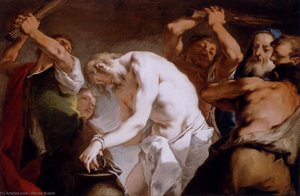
Nicola Grassi
1682 - 1748 , Italien
Kurzinfos
- Artistic Movement Or Style: Barock/Rokoko
- Artists Or Movements Influenced By This Artist: ['Giovanni Francesco Cassana']
- Artists Who Influenced This Artist:
- Antonio Carneo
- Nicolo Cassana
- Date Of Birth: April 7, 1682
- Date Of Death: October 6, 1748
- Full Name: Nicola Grassi
- Nationality: Italienisch
- Notable Artworks:
- Die Flagellatio Christi
- St. Paulus Apostol
- Rebecca am Brunnen
- Place Of Birth: Formosa, Italien

