
- Startseite

- Digitales Bild
- Nicolaes De Geijselers, Nicolaes De Geyselers, Nicolaas De Gijselaer, Nicolaas De Gijzelaer, Nicolaes De Gyselaer, Nicolaas De Gyzelaer, Nicolaes De G
 Vorschau anzeigen
 Versenden
 Teilen
 Details anzeigen

 Herunterladen
 Ähnliche Objekte
 Röntgenaufnahme
 Diashow
 Statistiken
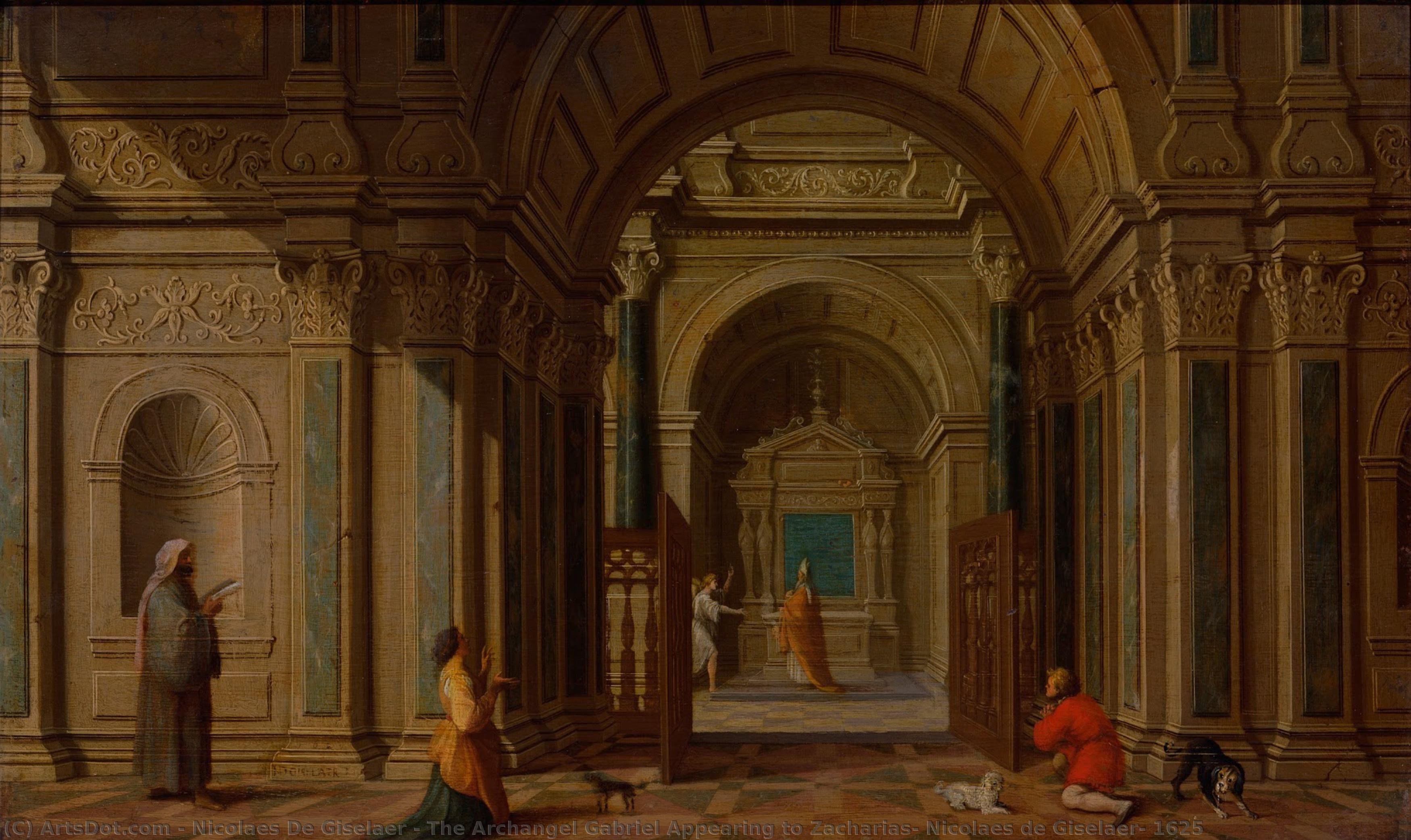
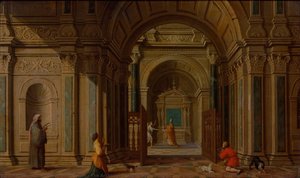
The Archangel Gabriel Appearing to Zacharias, Nicolaes de Giselaer, 1625


 Weiterlesen
Erwerben Sie ein hochauflösendes, optimiertes digitales Bild, das der Online-Vorschau weit überlegen ist.
Jede Datei wird von unseren hauseigenen Spezialisten mit modernsten Werkzeugen und fachmännischer manueller Retusche sorgfältig vorbereitet. Wir stellen sicher, dass jedes Bild eine außergewöhnliche Klarheit, präzise Farbgenauigkeit und feinste Details aufweist.
Die endgültige Datei wird innerhalb von 72 Stunden per E-Mail zugestellt und ist für den sofortigen Einsatz in professionellen, redaktionellen und Druckumgebungen optimiert. Es handelt sich um dieselbe Qualität, der führende Designstudios, Verlage und Galerien vertrauen.
Digitales Bild
Laden Sie eine hochauflösende Datei für die persönliche Präsentation, den Druck und kreative Projekte herunter. ( Zu Druck wechseln Handgemalte Reproduktion bestellen)
In jeder Bestellung digitaler Bilder enthalten
Professionelle digitale Bereitstellung, garantiert
Wenn Sie sich für ArtsDot.com entscheiden, erhalten Sie nicht nur ein Bild – Sie erhalten ein professionell aufbereitetes digitales Kunstwerk, das mit höchster Präzision erstellt und durch eine Zufriedenheitsgarantie abgesichert wird. Hier ist alles, was automatisch mit Ihrer Bestellung geliefert wird:

Schnelle E-Mail-Zustellung
Ihre hochauflösende digitale Bilddatei wird Ihnen innerhalb von 72 Stunden nach der Bestellung per E-Mail zugestellt – bereit zur sofortigen Verwendung.

KI-optimierte digitale Datei
Ihre Kunstwerke werden professionell mithilfe fortschrittlicher KI-Tools und manueller Bearbeitung optimiert, um maximale Detailtreue, Klarheit und Farbgenauigkeit zu gewährleisten.

Lebenslanger kostenloser Neudruckservice
Datei versehentlich gelöscht oder verloren? Keine Sorge – wir senden sie Ihnen jederzeit kostenlos erneut zu.

Keine Einfuhrgebühren – jemals
Genießen Sie Ihr Kunstwerk sofort ohne Zollgebühren, Einfuhrabgaben oder Versandkosten – digitale Downloads sind immer steuerfrei.

Garantierte Farbtreue
Wir garantieren, dass Ihr digitales Bild mithilfe professioneller Werkzeuge und Farbmanagement die Originalfarben so präzise wie möglich wiedergibt.

100-Tage-Zufriedenheitsgarantie
Wenn Sie mit Ihrem digitalen Bild nicht zufrieden sind, werden wir es überarbeiten oder 100% innerhalb von 100 Tagen erstatten – ohne Wenn und Aber.

100% Geld-zurück-Garantie
Nicht zufrieden? Erhalten Sie innerhalb von 100 Tagen nach Erhalt Ihrer digitalen Datei eine vollständige Rückerstattung – ohne Wenn und Aber.

Rabatte bei Großbestellungen
3 Bilder kaufen, 10% sparen – 5 Bilder kaufen, 15% sparen – Ab 10 Bildern 20% sparen. Ideal für kreative Projekte, Galerien und Agenturen.
Ähnliche Kunstwerke

Biografie des Künstlers
A Life Shrouded in Light: The World of Nicolaes de Giselaer
Nicolaes de Giselaer, a name that echoes through the halls of Dutch Baroque painting, remains an artist somewhat elusive to modern biographical scrutiny. Born in Dordrecht in 1583 and passing away around 1647, his life is less a clearly documented narrative and more a constellation pieced together from surviving works, archival records, and stylistic analysis. What emerges is the portrait of a skilled painter and draughtsman who navigated the artistic currents of Leiden, Utrecht, and Amsterdam during a period of immense change and flourishing in the Netherlands.
Early documentation suggests a life centered around his craft. Records indicate his presence in Leiden and Utrecht by 1616, followed by a sojourn in Amsterdam between 1616 and 1617. This peripatetic existence hints at an artist actively seeking opportunities and engaging with diverse artistic communities. His marriage to Cornelia Cornelisdr. Van Riebeeck in Leiden on March 24th, 1616, provides a personal anchor point amidst the professional movements. He eventually settled back in Utrecht, where he continued his work until his death, finding final rest within its soil on February 8th, 1647.
The Artistic Landscape and De Giselaer’s Style
De Giselaer's artistic development unfolded against the backdrop of a Dutch Golden Age brimming with innovation. The early 17th century witnessed a shift away from the rigid formalism of Mannerism towards a more naturalistic, emotionally resonant style—a trend powerfully influenced by Caravaggio and his followers. While not directly adopting the dramatic *tenebrism* of Caravaggio, De Giselaer absorbed its principles of strong chiaroscuro and psychological realism. His paintings are characterized by a delicate balance between light and shadow, used to sculpt forms and imbue scenes with a sense of quiet dignity.
His subject matter predominantly revolved around biblical narratives, particularly those lending themselves to intimate domestic settings. He excelled in depicting interiors—palatial courtyards, richly furnished rooms—populated by figures engaged in moments of contemplation or revelation. A hallmark of his style is the meticulous attention to detail: the textures of fabrics, the gleam of metal objects, and the subtle expressions on faces all contribute to a sense of tangible reality. He wasn’t a painter of grand historical spectacles; rather, he focused on the human drama unfolding within contained spaces.
Key Works and Recurring Themes
Among his notable works is “The Archangel Gabriel Appearing to Zacharias” (1625), a piece that exemplifies his mastery of light and composition. The scene unfolds with a serene grace, the angel’s presence radiating a gentle luminosity that contrasts beautifully with the shadowed interior. Another significant work, "The Triumph of Mordekai," housed in the Centraal Museum in Utrecht, showcases his ability to depict complex narratives with clarity and emotional depth. These paintings aren't merely illustrations of biblical stories; they are explorations of faith, devotion, and the power of divine intervention.
Recurring themes within De Giselaer’s oeuvre include the Annunciation, scenes from the life of Christ, and depictions of figures in prayer or contemplation. He often employed architectural settings—palaces, loggias, courtyards—to create a sense of grandeur and symbolic resonance. These spaces weren't simply backdrops; they were integral to the narrative, reflecting the spiritual weight of the events unfolding within them.
Legacy and Historical Significance
While De Giselaer may not be as widely recognized as some of his contemporaries—Rembrandt or Vermeer—his contribution to Dutch Baroque painting is nonetheless significant. He represents a strand of artistic sensibility that valued quiet contemplation, meticulous detail, and emotional realism. His paintings offer a glimpse into the domestic lives and spiritual beliefs of 17th-century Holland.
His influence, though difficult to trace directly, can be seen in the works of later artists who embraced similar themes and stylistic approaches. The Centraal Museum’s collection of his work serves as a testament to his enduring legacy, allowing viewers today to appreciate the subtle beauty and profound humanity that characterize his art. He stands as a reminder that artistic greatness isn't always defined by dramatic innovation but also by a consistent pursuit of excellence and a deep understanding of the human condition.
Kurzinfos
- Artistic Movement Or Style: Baroque painting
- Date Of Birth: 1583
- Date Of Death: c. 1647
- Full Name: Nicolaes de Giselaer
- Nationality: Dutch
- Notable Artworks:
- Archangel Gabriel Appearing to Zacharias
- De triomf van Mordekai
- Place Of Birth: Dordrecht, Netherlands