 Vorschau anzeigen
 Versenden
 Teilen
 Details anzeigen

 Herunterladen
 Ähnliche Objekte
 Röntgenaufnahme
 Diashow
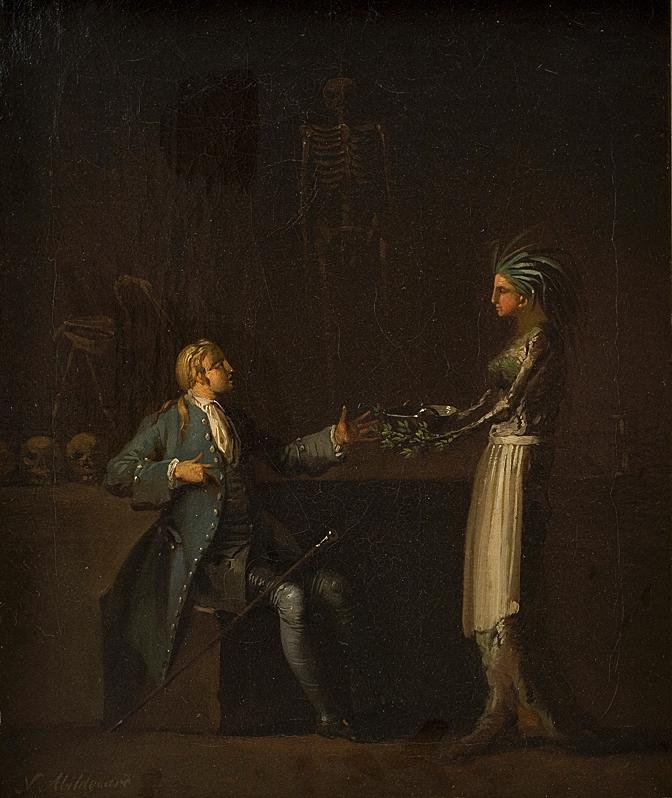
The Doctor's Wife Reveals Her Husband's Intention of Anatomising Niels Klim


 Weiterlesen
Handgefertigte Ölreproduktion
Handgemaltes Ölgemälde auf Leinwand in Ihrer Wunschgröße und mit Rahmen, auf Bestellung von unseren Künstlern angefertigt. ( Druck bestellen Bild kaufen)




P118B $10

P118H $10

P118W $10

P438Z $10

P508JH $12

P508YH $12

P805H $10

P805Z $10

P919BZ $10

P919G $10

P919XJ $10

P959ZH $10

P968JZ $12

W106C $8

W218G $10

W218JH $8

W218Y $10

W307PJ $10

W316G $10

W316PJ $8

W316Y $10

W398PJ $8

W4111J $10

W500HY $15

W500JH $15

W692G $12

W849H $8

W940BG $15

W953PJ $8




Wählen Sie aus unseren vordefinierten Formaten, die den ursprünglichen Proportionen des Kunstwerks entsprechen.

Sie können Ihre eigenen Maße eingeben, um einen bestimmten Rahmen oder Platz auszufüllen. Wenn die gewählte Größe nicht den Proportionen des Originalbildes entspricht, werden wir das Kunstwerk entweder beschneiden oder das Gemälde durch zusätzliche, handgemalte Elemente erweitern. Ein digitales Mockup wird Ihnen zur Genehmigung zugesandt, bevor die Produktion beginnt.
Bitte beachten Sie, dass die Bildschirmvorschau nicht die tatsächliche Beschneidung oder Erweiterung widerspiegelt. Nur das Mockup zeigt die endgültige Komposition exakt an.
Obwohl Sondermaße verfügbar sind, empfehlen wir, eine Größe aus der vordefinierten Liste zu wählen, um die ursprünglichen Proportionen beizubehalten.
Nach der Bestellung wird das ArtsDot.com-Team dem Kunden Anweisungen per E-Mail zusenden und eine Mockup-Vorschau bereitstellen.
Weltweiter Versand () in nur 3 bis 4 Wochen statt der üblichen 5 Wochen. (29 August). Keine Kompromisse bei der Qualität.

Kostenloser weltweiter Expressversand

Hochwertige Leinenleinwand

Umfassender Versicherungsschutz beim Versand

Zollgebühren-Rückerstattungsgarantie

Garantie für exakte Farbtreue

60 Tage Rückgaberecht (nur bei Mängeln)

100% Geld-zurück-Garantie

Mengenrabatt verfügbar
 Die Glasoption ist nur für Größen unter 110 cm verfügbar.

The Doctor's Wife Reveals Her Husband's Intention of Anatomising Niels Klim
Art der Reproduktion
Format der Reproduktion
-


Gesamtpreis
$ 263
The Doctor’s Wife Reveals Her Husband’s Intention – A Study in Mortality and Myth
Nicolai Abraham Abildgaard's "The Doctor’s Wife Reveals Her Husband’s Intention of Anatomising Niels Klim" is not merely a painting; it’s a meticulously constructed tableau vivant, brimming with unsettling beauty and profound psychological depth. Completed in 1787, this arresting work resides within the Statens Museum for Kunst in Copenhagen, offering viewers a glimpse into a world where science, superstition, and domestic drama intertwine. The scene depicts a starkly lit interior – a sparsely furnished room dominated by a central figure seated on a chair, his hand extended towards a standing woman. Scattered around them are unsettling details: three potted plants, a collection of human skulls, and the palpable sense of impending revelation.
Abildgaard, a pivotal figure in Danish art history, was deeply influenced by both Neoclassical ideals and Romantic sensibilities. Trained at the Royal Danish Academy, he initially embraced classical forms but later developed a distinctive style characterized by dramatic lighting, intricate detail, and an exploration of human emotion – particularly anxieties surrounding death and the unknown. This painting exemplifies his ability to fuse these influences, creating a work that is both formally sophisticated and emotionally resonant.
A Dance of Symbolism: Anatomy, Marriage, and Mortality
The central figures are immediately arresting. The seated man, presumed to be a physician – perhaps referencing the titular “Niels Klim,” a character from a satirical Danish novel – extends his hand towards his wife. This gesture is laden with symbolism; it’s not an act of affection but rather a deliberate unveiling, a presentation of something unsettling and potentially disturbing. The woman's expression is one of horrified curiosity, her gaze fixed on the collection of skulls surrounding them. These aren’t simply decorative elements; they represent the fragility of life, the inevitability of death, and the pursuit of knowledge through dissection – a practice increasingly fraught with ethical dilemmas in the Enlightenment era.
The potted plants further contribute to the painting's complex symbolism. They can be interpreted as representing fertility and growth, juxtaposed against the stark reality of mortality. Their presence suggests a desire to preserve life, even as the figures contemplate its inevitable end. The skulls themselves are potent symbols – reminders of human vulnerability and the limitations of earthly existence. Abildgaard masterfully uses these elements to create a scene that is both visually arresting and intellectually stimulating.
Technique and Composition: A Masterclass in Dramatic Lighting
Abildgaard’s technical skill is evident in every detail of this painting. He employs a dramatic chiaroscuro technique – the stark contrast between light and shadow – to heighten the sense of drama and mystery. The figures are bathed in an almost theatrical light, while the background remains shrouded in darkness, drawing the viewer's attention to the central action. The composition is carefully balanced, with the seated man dominating the foreground and the standing woman positioned slightly off-center, creating a dynamic visual flow.
Abildgaard’s meticulous rendering of textures – the rough bark of the plants, the smooth surfaces of the skulls, the fabric of the figures' clothing – adds to the painting’s realism and tactile quality. He demonstrates an exceptional command of color, using muted tones to create a somber atmosphere and emphasizing key details with subtle highlights. The overall effect is one of intense concentration and emotional intensity.
A Window into the Enlightenment: Fear, Knowledge, and Domesticity
"The Doctor’s Wife Reveals Her Husband’s Intention of Anatomising Niels Klim" offers a fascinating glimpse into the intellectual and cultural landscape of 18th-century Denmark. It reflects anxieties surrounding scientific progress, the burgeoning field of anatomy, and the changing role of women in society. The painting raises questions about the ethics of knowledge acquisition, the boundaries between science and superstition, and the complexities of human relationships.
Beyond its historical significance, the work possesses a lasting emotional impact. It evokes a sense of unease, curiosity, and perhaps even horror – prompting viewers to contemplate the darker aspects of human nature and the mysteries that lie beneath the surface of everyday life. Reproductions of this compelling artwork continue to captivate audiences with their haunting beauty and profound psychological depth.
Ähnliche Kunstwerke
Über den Künstler
Frühes Leben und Ausbildung
- Geboren: 11. September 1743, Kopenhagen, Dänemark
- Eltern: Søren Abildgaard (Antiquarischer Zeichner) und Anne Margrethe Bastholm
- Frühe Ausbildung bei einem Malermeister.
- Tret der Neuen Königlichen Dänischen Akademie der Künste in Kopenhagen (Det Kongelige Danske Kunstakademi) im Jahr 1764 bei.
- Gewinnt von 1764 bis 1767 mehrere Medaillen an der Akademie, was frühes Talent demonstriert.
- Erhält 1767 ein Reisestipendium, das er fünf Jahre später nutzt.
- Studierte unter Johan Edvard Mandelberg und Johannes Wiedewelt an der Akademie.
Die Römische Periode und Künstlerische Entwicklung (1772-1777)
- Reiste von 1772 bis 1777 nach Rom, eine entscheidende Periode in seiner künstlerischen Entwicklung.
- Studierte Bildhauerei, Architektur, Dekoration, Fresken (im Palazzo Farnese) und Wandmalereien.
- Besuchte 1776 mit Jens Juel Neapel.
- Konzentrierte sich auf die Entwicklung von Fähigkeiten in der historischen Malerei.
- Lass sich von Annibale Carraccis Fresken, Raffael, Tizian und Michelangelo inspirieren.
- Entfernt sich vom strengen Klassizismus, beeinflusst von Künstlern wie Johan Tobias Sergel und Johann Heinrich Füssli.
- Entwickelte eine Wertschätzung für Literatur, darunter Shakespeare, Homer und Ossian.
Rückkehr nach Dänemark und Königliche Aufträge
- Kehrt im Dezember 1777 nach Kopenhagen zurück.
- Wird 1778 Professor an der Akademie ernannt.
- Wird um 1780 königlicher Historienmaler.
- Erhält den bedeutenden Auftrag von der dänischen Regierung: die Malerei einer Geschichte Dänemarks für den Rittersaal (Riddersal) im Schloss Christiansborg.
- Dieses Projekt umfasste monumentale Werke, die historische Darstellungen, allegorische Elemente und mythologische Bezüge kombinierten, um die Monarchie zu verherrlichen.
- Arbeitete mit Johan Edvard Mandelberg an Dekorationen für den Fredensborg Palast.
Hauptwerke und Künstlerischer Stil
- Bemerkenswerte Gemälde: "Christian I erhebt Holstein zum Herzogtum im Jahr 1474", "Der Alptraum", "Porträt von Nicolai Abraham Abildgaard", "Erscheinung des Geistes Culmins an seine Mutter", "Szenen aus 'Niels Klims unterirdische Reise'", "Die Amme verabschiedet sich vom Mädchen aus Andros (aus Terenz's Andria)", "Magnus Stenbock übergibt die Festung Tønningen an Frederik IV im Jahr 1714", "Sitzender männlicher Akt mit dem teilweise von seinen erhobenen Armen bedeckten Gesicht", “Audhumla”, und "Der verwundete Philoctetes."
- Künstlerischer Stil: Abildgaards Stil vermischte neoklassische Elemente mit aufkommenden romantischen Einflüssen. Er integrierte bildliche Allegorien, wobei er Symbole verwendete, um Ideen einem gebildeten Publikum zu vermitteln. Seine Werke zeichneten sich oft durch dramatische Beleuchtung, reiche Farben und sorgfältige Details aus.
- Themen: Erkundete Themen aus der griechischen und nordischen Mythologie, historischen Ereignissen und literarischen Erzählungen.
Vermächtnis und Einfluss
- War von 1789 bis 1791 und von 1801 bis 1809 Direktor der Akademie.
- Lehrte einflussreiche Künstler wie Asmus Jacob Carstens, Bertel Thorvaldsen, J. L. Lund und Christoffer Wilhelm Eckersberg.
- Eckersberg, sein Schüler, wurde als der "Vater der dänischen Malerei" bekannt und legte den Grundstein für das Goldene Zeitalter der Dänischen Malerei.
- Starb am 14. November 1809 in Kopenhagen.
- Seine Arbeit beeinflusste maßgeblich die Entwicklung des nordischen Romantismus und trug zur künstlerischen Landschaft Dänemarks bei.
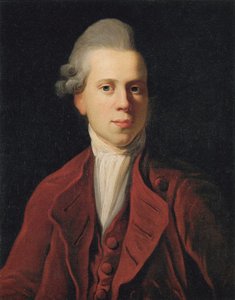
Nicolai Abraham Abildgaard
1743 - 1809 , Dänemark
Kurzinfos
- Beeinflusste Künstler:
- Asmus Jacob Carstens
- Bertel Thorvaldsen
- J. L. Lund
- Christoffer Wilhelm Eckersberg
- Bemerkenswerte Werke:
- Christian I erhebt Holstein
- Der Alptraum
- Porträt Nicolai Abildgaard
- Culins Geist erscheint Mutter
- Szenen aus 'Niels Klim'
- Die Hebamme verabschiedet Mädchen
- Magnus Stenbock übergibt Festung
- Sitzender Akt mit erhobenen Armen
- Audhumla
- Der verwundete Philoctetes
- Geburtsdatum: 11. September 1743
- Künstlerische Einflüsse:
- Annibale Carracci
- Rafael
- Titian
- Michelangelo
- Künstlerischer Stil: Neoklassizismus, Historienmalerei
- Nationalität: Dänisch
- Vollständiger Name: Nicolai Abraham Abildgaard
Ähnliche Artikel
Leonardo da Vinci: Die 25 Meisterwerke für Ihr Zuhause | ArtsDot
Entdecken Sie die 25 Meisterwerke von Leonardo da Vinci! Erfahren Sie faszinierende Geschichten hinter Gemälden wie der Mona Lisa & Das letzte Abendmahl. Hochwertige Reproduktionen für Ihr Zuhause – jetzt bei ArtsDot entdecken!
Frederick Bridgman: Anatomische Meisterschaft und die Evolution des Figurenzeichens
Entdecken Sie die revolutionäre Anatomie-Lehre von George B. Bridgman! Lernen Sie die Grundlagen der Figurenzeichnung und verbessern Sie Ihre künstlerischen Fähigkeiten mit unseren detaillierten Anleitungen und Übungen.
Neoklassizismus: Die 10 Meisterwerke, die eine Epoche prägten – Kunst für Ihr Zuhause
Entdecken Sie die 10 prägendsten Meisterwerke des Neoklassizismus! Von David bis Canova – erfahren Sie die Geschichten hinter ikonischen Gemälden & Skulpturen. Finden Sie hochwertige Reproduktionen für Ihr Zuhause auf
The Intimate Gaze: Study & Intellectual Pursuit in Western Art
Explore the fascinating history of study and intellectual pursuit in Western art! Discover Renaissance scholars, iconic portraits like Holbein's Erasmus, and Leonardo’s studies – a journey through humanist ideals & artistic mastery. Learn more at ArtsDot.

The Revival of Antiquity: Exploring Neoclassical Art's Ideals & Enduring Legacy
Explore the revival of classical ideals in Neoclassical art! Discover Jacques-Louis David & the movement's impact on painting, sculpture & architecture. Expert insights & high-quality reproductions at ArtsDot.