 Vorschau anzeigen
 Versenden
 Teilen
 Details anzeigen

 Herunterladen
 Ähnliche Objekte
 Röntgenaufnahme
 Diashow
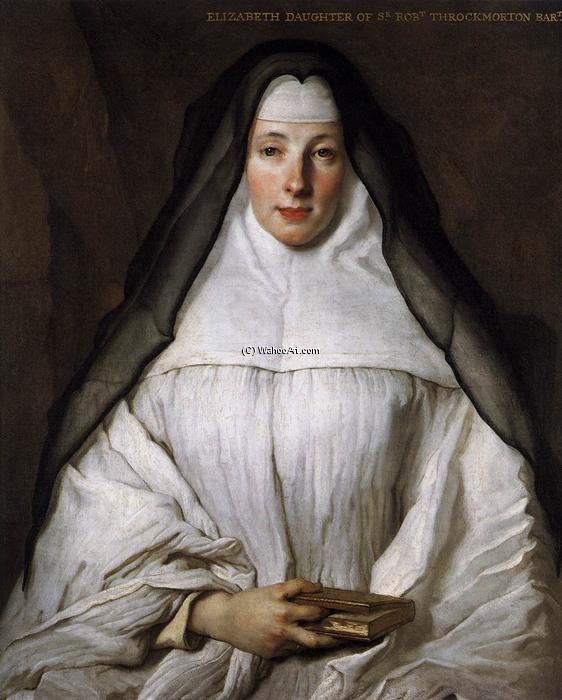
Elizabeth Throckmorton, Canoness of the Order of the Dames Augustines Anglaises
 Oil On Canvas
- WallArt
- Baroque
 1729
1729 82.0 x 66.0 cm
 National Gallery of Art
 Weiterlesen
Handgefertigte Ölreproduktion
Handgemaltes Ölgemälde auf Leinwand in Ihrer Wunschgröße und mit Rahmen, auf Bestellung von unseren Künstlern angefertigt. ( Druck bestellen Bild kaufen)




P118B $10

P118H $10

P118W $10

P438Z $10

P508JH $12

P508YH $12

P805H $10

P805Z $10

P919BZ $10

P919G $10

P919XJ $10

P959ZH $10

P968JZ $12

W106C $8

W218G $10

W218JH $8

W218Y $10

W307PJ $10

W316G $10

W316PJ $8

W316Y $10

W398PJ $8

W4111J $10

W500HY $15

W500JH $15

W692G $12

W849H $8

W940BG $15

W953PJ $8




Wählen Sie aus unseren vordefinierten Formaten, die den ursprünglichen Proportionen des Kunstwerks entsprechen.

Sie können Ihre eigenen Maße eingeben, um einen bestimmten Rahmen oder Platz auszufüllen. Wenn die gewählte Größe nicht den Proportionen des Originalbildes entspricht, werden wir das Kunstwerk entweder beschneiden oder das Gemälde durch zusätzliche, handgemalte Elemente erweitern. Ein digitales Mockup wird Ihnen zur Genehmigung zugesandt, bevor die Produktion beginnt.
Bitte beachten Sie, dass die Bildschirmvorschau nicht die tatsächliche Beschneidung oder Erweiterung widerspiegelt. Nur das Mockup zeigt die endgültige Komposition exakt an.
Obwohl Sondermaße verfügbar sind, empfehlen wir, eine Größe aus der vordefinierten Liste zu wählen, um die ursprünglichen Proportionen beizubehalten.
Nach der Bestellung wird das ArtsDot.com-Team dem Kunden Anweisungen per E-Mail zusenden und eine Mockup-Vorschau bereitstellen.
Weltweiter Versand () in nur 3 bis 4 Wochen statt der üblichen 5 Wochen. (31 August). Keine Kompromisse bei der Qualität.

Kostenloser weltweiter Expressversand

Hochwertige Leinenleinwand

Umfassender Versicherungsschutz beim Versand

Zollgebühren-Rückerstattungsgarantie

Garantie für exakte Farbtreue

60 Tage Rückgaberecht (nur bei Mängeln)

100% Geld-zurück-Garantie

Mengenrabatt verfügbar
 Die Glasoption ist nur für Größen unter 110 cm verfügbar.

Elizabeth Throckmorton, Canoness of the Order of the Dames Augustines Anglaises
Art der Reproduktion
Format der Reproduktion
-


Gesamtpreis
$ 263
A Portrait of Piety and Grace: Nicolas de Largillière’s Elizabeth Throckmorton
Nicolas de Largillière's 1729 portrait, “Elizabeth Throckmorton, Canoness of the Order of the Dames Augustines Anglaises,” is more than a simple likeness; it’s a carefully constructed tableau of faith, status, and quiet dignity. The painting, housed within the National Gallery of Art in Washington, D.C., immediately draws the viewer into a world of Baroque elegance, offering a glimpse into the life of a woman deeply embedded within the religious landscape of 18th-century France. Largillière’s masterful handling of light and shadow, combined with an astute understanding of human expression, elevates this portrait beyond mere representation to become a profound meditation on spirituality and social standing.
The subject herself, Elizabeth Throckmorton, was a figure of considerable importance within the Order of the Dames Augustines. Born into a prominent British family – her lineage tracing back through the Throckmorton baronetcy – she embraced religious life, dedicating herself to service and contemplation. The portrait captures her at a pivotal moment in her vocation, embodying the ideals of piety, humility, and devotion that were central to the Order’s ethos. Her attire—a rich, dark habit adorned with subtle gold embroidery—immediately signifies her status as a member of this esteemed religious community. The careful folds of the fabric, rendered with meticulous detail, speak volumes about the quality of materials and the importance placed on outward appearance within the context of 18th-century French society.
The Language of Baroque Portraiture
Largillière’s technique is a quintessential example of the Baroque style. He eschews dramatic theatricality in favor of a refined, almost understated elegance. The lighting, originating from an unseen source above and slightly to the left, creates a powerful sense of drama through carefully sculpted shadows that accentuate Elizabeth's face and the drapery of her robes. This chiaroscuro effect—the interplay of light and dark—is not merely decorative; it serves to draw attention to key features and imbue the portrait with an emotional depth. The brushstrokes are smooth and controlled, contributing to a sense of serenity and composure. The artist’s skill lies in his ability to capture not just Elizabeth's physical likeness but also her inner state—a quiet contemplation that invites the viewer to share in her solemnity.
Notably, Largillière employs a relatively shallow perspective, typical of portraiture during this era. This creates a sense of immediacy and intimacy, as if we are observing Elizabeth directly. The background is deliberately dark and indistinct, further emphasizing the subject’s presence and reinforcing the formality of the scene. The use of muted earth tones—browns, creams, and off-whites—dominates the palette, lending the portrait a timeless quality. Subtle variations in shade create visual interest without disrupting the overall sense of harmony and balance.
Symbolism and Social Context
Beyond its aesthetic qualities, “Elizabeth Throckmorton” is rich in symbolic meaning. The nun’s habit represents her commitment to religious life—a path chosen for devotion and service. Her hands, gently holding a prayer book, symbolize her connection to faith and the pursuit of spiritual knowledge. The composition as a whole suggests a woman at peace with herself and her vocation, embodying the virtues valued by the Order. The portrait also speaks volumes about the social context in which it was created—a period when religious orders played a significant role in French society, providing education, charity, and spiritual guidance.
The provenance of the painting – commissioned by Sir Robert Throckmorton, Elizabeth’s brother – further illuminates its significance. The fact that it resided within the family's parlor for decades underscores its importance as a symbol of lineage and social standing. Its eventual acquisition by the National Gallery of Art ensured its preservation and accessibility to a wider audience, allowing future generations to appreciate Largillière’s artistry and the captivating story of Elizabeth Throckmorton.
A Timeless Masterpiece
“Elizabeth Throckmorton” remains a compelling work of art, offering a rare glimpse into the life of a woman dedicated to faith and service. Largillière's masterful technique, combined with his astute understanding of human psychology and social context, creates a portrait that is both beautiful and profoundly moving. It’s a testament to the enduring power of Baroque artistry—a timeless masterpiece that continues to resonate with viewers today.
Ähnliche Kunstwerke

Über den Künstler
Nicolas de Largillière: Ein Leben im Porträt
- Geboren: Paris, Frankreich (1656)
- Gestorben: 1746
Nicolas de Largillière war ein bedeutender französischer Barockporträtmaler, der im späten 17. und frühen 18. Jahrhundert florierte. Seine Karriere umfasste mehrere wichtige Perioden der europäischen Geschichte und spiegelte sowohl künstlerische Trends als auch politische Umwälzungen wider. Largillières Fähigkeit, das Wesen seiner Sujets – von Adeligen bis zu einfachen Bürgern – einzufangen, etablierte ihn als einen der führenden Porträtisten seiner Zeit.
Frühes Leben und Ausbildung
Largillières frühes Leben war geprägt von erheblichen Reisen. Geboren in Paris, wurde er bereits im Alter von drei Jahren von seinem Kaufmannsvater nach Antwerpen gebracht. Er verbrachte fast zwei Jahre als Junge in London, bevor er nach Antwerpen zurückkehrte. Ein gescheitertes Geschäft führte ihn dazu, eine Lehre bei Anton Goubau zu suchen, doch Largillière verließ diese nach kurzer Zeit. Ein entscheidender Moment kam, als er nach England reiste und vier Jahre lang für Peter Lely arbeitete, den führenden Porträtisten des englischen Hofes in Windsor. Diese Erfahrung unter Lely erwies sich als unschätzbar wertvoll und ermöglichte es ihm, die Techniken und Stile kennenzulernen, die seine eigene künstlerische Entwicklung prägen sollten. Die Kontroverse um die Verschwörung gegen römisch-katholische Personen im Rye House veranlasste ihn zu seiner Rückkehr nach Paris.
Karrierehöhepunkte und Künstlerischer Stil
- Königliche Förderung: Largillière erlangte schnell Anerkennung in Paris und zog die Aufmerksamkeit von König Jakob II. auf sich, der ihn kurzzeitig zurück nach England berief. Er malte Porträts von Jakob II., Königin Maria von Modena und dem Prinzen von Wales (obwohl letzteres wahrscheinlich später in Paris fertiggestellt wurde).
- Mitgliedschaft in der Académie Française: Im Jahr 1686 schuf er ein Porträt von Charles Le Brun, dem damaligen Vorsitzenden der Académie Française, was ihm die Aufnahme in diese prestigeträchtige Institution sicherte. Dies markierte ihn als eine bedeutende Figur innerhalb der Pariser Kunstwelt.
- Historisches Malen und Porträtkunst: Largillière wurde von der Académie Française als Historiker gemalt dokumentiert, was einen breiteren künstlerischen Trend widerspiegelt. Er blieb jedoch vor allem für seine Porträts bekannt, die prominente Persönlichkeiten der Epoche darstellten, darunter Pierre de Montesquiou, Gouverneur von Arras, und Mitglieder der königlichen Familie.
- Das Königliche Familienporträt (1709): Sein monumentales Porträt der Familie Ludwigs XIV., das den König, Madame de Ventadour und seine Enkelkinder zeigt, veranschaulicht seine Meisterschaft in Komposition und die Fähigkeit, individuelle Persönlichkeiten innerhalb einer Gruppierung einzufangen. Er verwendete dabei Renaissance-Techniken strukturierter Anordnung in diesem Werk.
- Spätere Porträts: Gegen Ende seiner Karriere malte Largillière zahlreiche Porträts von Pariser Adligen, wobei er oft eine charakteristische Pose mit gespreizten Fingern annahm, die einen Brief verbergen oder eine frontale Dreiviertelansicht vor einem dorischen Säulenhintergrund darstellen. Bemerkenswerte spätere Werke sind Porträts von König August II. von Polen, Jacques-Antoine Arlaud und Nicolas Couston.
Largillières Stil ist durch Eleganz, Realismus und Detailgenauigkeit gekennzeichnet. Er setzte Licht und Schatten geschickt ein, um Tiefe und Dimension in seinen Porträts zu erzeugen und die Gesichtszüge seiner Sujets mit bemerkenswerter Genauigkeit einzufangen. Obwohl er von Peter Lelys Ansatz beeinflusst war, entwickelte Largillière eine ausgeprägte Pariser Sensibilität und integrierte Elemente des französischen Hofstils in seine Kompositionen.
Vermächtnis und Einfluss
Nicolas de Largillière hinterließ einen beträchtlichen Bestand an Werken, der wertvolle Einblicke in die soziale und kulturelle Landschaft Frankreichs im 18. Jahrhundert bietet. Seine Porträts werden für ihre technische Fertigkeit und ihre Fähigkeit bewundert, den Charakter und den Status seiner Modelle zu vermitteln. Er bildete mehrere bemerkenswerte Künstler aus, darunter Jean-Baptiste Oudry und Jacob van Schuppen, die in der Rokoko-Tradition fortfuhren. Largillières Vermächtnis geht über seine einzelnen Werke hinaus; er spielte eine bedeutende Rolle bei der Gestaltung der Entwicklung der Porträtmalerei in Frankreich und trug zum Prestige der Académie Française bei.
Sammlungen
Werke von Nicolas de Largillière finden sich in zahlreichen renommierten Museen weltweit, darunter:
- Ashmolean Museum (University of Oxford)
- Fitzwilliam Museum (University of Cambridge)
- Honolulu Museum of Art
- Das Louvre
- National Gallery of Art (Washington D.C.)
- Nelson-Atkins Museum of Art (Kansas City, Missouri)
- Musée des Beaux-Arts de Strasbourg
- Pinacoteca di Brera (Mailand)
- Calouste Gulbenkian Museum
- Museu Nacional de Arte Antiga (Lissabon)
- Museum De Fundatie (Zwolle)
- Detroit Institute of Arts (Detroit)
- Speed Art Museum (Louisville)
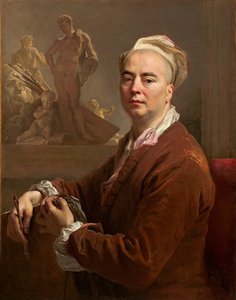
Nicolas de Largillière
1656 - 1746 , Frankreich
Kurzinfos
- Artistic Movement Or Style: Barock, Rokoko
- Artists Or Movements Influenced By This Artist:
- Jean-Baptiste Oudry
- Jacob van Schuppen
- Artists Who Influenced This Artist:
- Anton Goubau
- Peter Lely
- Date Of Birth: 10. Oktober 1656
- Date Of Death: 1746
- Full Name: Nicolas de Largillière
- Nationality: Französisch
- Notable Artworks:
- Porträt eines jungen Mannes
- François de Gontaut
- Provost und Magistrate
- Prinzessin rákóczi
- André François Alloys
- Elizabeth Throckmorton
- Anne Frances Throckmorton
- Pomona-Darstellung
- Selbstbildnis
- Place Of Birth (City And Country): Paris, Frankreich
Ähnliche Artikel

Goya: Die 25 Meisterwerke des spanischen Genies – Kunst für Ihr Zuhause | ArtsDot
Entdecken Sie die 25 Meisterwerke von Francisco Goya! Tauchen Sie ein in die düstere Romantik spanischer Malerei, Porträts & Historienbilder. Hochwertige Kunstdrucke auf ArtsDot.com – für Kunstliebhaber und stilvolles Wohnen.

Über uns
Entdecken Sie unsere Geschichte! Wir bringen Weltklasse-Kunst in Ihr Leben durch fachkundige Auswahl, individuelle Kreationen und kostenlose Vorschauen. Seit dem Jahr 2000 von Privatpersonen und Unternehmen geschätzt.

Barocke Pracht: Wie Sie Opulenz und Emotionen in zeitgenössische Innenräume bringen
Entdecken Sie die Pracht des Barock! Expertenratgeber für luxuriöse Innenräume mit barocken Elementen. Inspiration, Tipps & hochwertige Kunst bei .

Barock Meisterwerke: Die 10 prägendsten Kunstwerke für Ihr Zuhause |
Entdecken Sie die 10 prägendsten Meisterwerke des Barock! Caravaggio, Rembrandt & Co. – Erfahren Sie die Geschichten hinter ikonischen Gemälde und finden Sie hochwertige Kunst Reproduktionen für Ihr Zuhause auf .

The Dramatic Flourish: Exploring the Baroque Movement's Enduring Legacy in Art History
Explore the dramatic world of Baroque art! Discover iconic artists like Caravaggio & Rubens, defining techniques, and its lasting impact on art history. Expert insights for collectors & enthusiasts at ArtsDot.