 Vorschau anzeigen
 Versenden
 Teilen
 Details anzeigen

 Herunterladen
 Ähnliche Objekte
 Röntgenaufnahme
 Diashow
The Realm of Flora
 Acrylic
- WallArt
- Classical Baroque
 1631
1631 131.0 x 181.0 cm
 Weiterlesen
Handgefertigte Ölreproduktion
Handgemaltes Ölgemälde auf Leinwand in Ihrer Wunschgröße und mit Rahmen, auf Bestellung von unseren Künstlern angefertigt. ( Druck bestellen Bild kaufen)




P118B $10

P118H $10

P118W $10

P438Z $10

P508JH $12

P508YH $12

P805H $10

P805Z $10

P919BZ $10

P919G $10

P919XJ $10

P959ZH $10

P968JZ $12

W106C $8

W218G $10

W218JH $8

W218Y $10

W307PJ $10

W316G $10

W316PJ $8

W316Y $10

W398PJ $8

W4111J $10

W500HY $15

W500JH $15

W692G $12

W849H $8

W940BG $15

W953PJ $8




Wählen Sie aus unseren vordefinierten Formaten, die den ursprünglichen Proportionen des Kunstwerks entsprechen.

Sie können Ihre eigenen Maße eingeben, um einen bestimmten Rahmen oder Platz auszufüllen. Wenn die gewählte Größe nicht den Proportionen des Originalbildes entspricht, werden wir das Kunstwerk entweder beschneiden oder das Gemälde durch zusätzliche, handgemalte Elemente erweitern. Ein digitales Mockup wird Ihnen zur Genehmigung zugesandt, bevor die Produktion beginnt.
Bitte beachten Sie, dass die Bildschirmvorschau nicht die tatsächliche Beschneidung oder Erweiterung widerspiegelt. Nur das Mockup zeigt die endgültige Komposition exakt an.
Obwohl Sondermaße verfügbar sind, empfehlen wir, eine Größe aus der vordefinierten Liste zu wählen, um die ursprünglichen Proportionen beizubehalten.
Nach der Bestellung wird das ArtsDot.com-Team dem Kunden Anweisungen per E-Mail zusenden und eine Mockup-Vorschau bereitstellen.
Weltweiter Versand () in nur 3 bis 4 Wochen statt der üblichen 5 Wochen. (22 August). Keine Kompromisse bei der Qualität.

Kostenloser weltweiter Expressversand

Hochwertige Leinenleinwand

Umfassender Versicherungsschutz beim Versand

Zollgebühren-Rückerstattungsgarantie

Garantie für exakte Farbtreue

60 Tage Rückgaberecht (nur bei Mängeln)

100% Geld-zurück-Garantie

Mengenrabatt verfügbar
 Die Glasoption ist nur für Größen unter 110 cm verfügbar.

The Realm of Flora
Art der Reproduktion
Format der Reproduktion
-


Gesamtpreis
$ 263
Beschreibung des Kunstwerks
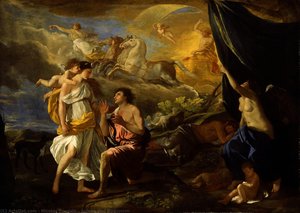
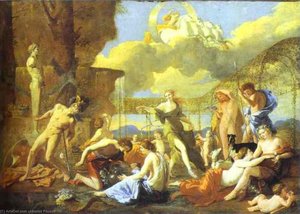
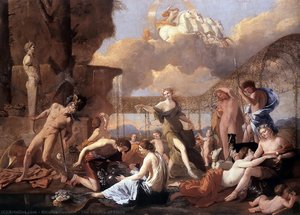
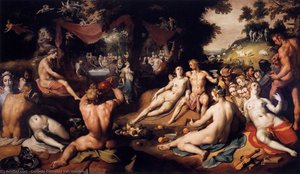
A Symphony of Pastoral Idyllic: Exploring Nicolas Poussin’s “The Realm of Flora”
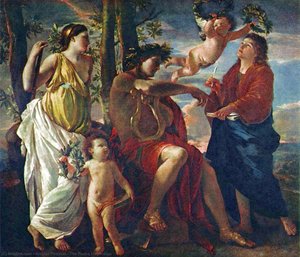
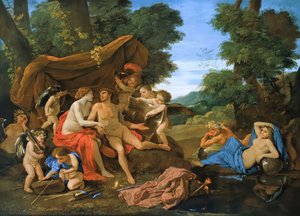
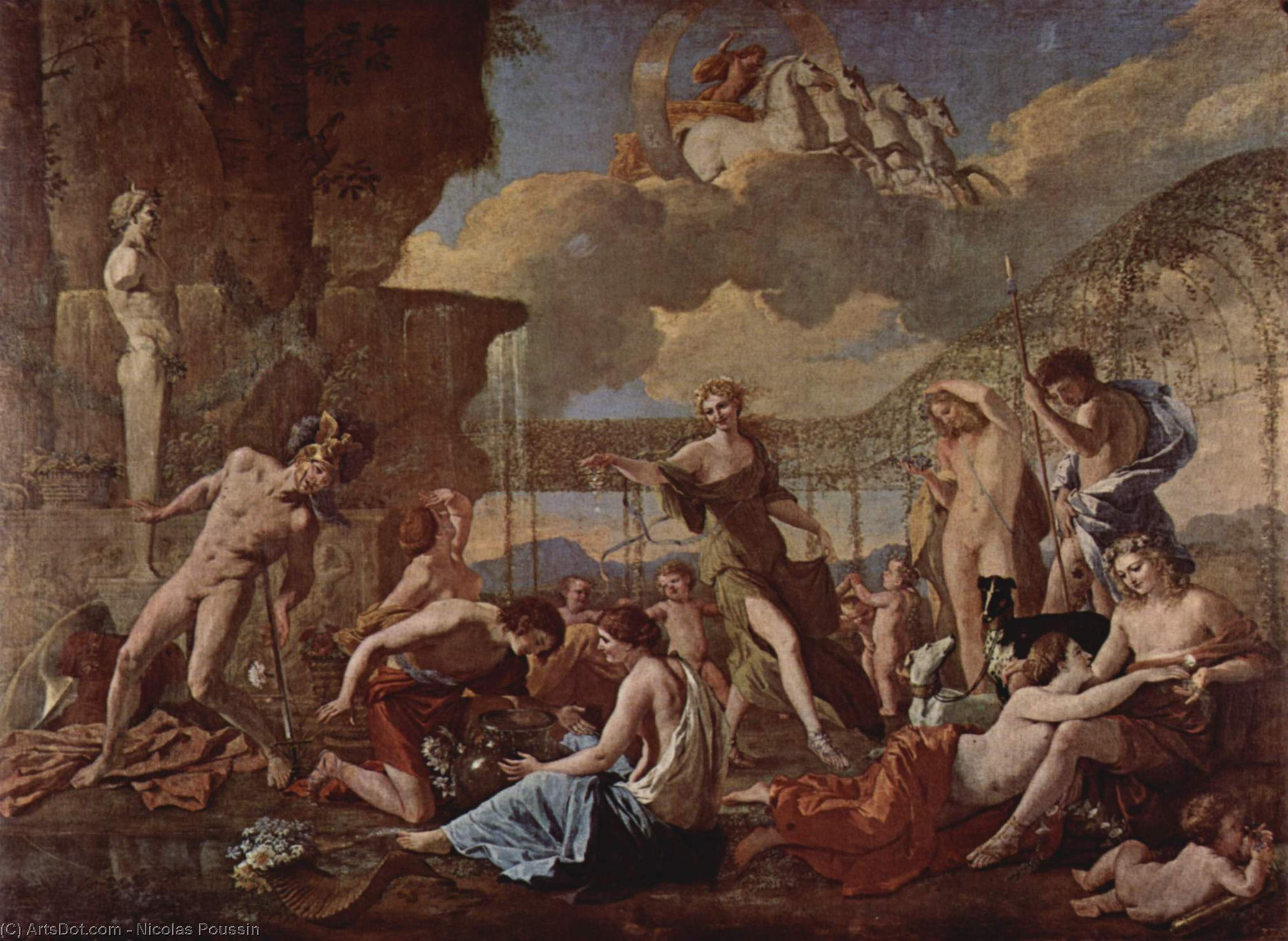
The painting "The Realm of Flora," completed in 1631 by Nicolas Poussin, transcends mere depiction; it embodies a profound meditation on classical ideals and the sublime beauty of nature. Executed during the height of French Baroque, this monumental canvas—measuring 131 x 181 cm—represents more than just a picturesque garden scene; it’s a carefully constructed allegory designed to elevate the viewer's spirit and communicate complex philosophical concepts rooted in Renaissance humanism.The Scene Unfolds: Composition and Observation
At first glance, “The Realm of Flora” presents an arresting tableau of nude figures inhabiting a verdant landscape dominated by towering trees. Thirteen individuals are scattered throughout the composition, engaging in activities ranging from contemplative repose to animated conversation. Poussin’s masterful arrangement prioritizes balance and harmony—a hallmark of his artistic approach—creating a visual pyramid that draws the eye upwards towards the celestial realm. The figures aren't merely present; they are positioned strategically to guide the viewer’s gaze, fostering a sense of movement and dynamism within the stillness of the garden. Detailed observation reveals subtle nuances in posture and gesture, reflecting an artist deeply attuned to anatomical precision and expressive realism.Technique: Mastering Illusionism
Poussin's technique is characterized by its unwavering commitment to illusionism—a method pioneered by Venetian painters like Titian and Raphael—that sought to convincingly simulate reality through meticulous layering of pigments. He employed sfumato, a hazy blending technique that softens contours and creates atmospheric depth, lending the garden an ethereal quality. The artist skillfully utilized chiaroscuro – dramatic contrasts between light and shadow – to sculpt forms and heighten emotional impact. Each brushstroke contributes to the overall illusion, transporting the viewer into this idealized pastoral setting. Layers of translucent glazes build upon one another, achieving remarkable luminosity and capturing the subtle nuances of color—a testament to Poussin’s painstaking attention to detail.Historical Context: Echoes of Antiquity
“The Realm of Flora” emerged from a period marked by fervent revival of classical learning in France. The humanist movement championed reason and observation alongside artistic excellence, influencing artists like Poussin who sought inspiration from the sculptures and architectural ruins of Greece and Rome. This painting reflects the prevailing aesthetic sensibilities of its time—a desire to represent beauty not merely as it appears but as it aspires to be. Furthermore, it aligns with broader theological concerns surrounding humanity’s relationship with God and nature, portraying Edenic paradise as a symbol of divine grace and moral perfection.Symbolism: Beyond Surface Beauty
The garden itself serves as a potent emblem of fertility, innocence, and spiritual contemplation. The nude figures represent human virtue—particularly chastity and contemplation—idealized according to classical notions of beauty and harmony. Their poses convey serenity and introspection, inviting viewers to contemplate the divine order underlying all creation. The celestial sphere visible in the upper portion of the canvas reinforces this symbolic dimension, suggesting that earthly pleasures are but fleeting reflections of eternal truths.Emotional Resonance: Capturing the Sublime
Ultimately, “The Realm of Flora” succeeds in evoking a profound emotional response—a feeling of awe and wonder at the grandeur of nature and the beauty of human form. Poussin’s masterful composition and luminous technique capture the sublime—that elusive quality described by Edmund Burke as eliciting terror mingled with pleasure—inspiring contemplation and fostering a sense of spiritual transcendence. It remains an enduring masterpiece, demonstrating the transformative power of art to elevate the human spirit and connect us to something larger than ourselves.Ähnliche Kunstwerke

Über den Künstler
frühes Leben und Ausbildung
Nikos Poussin, geboren im Juni 1594, war die Quintessenz der französischen Barockmalerei des Klassikers. Obwohl er den Großteil seiner Karriere in Rom verbrachte, blieb er tief in den französischen künstlerischen Traditionen verwurzelt. Seine frühen Tage als Maler waren von Unsicherheit umhüllt, aber bereits im Jahr 1612 hatte er formale Studien in Paris begonnen und sich von weniger bekannten Künstlern beeinflussen lassen, bevor er 1624 nach Rom zog.Künstlerischer Stil und Einflüsse
Poussins Ästhetik, die für ihre kohärente Komposition und Priorisierung der Linearität bekannt ist, legte einen Präzedenzfall fest, der Meister wie Jacques-Louis David und Paul Cézanne noch bis ins 20. Jahrhundert beeinflusste. Sein unverwechselbarer Stil kristallisierte sich in herausragenden Werken wie Der Tod des Germanikers und seiner einflussreichen Sieben Sakramente-Serie.Bekannte Werke und Museen
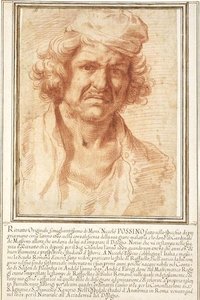
- Nikos Poussin: Selbstporträt 1 (Barock, Öl), ein Beweis für seine Meisterschaft in der Technik.
- Bacchanten vor einem Tempel (74 x 101 cm, Legion of Honor, San Francisco, USA, Öl auf Leinwand), das seine Fähigkeit zur Balance von Komposition und Erzählung demonstriert.
- Das Musée des Beaux-Arts de Carcassonne, ein Muss für Kunstliebhaber, beherbergt eine beeindruckende Sammlung westlicher Gemälde vom 17. bis zum 20. Jahrhundert.
Vermächtnis und Einfluss
Poussins Loyalität blieb Rom, wo er schließlich darauf konzentrierte sich, weitreichende Landschaften in seine Kunst zu integrieren. Seine Reife als Künstler wird in Werken wie Orion, der von der Sonne geblendet sucht und Die Jahreszeiten verkörpert, die eine Ära strenger Komposition einleitet, die von der ruhigen Schönheit der Natur durchdrungen ist.Erfahren Sie mehr mit ArtsDot.com
Entdecken Sie die Meisterwerke des Musée France und tauchen Sie ein in die Welt der französischen Barockmalerei mit Musée Picasso, Musée des Beaux-Arts de Carcassonne und anderen bemerkenswerten Museen. Besuchen Sie Nikos Poussins Seite auf ArtsDot.com, um mehr über seine Werke zu erfahren und den Kontext, in dem sie entstanden sind.Referenzen
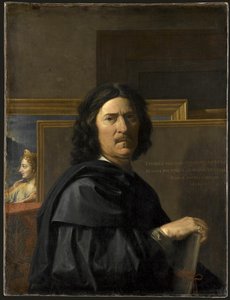
Nikolaus Poussin
1594 - 1665 , Frankreich
Kurzinfos
- Bemerkenswerte Werke:
- Der Tod des Germanicus
- Die Sieben Sakramente
- Eine römische Straße
- Orion auf der Suche nach der Sonne
- Die Jahreszeiten
- Geburtsdatum: Juni 1594
- Geburtsort: Le Havre, Frankreich
- Künstler, Die Ihn Beeinflussten:
- Raphael
- Titian
- Künstlerische Bewegung: Barock
- Nationalität: Französisch
- Todatum: 1665
- Vollständiger Name: Nicolas Poussin
- Von Ihm Beeinflusste Künstler:
- Jacques-Louis David
- Paul Cézanne
Ähnliche Artikel
Nicolas Poussin: Klassizismus, Allegorie und Ordnung in der französischen Malerei des 17. Jahrhunderts
Entdecken Sie Nicolas Poussins Meisterwerke und seinen Einfluss auf den französischen Klassizismus. Analyse von Allegorie, Komposition und der Bedeutung seiner Kunst im 17. Jahrhundert.
Charles Le Brun: Master of French Baroque Classicism & His Enduring Legacy
Explore the life & art of Charles Le Brun, master of French Baroque Classicism. Discover his royal commissions, influence on Versailles, and enduring legacy through detailed analysis & stunning artworks.
Simon Vouet: Vom italienischen Barock zum französischen Klassizismus – Eine künstlerische Reise
Entdecken Sie das Leben und Werk von Simon Vouet, dem Pionier des italienischen Barock in Frankreich! Erfahren Sie mehr über seinen künstlerischen Werdegang, seine wichtigsten Gemälde und seinen nachhaltigen Einfluss auf die französische Malerei. Jetzt lesen!
Baroque Classicism: Reconciling Drama & Order in 17th-Century Art
Explore the captivating world of Baroque Classicism! Discover its history, key artists like Caravaggio & Rubens, and defining characteristics. Expert insights & high-quality reproductions at ArtsDot.
Cultivating Paradise: A Historical & Artistic Exploration of Gardens in Painting
Explore the rich history of gardens in painting! Discover masterpieces from Renaissance to Impressionism & beyond. Learn about symbolism, artists like Monet & Klimt, and find your perfect artwork at ArtsDot.