

 Vorschau anzeigen
 Versenden
 Teilen
 Details anzeigen

 Herunterladen
 Ähnliche Objekte
 Röntgenaufnahme
 Diashow
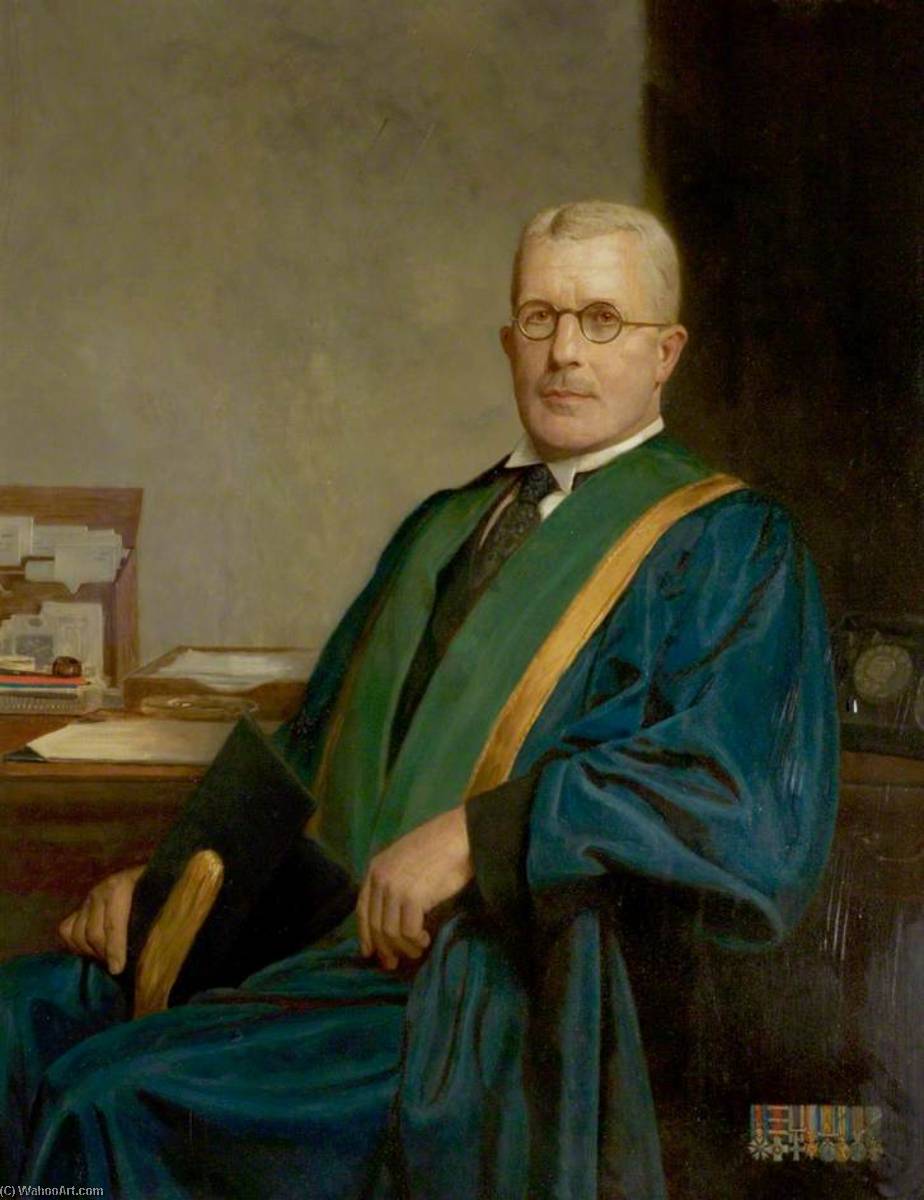
Hugh Stewart (1884–1934), Principal of University College Nottingham (1929–1934)
 110.0 x 85.0 cm
 Die Universität Nottingham
 Weiterlesen
Handgefertigte Ölreproduktion
Handgemaltes Ölgemälde auf Leinwand in Ihrer Wunschgröße und mit Rahmen, auf Bestellung von unseren Künstlern angefertigt. ( Druck bestellen Bild kaufen)




































Wählen Sie aus unseren vordefinierten Formaten, die den ursprünglichen Proportionen des Kunstwerks entsprechen.

Sie können Ihre eigenen Maße eingeben, um einen bestimmten Rahmen oder Platz auszufüllen. Wenn die gewählte Größe nicht den Proportionen des Originalbildes entspricht, werden wir das Kunstwerk entweder beschneiden oder das Gemälde durch zusätzliche, handgemalte Elemente erweitern. Ein digitales Mockup wird Ihnen zur Genehmigung zugesandt, bevor die Produktion beginnt.
Bitte beachten Sie, dass die Bildschirmvorschau nicht die tatsächliche Beschneidung oder Erweiterung widerspiegelt. Nur das Mockup zeigt die endgültige Komposition exakt an.
Obwohl Sondermaße verfügbar sind, empfehlen wir, eine Größe aus der vordefinierten Liste zu wählen, um die ursprünglichen Proportionen beizubehalten.
Nach der Bestellung wird das ArtsDot.com-Team dem Kunden Anweisungen per E-Mail zusenden und eine Mockup-Vorschau bereitstellen.
Weltweiter Versand () in nur 3 bis 4 Wochen statt der üblichen 5 Wochen. (26 August). Keine Kompromisse bei der Qualität.

Kostenloser weltweiter Expressversand

Hochwertige Leinenleinwand

Umfassender Versicherungsschutz beim Versand

Zollgebühren-Rückerstattungsgarantie

Garantie für exakte Farbtreue

60 Tage Rückgaberecht (nur bei Mängeln)

100% Geld-zurück-Garantie

Mengenrabatt verfügbar
 Die Glasoption ist nur für Größen unter 110 cm verfügbar.

Hugh Stewart (1884–1934), Principal of University College Nottingham (1929–1934)
Art der Reproduktion
Format der Reproduktion
-


Gesamtpreis
$ 263
Ähnliche Kunstwerke








Über den Künstler
The Dignified Vision of Noel Denholm Davis
In the heart of England’s artistic heritage, few names evoke the quiet grandeur of the Victorian and Edwardian eras quite like Noel Denholm Davis. Born in Nottingham in 1876, Davis was more than a mere chronicler of faces; he was a master of character, an artist who possessed the rare ability to translate the weight of social standing and the nuance of human spirit onto canvas. His journey began with a rigorous academic foundation, shaped by his studies at the Nottingham School of Art and later refined within the prestigious halls of the Royal Academy Schools. This classical training instilled in him a profound respect for anatomical precision and the luminous possibilities of oil paint, preparing him for a career that would eventually define the visual identity of his beloved Nottinghamshire.
After spending a formative decade immersed in the vibrant, competitive art scene of London, Davis returned to his roots, bringing with him a sophisticated metropolitan sensibility. He established a successful studio in Nottingham, where he became the preferred portraitist for the city's most influential figures. His work was characterized by a meticulous realism—a style that did not merely seek to replicate a likeness but to capture the very essence of his subjects through subtle expressions and commanding poses. Through his brush, the textures of fine fabrics, the soft glow of skin, and the solemnity of official regalia were rendered with an almost tactile clarity, embodying the aristocratic traditions of his time.
A Legacy Captured in Oil and Fresco
The breadth of Davis’s oeuvre is a testament to his versatility and his deep connection to the civic life of his community. While he is most celebrated for his prolific output of over 300 portraits, his artistic reach extended into the very architecture of Nottingham itself. In 1929, he left an indelible mark on the city by painting the magnificent frescoes that still adorn the stairwell of the Nottingham Council House, a feat that demonstrated his ability to handle large-scale, monumental compositions with the same grace as his intimate portraiture.
His subjects formed a tapestry of historical significance, ranging from local heroes to international icons. Some of his most notable achievements include:
- The Portraits of Distinction: His depictions of Jesse Boot, 1st Baron Trent, are held in prestigious collections such as the University of Nottingham, serving as enduring symbols of industrial and philanthropic legacy.
- Heroic Commemorations: The portrait of Captain Albert Ball, V.C., stands as a poignant tribute to one of Britain's most celebrated flying aces, capturing the bravery of a generation.
- Civic Leadership: Through works featuring figures like Sir John T. McCraith, JP and Alderman F. R. Radford, Davis documented the administrative and social backbone of Nottinghamshire.
- Spiritual and Social Icons: His ability to capture character is evident in his portrait of William Booth, the founder of the Salvation Army, blending reverence with realism.
As we look back upon the life of Noel Denholm Davis, we see an artist who bridged the gap between personal legacy and public history. He did not merely paint people; he painted the era itself. His death in 1950 marked the end of a prolific chapter, yet his works remain vital, housed in institutions like the Nottingham Castle Museum and the National Portrait Gallery, ensuring that the dignity, gravity, and light of his vision continue to inspire awe in all who encounter them.
noel denholm davis
1876 - 1950
Kurzinfos
- Artistic Movement Or Style: Portraiture
- Artists Or Movements Influenced By This Artist: ['Victorian Art']
- Artists Who Influenced This Artist: ['']
- Date Of Birth: 1876
- Date Of Death: 1950
- Full Name: Noel Denholm Davis
- Nationality: British
- Notable Artworks:
- William A. Spalding
- Sir John T. McCraith, JP
- Study for 'Captain Albert Ball (1896–1917), VC'
- Place Of Birth: Nottingham, England

