

 Vorschau anzeigen
 Versenden
 Teilen
 Details anzeigen

 Herunterladen
 Ähnliche Objekte
 Röntgenaufnahme
 Diashow
Painting to Hammer a Nail
 Conceptual Art
 30.0 x 44.0 cm
 Modern Art Oxford
 Weiterlesen
Giclée / Kunstdruck
Giclée- oder Leinwanddruck in Museumsqualität mit schneller Produktion und flexiblen Veredelungsoptionen. ( Handgemalte Reproduktion bestellen Bild kaufen)




P118B $10

P118H $10

P118W $10

P438Z $10

P508JH $12

P508YH $12

P805H $10

P805Z $10

P919BZ $10

P919G $10

P919XJ $10

P959ZH $10

P968JZ $12

W106C $8

W218G $10

W218JH $8

W218Y $10

W307PJ $10

W316G $10

W316PJ $8

W316Y $10

W398PJ $8

W4111J $10

W500HY $15

W500JH $15

W692G $12

W849H $8

W940BG $15

W953PJ $8




Wählen Sie aus unseren vordefinierten Formaten, die den ursprünglichen Proportionen des Kunstwerks entsprechen.

Sie können Ihre eigenen Maße eingeben, um ein bestimmtes Format oder einen speziellen Platz einzupassen. Wenn das von Ihnen gewählte Format nicht den Proportionen des Originalbildes entspricht, werden wir das Kunstwerk entweder beschneiden oder das Bild mit einem gespiegelten oder einfarbigen Rand erweitern. Ein digitaler Entwurf wird Ihnen zur Genehmigung zugesandt, bevor die Produktion beginnt.
Bitte beachten Sie, dass die Vorschau auf dem Bildschirm nicht den tatsächlichen Zuschnitt oder die Erweiterung widerspiegelt. Nur der Entwurf zeigt die endgültige Komposition präzise an.
Obwohl Sondermaße verfügbar sind, empfehlen wir die Auswahl eines Maßes aus der vordefinierten Liste, um die ursprünglichen Proportionen zu bewahren.
Weltweiter Versand () innerhalb von 2 Wochen statt der üblichen 4/5 Wochen. (21 August)

Kostenloser weltweiter Expressversand

Hochwertige Leinenleinwand

Umfassender Versicherungsschutz beim Versand

Zollgebühren-Rückerstattungsgarantie

Garantie für exakte Farbtreue

60 Tage Rückgaberecht (nur bei Mängeln)

100% Geld-zurück-Garantie

Mengenrabatt verfügbar
 Die Glasoption ist nur für Größen unter 110 cm verfügbar.

Painting to Hammer a Nail
Giclée / Kunstdruck
Format der Reproduktion
-


Gesamtpreis
$ 62
Sammlerstück-Beschreibung
A Silent Command: Unpacking the Minimalist Power of "Painting to Hammer a Nail"
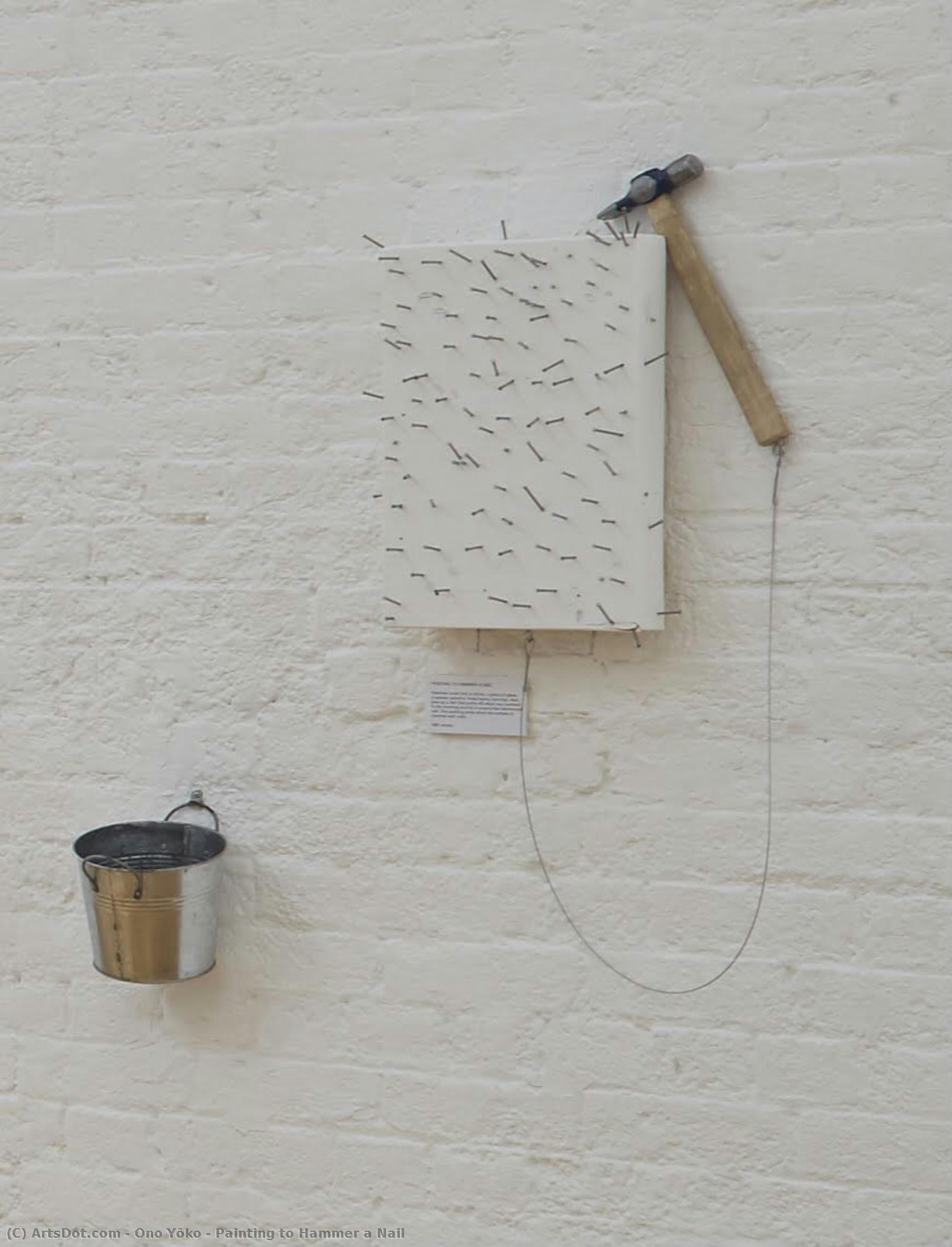
Yoko Ono’s “Painting to Hammer a Nail,” created in 1961, isn't merely a depiction of an action; it’s an invitation. A deceptively simple arrangement – a stark white wooden board affixed to a weathered brick wall, a solitary hammer suspended beneath, and a small bucket holding nails – belies a profound conceptual depth. This work, born from the fertile ground of early Conceptual Art and Fluxus, speaks volumes about participation, agency, and the shifting relationship between artist and viewer. It’s a piece that demands engagement, transforming a passive observation into an active contribution, a quiet command echoing through time.
The core of Ono's artistic philosophy—as evident here—lies in disrupting traditional notions of art-making. Rather than producing a finished object, she presents a scenario, a set of instructions. The viewer becomes the artist, tasked with completing the work by hammering nails into the board. This deliberate relinquishing of control is central to her practice; it’s not about creating beauty through skill but about fostering a shared experience, a collective act of participation that dissolves the boundaries between creator and audience. The piece's longevity speaks to its enduring relevance – in an increasingly mediated world, Ono’s work reminds us of the power inherent in simple actions and direct engagement.
Materials and Method: A Study in Contrasts
“Painting to Hammer a Nail” is a masterclass in minimalist restraint. The materials are deliberately chosen for their starkness and contrast. The smooth, pale surface of the wooden board offers a visual counterpoint to the rough texture of the brick wall, grounding the composition while simultaneously suggesting an underlying tension. The hammer, rendered in a muted brown hue, appears almost weightless against the backdrop, emphasizing its potential for action. Crucially, the nails themselves are small and unassuming, yet their cumulative effect promises transformation – a slow, deliberate process of covering the board with evidence of participation.
Ono’s technique is equally understated. The board is painted white, creating a blank canvas that invites immediate engagement. The placement of the hammer and bucket is carefully considered, establishing a clear trajectory for the viewer's action. The scattered black marks across the surface – resembling splatters or drips – add an element of controlled chaos, hinting at the potential energy contained within the seemingly passive arrangement. These marks are not accidental; they represent the traces of previous participants, a visual record of countless acts of creation.
Symbolism and Interpretation: Beyond the Hammer
While the act of hammering a nail is the immediate focus, “Painting to Hammer a Nail” carries deeper symbolic weight. The hammer itself can be interpreted as a tool for both construction and destruction – a reminder that art-making is often a process of dismantling existing conventions and building new ones. The bucket, suspended below, suggests containment or consequence, hinting at the potential ramifications of our actions. Ono herself has described the work as an exploration of “the relationship between the artist and the audience,” emphasizing the importance of shared experience and collective creation.
Furthermore, the piece resonates with themes of peace and activism that have been central to Ono’s career. The act of hammering can be seen as a metaphor for breaking down barriers and forging connections – a quiet assertion of agency in a world often dominated by passive observation. The work's enduring appeal lies in its ability to invite viewers to engage with these complex ideas on a deeply personal level.
A Legacy of Participation: Reproductions and the Spirit of the Original
Reproductions of “Painting to Hammer a Nail” retain much of the original’s power, offering a tangible connection to Ono's conceptual vision. However, it is important to remember that the true essence of the work lies in its participatory nature. While a reproduction can provide a visual representation of the arrangement, it cannot replicate the experience of actively engaging with the piece – of selecting a nail, positioning yourself beneath the hammer, and contributing to the evolving artwork. When commissioning a hand-painted reproduction, consider seeking one that incorporates elements reminiscent of the original’s scattered marks, subtly acknowledging the countless acts of participation that have shaped this iconic work.
Ähnliche Kunstwerke
Über den Künstler
Yoko Ono: Leben und Vermächtnis
Frühes Leben und künstlerische Anfänge
- Yoko Ono wurde 1933 in Tokio, Japan, geboren und wuchs innerhalb einer aristokratischen Familie in einem privilegierten Umfeld auf.
- Ihr frühes Leben wurde durch den Zweiten Weltkrieg gestört, was zu Umsiedlungen und Schwierigkeiten führte. Diese Erfahrung prägte ihre Weltanschauung und ihren späteren künstlerischen Ausdruck nachhaltig.
- Ono begann bereits im jungen Alter Klavier zu studieren und zeigte frühzeitig Talent für kreative Tätigkeiten.
- Im Jahr 1952 zog sie mit ihrer Familie nach New York City, wo sie ihre Ausbildung fortsetzte, zunächst an der Sarah Lawrence College.
Künstlerische Entwicklung und Einflüsse
- Ono tauchte schnell in die lebendige Kunstszene von 1960er New York City ein.
- Sie wurde mit der Fluxus-Bewegung assoziiert, einer radikalen Avantgarde-Gruppe, die traditionelle künstlerische Grenzen herausforderte.
- Wichtige Einflüsse in dieser Zeit waren Komponisten wie John Cage und Künstler wie La Monte Young, die Experimentalismus und konzeptuelle Ansätze in der Kunst betonten.
- Ihre frühen Werke umfassten oft Performance-Stücke und Happenings, die die Grenzen dessen, was als “Kunst” gilt, ausloteten. Diese wurden durch Publikumspartizipation und den Fokus auf Ideen statt traditioneller Ästhetik geprägt.
Wichtige künstlerische Beiträge
- Ono’s Werk erstreckt sich über verschiedene Disziplinen, darunter konzeptuelle Kunst, Performance-Kunst, Musik, Filmemachen und Friedensaktivismus.
- Ihre anleitenden Stücke, oft als schriftliche Anweisungen oder Scores präsentiert, luden das Publikum ein, aktiv an der Schaffung des Kunstwerks teilzunehmen. Beispiele hierfür sind “Grapefruit”, eine Sammlung solcher Anweisungen.
- Installationen wie “Liverpool Skyladders” demonstrieren ihr Engagement für die Schaffung öffentlicher Kunst, die mit Raum und Gemeinschaft interagiert.
- Die Wish Tree-Reihe, bei der Besucher Wünsche auf Tags schreiben und sie an Äste binden, verkörpert Themen von Hoffnung, Frieden und kollektiver Absicht.
Zusammenarbeit mit John Lennon und musikalische Karriere
- Ono’s Beziehung zu John Lennon, die 1966 begann, hatte einen erheblichen Einfluss auf ihr gemeinsames Leben und ihre künstlerischen Karrieren.
- Ihre Heirat im Jahr 1969 zog erhebliche Medienaufmerksamkeit auf sich und löste Kontroversen aus.
- Gemeinsam nutzten sie ihre Plattform, um für Frieden zu werben, darunter Proteste gegen den Vietnamkrieg, einschließlich ihrer berühmten “Bed-Ins for Peace”.
- Sie gründeten die Plastic Ono Band, veröffentlichten hochgelobte Alben wie “Wedding Album” und “Double Fantasy”, die 1980 mit einem Grammy Award für Album of the Year ausgezeichnet wurden.
Vermächtnis und historische Bedeutung
- Nach John Lennons tragischem Tod im Jahr 1980 widmete sich Ono der Bewahrung seines Erbes durch Initiativen wie Strawberry Fields in Central Park und den Imagine Peace Tower in Island.
- Sie setzt ihre künstlerische Tätigkeit und ihren Einsatz für Frieden, ökologische Nachhaltigkeit und Menschenrechte fort.
- Ono’s bahnbrechende Arbeit hat Generationen von Künstlern in verschiedenen Disziplinen nachhaltig beeinflusst.
- Ihr Fokus auf Konzeptkunst, Publikumspartizipation und gesellschaftliches Engagement ist auch heute noch hochrelevant für die zeitgenössische Kunstpraxis.
- Sie wird als eine wegweisende Figur anerkannt, die konventionelle künstlerische Normen herausforderte und ihre Plattform zur Förderung positiver Veränderungen nutzte.
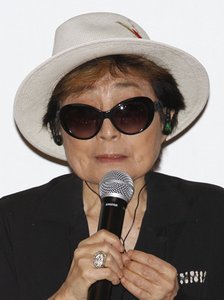
ono yōko
1933 - , Japan
Kurzinfos
- Artistic Movement Or Style: Konzeptkunst, Fluxus
- Artists Or Movements Influenced By This Artist: ['Performance Kunst']
- Artists Who Influenced This Artist:
- John Cage
- La Monte Young
- Date Of Birth: 18. Februar 1933
- Full Name: Yoko Ono
- Nationality: Japanisch
- Notable Artworks:
- Grapefruit
- Liverpool Skyladders
- Wish Tree
- Place Of Birth: Tokio, Japan
Ähnliche Artikel

Beyond Representation: Conceptual Art & the Enduring Legacy of Ideas
Explore the profound impact of Conceptual Art with ArtsDot. Discover its history, key artists like Duchamp & Kosuth, and learn how to collect this influential movement. Expert insights for discerning art collectors.
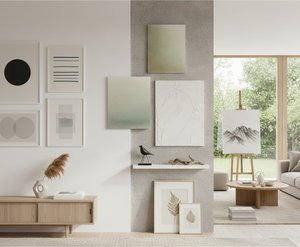
Minimalistische Meisterwerke: Die Top 10 Kunstwerke für ein ruhiges Zuhause | ArtsDot
Entdecken Sie die Top 10 minimalistischer Kunstwerke von Rothko bis Mondrian! Erfahren Sie die Geschichten hinter diesen ikonischen Gemälden & finden Sie Inspiration für ruhige Interieurs. Museum-Qualität bei ArtsDot.
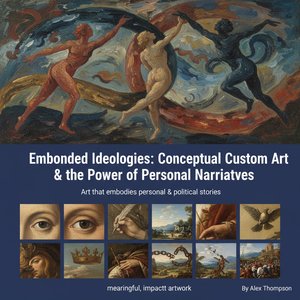
Verkörperte Ideologien: Konzeptuelle Auftragsmalerei und die Kraft persönlicher Narrative
Entdecken Sie die Welt der Auftragsmalerei! Wir verbinden traditionelle Handwerkskunst mit modernen Konzepten für einzigartige Kunstwerke. Expertenberatung & höchste Qualität.
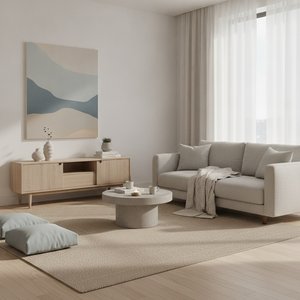
The Art of Calm: Transforming Your First Shared Space with the Serenity of Minimalist Art
Transform your first shared home into a serene sanctuary with the beauty of minimalist art. From geometric abstractions to bespoke oil paintings, ArtsDot.com offers expert curation and hand-painted masterpieces to help you design a timeless, peaceful space.
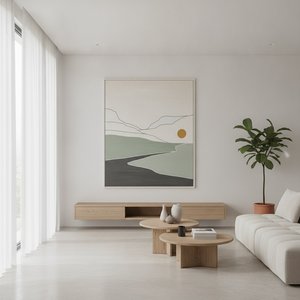
Simple Elegance: Transform Your New Home with the Timeless Beauty of Minimalist Art
Elevate your first home with stunning minimalist art from ArtsDot.com. From geometric abstracts to custom wedding portraits hand-painted on canvas, discover elegant decor designed to inspire. Transform your new space into a timeless sanctuary with our expert curation and bespoke beauty.

