 Vorschau anzeigen
 Versenden
 Teilen
 Details anzeigen

 Herunterladen
 Ähnliche Objekte
 Röntgenaufnahme
 Diashow
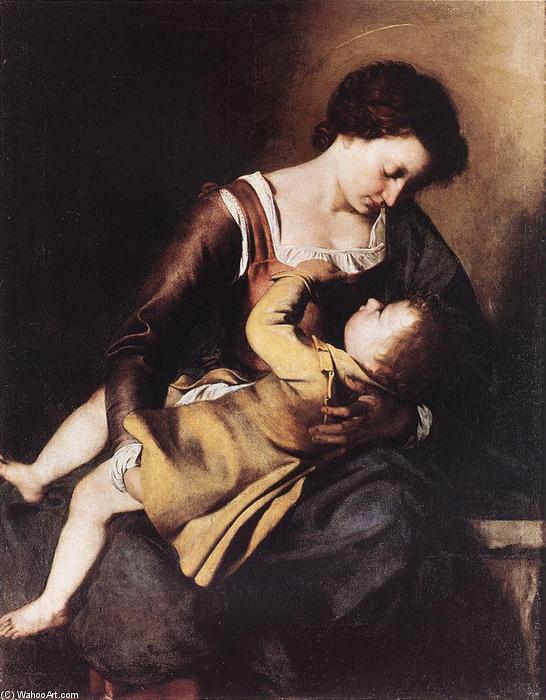
Madonna
 Acrylic On Canvas
- WallArt
- Baroque
 131.0 x 91.0 cm
 Galleria Nazionale d’Arte Antica
 Weiterlesen
Handgefertigte Ölreproduktion
Handgemaltes Ölgemälde auf Leinwand in Ihrer Wunschgröße und mit Rahmen, auf Bestellung von unseren Künstlern angefertigt. ( Druck bestellen Bild kaufen)




P118B $10

P118H $10

P118W $10

P438Z $10

P508JH $12

P508YH $12

P805H $10

P805Z $10

P919BZ $10

P919G $10

P919XJ $10

P959ZH $10

P968JZ $12

W106C $8

W218G $10

W218JH $8

W218Y $10

W307PJ $10

W316G $10

W316PJ $8

W316Y $10

W398PJ $8

W4111J $10

W500HY $15

W500JH $15

W692G $12

W849H $8

W940BG $15

W953PJ $8




Wählen Sie aus unseren vordefinierten Formaten, die den ursprünglichen Proportionen des Kunstwerks entsprechen.

Sie können Ihre eigenen Maße eingeben, um einen bestimmten Rahmen oder Platz auszufüllen. Wenn die gewählte Größe nicht den Proportionen des Originalbildes entspricht, werden wir das Kunstwerk entweder beschneiden oder das Gemälde durch zusätzliche, handgemalte Elemente erweitern. Ein digitales Mockup wird Ihnen zur Genehmigung zugesandt, bevor die Produktion beginnt.
Bitte beachten Sie, dass die Bildschirmvorschau nicht die tatsächliche Beschneidung oder Erweiterung widerspiegelt. Nur das Mockup zeigt die endgültige Komposition exakt an.
Obwohl Sondermaße verfügbar sind, empfehlen wir, eine Größe aus der vordefinierten Liste zu wählen, um die ursprünglichen Proportionen beizubehalten.
Nach der Bestellung wird das ArtsDot.com-Team dem Kunden Anweisungen per E-Mail zusenden und eine Mockup-Vorschau bereitstellen.
Weltweiter Versand () in nur 3 bis 4 Wochen statt der üblichen 5 Wochen. (19 August). Keine Kompromisse bei der Qualität.

Kostenloser weltweiter Expressversand

Hochwertige Leinenleinwand

Umfassender Versicherungsschutz beim Versand

Zollgebühren-Rückerstattungsgarantie

Garantie für exakte Farbtreue

60 Tage Rückgaberecht (nur bei Mängeln)

100% Geld-zurück-Garantie

Mengenrabatt verfügbar
 Die Glasoption ist nur für Größen unter 110 cm verfügbar.

Madonna
Art der Reproduktion
Format der Reproduktion
-


Gesamtpreis
$ 263
Beschreibung des Kunstwerks
Orazio Gentileschi: A Tuscan Master Bridging Mannerism and Baroque
Orazio Gentileschi (1563 – 7 February 1639) stands as a pivotal figure in the artistic transition from Mannerism to Baroque painting, embodying the synthesis of stylistic innovation and humanist sensibility that characterized this transformative era. Born in Pisa amidst the fertile cultural landscape of Tuscany, he embarked on an itinerant journey that propelled him through Rome, Florence, Paris, and London—a path marked by collaboration, experimentation, and a profound engagement with artistic currents shaping Europe’s visual imagination. His legacy resides not merely in his prolific output but also in his role as mentor to Artemisia Gentileschi, arguably the most celebrated female artist of the Baroque period, cementing his place within art history's narrative of gender equality and creative achievement.Early Influences: Mannerist Roots and Caravaggio’s Embrace
Gentileschi’s formative years in Rome witnessed him absorbing the stylistic precepts of Cola dell’Amata and Francesco da Sangallo—architectural sensibilities that instilled a meticulous attention to form and composition—traits which would persist throughout his artistic career. Initially, Gentileschi honed his skills within collaborative projects, adorning monumental spaces with figures alongside other artists – an experience that fostered adaptability and underscored the importance of collective endeavor. However, it was his encounter with Caravaggio around 1603 that irrevocably altered his artistic trajectory. Caravaggio’s revolutionary approach to painting—characterized by dramatic chiaroscuro, unflinching realism, and a preference for portraying figures from life—challenged prevailing conventions and ignited Gentileschi's imagination. As Keith Christiansen meticulously documented in his seminal monograph, Gentileschi adopted Caravaggio’s technique of working directly from models, mirroring the artist’s commitment to capturing psychological depth and conveying emotional intensity. This stylistic convergence signaled a decisive break from Mannerist formalism, propelling Gentileschi toward a more expressive Baroque aesthetic.The Florentine Period: Lyricism and Color Harmony
Between 1613 and 1619 Gentileschi established his artistic base in Florence—a city renowned for its humanist ideals and burgeoning patronage—where he cultivated relationships with influential figures such as Giovanni Battista Ricci and Vincenzo Gonzaga, Duke of Parma. During this period, Gentileschi’s palette shifted decisively away from the muted hues favored by Mannerist painters toward vibrant colors reminiscent of Tuscan lyricism—a stylistic choice that reflects his deep connection to the region's artistic heritage. Christiansen argues that Gentileschi deliberately sought to emulate the harmonious color schemes championed by Carracci and Bolognese artists, demonstrating a nuanced understanding of artistic tradition while simultaneously forging his own distinctive visual idiom. The frescoes adorning Vincenzo Gonzaga’s palazzo at Sampierdarena exemplify this stylistic fusion—a testament to Gentileschi's ability to synthesize Caravaggesque naturalism with formal elegance.London Engagement: A Court Painter’s Legacy
In 1626 Gentileschi accepted the invitation of Charles I to relocate to London, securing a prestigious position as court painter—a move that solidified his reputation as one of Europe's foremost artistic innovators. During his time in England, Gentileschi produced several portraits for the royal family and engaged in ambitious decorative schemes intended to elevate the grandeur of Whitehall Palace. Christiansen notes that Gentileschi’s stylistic preferences remained consistent throughout his London engagement—characterized by a refined palette and meticulous attention to detail—reflecting his unwavering commitment to upholding artistic standards while adapting to the tastes of a cosmopolitan court. His final commission, undertaken in January 1654, underscores Gentileschi's enduring dedication to his craft until his death—a poignant reminder of his profound contribution to Baroque art history.Symbolism and Emotional Resonance
Gentileschi’s paintings transcend mere visual representation; they embody complex symbolic narratives rooted in biblical stories and mythological themes—expressions of humanist conviction and spiritual contemplation. As Keith Christiansen observes, Gentileschi's works convey a palpable emotional resonance—capturing the psychological nuances of human experience with remarkable sensitivity. The Madonna and Child depicted here exemplifies Gentileschi’s masterful command of chiaroscuro—a technique borrowed from Caravaggio—to illuminate the serene countenance of Mary and imbue the scene with an aura of profound piety. Furthermore, Christiansen posits that Gentileschi's use of color—particularly the luminous yellows employed in depictions of saints—serves to heighten visual impact and convey spiritual significance—underscoring his artistic genius as a conduit for conveying emotion and communicating moral truths.Ähnliche Kunstwerke
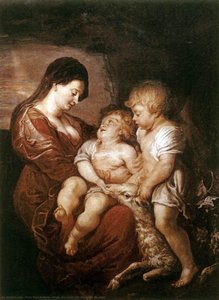
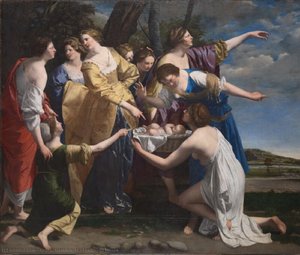
Über den Künstler
Frühes Leben und Ausbildung
- Geboren: Toskana, Italien (1563)
- Gestorben: 1639
- Orazio Gentileschi begann seine Karriere in Rom, wo er im Manierismus-Stil malte. Ein Großteil seiner frühen Arbeit bestand darin, Figuren innerhalb dekorativer Gestaltungsschemata anderer Künstler zu malen.
- Er wurde vom umbrischen Maler Cola dell'Amata ausgebildet.
- Gentileschi wurde auch von der Arbeit des Architekten und Bildhauers Francesco da Sangallo beeinflusst.
Künstlerischer Stil und Einflüsse
- Sein Stil zeichnete sich durch leuchtende Farben und dramatische Kompositionen aus.
- Nach 1600 geriet er unter den Einfluss des naturalistischen Stils von Caravaggio und übernahm diesen.
- Gentileschis Gemälde zeigten oft biblische Szenen und mythologische Themen.
- Wichtige Einflüsse: Manierismus, Caravaggio
Hauptwerke und Errungenschaften
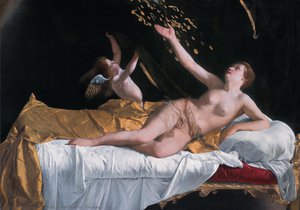
- "Danae": Gilt als eines seiner wichtigsten Werke und zeigt sein Können bei der Darstellung des Wesens mythologischer Geschichten.
- "Die Verkündigung": Befindet sich in der Galleria Borghese in Rom.
- "Die Jungfrau Maria": Ebenfalls in der Galleria Borghese in Rom.
- Seine Fresken und Mosaike für Kirchen wie Santa Maria Maggiore und San Giovanni Laterano demonstrieren seine Meisterschaft in großflächiger dekorativer Malerei.
Entwicklung und Evolution
- Er arbeitete zunächst im Manierismus-Stil, übernahm aber allmählich Elemente des Caravaggismo.
- Er entwickelte eine weichere, verfeinerte Version des dramatischen Stils von Caravaggio, die sich durch eine hellere Palette und präzise Details auszeichnete.
- Seine späteren Werke zeigten einen eleganten und höfischen Stil, der seine Förderung am Hof von Marie de' Medici in Paris und Karl I. in London widerspiegelte.
Historische Bedeutung und Vermächtnis
- Gentileschis Einsatz leuchtender Farben und dramatischer Kompositionen beeinflusste die Entwicklung der Barockkunst.
- Er war einer der ersten Vertreter des Caravaggismo in England und hatte damit einen bedeutenden Einfluss auf das dortige Kunstgeschehen.
- Seine Tochter Artemisia Gentileschi wurde zu einer renommierten Künstlerin ihres eigenen Rechts, setzte sein Vermächtnis fort und entwickelte die künstlerische Tradition der Familie weiter.
- Seine Werke sind in prominenten Museen und Galerien auf der ganzen Welt zu finden, darunter die Uffizien in Florenz und die Galleria dell'Accademia in Venedig.
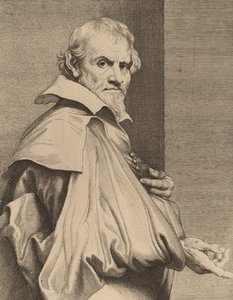
Orazio Gentileschi
1563 - 1639 , Italien
Kurzinfos
- Beeinflusste Künstler:
- Cola dell'Amata
- Francesco da Sangallo
- Bemerkenswerte Werke:
- Danae
- Ankündigung
- Jungfrau Maria
- Geburtsdatum: 9. Juli 1563 (getauft)
- Geburtsort: Toskana, Italien
- Künstlerischer Stil: Barockmalerei
- Nationalität: Italiener
- Sterbedatum: 7. Februar 1639
- Vollständiger Name: Orazio Gentileschi
- Von Künstlern Beeinflusst: ['Caravaggio']
Ähnliche Artikel

Barock Meisterwerke: Die 10 prägendsten Kunstwerke für Ihr Zuhause |
Entdecken Sie die 10 prägendsten Meisterwerke des Barock! Caravaggio, Rembrandt & Co. – Erfahren Sie die Geschichten hinter ikonischen Gemälde und finden Sie hochwertige Kunst Reproduktionen für Ihr Zuhause auf .

Barocke Pracht: Wie Sie Opulenz und Emotionen in zeitgenössische Innenräume bringen
Entdecken Sie die Pracht des Barock! Expertenratgeber für luxuriöse Innenräume mit barocken Elementen. Inspiration, Tipps & hochwertige Kunst bei .
Simon Vouet: Vom italienischen Barock zum französischen Klassizismus – Eine künstlerische Reise
Entdecken Sie das Leben und Werk von Simon Vouet, dem Pionier des italienischen Barock in Frankreich! Erfahren Sie mehr über seinen künstlerischen Werdegang, seine wichtigsten Gemälde und seinen nachhaltigen Einfluss auf die französische Malerei. Jetzt lesen!

The Dramatic Flourish: Exploring the Baroque Movement's Enduring Legacy in Art History
Explore the dramatic world of Baroque art! Discover iconic artists like Caravaggio & Rubens, defining techniques, and its lasting impact on art history. Expert insights for collectors & enthusiasts at ArtsDot.

The Visceral Stage: Exploring Dramatic Narratives & Emotional Intensity in Baroque Art
Explore the dramatic world of Baroque art! Discover iconic masters like Caravaggio & Rembrandt, their techniques, and the movement's lasting impact. Expert insights for collectors & enthusiasts at ArtsDot.