

 Vorschau anzeigen
 Versenden
 Teilen
 Details anzeigen

 Herunterladen
 Ähnliche Objekte
 Röntgenaufnahme
 Diashow
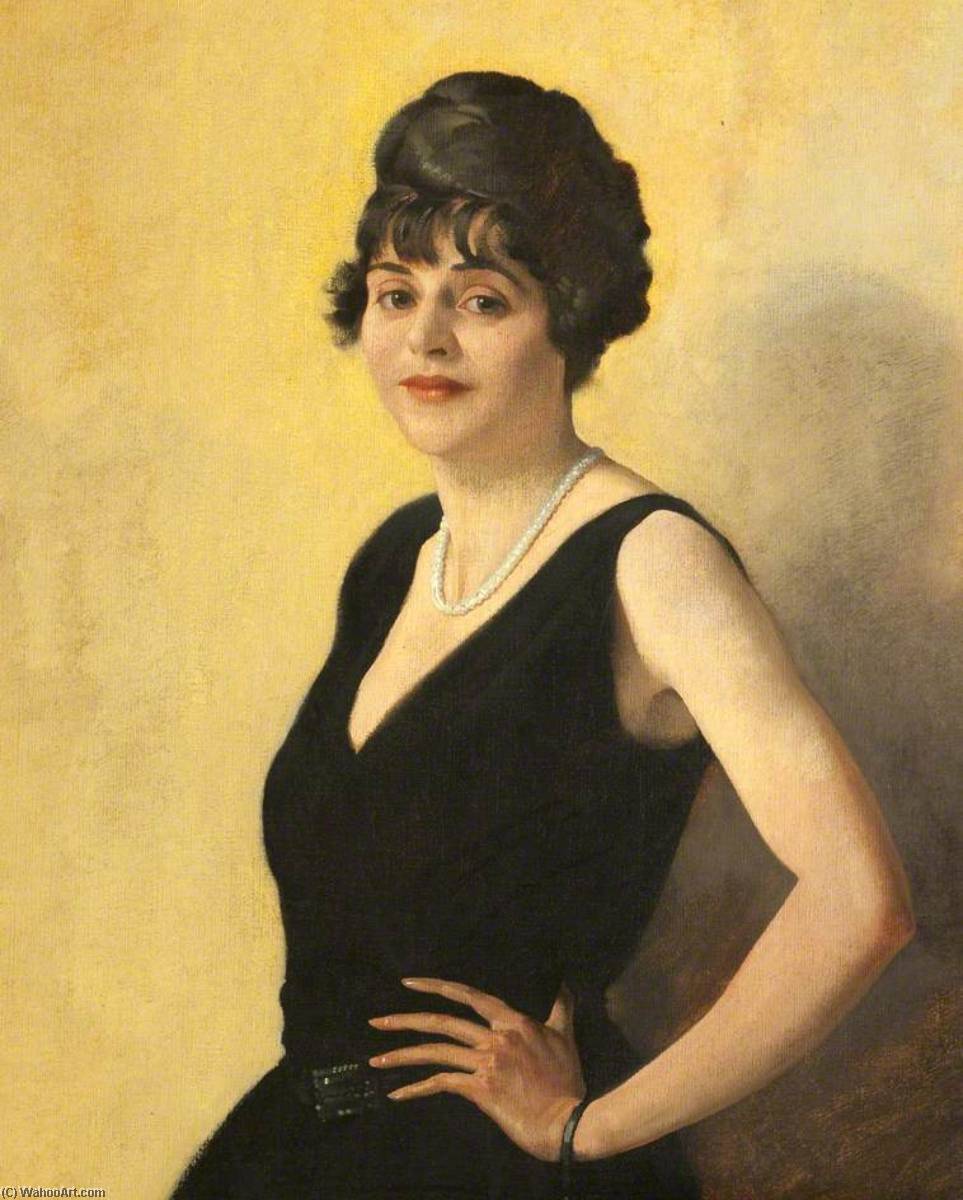
The Lady in Black
 1945
1945 74.0 x 62.0 cm
 Towneley Hall Art Gallery & Museum
 Weiterlesen
Erwerben Sie ein hochauflösendes, optimiertes digitales Bild, das der Online-Vorschau weit überlegen ist.
Jede Datei wird von unseren hauseigenen Spezialisten mit modernsten Werkzeugen und fachmännischer manueller Retusche sorgfältig vorbereitet. Wir stellen sicher, dass jedes Bild eine außergewöhnliche Klarheit, präzise Farbgenauigkeit und feinste Details aufweist.
Die endgültige Datei wird innerhalb von 72 Stunden per E-Mail zugestellt und ist für den sofortigen Einsatz in professionellen, redaktionellen und Druckumgebungen optimiert. Es handelt sich um dieselbe Qualität, der führende Designstudios, Verlage und Galerien vertrauen.
Digitales Bild
Laden Sie eine hochauflösende Datei für die persönliche Präsentation, den Druck und kreative Projekte herunter. ( Druck bestellen Handgemalte Reproduktion bestellen)
In jeder Bestellung digitaler Bilder enthalten
Professionelle digitale Bereitstellung, garantiert
Wenn Sie sich für ArtsDot.com entscheiden, erhalten Sie nicht nur ein Bild – Sie erhalten ein professionell aufbereitetes digitales Kunstwerk, das mit höchster Präzision erstellt und durch eine Zufriedenheitsgarantie abgesichert wird. Hier ist alles, was automatisch mit Ihrer Bestellung geliefert wird:

Schnelle E-Mail-Zustellung
Ihre hochauflösende digitale Bilddatei wird Ihnen innerhalb von 72 Stunden nach der Bestellung per E-Mail zugestellt – bereit zur sofortigen Verwendung.

KI-optimierte digitale Datei
Ihre Kunstwerke werden professionell mithilfe fortschrittlicher KI-Tools und manueller Bearbeitung optimiert, um maximale Detailtreue, Klarheit und Farbgenauigkeit zu gewährleisten.

Lebenslanger kostenloser Neudruckservice
Datei versehentlich gelöscht oder verloren? Keine Sorge – wir senden sie Ihnen jederzeit kostenlos erneut zu.

Keine Einfuhrgebühren – jemals
Genießen Sie Ihr Kunstwerk sofort ohne Zollgebühren, Einfuhrabgaben oder Versandkosten – digitale Downloads sind immer steuerfrei.

Garantierte Farbtreue
Wir garantieren, dass Ihr digitales Bild mithilfe professioneller Werkzeuge und Farbmanagement die Originalfarben so präzise wie möglich wiedergibt.

60-Tage-Zufriedenheitsgarantie
Sollten Sie mit Ihrem digitalen Bild nicht zufrieden sein, werden wir es überarbeiten oder Ihnen innerhalb von 60 Tagen 100% erstatten – ohne Wenn und Aber.

100% Geld-zurück-Garantie
Nicht zufrieden? Erhalten Sie innerhalb von 60 Tagen nach Erhalt Ihrer digitalen Datei eine vollständige Rückerstattung – ohne Angabe von Gründen.

Rabatte bei Großbestellungen
3 Bilder kaufen, 10% sparen – 5 Bilder kaufen, 15% sparen – Ab 10 Bildern 20% sparen. Ideal für kreative Projekte, Galerien und Agenturen.
Ähnliche Kunstwerke



Biografie des Künstlers
Orlando Greenwood: A Painter of Rural England’s Soul
Orlando Greenwood (1892 – 1989) remains a quietly significant figure in British realist painting, a master of capturing the weathered beauty and poignant simplicity of rural life. Born in Nelson, Lancashire, his artistic journey began not within formal art academies but amidst the industrial landscape of his childhood—a stark contrast to the luminous landscapes he would later become renowned for. Greenwood’s early years were spent working in his uncle's cotton mill, an experience that instilled a deep appreciation for honest labor and the rhythms of everyday existence – themes that would permeate much of his work. This grounding in the realities of rural life profoundly shaped his artistic vision, informing a style characterized by meticulous detail, subtle color palettes, and a profound empathy for his subjects.Early Influences and Artistic Development
Greenwood’s formal art training commenced at Goldsmiths' College School of Art in London, where he honed his skills in drawing and painting. However, it was the influence of Impressionism, particularly Monet’s masterful use of light and color, that truly ignited his artistic passion. He embraced the Impressionist philosophy of capturing fleeting moments and atmospheric effects, translating this approach to the familiar landscapes of his native Lancashire. Crucially, Greenwood wasn't merely replicating what he saw; he was imbuing his paintings with a sense of memory and emotion, drawing upon personal experiences and observations. His early works demonstrate a deliberate shift away from purely representational art, favoring instead a more subjective interpretation of the world around him. The impact of this period is evident in his later work, where light and shadow are used to evoke mood and atmosphere rather than simply depict form.The “Card” and the Rise to Recognition
Greenwood’s breakthrough piece, "The Card," painted around 1930, exemplifies his distinctive style and thematic concerns. The painting depicts a solitary figure seated at a table, contemplating a playing card – a seemingly simple subject that belies a deeper layer of meaning. Many interpret the image as representing the loneliness and quiet contemplation inherent in rural life, or perhaps the weight of responsibility borne by those who toiled in the fields. This work garnered critical attention and established Greenwood’s reputation as an artist capable of conveying complex emotions through deceptively straightforward imagery. Following "The Card," he continued to produce a series of evocative landscapes, often featuring farmhouses, fields, and livestock – scenes that resonated with viewers' sense of nostalgia for a disappearing way of life.Technique and Style: A Master of Detail
Greenwood’s artistic technique was characterized by an extraordinary level of detail and precision. He employed a meticulous approach to rendering textures—the rough bark of trees, the weathered surfaces of farm buildings, the folds of clothing – creating paintings that possess a remarkable tactile quality. His color palette was generally subdued, favoring earthy tones and muted greens and browns, reflecting the natural hues of his subjects. However, he skillfully used subtle variations in tone and shade to create depth and atmosphere, particularly in his depictions of light filtering through trees or casting shadows across fields. He wasn’t interested in dramatic contrasts; instead, he favored a nuanced approach that allowed him to capture the quiet beauty of the English countryside with remarkable subtlety.Legacy and Historical Significance
Orlando Greenwood's work is often overlooked compared to some of his contemporaries, yet it holds significant historical value. He represents a vital link between British realism and Impressionism, capturing a specific moment in time—the decline of rural England and the changing social landscape of the 20th century. His paintings offer a poignant glimpse into the lives of ordinary people who worked the land, reflecting both their hardships and their resilience. His influence can be seen in later generations of British artists who continued to explore themes of rural life and social commentary. Today, Greenwood’s work is held in several collections, including the Red Rose Collections at Lancashire County Council, ensuring that his quietly powerful paintings continue to resonate with audiences seeking a deeper understanding of British art and culture. His legacy lies not in grand pronouncements or revolutionary techniques, but in the quiet dignity and enduring beauty of his depictions of rural England’s soul.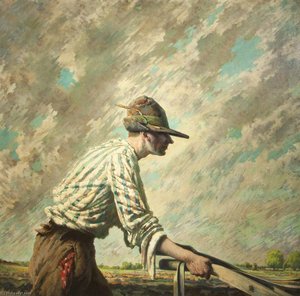
orlando greenwood
1892 - 1989
Kurzinfos
- Artistic Movement Or Style: Rural Landscape Painting
- Artists Or Movements Influenced By This Artist: ['Post-Impressionism']
- Artists Who Influenced This Artist: ['Monet']
- Date Of Birth: 1892
- Date Of Death: 1989
- Full Name: Orlando Greenwood
- Nationality: British
- Notable Artworks:
- The Card
- Pendle
- Place Of Birth: WahooArt, USA

