

 Vorschau anzeigen
 Versenden
 Teilen
 Details anzeigen

 Herunterladen
 Ähnliche Objekte
 Röntgenaufnahme
 Diashow
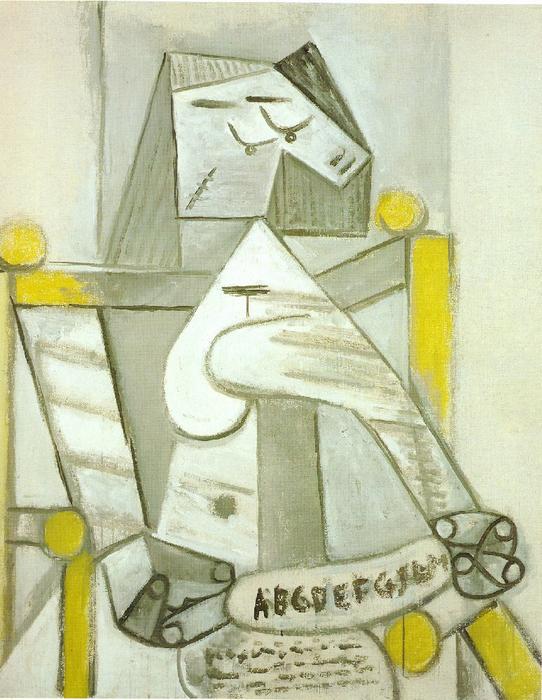
Femme assise avec livre d'orthographe


 Weiterlesen
Erwerben Sie ein hochauflösendes, optimiertes digitales Bild, das der Online-Vorschau weit überlegen ist.
Jede Datei wird von unseren hauseigenen Spezialisten mit modernsten Werkzeugen und fachmännischer manueller Retusche sorgfältig vorbereitet. Wir stellen sicher, dass jedes Bild eine außergewöhnliche Klarheit, präzise Farbgenauigkeit und feinste Details aufweist.
Die endgültige Datei wird innerhalb von 72 Stunden per E-Mail zugestellt und ist für den sofortigen Einsatz in professionellen, redaktionellen und Druckumgebungen optimiert. Es handelt sich um dieselbe Qualität, der führende Designstudios, Verlage und Galerien vertrauen.
Digitales Bild
Laden Sie eine hochauflösende Datei für die persönliche Präsentation, den Druck und kreative Projekte herunter. ( Druck bestellen Handgemalte Reproduktion bestellen)
In jeder Bestellung digitaler Bilder enthalten
Professionelle digitale Bereitstellung, garantiert
Wenn Sie sich für ArtsDot.com entscheiden, erhalten Sie nicht nur ein Bild – Sie erhalten ein professionell aufbereitetes digitales Kunstwerk, das mit höchster Präzision erstellt und durch eine Zufriedenheitsgarantie abgesichert wird. Hier ist alles, was automatisch mit Ihrer Bestellung geliefert wird:

Schnelle E-Mail-Zustellung
Ihre hochauflösende digitale Bilddatei wird Ihnen innerhalb von 72 Stunden nach der Bestellung per E-Mail zugestellt – bereit zur sofortigen Verwendung.

KI-optimierte digitale Datei
Ihre Kunstwerke werden professionell mithilfe fortschrittlicher KI-Tools und manueller Bearbeitung optimiert, um maximale Detailtreue, Klarheit und Farbgenauigkeit zu gewährleisten.

Lebenslanger kostenloser Neudruckservice
Datei versehentlich gelöscht oder verloren? Keine Sorge – wir senden sie Ihnen jederzeit kostenlos erneut zu.

Keine Einfuhrgebühren – jemals
Genießen Sie Ihr Kunstwerk sofort ohne Zollgebühren, Einfuhrabgaben oder Versandkosten – digitale Downloads sind immer steuerfrei.

Garantierte Farbtreue
Wir garantieren, dass Ihr digitales Bild mithilfe professioneller Werkzeuge und Farbmanagement die Originalfarben so präzise wie möglich wiedergibt.

60-Tage-Zufriedenheitsgarantie
Sollten Sie mit Ihrem digitalen Bild nicht zufrieden sein, werden wir es überarbeiten oder Ihnen innerhalb von 60 Tagen 100% erstatten – ohne Wenn und Aber.

100% Geld-zurück-Garantie
Nicht zufrieden? Erhalten Sie innerhalb von 60 Tagen nach Erhalt Ihrer digitalen Datei eine vollständige Rückerstattung – ohne Angabe von Gründen.

Rabatte bei Großbestellungen
3 Bilder kaufen, 10% sparen – 5 Bilder kaufen, 15% sparen – Ab 10 Bildern 20% sparen. Ideal für kreative Projekte, Galerien und Agenturen.
A Fragmented World: Exploring Picasso’s ‘Seated Woman with Spelling Book’
Pablo Ruiz Picasso (1881–1973), a Spanish painter and sculptor, stands as one of the most influential figures in 20th-century art. Born in Málaga, Spain, his artistic journey began under the tutelage of his father, José Ruiz y Blasco, who instilled in him a foundational understanding of painting principles. From these early formative years onward, Picasso demonstrated an unparalleled talent—a relentless pursuit of innovation that would propel him to international acclaim and redefine visual expression. His relocation to Barcelona fostered connections with vibrant artistic communities where he honed his skills and solidified his commitment to groundbreaking experimentation.Subject & Composition
‘Seated Woman with Spelling Book,’ created in 1941, captures a deceptively simple scene: a woman absorbed in reading a book titled ‘ABCDEFGH’. However, Picasso transforms this commonplace image into a complex geometric puzzle—a cornerstone of his Cubist style. He dismantles the figure’s form into interlocking planes and angular shapes, presenting multiple viewpoints simultaneously. This deliberate fracturing challenges traditional notions of realism, prioritizing spatial relationships over accurate representation. The woman's body is constructed from fragmented blocks, mirroring the broader aesthetic concerns of Analytical Cubism—a movement characterized by its meticulous dissection of objects and surfaces. Her hands firmly grasp the book, anchoring the composition while subtly hinting at intellectual engagement. A muted grey background amplifies the impact of these fractured forms, creating a contemplative atmosphere.Style & Technique: Analytical Cubism in Practice
The artwork exemplifies *Analytical Cubism*, Picasso’s dominant stylistic approach during this period (roughly 1908–1912). This style distinguishes itself through its restrained color palette—primarily shades of grey and yellow—and a technique rooted in layering lines and planes to generate depth despite the flattened visual space. Picasso employs crayon or pastel on paper, imparting a tactile quality that enhances the artwork’s expressive power. The meticulous application of lines creates an illusion of volume and perspective, mirroring the principles of Cubism's exploration of spatial ambiguity. This deliberate distortion underscores Picasso’s rejection of conventional artistic conventions—a bold assertion of intellectual freedom within the realm of visual art.Historical Context: Art in a Time of Turmoil
‘Seated Woman with Spelling Book’ was produced during World War II, a period marked by profound global instability and personal anxieties for Picasso. Despite the pervasive atmosphere of conflict, the artwork retains an understated elegance—a testament to Picasso's unwavering dedication to artistic innovation amidst challenging circumstances. He remained in Paris throughout the occupation, navigating a complex political landscape while continuing to push the boundaries of artistic expression. The piece speaks to the broader cultural anxieties of its time, reflecting a preoccupation with fragmentation and uncertainty—themes that resonate powerfully across generations.Symbolism & Interpretation
The inclusion of the spelling book is particularly noteworthy. It serves as a potent symbol representing knowledge, education, or perhaps even the constraints imposed by intellectual pursuits. Picasso’s stylistic choices—the geometric abstraction, the muted color palette—further contribute to an atmosphere of introspection and contemplation. The artwork's enduring appeal lies in its ability to provoke thought about perception and representation—a challenge to accepted visual norms that cemented Picasso’s legacy as a revolutionary artist. Its impact transcends mere aesthetic beauty; it embodies a profound engagement with the intellectual and emotional dimensions of human experience. A truly iconic piece for any collection or interior space – reflecting Picasso's masterful exploration of form and emotion. Photo Description: --Overall Impression-- The artwork is a Cubist depiction of a seated figure, rendered in a simplified, geometric style. It’s dominated by shades of grey and yellow, creating a somewhat muted and melancholic atmosphere. The composition breaks down the figure into fragmented planes, presenting multiple viewpoints simultaneously. The subject's head and torso are presented as angular blocks, with sharp edges and intersecting lines. The hands are stylized and abstracted, holding a book titled ‘ABCDEFGH’. The background is a plain grey, providing a stark contrast to the figure’s forms. Lines are used extensively to define shapes and create a sense of depth through overlapping planes. The texture appears somewhat rough, suggesting the use of crayon or pastel on paper. Perspective is deliberately distorted, emphasizing the fragmented nature of the representation. The subject matter is a portrait, but it's not intended as a realistic likeness; instead, it’s an exploration of form and space. There are symbolic elements in the inclusion of the book, representing knowledge or perhaps the constraints of intellectual pursuits. The style aligns with Cubism, particularly the Analytical phase, characterized by its deconstruction of objects into geometric shapes and multiple perspectives. The technique involves layering colors and lines to create a sense of volume and depth despite the simplified forms. Size: Unknown Date: 1941 ARTIST INFORMATION: ================== Artist: Pablo Ruiz Picasso Birth Year: 1881 Death Year: 1973 Birth City: Malaga Birth Country: Spain Biography:A Revolutionary Spirit: The Life and Art of Pablo Picasso
Pablo Ruiz Picasso, a name that resonates through the annals of art history, was born in Málaga, Spain, in 1881—a nation poised on the cusp of profound change. His life, spanning nearly a century, became an extraordinary mirror reflecting this transformation, a relentless exploration of form, perspective, and the very essence of human experience. From his earliest artistic training under his father, José Ruiz y Blasco, a painter himself, Picasso displayed a precocious talent that quickly surpassed even his mentor’s abilities. This early mastery wasn't merely technical; it hinted at an insatiable curiosity and a willingness to challenge convention—qualities destined to define his entire career. The family’s subsequent moves to A Coruña and then Barcelona immersed the young artist in vibrant cultural environments where he honed his skills and began to forge hiÄhnliche Kunstwerke

Biografie des Künstlers
Pablo Picasso: Ein revolutionärer Künstler
Frühes Leben und Ausbildung (1881-1904)
- Geboren am 25. Oktober 1881 in Málaga, Spanien, zeigte Pablo Ruiz y Picasso von sehr jungem an sein künstlerisches Talent.
- Sein Vater, José Ruiz y Blasco, war Kunstlehrer und gab seinem Sohn eine frühe Ausbildung. Es heißt, Picassos erste Worte waren “piz, piz” – ein Versuch, ‘Bleistift’ zu sagen.
- Picasso übertraf seine Vaters Fähigkeiten schnell und zeigte bemerkenswerte Begabung in naturalistischen Darstellungen.
- Die Familie zog nach A Coruña und später nach Barcelona nach dem tragischen Verlust Picassos Schwester.
- In Barcelona besuchte er die Kunsthochschule, störte sich aber oft an der traditionellen akademischen Lehre. Er studierte kurzzeitig an der Königlichen Akademie San Fernando in Madrid und fand es beengend, bevorzugte aber das unabhängige Studium von Meistern wie Velázquez und Goya.
Die Blauen und Rosafarbenen Perioden (1901-1906)
- Die Blaue Periode (ungefähr 1901-1904) ist durch düstere Gemälde geprägt, die von Blautönen und Blaugrün dominiert werden.
- Diese Werke stellen oft marginalisierte Figuren dar – Bettler, blinde Menschen, Prostituierte – und spiegeln Melancholie und sozialen Kommentar wider. Wichtige Beispiele sind La Vie (1903) und Der alte Gitarrist (1903-1904).
- Nachfolgend entstand die Rosafarbene Periode (1904-1906) mit wärmeren Tönen – Rosa-, Orange- und Rottönen.
- Diese Periode spiegelt eine optimistischere Sichtweise wider und stellt oft Zirkusclowns, Harlekinen und Akrobaten dar. Familie der Saltimbanques (1905) ist ein Beispiel dafür.
Die revolutionären Jahre: Kubismus und darüber hinaus (1907-1919)
- 1907 markierte einen Wendepunkt mit Les Demoiselles d'Avignon, der von iberischer Skulptur und afrikanischen Masken beeinflusst wurde. Dieses Gemälde zerstörte die traditionelle Perspektive und ebnete den Weg für den Kubismus.
- Picasso arbeitete eng mit Georges Braque zusammen und gründete den Kubismus, der die Art und Weise, wie Künstler Realität darstellten, grundlegend veränderte.
- Analytischer Kubismus (1909-1912) zeichnete sich durch fragmentierte Formen, gedämpfte Farben und die Zerlegung von Objekten in geometrische Formen aus.
- Synthetischer Kubismus (1912-1919) integrierte Collagen – Zeitungsartikel, Stoffreste – um texturierte Oberflächen und neue visuelle Schichten zu schaffen.
Neoklassizismus und Surrealismus (1920er - 1930er Jahre)
- In den 1920er Jahren erkundete Picasso neoklasische Stile mit monumentalen Figuren, die klassische Formen betonten.
- Er beschäftigte sich auch mit dem Surrealismus, obwohl er sich nie vollständig mit dessen Prinzipien identifizierte. Seine Werke vermischten frühere Stile mit surrealistischer Bildsprache und verzerrten Perspektiven.
Spätere Jahre und Vermächtnis (1940-1973)
- Während des Zweiten Weltkriegs blieb Picasso in Frankreich und produzierte kraftvolle Antikriegserklärungen wie Guernica (1937), eine wirkliche Reaktion auf den Angriff auf Guernica während des Spanischen Bürgerkriegs.
- Guernica wurde zu einem bleibenden Symbol der Schrecken des Krieges und gilt als eines seiner bekanntesten Werke.
- In den 1950er und 60er Jahren experimentierte Picasso weiterhin mit verschiedenen Medien – Keramik, Skulptur, Druckgrafik – und demonstrierte bemerkenswerte Vielseitigkeit.
- Er heiratete Jacqueline Roque im Jahr 1961. Er starb am 8. April 1973 in Mougins, Frankreich.
Einflüsse und historische Bedeutung
- Picassos künstlerische Entwicklung wurde von spanischen Meistern wie Velázquez und Goya, iberischer Skulptur, afrikanischer Kunst und Henri Matisse geprägt.
- Sein Einfluss auf die Kunst des 20. Jahrhunderts ist unermesslich. Er gründete den Kubismus, pionierte Collagen und konstruktive Skulpturen und stellte traditionelle künstlerische Konventionen kontinuierlich in Frage.
- Picassos unerbittliche Experimentierfreude definierte die moderne Kunst neu und inspiriert Künstler bis heute.
- Seine fruchtbare Produktion – geschätzt auf über 50.000 Werke – festigt seine Position als einer der wichtigsten und einflussreichsten Künstler in der Geschichte.
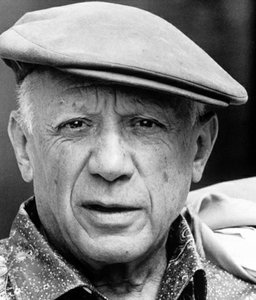
Pablo Picasso
1881 - 1973 , Spanien
Kurzinfos
- Beeinflusste Künstler:
- Velázquez
- Goya
- Henri Matisse
- Bemerkenswerte Werke:
- Les Demoiselles d'Avignon
- Guernica
- Der alte Gitarrist
- Familie der Saltimbanques
- Geburtsdatum: 25. Oktober 1881
- Geburtsort: Málaga, Spanien
- Künstlerische Richtung: Kubismus, Surrealismus
- Nationalität: Spanisch
- Sterbedatum: 8. April 1973
- Vollständiger Name: Pablo Picasso
- Von Künstlern Beeinflusst:
- Iberische Skulptur
- Afrikanische Kunst

