 Vorschau anzeigen
 Versenden
 Teilen
 Details anzeigen

 Herunterladen
 Ähnliche Objekte
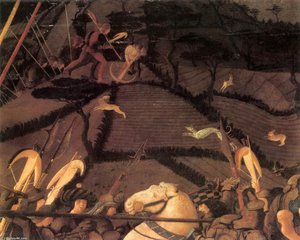
 Röntgenaufnahme
 Diashow
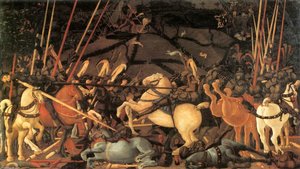
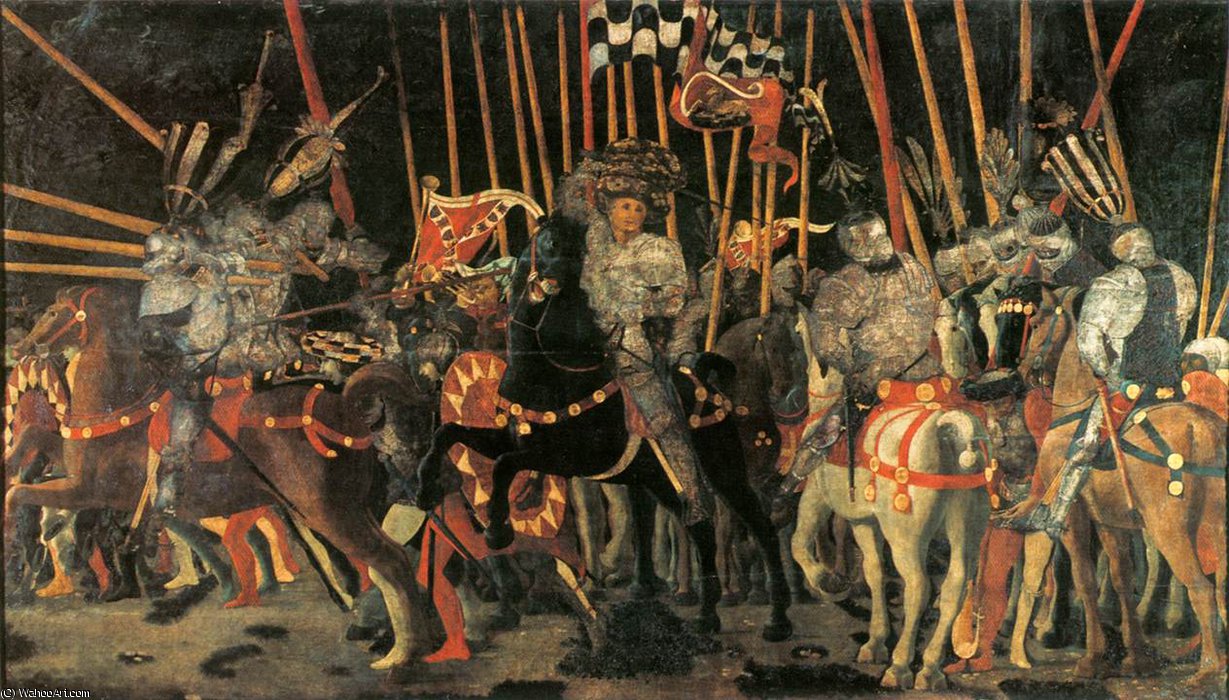
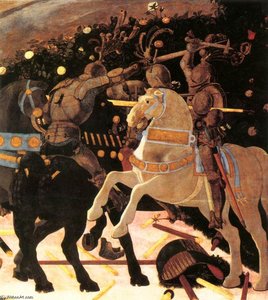
Battle of San Romano - Micheletto da Cotignola


 Weiterlesen
Handgefertigte Ölreproduktion
Handgemaltes Ölgemälde auf Leinwand in Ihrer Wunschgröße und mit Rahmen, auf Bestellung von unseren Künstlern angefertigt. ( Druck bestellen Bild kaufen)




P118B $10

P118H $10

P118W $10

P438Z $10

P508JH $12

P508YH $12

P805H $10

P805Z $10

P919BZ $10

P919G $10

P919XJ $10

P959ZH $10

P968JZ $12

W106C $8

W218G $10

W218JH $8

W218Y $10

W307PJ $10

W316G $10

W316PJ $8

W316Y $10

W398PJ $8

W4111J $10

W500HY $15

W500JH $15

W692G $12

W849H $8

W940BG $15

W953PJ $8




Wählen Sie aus unseren vordefinierten Formaten, die den ursprünglichen Proportionen des Kunstwerks entsprechen.

Sie können Ihre eigenen Maße eingeben, um einen bestimmten Rahmen oder Platz auszufüllen. Wenn die gewählte Größe nicht den Proportionen des Originalbildes entspricht, werden wir das Kunstwerk entweder beschneiden oder das Gemälde durch zusätzliche, handgemalte Elemente erweitern. Ein digitales Mockup wird Ihnen zur Genehmigung zugesandt, bevor die Produktion beginnt.
Bitte beachten Sie, dass die Bildschirmvorschau nicht die tatsächliche Beschneidung oder Erweiterung widerspiegelt. Nur das Mockup zeigt die endgültige Komposition exakt an.
Obwohl Sondermaße verfügbar sind, empfehlen wir, eine Größe aus der vordefinierten Liste zu wählen, um die ursprünglichen Proportionen beizubehalten.
Nach der Bestellung wird das ArtsDot.com-Team dem Kunden Anweisungen per E-Mail zusenden und eine Mockup-Vorschau bereitstellen.
Weltweiter Versand () in nur 3 bis 4 Wochen statt der üblichen 5 Wochen. (28 August). Keine Kompromisse bei der Qualität.

Kostenloser weltweiter Expressversand

Hochwertige Leinenleinwand

Umfassender Versicherungsschutz beim Versand

Zollgebühren-Rückerstattungsgarantie

Garantie für exakte Farbtreue

60 Tage Rückgaberecht (nur bei Mängeln)

100% Geld-zurück-Garantie

Mengenrabatt verfügbar
 Die Glasoption ist nur für Größen unter 110 cm verfügbar.

Battle of San Romano - Micheletto da Cotignola
Art der Reproduktion
Format der Reproduktion
-


Gesamtpreis
$ 263
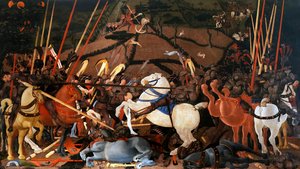
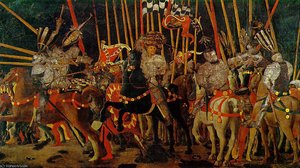
The Battle of San Romano: A Triumph of Mathematical Vision
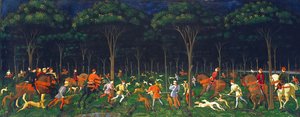
Paolo Uccello’s “Battle of San Romano,” completed around 1450, stands as an unparalleled achievement in Early Renaissance art—a monumental testament to the burgeoning fascination with mathematical principles and a daring exploration of spatial illusion. More than just a depiction of warfare, it represents a pivotal moment in artistic history: the formal embrace of linear perspective, transforming how artists represented reality on canvas.
Commissioned by Giovanni Battista Guadagni for the Palazzo Ducale di Urbino—a symbol of papal power and prestige—the painting commemorates a significant military engagement between Florence and Siena. The scene unfolds with meticulous detail, capturing the chaotic energy of combat. Soldiers clash amidst rubble and fortifications, their movements rendered with astonishing accuracy thanks to Uccello’s groundbreaking use of perspective.
- Style: Florentine Renaissance
- Technique: Tempera on wood – a durable medium favored for altarpieces and monumental commissions.
- Dimensions: Approximately 180 x 316 cm (71 x 124 inches)
A Revolutionary Approach to Space
What distinguishes “Battle of San Romano” from its contemporaries is Uccello’s masterful manipulation of linear perspective. Unlike earlier artists who relied on flattened representations, he painstakingly constructed a three-dimensional space using mathematical calculations—specifically the Pythagorean theorem—to achieve astonishing realism. This wasn't merely about creating an aesthetically pleasing image; it was about capturing the very essence of how human vision perceives depth.
The painting’s composition is deliberately staged to guide the viewer’s eye across the battlefield, emphasizing the importance of spatial relationships. Foreground figures are rendered with greater detail and vibrancy, while those in the background appear smaller and less sharply defined—a technique that convincingly simulates distance. This meticulous attention to perspective elevates the artwork beyond a simple narrative depiction into a profound meditation on visual perception.
Symbolism and Narrative Significance
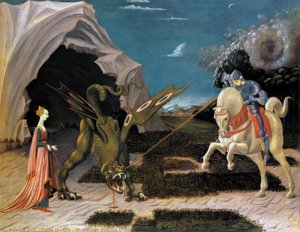
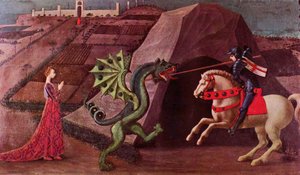
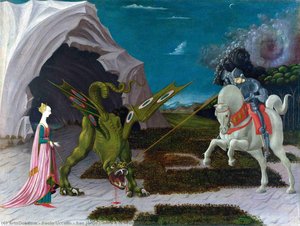
Beyond its technical brilliance, “Battle of San Romano” carries symbolic weight reflecting the anxieties and aspirations of Renaissance Florence. The battle itself represents the ongoing struggle between rival factions vying for dominance—a microcosm of Florentine politics. Furthermore, the depiction of St. George slaying the dragon embodies Christian ideals of courage and triumph over evil.
The inclusion of architectural elements—such as the fortified walls—underscores the importance of defense and stability—themes that resonated deeply with Uccello’s patrons. The artist's deliberate use of color contributes to the overall dramatic effect, highlighting key figures and emphasizing the intensity of the conflict.
Emotional Impact & Legacy
"Battle of San Romano" continues to captivate viewers centuries after its creation. Its sheer scale and technical sophistication are breathtaking, yet it’s more than just a spectacle of artistic prowess; it evokes a palpable sense of urgency and excitement. The painting's enduring influence can be seen in subsequent artists who adopted perspective—establishing it as the cornerstone of Western art.
Today, reproductions of “Battle of San Romano” adorn galleries and private collections worldwide, allowing enthusiasts to experience firsthand the transformative power of Uccello’s vision. It remains an unforgettable masterpiece—a symbol of artistic innovation and a testament to the enduring fascination with capturing the complexities of human experience.
Ähnliche Kunstwerke
Über den Künstler
frühes Leben und Ausbildung
Paolo Uccello, geboren Paolo di Dono, war ein angesehener italienischer Maler und Mathematiker aus Florenz. Er war bekannt für seine bahnbrechende Arbeit an der visuellen Perspektive in der Kunst. Geboren im Jahr 1397, ist das frühe Leben von Uccello nicht gut dokumentiert, aber es ist bekannt, dass er ab 1412 bis 1416 die berühmte Bildhauerin Lorenzo Ghiberti als Lehrling hatte.Karriere und bedeutende Werke
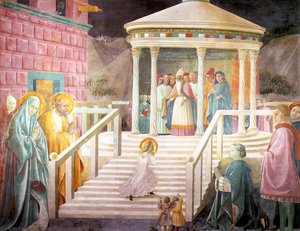
Uccellos Karriere erstreckte sich über vier Jahrzehnte, in denen er zahlreiche Kunstwerke produzierte, darunter Gemälde, Fresken und Altäre. Zu seinen bekanntesten Werken gehören:- Geburt der Jungfrau (Frührenaissance, Öl), ein Gemälde, das seine Verwendung der Perspektive zur Schaffung eines Gefühls von Tiefe demonstriert.
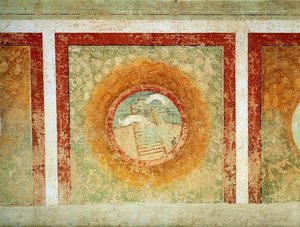
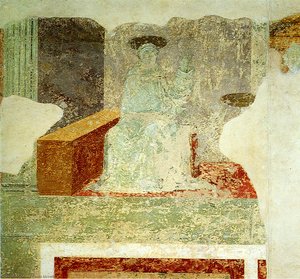
- Fresken San Miniato al Monte 03 (Frührenaissance, Öl), eine Fresko, die seine innovative Verwendung von Farbe und Licht demonstriert.
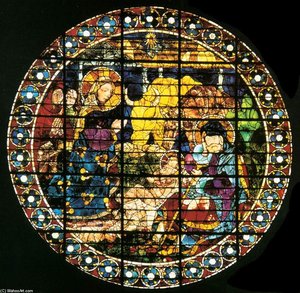
- Anbetung des Kindes (Frührenaissance, Öl), ein Gemälde mit einer detaillierten und naturalistischen Darstellung der menschlichen Form.
- Studio di Cavaliere (Frührenaissance, Öl), ein Selbstporträt, das seine selbstbewusste Verwendung autonomer Themen in der Kunst demonstriert.
Einfluss und Vermächtnis
Uccellos Werk hatte einen bedeutenden Einfluss auf die Entwicklung der Renaissancekunst. Seine Verwendung der Perspektive und sein Schwerpunkt auf die Schaffung eines Gefühls von Tiefe in seinen Gemälden beeinflussten zahlreiche Künstler, darunter Albrecht Dürer, der ebenfalls für seine bahnbrechende Arbeit im Bereich der Perspektive bekannt war. Wichtige Kunstbewegungen:- Die Frührenaissancekunstbewegung
- Italienische Renaissance
- Spätes Gotik
- Paolo Uccello (1397-1475)
- Albrecht Dürer (1471-1528)
- Lorenzo Ghiberti (1379-1455)
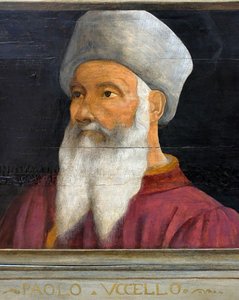
Paolo Uccello
1397 - 1475 , Italien
Kurzinfos
- Beeinflusste Künstler: ['Albrecht Dürer']
- Bemerkenswerte Werke:
- Schlacht von San Romano
- Geburt der Jungfrau
- St. Georg und Drache
- Geburtsdatum: 1397
- Geburtsort: Pratovecchio, Italien
- Künstlerische Bewegung: Frührenaissance
- Künstlerische Einflüsse:
- Lorenzo Ghiberti
- Donatello
- Nationalität: Italienisch
- Todatum: 1475
- Vollständiger Name: Paolo Uccello
Ähnliche Artikel

Giclée Prints: Archival Quality & Aesthetic Nuances for the Discerning Collector
Explore the world of giclée prints with ArtsDot. Learn about archival quality, aesthetic nuances & investment potential. Expert guidance for discerning art collectors seeking museum-quality reproductions and lasting value.
Paolo Uccello: Pionier der Perspektive und die Renaissance-Suche nach visueller Wahrheit
Entdecken Sie Paolo Uccello, einen Pionier der Renaissance und seine revolutionären Perspektivtechniken. Erfahren Sie mehr über sein Leben, ikonische Werke wie die 'Schlacht von San Romano' und seinen Einfluss auf die Kunstgeschichte.

The Enduring Legacy of Fine Art Prints: Technique, History & Aesthetic Impact
Explore the rich history & techniques of fine art prints. Discover investment potential, assess authenticity, and learn how to preserve your collection with expert guidance. Trusted insights for discerning collectors.

Echoes of Time: Exploring the Enduring Appeal & Historical Context of Vintage Art Prints
Explore the captivating world of vintage art prints! Discover their history, collecting tips & enduring appeal. Expert insights on chromolithography and building a legacy collection with ArtsDot.
The Enduring Legacy of Printmaking: Techniques, Themes & Artistic Innovation Across Centuries
Explore the rich history of printmaking with ArtsDot. Discover techniques from intaglio to lithography, learn about collecting valuable prints & find museum-quality reproductions. Expert insights for art enthusiasts and collectors.