 Vorschau anzeigen
 Versenden
 Teilen
 Details anzeigen

 Herunterladen
 Ähnliche Objekte
 Röntgenaufnahme
 Diashow
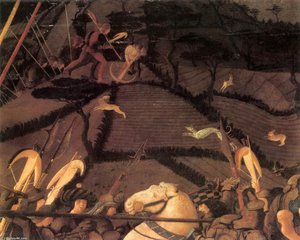
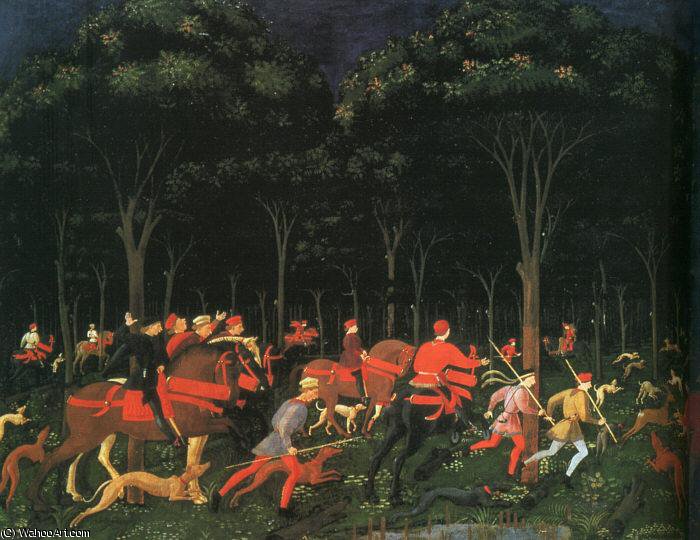
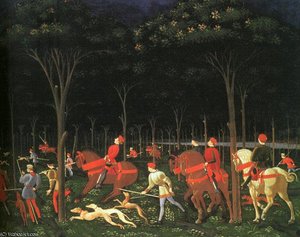
The hunt in the forest (left),1468, ashmolean museum

 Weiterlesen
Handgefertigte Ölreproduktion
Handgemaltes Ölgemälde auf Leinwand in Ihrer Wunschgröße und mit Rahmen, auf Bestellung von unseren Künstlern angefertigt. ( Druck bestellen Bild kaufen)




P118B $10

P118H $10

P118W $10

P438Z $10

P508JH $12

P508YH $12

P805H $10

P805Z $10

P919BZ $10

P919G $10

P919XJ $10

P959ZH $10

P968JZ $12

W106C $8

W218G $10

W218JH $8

W218Y $10

W307PJ $10

W316G $10

W316PJ $8

W316Y $10

W398PJ $8

W4111J $10

W500HY $15

W500JH $15

W692G $12

W849H $8

W940BG $15

W953PJ $8




Wählen Sie aus unseren vordefinierten Formaten, die den ursprünglichen Proportionen des Kunstwerks entsprechen.

Sie können Ihre eigenen Maße eingeben, um einen bestimmten Rahmen oder Platz auszufüllen. Wenn die gewählte Größe nicht den Proportionen des Originalbildes entspricht, werden wir das Kunstwerk entweder beschneiden oder das Gemälde durch zusätzliche, handgemalte Elemente erweitern. Ein digitales Mockup wird Ihnen zur Genehmigung zugesandt, bevor die Produktion beginnt.
Bitte beachten Sie, dass die Bildschirmvorschau nicht die tatsächliche Beschneidung oder Erweiterung widerspiegelt. Nur das Mockup zeigt die endgültige Komposition exakt an.
Obwohl Sondermaße verfügbar sind, empfehlen wir, eine Größe aus der vordefinierten Liste zu wählen, um die ursprünglichen Proportionen beizubehalten.
Nach der Bestellung wird das ArtsDot.com-Team dem Kunden Anweisungen per E-Mail zusenden und eine Mockup-Vorschau bereitstellen.
Weltweiter Versand () in nur 3 bis 4 Wochen statt der üblichen 5 Wochen. (7 September). Keine Kompromisse bei der Qualität.

Kostenloser weltweiter Expressversand

Hochwertige Leinenleinwand

Umfassender Versicherungsschutz beim Versand

Zollgebühren-Rückerstattungsgarantie

Garantie für exakte Farbtreue

100 Tage Rückgaberecht (nur bei Mängeln)

100% Geld-zurück-Garantie

Mengenrabatt verfügbar
 Die Glasoption ist nur für Größen unter 110 cm verfügbar.

The hunt in the forest (left),1468, ashmolean museum
Art der Reproduktion
Format der Reproduktion
-


Gesamtpreis
$ 263
A Visionary's Embrace of Space: Paolo Uccello’s “The Hunt in the Forest”
Paolo Uccello (1397 – 1475), born Paolo di Dono in Pratovecchio, Italy, stands as a singular beacon of artistic innovation during the Early Renaissance. More than simply a painter, he was a mathematician of pigment and perspective—a daring experimenter who fundamentally reshaped how artists represented reality on canvas. His legacy resides not just in his celebrated paintings but also in his pioneering approach to spatial illusion, cementing his place amongst the foremost figures shaping the aesthetic landscape of Florence and beyond.- Early Life & Training: Uccello’s formative years were steeped in Florentine tradition, nurtured under the mentorship of Lorenzo Ghiberti at the renowned Baptistery workshop. This exposure instilled a meticulous attention to detail and an understanding of sculptural principles that would profoundly influence his artistic vision.
- The Pursuit of Perspective: Uccello’s obsession with achieving accurate spatial representation—a concept largely absent from medieval art—fueled his groundbreaking work, “The Hunt in the Forest.” He meticulously studied mathematical treatises on optics and experimented relentlessly with techniques to create an illusion of depth that surpassed anything seen before.
Decoding the Canvas: Technique & Innovation
“The Hunt” isn’t merely a depiction of a medieval pastime; it's a meticulously crafted demonstration of Uccello’s revolutionary approach to painting. He employed a technique known as *polychromy*, layering multiple colors onto the canvas—a bold departure from the predominantly monochrome palettes favored by his contemporaries. Furthermore, he utilized *trompe l'oeil* – “fool the eye”—creating visual illusions that tricked the viewer into perceiving depth and perspective where none actually existed. The use of concentric circles radiating outwards from the center of the painting serves as a masterful tool for conveying spatial relationships, guiding the gaze across the scene with remarkable precision.Symbolism & Narrative Depth
Beyond its technical brilliance, “The Hunt” is laden with symbolic significance. The forest itself represents the unknown—the realm of primal instinct and spiritual contemplation. The hunters embody courage and determination, striving to conquer both physical obstacles and inner demons. Notably, Uccello incorporated a complex geometric framework into the composition—circles, squares, and triangles—representing harmony and order amidst chaos. These shapes aren’t merely decorative; they actively contribute to the painting's narrative structure, reinforcing its themes of ambition, discipline, and ultimately, triumph.Emotional Resonance & Artistic Legacy
“The Hunt in the Forest” transcends mere visual representation; it evokes a palpable sense of excitement and dynamism. The vibrant colors—particularly the rich reds and greens—capture the energy of the hunt, transporting the viewer back to a bygone era. Yet, beneath the surface thrill lies a deeper contemplation of human nature and our relationship with the natural world. Uccello’s masterpiece stands as an enduring testament to his artistic genius—a pivotal moment in the history of art that continues to inspire artists and captivate audiences centuries later. Its influence can be seen in subsequent Renaissance paintings, establishing Uccello as a cornerstone of Western artistic tradition.Ähnliche Kunstwerke
Über den Künstler
frühes Leben und Ausbildung
Paolo Uccello, geboren Paolo di Dono, war ein angesehener italienischer Maler und Mathematiker aus Florenz. Er war bekannt für seine bahnbrechende Arbeit an der visuellen Perspektive in der Kunst. Geboren im Jahr 1397, ist das frühe Leben von Uccello nicht gut dokumentiert, aber es ist bekannt, dass er ab 1412 bis 1416 die berühmte Bildhauerin Lorenzo Ghiberti als Lehrling hatte.Karriere und bedeutende Werke
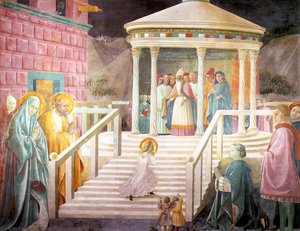
Uccellos Karriere erstreckte sich über vier Jahrzehnte, in denen er zahlreiche Kunstwerke produzierte, darunter Gemälde, Fresken und Altäre. Zu seinen bekanntesten Werken gehören:- Geburt der Jungfrau (Frührenaissance, Öl), ein Gemälde, das seine Verwendung der Perspektive zur Schaffung eines Gefühls von Tiefe demonstriert.
- Fresken San Miniato al Monte 03 (Frührenaissance, Öl), eine Fresko, die seine innovative Verwendung von Farbe und Licht demonstriert.
- Anbetung des Kindes (Frührenaissance, Öl), ein Gemälde mit einer detaillierten und naturalistischen Darstellung der menschlichen Form.
- Studio di Cavaliere (Frührenaissance, Öl), ein Selbstporträt, das seine selbstbewusste Verwendung autonomer Themen in der Kunst demonstriert.
Einfluss und Vermächtnis
Uccellos Werk hatte einen bedeutenden Einfluss auf die Entwicklung der Renaissancekunst. Seine Verwendung der Perspektive und sein Schwerpunkt auf die Schaffung eines Gefühls von Tiefe in seinen Gemälden beeinflussten zahlreiche Künstler, darunter Albrecht Dürer, der ebenfalls für seine bahnbrechende Arbeit im Bereich der Perspektive bekannt war. Wichtige Kunstbewegungen:- Die Frührenaissancekunstbewegung
- Italienische Renaissance
- Spätes Gotik
- Paolo Uccello (1397-1475)
- Albrecht Dürer (1471-1528)
- Lorenzo Ghiberti (1379-1455)
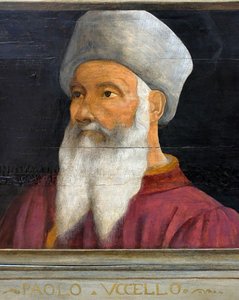
Paolo Uccello
1397 - 1475 , Italien
Kurzinfos
- Beeinflusste Künstler: ['Albrecht Dürer']
- Bemerkenswerte Werke:
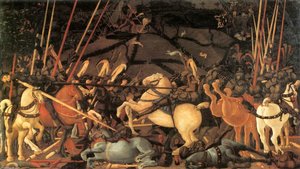
- Schlacht von San Romano
- Geburt der Jungfrau
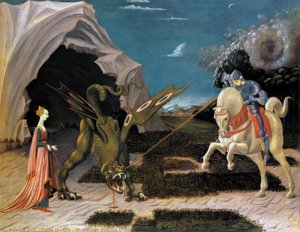
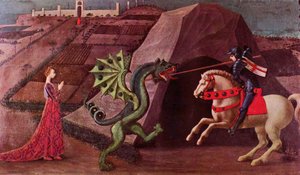
- St. Georg und Drache
- Geburtsdatum: 1397
- Geburtsort: Pratovecchio, Italien
- Künstlerische Bewegung: Frührenaissance
- Künstlerische Einflüsse:
- Lorenzo Ghiberti
- Donatello
- Nationalität: Italienisch
- Todatum: 1475
- Vollständiger Name: Paolo Uccello
Ähnliche Artikel

Romantische Landschaften: Die 10 Meisterwerke, die eine Epoche prägten | ArtsDot
Entdecken Sie die 10 Meisterwerke der Romantischen Landschaftsmalerei! Von Caspar David Friedrich bis Turner – erleben Sie die Kunst, Emotion & Natur. Hochwertige Reproduktionen auf ArtsDot.com

Evocations of Place: A Historical Journey Through Landscape Art
Explore the rich history of landscape art with ArtsDot. Discover renowned artists, movements like Impressionism & Romanticism, and expert guidance for collecting timeless pieces. Find your perfect serene escape today!
Paolo Uccello: Pionier der Perspektive und die Renaissance-Suche nach visueller Wahrheit
Entdecken Sie Paolo Uccello, einen Pionier der Renaissance und seine revolutionären Perspektivtechniken. Erfahren Sie mehr über sein Leben, ikonische Werke wie die 'Schlacht von San Romano' und seinen Einfluss auf die Kunstgeschichte.

John Constable: Die 25 Meisterwerke des englischen Landschaftsgenies – ArtsDot
Entdecken Sie die 25 Meisterwerke von John Constable! Erleben Sie englische Landschaftsmalerei vom Hay Wain bis zur Stour Valley. Hochwertige Reproduktionen & Kunst für Ihr Zuhause auf ArtsDot.com.
Evocations of Place: A Historical Journey Through Landscape Art
Explore the rich history of landscape art with ArtsDot. Discover renowned artists, movements like Impressionism & tonalism, and expert guidance for collecting timeless pieces. Find your perfect serene escape today!