 Vorschau anzeigen
 Versenden
 Teilen
 Details anzeigen

 Herunterladen
 Ähnliche Objekte
 Röntgenaufnahme
 Diashow
Stillleben mit Vase und Blumen
 Öl auf Leinwand
- Wandkunst
- Post-Impressionism
 1874
1874- Renaissance
 41.0 x 27.0 cm
 Weiterlesen
Handgefertigte Ölreproduktion
Handgemaltes Ölgemälde auf Leinwand in Ihrer Wunschgröße und mit Rahmen, auf Bestellung von unseren Künstlern angefertigt. ( Druck bestellen Bild kaufen)




P118B $10

P118H $10

P118W $10

P438Z $10

P508JH $12

P508YH $12

P805H $10

P805Z $10

P919BZ $10

P919G $10

P919XJ $10

P959ZH $10

P968JZ $12

W106C $8

W218G $10

W218JH $8

W218Y $10

W307PJ $10

W316G $10

W316PJ $8

W316Y $10

W398PJ $8

W4111J $10

W500HY $15

W500JH $15

W692G $12

W849H $8

W940BG $15

W953PJ $8




Wählen Sie aus unseren vordefinierten Formaten, die den ursprünglichen Proportionen des Kunstwerks entsprechen.

Sie können Ihre eigenen Maße eingeben, um einen bestimmten Rahmen oder Platz auszufüllen. Wenn die gewählte Größe nicht den Proportionen des Originalbildes entspricht, werden wir das Kunstwerk entweder beschneiden oder das Gemälde durch zusätzliche, handgemalte Elemente erweitern. Ein digitales Mockup wird Ihnen zur Genehmigung zugesandt, bevor die Produktion beginnt.
Bitte beachten Sie, dass die Bildschirmvorschau nicht die tatsächliche Beschneidung oder Erweiterung widerspiegelt. Nur das Mockup zeigt die endgültige Komposition exakt an.
Obwohl Sondermaße verfügbar sind, empfehlen wir, eine Größe aus der vordefinierten Liste zu wählen, um die ursprünglichen Proportionen beizubehalten.
Nach der Bestellung wird das ArtsDot.com-Team dem Kunden Anweisungen per E-Mail zusenden und eine Mockup-Vorschau bereitstellen.
Weltweiter Versand () in nur 3 bis 4 Wochen statt der üblichen 5 Wochen. (22 August). Keine Kompromisse bei der Qualität.

Kostenloser weltweiter Expressversand

Hochwertige Leinenleinwand

Umfassender Versicherungsschutz beim Versand

Zollgebühren-Rückerstattungsgarantie

Garantie für exakte Farbtreue

60 Tage Rückgaberecht (nur bei Mängeln)

100% Geld-zurück-Garantie

Mengenrabatt verfügbar
 Die Glasoption ist nur für Größen unter 110 cm verfügbar.

Stillleben mit Vase und Blumen
Art der Reproduktion
Format der Reproduktion
-


Gesamtpreis
$ 263
Beschreibung des Kunstwerks
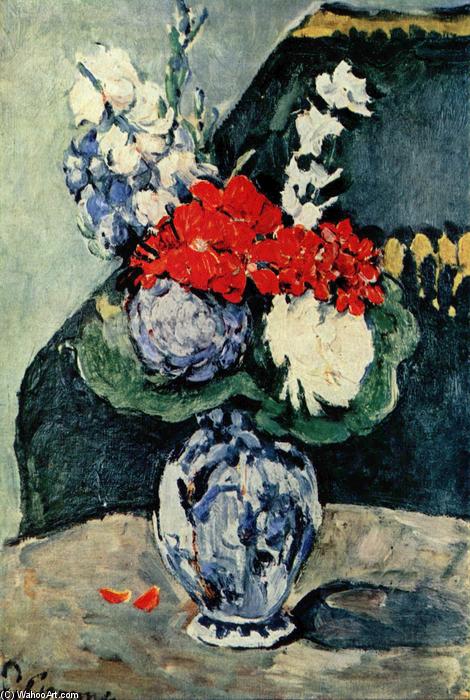
Still life, Delft vase with flowers
Paul Cézanne’s “Still Life, Delft Vase with Flowers,” created in 1874, stands as a cornerstone of Post-Impressionism and an enduring testament to the artist's revolutionary vision. More than just a depiction of commonplace objects—a Delft vase brimming with crimson poppies and violet blossoms resting upon a simple wooden table—it embodies Cézanne’s profound engagement with capturing essence rather than mere representation, marking a decisive break from Impressionistic optical realism. Measuring 41 x 27 cm, the painting exemplifies Cézanne's meticulous approach to transforming ordinary subjects into canvases brimming with palpable emotion and intellectual depth.Composition and Color Palette
The brilliance of “Still Life” lies in its deceptively austere composition. Cézanne eschewed traditional perspectival conventions, prioritizing balance and solidity over illusionistic accuracy. The Delft vase dominates the scene, anchoring the eye while simultaneously radiating a quiet dignity. Alongside it sits a bowl—a subtle counterpoint to the vase’s assertive form—containing complementary blooms that heighten visual interest. Cézanne's masterful use of color is equally transformative. He abandons Impressionist pastel hues in favor of bold, earthy tones—primarily ochre and umber—that imbue the painting with an atmosphere of stillness and contemplation. The vibrant reds and purples of the flowers contrast dramatically against the muted green background, creating a dynamic interplay of light and shadow that draws the viewer into the heart of Cézanne’s artistic endeavor.Artistic Significance
Cézanne's exploration of form and color fundamentally reshaped the trajectory of modern art. He meticulously dissected objects—reducing them to geometric primitives—and reconstructing them on canvas with painstaking precision. This technique, foreshadowing Cubism, challenged established aesthetic ideals and paved the way for subsequent artistic movements. “Still Life” isn’t merely a beautiful image; it's an intellectual statement about how Cézanne perceived the world around him—a conviction that art should strive to convey not just what is seen but also what is felt. His influence extends far beyond painting, impacting sculpture and architecture alike.Context within Art History
The history of still life stretches back centuries, yet Cézanne’s contribution distinguishes itself through its uncompromising commitment to expressive abstraction. Prior artists often sought to faithfully reproduce visual impressions—capturing fleeting moments of light and color—whereas Cézanne prioritized conveying the underlying structure of objects. As discussed in scholarly analyses of art history, Cézanne's work represents a pivotal juncture between Impressionism’s shimmering surfaces and Cubism’s fragmented planes. He anticipated the radical innovations of Picasso and Braque, demonstrating that artistic progress could be achieved through rigorous conceptual exploration rather than slavish adherence to convention.Relevance in Contemporary Art Market
Today, “Still Life, Delft Vase with Flowers” continues to captivate collectors and inspire artists worldwide. For those desiring to experience Cézanne’s masterpiece firsthand—without the expense of original artwork—ArtsDot offers exceptional reproductions crafted by skilled artisans using archival pigments and techniques. These meticulously executed prints allow admirers of Cézanne's vision to infuse their homes with a piece of art history, celebrating both its aesthetic beauty and intellectual legacy. Explore more at ArtsDot.Ähnliche Kunstwerke
Über den Künstler
frühes Leben und Einflüsse
Paul Cézanne, ein französischer Post-Impressionist-Maler, wurde am 19. Januar 1839 in Aix-en-Provence, Frankreich, geboren. Sein frühes Leben war geprägt von einer starken Verbindung zu seiner Familie’s Bankgeschäft, das ihm finanzielle Sicherheit verschaffte. Dies ermöglichte es ihm, sich ohne finanziellen Druck auf seine künstlerischen Bestrebungen zu konzentrieren. Les Nabis, Neo-Impressionismus und Symbolismus beeinflussten Cézannes frühe Arbeit, die sich durch seinen Schwerpunkt auf geometrische Formen und eine reduzierte Farbpalette auszeichnete. Sein Interesse an den Werken von Paul Gauguin und Georges Seurat festigte seinen Post-Impressionismusstil.Künstlerischer Stil und Techniken
Cézannes innovative Verwendung von Farbflächen und kleinen, sich wiederholenden Pinselstrichen schuf komplexe Felder, die seine intensive Beschäftigung mit den Motiven widerspiegelten. Sein oft explorativer Ansatz in der Kunst führte zur Entwicklung einer neuen bildlichen Sprache, die die zugrunde liegende Struktur von Objekten in einer Komposition betonte.- Schlüsselmerkmale:
- Geometrische Formen und Facetten
- Reduzierte Farbpalette
- Betonung der konstruktiven Essenz der physischen Welt
- Mehrere Perspektiven und Simultaneität
- Einflussreiche Werke:
- The Pond at Jas de Bouffan (1880)
- Portrait of Emile Zola (1866)
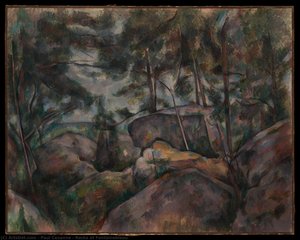
- Wald (1892)
- Museen mit Cézannes Werken:
- Musée Marmottan Monet in Paris, Frankreich
- The Museum of Fine Arts in Houston, Vereinigte Staaten
Vermächtnis und Einfluss
Cézannes bahnbrechende Arbeit im Post-Impressionismus ebnete den Weg für verschiedene Avantgarde-Bewegungen, darunter Kubismus, Fauvismus und Surrealismus. Sein Einfluss ist in den Werken von Pablo Picasso, Henri Matisse und Georges Braque zu sehen. Cézannes Vermächtnis inspiriert weiterhin Künstler und Kunstinteressierte gleichermaßen und festigt seinen Platz als eine zentrale Figur in der Geschichte der modernen Kunst.- Verwandte Kunstbewegungen:
- Betrachten Sie Cézannes Werke:
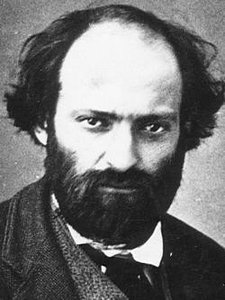
Paul Cézanne
1839 - 1906 , Frankreich
Kurzinfos
- Beeinflusste Künstler:
- Paul Gauguin
- Georges Seurat
- Bemerkenswerte Werke:
- Der Teich in Jas de Bouffan
- Porträt von Émile Zola
- Wald
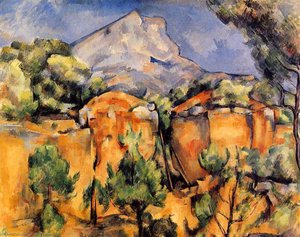
- Mont Sainte-Victoire
- Geburtsdatum: 19. Januar 1839
- Geburtsort: Aix-en-Provence, Frankreich
- Künstlerische Bewegung: Postimpressionismus
- Nationalität: Französisch
- Sterbedatum: 1906
- Vollständiger Name: Paul Cézanne
- Von Ihm Beeinflusste Künstler:
- Pablo Picasso
- Henri Matisse
- Georges Braque
Ähnliche Artikel

Paul Cézanne: Die 25 Meisterwerke des Impressionismus | ArtsDot
Entdecken Sie die 25 Meisterwerke von Paul Cézanne! Tauchen Sie ein in die Welt des Impressionismus und Postimpressionismus. Erfahren Sie mehr über seine Stillleben, Landschaften & berühmten Gemälde – jetzt hochwertige Kunstdrucke auf ArtsDot.com.
Paul Klee: Die 25 Meisterwerke des Abstrakten – Kunst für Ihr Zuhause | ArtsDot
Entdecken Sie die 25 Meisterwerke von Paul Klee! Tauchen Sie ein in seine abstrakte Welt, voller Expressionismus und Bauhaus-Einflüsse. Hochwertige Kunst für Ihr Zuhause – jetzt bei ArtsDot entdecken!
Jenseits des Impressionismus: Die emotionale Tiefe der postimpressionistischen Malerei
Entdecken Sie die emotionale Tiefe des Postimpressionismus! Analysieren Sie Cézanne, van Gogh, Gauguin & Seurat. Expertenwissen über Kunstgeschichte und Einfluss auf die Moderne.
Beyond Impressionism: Exploring Emotional Depth & Formal Innovation in Post-Impressionist Art
Explore the profound emotional depth & formal innovations of Post-Impressionism with our expert guide. Discover Cézanne, Van Gogh, Gauguin & more. Learn about art history, collecting, and investing in this pivotal movement.
Silent Narratives: Exploring the Enduring Appeal of Still Life Painting Across Centuries
Explore the rich history of still life painting with ArtsDot. Discover Dutch Masters, decode vanitas symbolism & learn about collecting timeless art. Expert insights and museum-quality reproductions.