


 In echtem Maßstab anzeigen
 Versenden als Grußkarte
 Teilen
 Details anzeigen

 Herunterladen
 Ähnliche Objekte
 Röntgenaufnahme
 Diashow
 Besucherstatistiken
The Battle of Love


 Mehr anzeigen
Erwerben Sie ein hochauflösendes, optimiertes digitales Bild, das der Online-Vorschau weit überlegen ist.
Jede Datei wird von unseren hauseigenen Spezialisten mit modernsten Werkzeugen und fachmännischer manueller Retusche sorgfältig vorbereitet. Wir stellen sicher, dass jedes Bild eine außergewöhnliche Klarheit, präzise Farbgenauigkeit und feinste Details aufweist.
Die endgültige Datei wird innerhalb von 72 Stunden per E-Mail zugestellt und ist für den sofortigen Einsatz in professionellen, redaktionellen und Druckumgebungen optimiert. Es handelt sich um dieselbe Qualität, der führende Designstudios, Verlage und Galerien vertrauen.
Digitales Bild
Laden Sie eine hochauflösende Datei für die persönliche Präsentation, den Druck und kreative Projekte herunter. ( Zum Druck wechseln Handgemalte Reproduktion kaufen)
In jeder Bestellung digitaler Bilder enthalten
Professionelle digitale Bereitstellung, garantiert
Wenn Sie sich für ArtsDot.com entscheiden, erhalten Sie nicht nur ein Bild – Sie erhalten ein professionell aufbereitetes digitales Kunstwerk, das mit höchster Präzision erstellt und durch eine Zufriedenheitsgarantie abgesichert wird. Hier ist alles, was automatisch mit Ihrer Bestellung geliefert wird:

Schnelle E-Mail-Zustellung
Ihre hochauflösende digitale Bilddatei wird Ihnen innerhalb von 72 Stunden nach der Bestellung per E-Mail zugestellt – bereit zur sofortigen Verwendung.

KI-optimierte digitale Datei
Ihre Kunstwerke werden professionell mithilfe fortschrittlicher KI-Tools und manueller Bearbeitung optimiert, um maximale Detailtreue, Klarheit und Farbgenauigkeit zu gewährleisten.

Kostenloser lebenslanger Neudruckservice
Datei versehentlich gelöscht oder verloren? Keine Sorge – wir senden sie Ihnen jederzeit kostenlos erneut zu.

Keine Einfuhrgebühren – jemals
Genießen Sie Ihr Kunstwerk sofort ohne Zollgebühren, Einfuhrabgaben oder Versandkosten – digitale Downloads sind immer steuerfrei.

Garantierte Farbtreue
Wir garantieren, dass Ihr digitales Bild mithilfe professioneller Werkzeuge und Farbmanagement die Originalfarben so präzise wie möglich wiedergibt.

100-Tage-Zufriedenheitsgarantie
Sollten Sie mit Ihrem digitalen Bild nicht zufrieden sein, werden wir es überarbeiten oder 100% innerhalb von 100 Tagen erstatten – ohne Wenn und Aber.

100% Geld-zurück-Garantie
Nicht zufrieden? Erhalten Sie innerhalb von 100 Tagen nach Erhalt Ihrer digitalen Datei eine vollständige Rückerstattung – ohne Wenn und Aber.

Rabatte bei Großbestellungen
3 Bilder kaufen, 10% sparen – 5 Bilder kaufen, 15% sparen – Ab 10 Bildern 20% sparen. Ideal für kreative Projekte, Galerien und Agenturen.
A Frenzied Embrace: Paul Cézanne’s “The Battle of Love”
Paul Cézanne's "The Battle of Love," painted in 1876, isn’t merely a mythological scene; it’s a visceral embodiment of primal desire and the chaotic dance between love and conflict. This watercolor on cardboard, now residing in a private collection, immediately captivates with its dynamic energy – a swirling vortex of figures caught in an intense, almost violent embrace. Far removed from the serene depictions of classical mythology, Cézanne presents a raw, earthy drama, hinting at a struggle both physical and emotional, rendered with the loose, expressive brushstrokes that would become hallmarks of his Post-Impressionist style.
The painting’s genesis lies in a fascination with Venetian art, particularly the exuberant bacchanals of Titian and Poussin. However, Cézanne doesn't simply replicate these scenes; he transforms them, injecting a potent dose of modern anxiety and a profound sense of unease. The figures aren’t idealized gods or goddesses but rather individuals caught in a moment of intense passion – a struggle that feels both exhilarating and threatening. Notice the deliberate blurring of forms, the way bodies seem to merge with the landscape, suggesting an inextricable connection between humanity and nature. This technique, influenced by his studies of Japanese prints, anticipates the fragmented perspectives that would later define Cubism.
Technique and Materiality: A Watercolor Tempest
Cézanne’s masterful use of watercolor is crucial to understanding the painting's impact. The medium lends itself beautifully to capturing movement and spontaneity – the brushstrokes are visible, almost frantic, conveying a sense of urgency and unrest. He employs a layering technique, building up color gradually, creating luminous washes that shimmer with an inner light. The choice of cardboard as the support further contributes to the painting’s tactile quality; it feels slightly rough beneath the surface, grounding the ethereal figures in a tangible reality.
The palette is dominated by earthy tones – spring greens, sky blues, straw yellows, and ivory whites – creating a sense of both vibrancy and melancholy. The use of dark gray strokes near the lower right corner introduces an element of shadow and foreboding, suggesting that this idyllic scene hides a darker undercurrent. It’s a deliberate departure from the bright, optimistic colors often associated with Impressionism, reflecting Cézanne's growing interest in exploring the complexities of human emotion.
Decoding the Myth: Desire, Conflict, and the Unconscious
The precise narrative of “The Battle of Love” remains deliberately ambiguous. While rooted in classical mythology – potentially referencing themes of Dionysus and Ariadne or other tales of ecstatic love and violent encounters – Cézanne strips away the traditional allegorical elements, leaving us with a primal scene of raw desire. The figures are not clearly defined; their faces are often obscured, suggesting that they represent universal archetypes rather than individual characters. The central pair, locked in an embrace, embodies this tension between love and conflict, while the other figures seem to be caught up in the maelstrom of emotion.
Some scholars have interpreted the painting as a metaphor for the artist’s own struggles with love and creativity. Cézanne was notoriously private about his personal life, but it's believed that he experienced periods of intense emotional turmoil. “The Battle of Love” could be seen as an exploration of these inner conflicts – a visual representation of the passionate, often destructive forces that drive human behavior.
A Legacy of Fragmentation: Influence and Inspiration
“The Battle of Love” stands as a pivotal work in Cézanne’s artistic development, bridging the gap between Impressionism and Cubism. His innovative use of perspective, his emphasis on form over representation, and his exploration of emotional intensity paved the way for future generations of artists. Picasso himself famously declared that Cézanne “is the father of us all,” recognizing the profound influence he had on the development of modern art.
Today, "The Battle of Love" continues to resonate with viewers, inviting them to contemplate the complexities of human relationships and the enduring power of myth. It’s a painting that demands attention, challenging our perceptions of beauty and prompting us to delve deeper into the hidden depths of the human psyche.
Ähnliche Kunstwerke
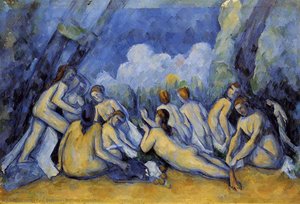
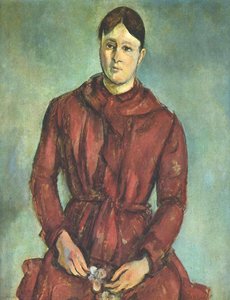
Künstlerbiografie
frühes Leben und Einflüsse
Paul Cézanne, ein französischer Post-Impressionist-Maler, wurde am 19. Januar 1839 in Aix-en-Provence, Frankreich, geboren. Sein frühes Leben war geprägt von einer starken Verbindung zu seiner Familie’s Bankgeschäft, das ihm finanzielle Sicherheit verschaffte. Dies ermöglichte es ihm, sich ohne finanziellen Druck auf seine künstlerischen Bestrebungen zu konzentrieren. Les Nabis, Neo-Impressionismus und Symbolismus beeinflussten Cézannes frühe Arbeit, die sich durch seinen Schwerpunkt auf geometrische Formen und eine reduzierte Farbpalette auszeichnete. Sein Interesse an den Werken von Paul Gauguin und Georges Seurat festigte seinen Post-Impressionismusstil.Künstlerischer Stil und Techniken
Cézannes innovative Verwendung von Farbflächen und kleinen, sich wiederholenden Pinselstrichen schuf komplexe Felder, die seine intensive Beschäftigung mit den Motiven widerspiegelten. Sein oft explorativer Ansatz in der Kunst führte zur Entwicklung einer neuen bildlichen Sprache, die die zugrunde liegende Struktur von Objekten in einer Komposition betonte.- Schlüsselmerkmale:
- Geometrische Formen und Facetten
- Reduzierte Farbpalette
- Betonung der konstruktiven Essenz der physischen Welt
- Mehrere Perspektiven und Simultaneität
- Einflussreiche Werke:
- The Pond at Jas de Bouffan (1880)
- Portrait of Emile Zola (1866)
- Wald (1892)
- Museen mit Cézannes Werken:
- Musée Marmottan Monet in Paris, Frankreich
- The Museum of Fine Arts in Houston, Vereinigte Staaten
Vermächtnis und Einfluss
Cézannes bahnbrechende Arbeit im Post-Impressionismus ebnete den Weg für verschiedene Avantgarde-Bewegungen, darunter Kubismus, Fauvismus und Surrealismus. Sein Einfluss ist in den Werken von Pablo Picasso, Henri Matisse und Georges Braque zu sehen. Cézannes Vermächtnis inspiriert weiterhin Künstler und Kunstinteressierte gleichermaßen und festigt seinen Platz als eine zentrale Figur in der Geschichte der modernen Kunst.- Verwandte Kunstbewegungen:
- Betrachten Sie Cézannes Werke:
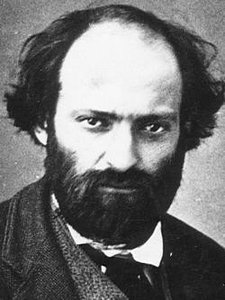
Paul Cézanne
1839 - 1906 , Frankreich
Kurzprofil
- Beeinflusste Künstler:
- Paul Gauguin
- Georges Seurat
- Bemerkenswerte Werke:
- Der Teich in Jas de Bouffan
- Porträt von Émile Zola
- Wald
- Mont Sainte-Victoire
- Geburtsdatum: 19. Januar 1839
- Geburtsort: Aix-en-Provence, Frankreich
- Künstlerische Bewegung: Postimpressionismus
- Nationalität: Französisch
- Sterbedatum: 1906
- Vollständiger Name: Paul Cézanne
- Von Ihm Beeinflusste Künstler:
- Pablo Picasso
- Henri Matisse
- Georges Braque