 Vorschau anzeigen
 Versenden
 Teilen
 Details anzeigen

 Herunterladen
 Ähnliche Objekte
 Röntgenaufnahme
 Diashow
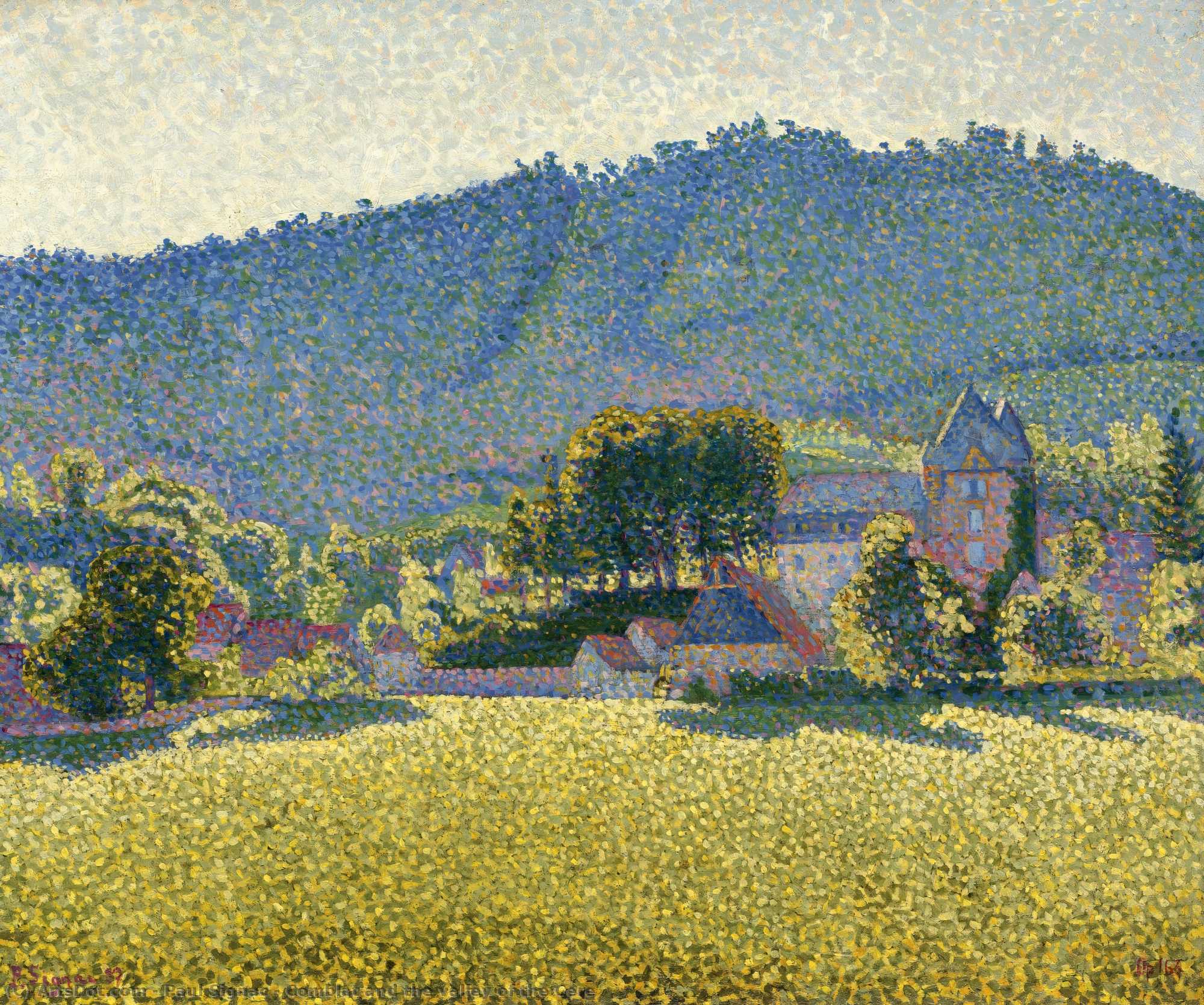
Comblat and the valley of the Cere


 Weiterlesen
Handgefertigte Ölreproduktion
Handgemaltes Ölgemälde auf Leinwand in Ihrer Wunschgröße und mit Rahmen, auf Bestellung von unseren Künstlern angefertigt. ( Druck bestellen Bild kaufen)




P118B $10

P118H $10

P118W $10

P438Z $10

P508JH $12

P508YH $12

P805H $10

P805Z $10

P919BZ $10

P919G $10

P919XJ $10

P959ZH $10

P968JZ $12

W106C $8

W218G $10

W218JH $8

W218Y $10

W307PJ $10

W316G $10

W316PJ $8

W316Y $10

W398PJ $8

W4111J $10

W500HY $15

W500JH $15

W692G $12

W849H $8

W940BG $15

W953PJ $8




Wählen Sie aus unseren vordefinierten Formaten, die den ursprünglichen Proportionen des Kunstwerks entsprechen.

Sie können Ihre eigenen Maße eingeben, um einen bestimmten Rahmen oder Platz auszufüllen. Wenn die gewählte Größe nicht den Proportionen des Originalbildes entspricht, werden wir das Kunstwerk entweder beschneiden oder das Gemälde durch zusätzliche, handgemalte Elemente erweitern. Ein digitales Mockup wird Ihnen zur Genehmigung zugesandt, bevor die Produktion beginnt.
Bitte beachten Sie, dass die Bildschirmvorschau nicht die tatsächliche Beschneidung oder Erweiterung widerspiegelt. Nur das Mockup zeigt die endgültige Komposition exakt an.
Obwohl Sondermaße verfügbar sind, empfehlen wir, eine Größe aus der vordefinierten Liste zu wählen, um die ursprünglichen Proportionen beizubehalten.
Nach der Bestellung wird das ArtsDot.com-Team dem Kunden Anweisungen per E-Mail zusenden und eine Mockup-Vorschau bereitstellen.
Weltweiter Versand () in nur 3 bis 4 Wochen statt der üblichen 5 Wochen. (25 August). Keine Kompromisse bei der Qualität.

Kostenloser weltweiter Expressversand

Hochwertige Leinenleinwand

Umfassender Versicherungsschutz beim Versand

Zollgebühren-Rückerstattungsgarantie

Garantie für exakte Farbtreue

60 Tage Rückgaberecht (nur bei Mängeln)

100% Geld-zurück-Garantie

Mengenrabatt verfügbar
 Die Glasoption ist nur für Größen unter 110 cm verfügbar.

Comblat and the valley of the Cere
Art der Reproduktion
Format der Reproduktion
-


Gesamtpreis
$ 263
Beschreibung des Kunstwerks
Paul Signac’s ‘Comblat and the Valley of the Cere’: A Symphony of Light and Color
Paul Signac's "Comblat and the Valley of the Cere" is more than just a depiction of a rural French landscape; it’s a meticulously constructed meditation on light, color, and the very principles of perception. Painted in 1889, this work exemplifies the artist’s pivotal role in the development of Neo-Impressionism, a movement that sought to revolutionize painting through scientific rigor and an intensely focused exploration of optical mixing. The scene unfolds with remarkable clarity – a charming village nestled within the embrace of the Cere Valley, its houses clustered around a central dwelling, all framed by the imposing presence of distant mountains. A solitary horse adds a touch of pastoral tranquility, suggesting a timeless connection between humanity and nature.
The Pointillist Technique: Decoding Signac’s Vision
- Optical Mixing: At the heart of "Comblat" lies Signac's signature technique – Pointillism. Rather than blending colors on a palette, he applied tiny, distinct dots of pure color directly onto the canvas. These individual points, when viewed from a distance, create an illusion of blended hues through optical mixing, a phenomenon meticulously studied by Signac and his contemporaries.
- Scientific Precision: This method wasn't simply a stylistic choice; it was rooted in scientific principles. Signac, influenced by Seurat’s research into color theory, believed that the human eye could more effectively perceive and synthesize colors when presented as individual points than when mixed conventionally.
- Texture and Depth: The deliberate application of these small dots creates a unique textural quality, adding to the painting's visual complexity and contributing significantly to its sense of depth and atmosphere.
Historical Context and Neo-Impressionism’s Influence
"Comblat" was created during a period of intense artistic experimentation in France. Following the Impressionists’ focus on capturing fleeting moments of light, Signac and Seurat sought to build upon this foundation with a more systematic approach. Neo-Impressionism emerged as a reaction against the perceived subjectivity of Impressionism, advocating for an objective study of color and its effects. This painting demonstrates the movement's commitment to scientific observation and precise execution, reflecting a desire to create art based on demonstrable principles rather than purely subjective impressions. The work’s subject matter – a quintessential French village scene – further aligns with the Neo-Impressionist interest in depicting familiar landscapes with heightened visual clarity.
Symbolism and Emotional Resonance
Beyond its technical brilliance, "Comblat" possesses a quiet emotional resonance. The serene depiction of rural life evokes a sense of peace and tranquility, inviting the viewer to contemplate the beauty of the natural world. The warm tones – predominantly ochres, reds, and yellows – contribute to this feeling of warmth and comfort, while the carefully rendered details—the texture of the houses, the dappled light filtering through the trees—add to the painting’s immersive quality. The inclusion of the horse subtly reinforces the theme of harmony between man and nature, a recurring motif in Signac's work.
A Timeless Masterpiece – Reproduction Options
ArtsDot offers meticulously crafted hand-painted reproductions of Paul Signac’s “Comblat and the Valley of the Cere,” ensuring that you experience the full impact of this remarkable artwork. Our skilled artisans employ traditional techniques to faithfully recreate Signac's Pointillist style, capturing every nuance of color and texture. Whether for your home or office, a reproduction of this iconic painting will undoubtedly become a focal point, adding a touch of artistic sophistication and intellectual depth to any space.
Ähnliche Kunstwerke
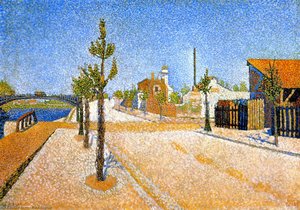
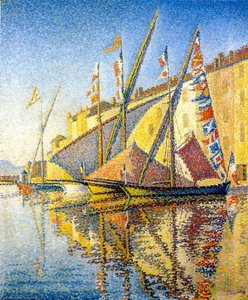
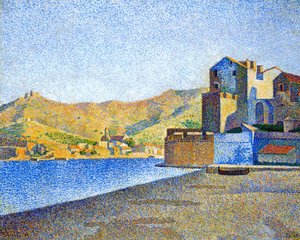
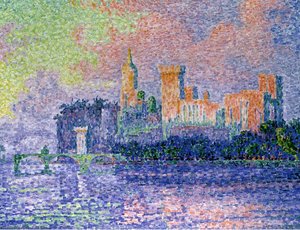
Über den Künstler
Frühe Jahre und Ausbildung
Paul Victor Jules Signac, ein französischer Neo-Impressionistischer Maler, wurde am 11. November 1863 in Paris geboren. Ursprünglich absolvierte er eine Ausbildung zum Architekten, entschied sich aber im Alter von 18 Jahren für die Malerei. Dieser Entschluss wurde durch eine Ausstellung der Werke von Claude Monet beeinflusst.Künstlerischer Stil und Einflüsse
Signacs Stil zeichnete sich durch die Verwendung kleiner Punkte reiner Farbe aus, die er nebeneinander stellte, um ein Gefühl für Tiefe und Licht zu erzeugen. Diese Technik, bekannt als Pointillismus, wurde in Zusammenarbeit mit Georges Seurat entwickelt. Signacs Arbeit wurde auch von seinen Reisen entlang der europäischen Küste beeinflusst, wo er die Schönheit von Hafenstädten in Aquarellen festhielt.Wichtige Werke und Verbindungen
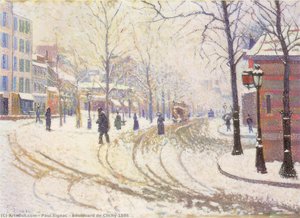
* Boulevard de Clichy (1886): Ein postimpressionistisches Werk, das Signacs akribischen Stil zeigt. * Der rote Bojen, Saint-Tropez (1895): Ein lebhaftes marines Gemälde mit einer rot-orangenen Boje vor blauem Hintergrund. * Gründungsmitglied der Société des Artistes Indépendants, die jährliche Ausstellungen organisierte, die Trends in der frühen 20. Jahrhundert Kunst prägten.Vermächtnis und Einfluss
Signacs Arbeit hatte einen tiefgreifenden Einfluss auf die Entwicklung des Fauvismus und beeinflusste Künstler wie Henri Matisse und André Derain. Als Präsident der Société des Artistes Indépendants unterstützte Signac jüngere Künstler und stellte kontroverse Werke von den Fauves und Kubisten aus.- Erleben Sie Paul Signacs „Boulevard de Clichy 1886“ – eine ruhige Pointillist-Winterszene in Paris. Bewundern Sie seine kühle Farbpalette und zeitlose Schönheit. Hochwertige Reproduktionen erhältlich.
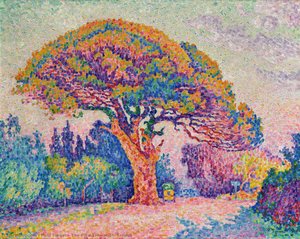
- Entdecken Sie Paul Signacs „Der Kiefernbaum in Saint-Tropez“, ein lebendiger Neo-Impressionistischer Meisterwerk! Erkunden Sie Pointillismus, mediterrane Schönheit und zeitlose Anziehungskraft. Perfekt für Kunstliebhaber und Sammler.
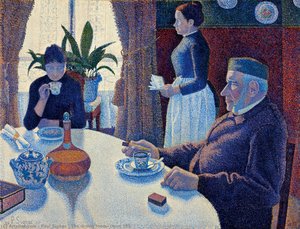
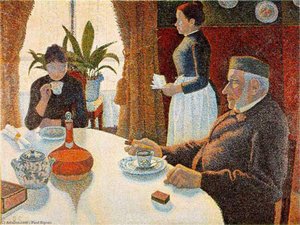
- Entdecken Sie Paul Signacs 'Frühstück (Die Speisekammer)' – ein lebendiger Neo-Impressionistischer Meisterwerk! Erkunden Sie Pointillismus, Belle Époque Charme und zeitlose Schönheit. Perfekt für Kunstsammler.
- Erleben Sie Signacs 'Der Leuchtturm, Saint-Tropez'! Dieses lebendige Postimpressionistenwerk fängt die Schönheit der französischen Küste mit dem schimmernden Licht und den Farben des Pointillismus ein.
- Entdecken Sie Gustav Klimts 'Schloss Kammer am Attersee'! Eine friedliche Symbolistische Landschaft mit leuchtenden Farben und geometrischen Mustern. Besorgen Sie sich heute eine handgemalte Ölmalerei Reproduktion!
Wichtige Daten
* 11. November 1863: Geburt in Paris * 1884: Mitbegründung der Société des Artistes Indépendants * 15. August 1935: Verstarb im Alter von 71 Jahren. Erleben Sie das künstlerische Genie von Paul Signac durch seine fesselnden Werke, die auf ArtsDot.com erkundet werden können.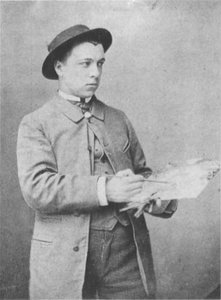
Paul Signac
1863 - 1935 , Frankreich
Kurzinfos
- Beeinflusste Künstler:
- Henri Matisse
- André Derain
- Bemerkenswerte Werke:
- Boulevard de Clichy (1886)
- Der rote Boje, Saint-Tropez
- Frühstück (Die Speisekammer)
- Einflussreiche Kunstrichtung: Fauvismus
- Geburtsdatum: 11. November 1863
- Geburtsort: Paris, Frankreich
- Künstlerische Bewegung: Neo-Impressionismus
- Nationalität: Französisch
- Sterbedatum: 15. August 1935
- Vollständiger Name: Paul Signac
Ähnliche Artikel

Giclée Prints: Archival Quality & Aesthetic Nuances for the Discerning Collector
Explore the world of giclée prints with ArtsDot. Learn about archival quality, aesthetic nuances & investment potential. Expert guidance for discerning art collectors seeking museum-quality reproductions and lasting value.

The Enduring Legacy of Fine Art Prints: Technique, History & Aesthetic Impact
Explore the rich history & techniques of fine art prints. Discover investment potential, assess authenticity, and learn how to preserve your collection with expert guidance. Trusted insights for discerning collectors.

Echoes of Time: Exploring the Enduring Appeal & Historical Context of Vintage Art Prints
Explore the captivating world of vintage art prints! Discover their history, collecting tips & enduring appeal. Expert insights on chromolithography and building a legacy collection with ArtsDot.

Impressionismus Meisterwerke: Die Top 10 Kunstwerke für Ihr Zuhause | ArtsDot
Entdecken Sie die Top 10 Meisterwerke des Impressionismus! Von Monet bis Renoir – erfahren Sie die Geschichten hinter berühmten Gemälden, Techniken & Farben. Hochwertige Kunstdrucke auf ArtsDot.com.
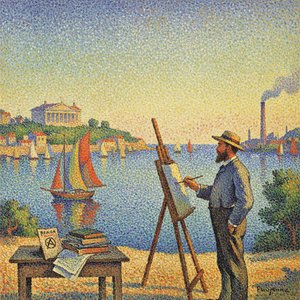
Paul Signac: Pointillismus, Politik und die Suche nach Harmonie in der modernen Kunst
Entdecken Sie Paul Signacs revolutionären Pointillismus! Erfahren Sie mehr über die wissenschaftlichen Grundlagen, politischen Engagements und das künstlerische Vermächtnis dieses Meisters des Neo-Impressionismus. Jetzt lesen!