

 Vorschau anzeigen
 Versenden
 Teilen
 Details anzeigen

 Herunterladen
 Ähnliche Objekte
 Röntgenaufnahme
 Diashow
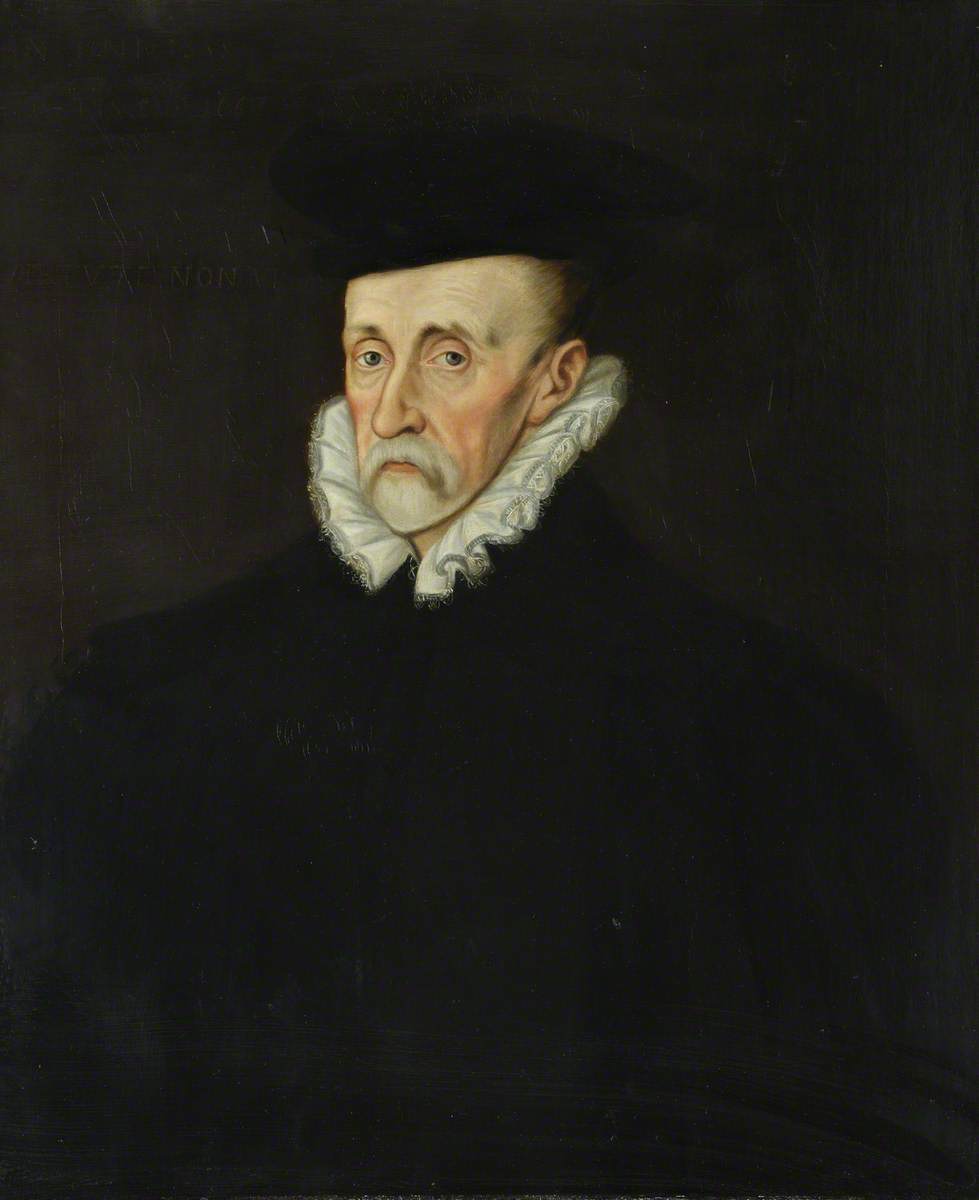
Sir Walter Mildmay (c.1522–1589), Fellow Commoner, Royal Servant, Chancellor of the Exchequer (1566–1589), Founder of Emmanuel College (1584)
 1904
1904 76.0 x 60.0 cm
 Christ's College
 Weiterlesen
Erwerben Sie ein hochauflösendes, optimiertes digitales Bild, das der Online-Vorschau weit überlegen ist.
Jede Datei wird von unseren hauseigenen Spezialisten mit modernsten Werkzeugen und fachmännischer manueller Retusche sorgfältig vorbereitet. Wir stellen sicher, dass jedes Bild eine außergewöhnliche Klarheit, präzise Farbgenauigkeit und feinste Details aufweist.
Die endgültige Datei wird innerhalb von 72 Stunden per E-Mail zugestellt und ist für den sofortigen Einsatz in professionellen, redaktionellen und Druckumgebungen optimiert. Es handelt sich um dieselbe Qualität, der führende Designstudios, Verlage und Galerien vertrauen.
Digitales Bild
Laden Sie eine hochauflösende Datei für die persönliche Präsentation, den Druck und kreative Projekte herunter. ( Druck bestellen Handgemalte Reproduktion bestellen)
In jeder Bestellung digitaler Bilder enthalten
Professionelle digitale Bereitstellung, garantiert
Wenn Sie sich für ArtsDot.com entscheiden, erhalten Sie nicht nur ein Bild – Sie erhalten ein professionell aufbereitetes digitales Kunstwerk, das mit höchster Präzision erstellt und durch eine Zufriedenheitsgarantie abgesichert wird. Hier ist alles, was automatisch mit Ihrer Bestellung geliefert wird:

Schnelle E-Mail-Zustellung
Ihre hochauflösende digitale Bilddatei wird Ihnen innerhalb von 72 Stunden nach der Bestellung per E-Mail zugestellt – bereit zur sofortigen Verwendung.

KI-optimierte digitale Datei
Ihre Kunstwerke werden professionell mithilfe fortschrittlicher KI-Tools und manueller Bearbeitung optimiert, um maximale Detailtreue, Klarheit und Farbgenauigkeit zu gewährleisten.

Lebenslanger kostenloser Neudruckservice
Datei versehentlich gelöscht oder verloren? Keine Sorge – wir senden sie Ihnen jederzeit kostenlos erneut zu.

Keine Einfuhrgebühren – jemals
Genießen Sie Ihr Kunstwerk sofort ohne Zollgebühren, Einfuhrabgaben oder Versandkosten – digitale Downloads sind immer steuerfrei.

Garantierte Farbtreue
Wir garantieren, dass Ihr digitales Bild mithilfe professioneller Werkzeuge und Farbmanagement die Originalfarben so präzise wie möglich wiedergibt.

60-Tage-Zufriedenheitsgarantie
Sollten Sie mit Ihrem digitalen Bild nicht zufrieden sein, werden wir es überarbeiten oder Ihnen innerhalb von 60 Tagen 100% erstatten – ohne Wenn und Aber.

100% Geld-zurück-Garantie
Nicht zufrieden? Erhalten Sie innerhalb von 60 Tagen nach Erhalt Ihrer digitalen Datei eine vollständige Rückerstattung – ohne Angabe von Gründen.

Rabatte bei Großbestellungen
3 Bilder kaufen, 10% sparen – 5 Bilder kaufen, 15% sparen – Ab 10 Bildern 20% sparen. Ideal für kreative Projekte, Galerien und Agenturen.
Ähnliche Kunstwerke








Biografie des Künstlers
A Courtly Presence: The Life and Art of Paulus van Somer I
Paulus van Somer, a name that resonates softly within the annals of 17th-century portraiture, arrived in England from Antwerp around 1618, already possessing a maturity of style that quickly established him as a favored artist at the court of King James I. While biographical details remain somewhat elusive—a characteristic common to many artists of his era—van Somer’s impact on the visual landscape of the Jacobean period is undeniable. He wasn't merely a painter; he was a chronicler of an age, capturing the likenesses and aspirations of European nobility with a refined realism that set him apart. Born circa 1577 in Antwerp, van Somer emerged from a vibrant artistic tradition steeped in Flemish Renaissance techniques, yet his work displays a unique sensitivity and elegance tailored to the tastes of his new patrons. His brother, Barend van Someren, is noted as having travelled to Italy, though whether Paulus accompanied him remains uncertain; Karel van Mander’s writings suggest he was unmarried at this time. Before settling in London, van Somer spent time in Leiden between 1612 and 1614, residing with Steven de Gheyn, and a period in Brussels around 1616, experiences that undoubtedly shaped his artistic development before his ascent to prominence in England.The Royal Brush: Style and Technique
Van Somer’s success stemmed from his ability to portray not just the physical appearance of his sitters but also their status and character. His portraits are characterized by a meticulous attention to detail—the intricate lace collars, the rich fabrics of gowns, the subtle sheen of jewels—all rendered with remarkable precision. However, it was his skill in capturing likeness that truly distinguished him. He moved away from the more stylized conventions of earlier portraiture, embracing a naturalism that conveyed a sense of individual personality. His palette favored rich, warm tones, and he employed a soft, diffused lighting technique that lent his portraits an air of dignity and grace. He was adept at depicting textures, creating a tactile quality in his work that draws the viewer in. Van Somer’s influence can be seen as a bridge between the earlier formality of artists like Nicholas Hilliard and the more dynamic style of Daniel Mytens and Anthony van Dyck, who would later dominate the English court. He even paved the way for these successors by creating copies of his own royal portraits that they were then tasked with reproducing—a testament to the high regard in which his work was held.Patronage and Prominence: A Courtier’s Artist
The heart of van Somer's career lay within the orbit of King James I and Queen Anne of Denmark. He became one of their preferred portraitists, receiving numerous commissions for depictions of the royal couple and members of their court. His portraits weren’t simply representations; they were statements of power, wealth, and lineage. Figures like Ludovic Stewart, 2nd Duke of Lennox, Elizabeth Hastings, Countess of Huntingdon, and Lady Anne Clifford all sat before his easel, immortalized in canvases that reflected their social standing. Beyond the royal family, van Somer also attracted patronage from other prominent individuals, including Francis Manners, 6th Earl of Rutland, who commissioned portraits in both 1618 and 1619. Lady Anne Clifford’s diary entry recording a sitting on August 30, 1619, provides a rare personal glimpse into the artist's working life. His ability to cater to the tastes of diverse patrons solidified his position as a leading portraitist in England during this period.A Legacy of Likenesses: Major Works and Enduring Appeal
While a comprehensive catalogue raisonné of van Somer’s work remains elusive, several key portraits stand out as exemplars of his style and skill. His depictions of King James I and Queen Anne are particularly noteworthy for their regal bearing and psychological depth. The portrait of Elizabeth Drury, made famous by John Donne's elegies, is a fascinating example of his willingness to experiment with composition and symbolism—depicting the subject in a semi-recumbent pose unusual for portraits of the time, perhaps hinting at themes of melancholy or philosophical contemplation. His portraits of noble figures, such as Lady Elizabeth Grey, Countess of Kent, showcase his mastery of texture and detail, capturing the opulence and refinement of Jacobean court life. Today, van Somer’s works are held in prestigious collections around the world, including the Royal Collection, the National Portrait Gallery, and numerous museums across Europe and North America.Historical Significance: A Flemish Master in England
Paulus van Somer's contribution to English art extends beyond his technical skill and artistic talent. He represents a crucial link between the Flemish Renaissance tradition and the burgeoning portraiture styles of the 17th century. His arrival in England coincided with a period of significant cultural exchange, and he played a key role in introducing new techniques and aesthetic sensibilities to the courtly circles of London. He helped establish a standard for realistic portraiture that would influence generations of artists to come. While his life remains shrouded in some mystery, van Somer’s paintings offer a captivating window into the world of Jacobean England—a testament to the enduring power of art to capture not just likenesses but also the spirit of an age. He is remembered as a forerunner, paving the way for artists like Mytens and Van Dyck, and solidifying his place as a significant figure in the history of English portraiture.
paulus van somer i
1577 - 1621
Kurzinfos
- Artistic Movement Or Style: Baroque
- Artists Or Movements Influenced By This Artist: ['Renaissance Art']
- Artists Who Influenced This Artist: ['Francis Bacon']
- Date Of Death: 1621
- Full Name: Paulus van Somer I
- Nationality: Dutch
- Notable Artworks:
- Catherine Vaux, Lady Abergavenny
- James I
- Queen Anne
- Place Of Birth: Antwerp

