 Vorschau anzeigen
 Versenden
 Teilen
 Details anzeigen

 Herunterladen
 Ähnliche Objekte
 Röntgenaufnahme
 Diashow
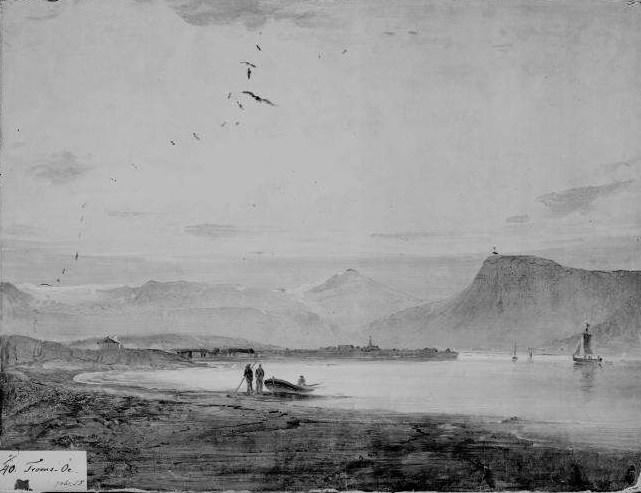
VUE DE TROMS OE (AUJOURD'HUI TROMSO)


 Weiterlesen
Giclée / Kunstdruck
Giclée- oder Leinwanddruck in Museumsqualität mit schneller Produktion und flexiblen Veredelungsoptionen. ( Handgemalte Reproduktion bestellen Bild kaufen)




































Wählen Sie aus unseren vordefinierten Formaten, die den ursprünglichen Proportionen des Kunstwerks entsprechen.

Sie können Ihre eigenen Maße eingeben, um ein bestimmtes Format oder einen speziellen Platz einzupassen. Wenn das von Ihnen gewählte Format nicht den Proportionen des Originalbildes entspricht, werden wir das Kunstwerk entweder beschneiden oder das Bild mit einem gespiegelten oder einfarbigen Rand erweitern. Ein digitaler Entwurf wird Ihnen zur Genehmigung zugesandt, bevor die Produktion beginnt.
Bitte beachten Sie, dass die Vorschau auf dem Bildschirm nicht den tatsächlichen Zuschnitt oder die Erweiterung widerspiegelt. Nur der Entwurf zeigt die endgültige Komposition präzise an.
Obwohl Sondermaße verfügbar sind, empfehlen wir die Auswahl eines Maßes aus der vordefinierten Liste, um die ursprünglichen Proportionen zu bewahren.
Weltweiter Versand () innerhalb von 2 Wochen statt der üblichen 4/5 Wochen. (23 August)

Kostenloser weltweiter Expressversand

Hochwertige Leinenleinwand

Umfassender Versicherungsschutz beim Versand

Zollgebühren-Rückerstattungsgarantie

Garantie für exakte Farbtreue

60 Tage Rückgaberecht (nur bei Mängeln)

100% Geld-zurück-Garantie

Mengenrabatt verfügbar
 Die Glasoption ist nur für Größen unter 110 cm verfügbar.

VUE DE TROMS OE (AUJOURD'HUI TROMSO)
Giclée / Kunstdruck
Format der Reproduktion
-


Gesamtpreis
$ 62
Sammlerstück-Beschreibung
A Sublime Echo of Northern Majesty: Exploring Peder Balke’s “Vue de Troms-Öe”
Peder Andersen Balke (1804 – 1887), born on the humble island of Helgøya in Norway, stands as a singular figure within the landscape tradition of the Romantic era. His life was marked by unwavering artistic dedication amidst challenging circumstances—a testament to the transformative power of passion and perseverance. Growing up immersed in the rugged beauty of the Norwegian countryside instilled in him an enduring fascination with nature’s grandeur, shaping his artistic vision for decades to come. Recognizing his innate talent early on, his community rallied together to secure him a crucial education – a poignant illustration of how creativity can flourish even within modest means. This formative encouragement propelled him toward formal training, initially under Heinrich August Grosch and Jacob Munch, before venturing abroad to hone his skills at the Royal Swedish Academy of Fine Arts in Stockholm alongside Carl Johan Fahlcrantz, ultimately refining his craft through meticulous observation and artistic experimentation.- Subject Matter: “Vue de Troms-Öe” captures a breathtaking panorama of Tromsø (formerly Tromsö), Norway—a coastal city nestled amidst towering mountains and icy fjords. Balke’s depiction isn't merely topographical; it strives to convey the very essence of the region’s dramatic landscape, embodying its austere majesty and captivating atmosphere.
- Style: The artwork firmly anchors itself within the Romantic movement, characterized by an intense emotional response to nature and a preoccupation with sublime beauty—a reaction against Enlightenment rationalism. Balke's style echoes the influence of Caspar David Friedrich and other German landscape painters who sought to evoke spiritual contemplation through meticulously rendered vistas.
- Technique: Executed in oil on canvas, “Vue de Troms-Öe” demonstrates Balke’s mastery of tonal gradation and textural detail. He employs a masterful blend of hatching, crosshatching, and glazing techniques—methods perfected during his time at Stockholm Academy—to achieve remarkable realism and luminosity. The artist's meticulous attention to capturing the subtleties of light and shadow contributes significantly to the painting’s emotive impact.
- Historical Context: Created around 1847, “Vue de Troms-Öe” reflects Balke’s ambition to secure royal patronage—a common aspiration among artists during the Victorian period. As part of a larger series commissioned by Louis Philippe I., it exemplifies the Romantic fascination with portraying dramatic landscapes as expressions of spiritual truth and artistic innovation.
- Symbolic Resonance: Beyond its visual splendor, “Vue de Troms-Öe” speaks to themes of solitude, contemplation, and the grandeur of the natural world—concepts central to Romantic philosophy. The muted palette and atmospheric perspective invite viewers to immerse themselves in a scene that transcends mere representation, fostering a feeling of profound connection with the environment. ## Detailed Analysis: Tromsø’s Silent Majesty The artwork presents a breathtaking panorama of Tromsø, Norway—a city nestled amidst towering mountains and icy fjords—captured with unwavering precision by Peder Balke. More than just a depiction of scenery, it embodies the Romantic spirit's yearning for transcendence through observation of nature’s sublime power. The artist’s deliberate choice of grayscale reinforces this mood, stripping away distracting color hues to focus solely on form and tonal variation—a technique reminiscent of Caspar David Friedrich’s iconic landscapes.
- Composition: Horizontal orientation dominates the canvas, emphasizing the vastness of Tromsø’s mountainous backdrop against which a small coastal settlement is delicately positioned. The shoreline serves as a visual anchor, guiding the eye upwards towards distant peaks shrouded in atmospheric haze—a compositional strategy designed to heighten the sense of depth and grandeur.
- Color Palette: Strikingly devoid of color, “Vue de Troms-Öe” utilizes subtle tonal shifts to sculpt form and convey mood. The darker hues of the foreground mountains contrast sharply with the paler tones of the distant peaks, simulating the effects of atmospheric perspective—a cornerstone of Romantic landscape painting.
- Technique: Executed in graphite or charcoal on paper, Balke’s method is characterized by meticulous hatching and cross-hatching—skills honed during his formative years at the Royal Swedish Academy of Fine Arts. These techniques imbue the artwork with textural richness, capturing the ruggedness of Tromsø's terrain and conveying a palpable sense of immediacy.
- Romantic Ideals: The painting embodies Romantic ideals of individualism, emotion, and reverence for the natural world—values championed by writers like Wordsworth and Coleridge during the same period.
- Peder Balke's Style: Balke’s distinctive style—characterized by bold lines and expressive shading—represents a departure from academic conventions prevalent in his time.
- Landscape as Reflection: Tromsø’s landscape serves as a mirror reflecting humanity's relationship with the natural world—a relationship marked by both admiration and apprehension.
- Emotional Impact: The artwork inspires feelings of serenity, wonder, and connection to the sublime—qualities that align perfectly with Romantic artistic aspirations.
Historical Context & Artistic Influences
Peder Balke’s oeuvre reflects the broader Romantic movement’s fascination with dramatic landscapes and its belief in art’s capacity to inspire awe and contemplation. Like Friedrich, he sought to portray nature not merely as an object of observation but as a force capable of elevating the human spirit—a conviction rooted in philosophical currents that questioned Enlightenment rationalism. The artwork's stylistic echoes of Friedrich are particularly evident in its subdued palette and masterful use of atmospheric perspective—elements that underscore Balke’s commitment to capturing the sublime beauty of Tromsø’s environment.Symbolism & Emotional Resonance
Beyond its formal qualities, “Vue de Troms-Öe (esquisse)” conveys profound symbolic meaning. The depiction of Tromsø’s coastline and distant mountains evokes a sense of solitude and remoteness—themes that resonate with the Romantic preoccupation with confronting existential questions. The muted tones contribute to an atmosphere of quiet contemplation, inviting viewers to immerse themselves in the grandeur of nature and reflect on its enduring power.Detailed Analysis & Artistic Merit
The artist’s masterful command of hatching and cross-hatching techniques elevates “Vue de Troms-Öe (esquisse)” beyond mere representation, transforming it into a powerful expression of visual artistry. The subtle gradations of gray capture the atmospheric perspective with remarkable precision—a hallmark of 19th-century landscape painting and particularly associated with Peder Balke’s oeuvre. Furthermore, the composition—horizontal and emphasizing depth—creates an immersive experience for the viewer, transporting them to the rugged beauty of Tromsø's northern Norwegian terrain. The artwork stands as a testament to Balke’s artistic vision and his ability to convey emotion through meticulous observation and skillful execution. Its enduring appeal lies in its capacity to evoke contemplation and inspire appreciation for the sublime grandeur of nature—a legacy that continues to captivate audiences today.Ähnliche Kunstwerke

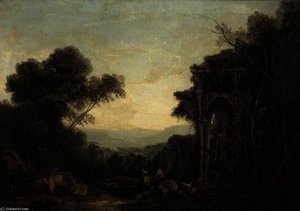
Über den Künstler
Peder Balke: Ein norwegischer Visionär des Romanticismus
- Geboren: Hegøy, Norwegen (1804)
- Gestorben: 1887
Frühes Leben und künstlerische Ausbildung
- Peder Andersen Balke wurde auf der Insel Helgøya im Kreis Hedmark in Norwegen geboren. Er wuchs in Ringsaker auf.
- Seine Familie waren Bauern, aber er erhielt die Unterstützung der lokalen Gemeinschaft, um seine künstlerischen Ambitionen zu verfolgen. Bauern aus Toten zahlten für seine Ausbildung.
- Er begann sein Training als Lehrling bei Heinrich August Grosch im Jahr 1827 und studierte auch unter Jacob Munch.
- Von 1829 bis 1833 war er Schüler von Carl Johan Fahlcrantz an der Königlichen Schwedischen Akademie für Bildende Künste in Stockholm.
- Später studierte er mit Johan Christian Dahl von 1843 bis 1844.
Künstlerischer Stil und Hauptwerke
- Landschaftsmalerei des Romanticismus: Balke ist am besten bekannt für seine dramatischen Darstellungen der norwegischen Landschaft, die durch eine romantische Sensibilität gekennzeichnet sind. Seine Werke zeichnen sich oft durch intensive Beleuchtung, atmosphärische Effekte und ein Gefühl von erhabener Erhabenheit aus.
- Einzigartiger Pinselstrich: Er entwickelte einen unverwechselbaren Stil mit texturierten Pinselstrichen und einer ungewöhnlichen Farbgebung, wodurch seine Gemälde eine traumartige Qualität erhielten.
- Hauptwerke: Zu seinen bekanntesten Werken gehören:
- Vue de Christiania (aujourd'hui Oslo) (1872) - Eine dramatische Stadtansicht, die das Wesen von Oslo einfängt.
- Der Hafen von Skjervøy (1846) – Zeigt eine fesselnde Hafenszene mit realistischen Details.
- Alte Bäume (1840) – Stellt eine karge norwegische Winterlandschaft mit kraftvoller Beleuchtung dar.
- Meeresansicht (1845) - Eine dramatische Meeresansicht, die die wilde Schönheit der norwegischen Küste hervorhebt.
- Fredrikshald (1852) – Zeigt ein Küstenkastell und Boote und demonstriert seine Beherrschung des Realismus.
- Der Nordkap im Mondschein (1848) - Fängt die Ehrfurcht gebietende Schönheit des Nordkaps unter dem Mondlicht ein.
Soziales Engagement und Späteres Leben
- Sozialer Gerechtigkeitsverfechter: Balke war nicht nur Künstler, sondern auch engagierter sozialer Reformer. Er engagierte sich aktiv in sozialen Fragen.
- Balkeby-Projekt: Er leitete den Bau von Balkeby, einem neuen Vorort von Oslo, der entwickelt wurde, um Arbeitnehmern verbesserte Lebensbedingungen zu bieten. Er gewährte Kredite und legte strenge Bauvorschriften fest.
- Eintreten für Künstler: Balke setzte sich für Stipendien für Künstler und Renten sowohl für Männer als auch für Frauen ein.
- Familiennachlass: Er war der Urgroßvater der Schauspielerin Turid Balke und der Ururgroßvater des Jazzpianisten Jon Balke.
Historische Bedeutung und Anerkennung
- Wiederentdeckung und Wertschätzung: Obwohl er anfänglich übersehen wurde, hat Bakes Werk in den letzten Jahrzehnten eine deutliche Wiederbelebung der Anerkennung erfahren.
- Internationale Ausstellungen: Seine Werke wurden in renommierten Institutionen wie der National Gallery in London (2014-2015) und dem Metropolitan Museum of Art (2017) ausgestellt.
- Einfluss auf die nordische Kunst: Bakes einzigartiger Stil und seine Vision trugen wesentlich zur Entwicklung der Romantik in Norwegen und im weiteren nördlichen Raum bei. Seine Gemälde gelten heute als wichtige Beispiele für norwegische Kunst des 19. Jahrhunderts und werden für ihre dramatischen Landschaften und emotionale Tiefe gefeiert.
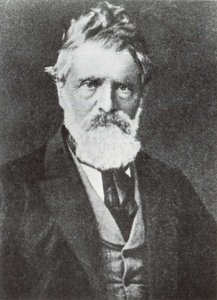
Peder Balke
1804 - 1887 , Norwegen
Kurzinfos
- Bemerkenswerte Werke:
- Vue de Christiania (Oslo)
- The Harbor at Skjervøy
- Old Trees
- Seascape
- Fredrikshald
- The North Cape by Moonlight
- Einflussreiche Künstler:
- Heinrich August Grosch
- Johan Christian Dahl
- Geburtsdatum: 4. November 1804
- Geburtsort: Hegøy, Norwegen
- Künstlerische Richtung: Romantik
- Nationalität: Norwegisch
- Sterbedatum: 5. Februar 1887
- Vollständiger Name: Peder Balke
Ähnliche Artikel

Romantische Landschaften: Die 10 Meisterwerke, die eine Epoche prägten | ArtsDot
Entdecken Sie die 10 Meisterwerke der Romantischen Landschaftsmalerei! Von Caspar David Friedrich bis Turner – erleben Sie die Kunst, Emotion & Natur. Hochwertige Reproduktionen auf ArtsDot.com
Johan Christian Dahl: Pioneering Norwegian Romantic Landscape Painting
Explore the life & art of Johan Christian Dahl, Norway's first great Romantic painter. Discover his iconic landscapes, cultural impact, and lasting legacy with ArtsDot.

Evocations of Place: A Historical Journey Through Landscape Art
Explore the rich history of landscape art with ArtsDot. Discover renowned artists, movements like Impressionism & Romanticism, and expert guidance for collecting timeless pieces. Find your perfect serene escape today!
The Sublime and the Picturesque: Exploring Emotion & Nature in Romantic Landscape Painting
Explore the emotional power of Romantic landscape painting! Discover the sublime & picturesque traditions, key artists like Friedrich & Cole, and find your perfect artwork at ArtsDot.

John Constable: Die 25 Meisterwerke des englischen Landschaftsgenies – ArtsDot
Entdecken Sie die 25 Meisterwerke von John Constable! Erleben Sie englische Landschaftsmalerei vom Hay Wain bis zur Stour Valley. Hochwertige Reproduktionen & Kunst für Ihr Zuhause auf ArtsDot.com.