

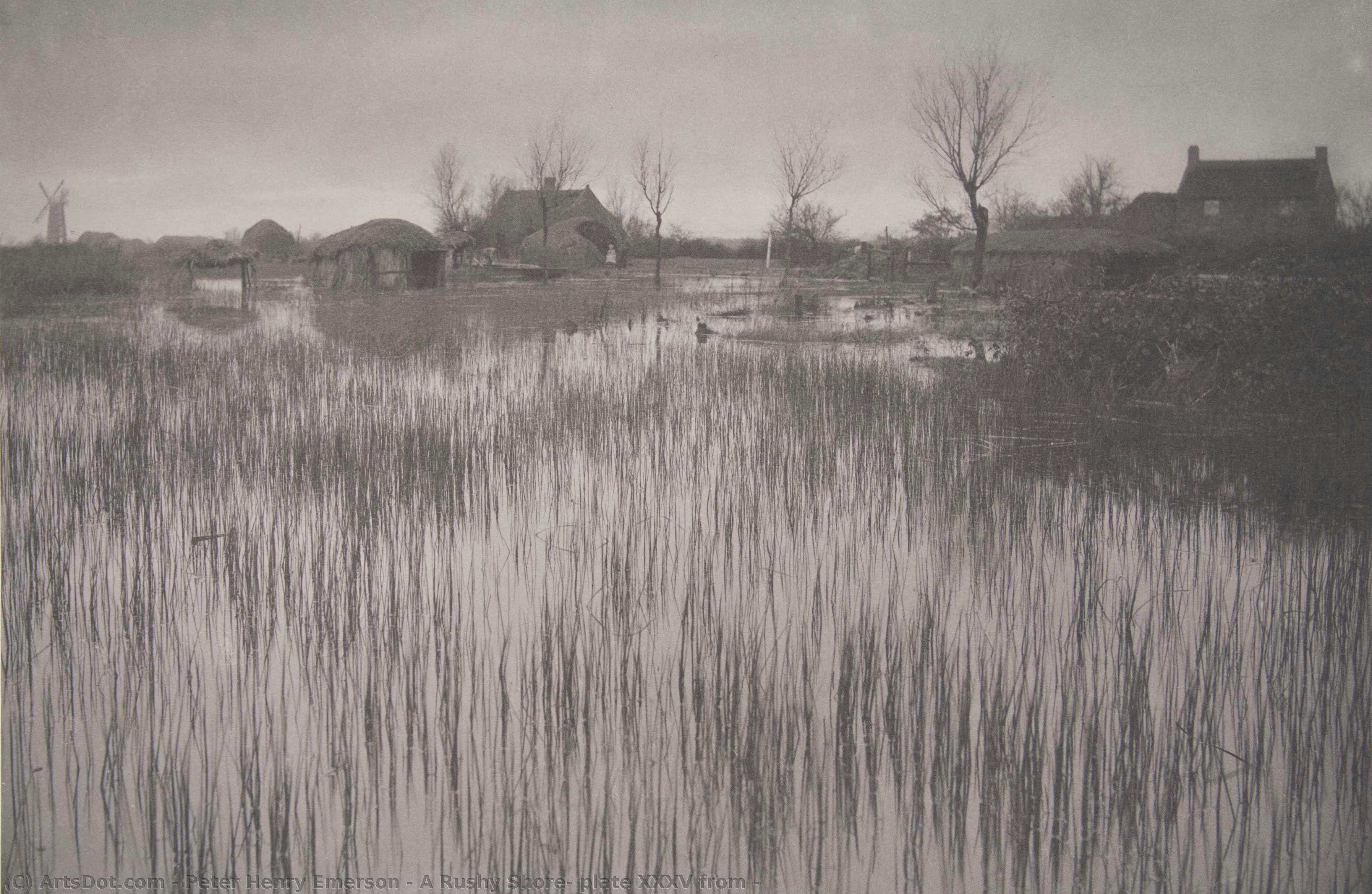
 Vorschau anzeigen
 Versenden
 Teilen
 Details anzeigen

 Herunterladen
 Ähnliche Objekte
 Röntgenaufnahme
 Diashow
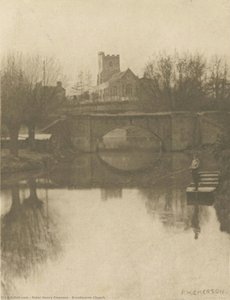
A Rushy Shore, plate XXXV from
 1887
1887 4.0 x 2.0 cm
 University of Michigan Museum of Art
 Weiterlesen
Erwerben Sie ein hochauflösendes, optimiertes digitales Bild, das der Online-Vorschau weit überlegen ist.
Jede Datei wird von unseren hauseigenen Spezialisten mit modernsten Werkzeugen und fachmännischer manueller Retusche sorgfältig vorbereitet. Wir stellen sicher, dass jedes Bild eine außergewöhnliche Klarheit, präzise Farbgenauigkeit und feinste Details aufweist.
Die endgültige Datei wird innerhalb von 72 Stunden per E-Mail zugestellt und ist für den sofortigen Einsatz in professionellen, redaktionellen und Druckumgebungen optimiert. Es handelt sich um dieselbe Qualität, der führende Designstudios, Verlage und Galerien vertrauen.
Digitales Bild
Laden Sie eine hochauflösende Datei für die persönliche Präsentation, den Druck und kreative Projekte herunter. ( Druck bestellen Handgemalte Reproduktion bestellen)
In jeder Bestellung digitaler Bilder enthalten
Professionelle digitale Bereitstellung, garantiert
Wenn Sie sich für ArtsDot.com entscheiden, erhalten Sie nicht nur ein Bild – Sie erhalten ein professionell aufbereitetes digitales Kunstwerk, das mit höchster Präzision erstellt und durch eine Zufriedenheitsgarantie abgesichert wird. Hier ist alles, was automatisch mit Ihrer Bestellung geliefert wird:

Schnelle E-Mail-Zustellung
Ihre hochauflösende digitale Bilddatei wird Ihnen innerhalb von 72 Stunden nach der Bestellung per E-Mail zugestellt – bereit zur sofortigen Verwendung.

KI-optimierte digitale Datei
Ihre Kunstwerke werden professionell mithilfe fortschrittlicher KI-Tools und manueller Bearbeitung optimiert, um maximale Detailtreue, Klarheit und Farbgenauigkeit zu gewährleisten.

Lebenslanger kostenloser Neudruckservice
Datei versehentlich gelöscht oder verloren? Keine Sorge – wir senden sie Ihnen jederzeit kostenlos erneut zu.

Keine Einfuhrgebühren – jemals
Genießen Sie Ihr Kunstwerk sofort ohne Zollgebühren, Einfuhrabgaben oder Versandkosten – digitale Downloads sind immer steuerfrei.

Garantierte Farbtreue
Wir garantieren, dass Ihr digitales Bild mithilfe professioneller Werkzeuge und Farbmanagement die Originalfarben so präzise wie möglich wiedergibt.

100-Tage-Zufriedenheitsgarantie
Wenn Sie mit Ihrem digitalen Bild nicht zufrieden sind, werden wir es überarbeiten oder 100% innerhalb von 100 Tagen erstatten – ohne Wenn und Aber.

100% Geld-zurück-Garantie
Nicht zufrieden? Erhalten Sie innerhalb von 100 Tagen nach Erhalt Ihrer digitalen Datei eine vollständige Rückerstattung – ohne Wenn und Aber.

Rabatte bei Großbestellungen
3 Bilder kaufen, 10% sparen – 5 Bilder kaufen, 15% sparen – Ab 10 Bildern 20% sparen. Ideal für kreative Projekte, Galerien und Agenturen.
Ähnliche Kunstwerke







Biografie des Künstlers
Early Life and Education: A Cuban Beginning
Peter Henry Emerson, born on May 13th, 1856, began life amidst the lush landscapes of La Palma Estate, a sugar plantation near Encrucijada, Cuba. His parents, Henry Ezekiel Emerson, an American, and Jane Harris Billing, a British woman, provided him with a unique upbringing far removed from the artistic circles he would later inhabit. A distant relative of both Samuel Morse and Ralph Waldo Emerson, young Peter’s early years were shaped by the rhythms of plantation life, a world steeped in natural beauty but also marked by the complexities of colonial society. The family's move to England in 1869, following his father’s death, signaled a significant shift in his trajectory. He received a classical education at Cranleigh School, where he distinguished himself as both a scholar and an athlete—a testament to his multifaceted intellect and energy. This foundation continued at King’s College London before culminating in a medical degree from Clare College, Cambridge in 1885.
From Surgeon to Photographer: A New Vision Emerges
Despite achieving academic success in medicine, Emerson harbored passions that lay elsewhere. In 1881, he acquired his first camera not as a tool for professional practice, but as an aid to bird-watching alongside ornithologist A.T. Evans. This seemingly casual beginning quickly blossomed into something far more profound. His involvement with the Camera Club of London in 1885 and subsequent election to the Council of the Photographic Society in 1886 marked a decisive turning point. He abandoned his surgical career, driven by an increasingly compelling desire to explore photography as a legitimate art form—a radical notion at the time. Emerson possessed not only intelligence and wealth but also a remarkable ability to articulate his convictions, qualities that would prove crucial in challenging established photographic norms.
Naturalistic Photography: Challenging Conventions
Emerson’s early work was deeply influenced by the naturalistic French painters, particularly those who focused on depicting rural life with honesty and detail. He championed a “naturalistic” approach to photography, advocating for sharp focus and meticulous recording of country scenes as they appeared—rejecting the then-popular practice of manipulating photographs to mimic painted effects. His first album, *Life and Landscape on the Norfolk Broads* (1886), comprised forty platinum prints that embodied this philosophy. However, Emerson was not one to remain static in his beliefs. He soon found himself dissatisfied with the indiscriminate clarity of sharp focus, recognizing it didn’t fully replicate human perception. This led him to experiment with soft focus techniques, though he ultimately found them lacking in their ability to capture the true depth and atmosphere of nature.
The Evolution of Style: Photogravure and a Shifting Aesthetic
Over the next decade, Emerson produced a remarkable body of work documenting the East Anglian fenlands. He published seven further books, culminating in *Marsh Leaves* (1895), widely considered his masterpiece. Increasingly frustrated with commercial printing processes that failed to meet his exacting standards, he took control of production himself, mastering the intricate art of photogravure for the final two volumes. This commitment to quality underscored his dedication to realizing his artistic vision. In 1889, Emerson published *Naturalistic Photography for Students of the Art*, a seminal text outlining his aesthetic principles and challenging prevailing photographic conventions. However, in a surprising turn, he recanted these views just two years later, acknowledging that accurate reproduction wasn’t synonymous with art itself.
Legacy and Historical Significance: A Pioneer of Straight Photography
Despite this shift in perspective, Emerson's initial arguments proved profoundly influential, laying the groundwork for much of 20th-century photography. He championed the idea of photography as a unique medium capable of capturing reality with unparalleled fidelity—a concept central to the development of straight photography. After *Marsh Leaves*, he largely ceased publishing photographs, turning his attention to other literary and scholarly pursuits, including genealogy and billiards. He began writing a history of artistic photography in 1924, completing the manuscript shortly before his death on May 12th, 1936, in Falmouth, Cornwall. Peter Henry Emerson’s legacy extends beyond his beautiful images; he was a visionary who dared to question established norms and elevate photography to its rightful place among the fine arts.
peter henry emerson
1856 - 1936