

 Vorschau anzeigen
 Versenden
 Teilen
 Details anzeigen

 Herunterladen
 Ähnliche Objekte
 Röntgenaufnahme
 Diashow
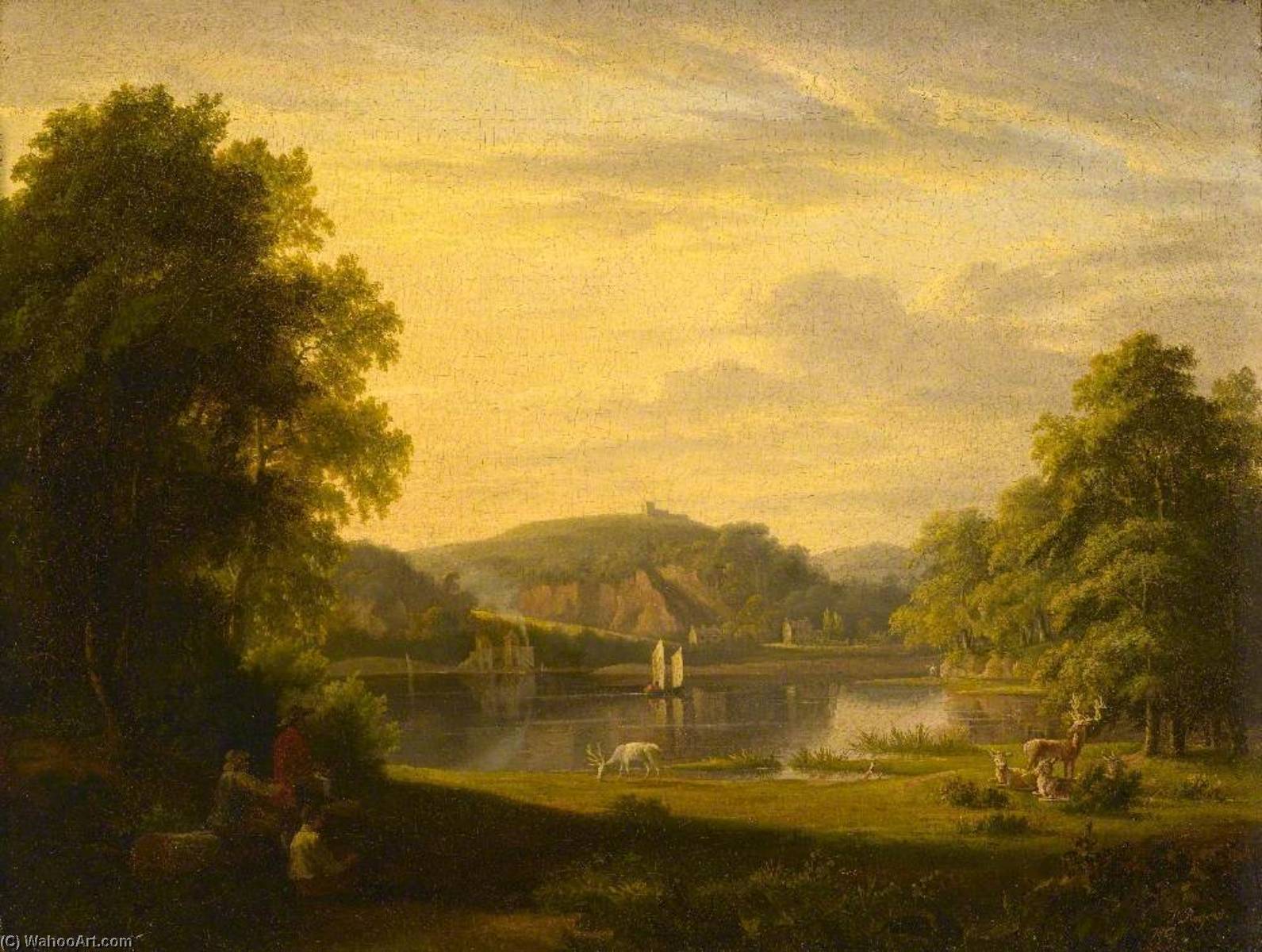
View of the Plym from the Grounds of Saltram House
 1812
1812 41.0 x 53.0 cm
 Royal Albert Memorial Museum
 Weiterlesen
Erwerben Sie ein hochauflösendes, optimiertes digitales Bild, das der Online-Vorschau weit überlegen ist.
Jede Datei wird von unseren hauseigenen Spezialisten mit modernsten Werkzeugen und fachmännischer manueller Retusche sorgfältig vorbereitet. Wir stellen sicher, dass jedes Bild eine außergewöhnliche Klarheit, präzise Farbgenauigkeit und feinste Details aufweist.
Die endgültige Datei wird innerhalb von 72 Stunden per E-Mail zugestellt und ist für den sofortigen Einsatz in professionellen, redaktionellen und Druckumgebungen optimiert. Es handelt sich um dieselbe Qualität, der führende Designstudios, Verlage und Galerien vertrauen.
Digitales Bild
Laden Sie eine hochauflösende Datei für die persönliche Präsentation, den Druck und kreative Projekte herunter. ( Druck bestellen Handgemalte Reproduktion bestellen)
In jeder Bestellung digitaler Bilder enthalten
Professionelle digitale Bereitstellung, garantiert
Wenn Sie sich für ArtsDot.com entscheiden, erhalten Sie nicht nur ein Bild – Sie erhalten ein professionell aufbereitetes digitales Kunstwerk, das mit höchster Präzision erstellt und durch eine Zufriedenheitsgarantie abgesichert wird. Hier ist alles, was automatisch mit Ihrer Bestellung geliefert wird:

Schnelle E-Mail-Zustellung
Ihre hochauflösende digitale Bilddatei wird Ihnen innerhalb von 72 Stunden nach der Bestellung per E-Mail zugestellt – bereit zur sofortigen Verwendung.

KI-optimierte digitale Datei
Ihre Kunstwerke werden professionell mithilfe fortschrittlicher KI-Tools und manueller Bearbeitung optimiert, um maximale Detailtreue, Klarheit und Farbgenauigkeit zu gewährleisten.

Lebenslanger kostenloser Neudruckservice
Datei versehentlich gelöscht oder verloren? Keine Sorge – wir senden sie Ihnen jederzeit kostenlos erneut zu.

Keine Einfuhrgebühren – jemals
Genießen Sie Ihr Kunstwerk sofort ohne Zollgebühren, Einfuhrabgaben oder Versandkosten – digitale Downloads sind immer steuerfrei.

Garantierte Farbtreue
Wir garantieren, dass Ihr digitales Bild mithilfe professioneller Werkzeuge und Farbmanagement die Originalfarben so präzise wie möglich wiedergibt.

100-Tage-Zufriedenheitsgarantie
Sollten Sie mit Ihrem digitalen Bild nicht zufrieden sein, werden wir es überarbeiten oder Ihnen innerhalb von 100 Tagen 100% erstatten – ohne Wenn und Aber.

100% Geld-zurück-Garantie
Nicht zufrieden? Erhalten Sie innerhalb von 100 Tagen nach Erhalt Ihrer digitalen Datei eine vollständige Rückerstattung – ohne Angabe von Gründen.

Rabatte bei Großbestellungen
3 Bilder kaufen, 10% sparen – 5 Bilder kaufen, 15% sparen – Ab 10 Bildern 20% sparen. Ideal für kreative Projekte, Galerien und Agenturen.
Ähnliche Kunstwerke








Biografie des Künstlers
The Soul of the Landscape: The Life and Legacy of Philip Hutchins Rogers
In the golden age of British Romanticism, few artists captured the profound dialogue between humanity and the natural world as poignantly as Philip Hutchins Rogers. Born in the coastal environs of Plymouth, Devon, in 1794, Rogers emerged from a period of intense intellectual awakening. His early years were shaped by the rugged beauty of the English West Country, a landscape that would serve as both his muse and his primary subject. This formative connection to the earth was deepened through his education at Plymouth Grammar School, where he studied under the esteemed botanist and geologist Dr. John Bidlake. It was under Bidlake’s tutelage that Rogers learned to look beyond the mere surface of nature, developing an eye for the scientific precision of flora and geology while simultaneously nurturing a Romantic sensibility that sought the emotional resonance within the wild.
The artistic circle in which Rogers moved was nothing short of extraordinary. Alongside contemporaries such as Samuel Prout, Benjamin Haydon, and Charles Lock Eastlake, he participated in a shared movement that redefined the boundaries of British landscape and marine painting. This cohort of artists shared a fascination with the sublime—the idea that nature could evoke feelings of awe, terror, and spiritual transcendence. Rogers’s work became a bridge between the meticulous observation of his scientific mentors and the expressive, often dramatic, interpretations characteristic of the Romantic era. His ability to blend a commitment to realism with an evocative use of light and atmosphere allowed him to create works that felt both tangibly real and deeply dreamlike.
Mastery of Light and Atmosphere
Rogers’s technical evolution is most evident in his diverse range of subjects, from the maritime drama of the English Channel to the tranquil vistas of the European continent. One of his most significant early achievements was the 1813 masterpiece, The Bombardment of Algiers. Commissioned by the Royal Academy, this ambitious work demonstrated his capacity for large-scale narrative painting and technical prowess, earning critical acclaim and a subsequent engraving that brought his vision to a wider public. This period of his career showcased a mastery of movement and tension, capturing the chaotic energy of naval conflict against the backdrop of an unforgiving sea.
As his career progressed, Rogers’s focus shifted toward more serene and contemplative landscapes. His depictions of Dartmoor National Park are particularly noteworthy; in these works, he meticulously rendered the rugged terrain, the shifting mists, and the atmospheric weight of the moorland, turning the local landscape into a stage for emotional expression. This talent for capturing the "spirit of place" extended to his travels across Europe. His explorations of the Spanish coast yielded evocative panoramas of the Mediterranean, while his later years spent on the Continent—driven by both economic necessity and artistic curiosity—led to stunning depictions of the German countryside. His 1838 work, Bavarian Landscape, stands as a testament to this period, showcasing a peaceful, idyllic harmony between rural life and the majestic mountains of Germany.
A Lasting Impression on British Art
The significance of Philip Hutchins Rogers lies in his ability to harmonize the scientific with the poetic. While his works often featured local views around Plymouth—some of which found permanent homes in prestigious collections like Saltram House—they were never merely topographical records. Instead, they were windows into a world where every hill, tree, and wave carried a weight of meaning. His style, characterized by expressive brushwork and a sophisticated use of color, helped pave the way for future generations of landscape painters to explore the subjective experience of the natural world.
Though he passed away in 1853 near Baden-Baden, his contribution to the British school of painting remains indelible. His legacy is found in:
- The integration of scientific observation and Romantic emotion, a hallmark of his training under Dr. Bidlake.
- The elevation of local landscapes, such as Dartmoor and Plymouth Sound, into subjects of high art and national importance.
- A versatile mastery of genre, ranging from the intense drama of marine combat to the quietude of pastoral European scenes.
Today, the works of Rogers continue to resonate with those who find beauty in the interplay of light, shadow, and the enduring majesty of the earth.
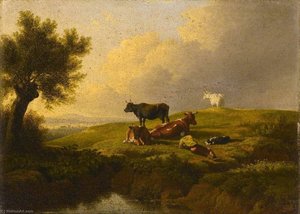
philip hutchins rogers
1794 - 1853
Kurzinfos
- Artistic Movement Or Style: Romanticism
- Artists Or Movements Influenced By This Artist: ['Charles Lock Eastlake']
- Artists Who Influenced This Artist:
- John Bidlake
- Samuel Prout
- Date Of Birth: 1794 Plymouth Devon England
- Date Of Death: 1853 Lichtenthal Baden-Baden Germany
- Full Name: Philip Hutchins Rogers
- Nationality: English
- Notable Artworks:
- The Bombardment of Algiers
- Dartmoor
- Place Of Birth: Plymouth England