

 Versenden
 Teilen
 Details anzeigen

 Herunterladen
 Ähnliche Objekte
 Diashow
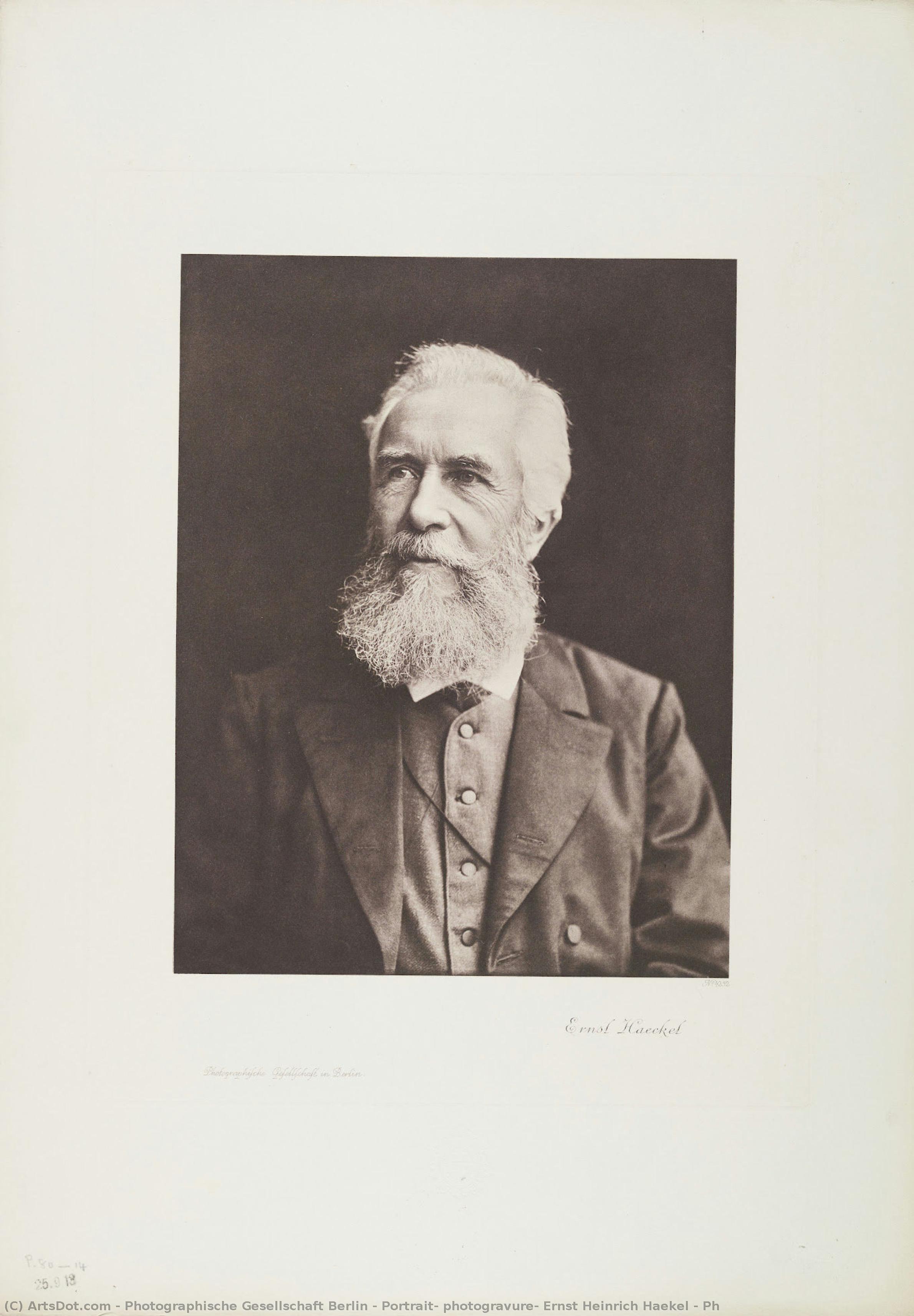
Portrait, photogravure, Ernst Heinrich Haekel / Ph


 Weiterlesen
Giclée / Kunstdruck
Giclée- oder Leinwanddruck in Museumsqualität mit schneller Produktion und flexiblen Veredelungsoptionen. ( Handgemalte Reproduktion bestellen Bild kaufen)




































Wählen Sie aus unseren vordefinierten Formaten, die den ursprünglichen Proportionen des Kunstwerks entsprechen.

Sie können Ihre eigenen Maße eingeben, um ein bestimmtes Format oder einen speziellen Platz einzupassen. Wenn das von Ihnen gewählte Format nicht den Proportionen des Originalbildes entspricht, werden wir das Kunstwerk entweder beschneiden oder das Bild mit einem gespiegelten oder einfarbigen Rand erweitern. Ein digitaler Entwurf wird Ihnen zur Genehmigung zugesandt, bevor die Produktion beginnt.
Bitte beachten Sie, dass die Vorschau auf dem Bildschirm nicht den tatsächlichen Zuschnitt oder die Erweiterung widerspiegelt. Nur der Entwurf zeigt die endgültige Komposition präzise an.
Obwohl Sondermaße verfügbar sind, empfehlen wir die Auswahl eines Maßes aus der vordefinierten Liste, um die ursprünglichen Proportionen zu bewahren.
Weltweiter Versand () innerhalb von 2 Wochen statt der üblichen 4/5 Wochen. (1 September)

Kostenloser weltweiter Expressversand

Hochwertige Leinenleinwand

Umfassender Versicherungsschutz beim Versand

Zollgebühren-Rückerstattungsgarantie

Garantie für exakte Farbtreue

60 Tage Rückgaberecht (nur bei Mängeln)

100% Geld-zurück-Garantie

Mengenrabatt verfügbar
 Die Glasoption ist nur für Größen unter 110 cm verfügbar.

Portrait, photogravure, Ernst Heinrich Haekel / Ph
Giclée / Kunstdruck
Format der Reproduktion
-


Gesamtpreis
$ 62
A Portrait of Scientific Majesty: Ernst Heinrich Haeckel’s Photogravure
The image before you is more than just a portrait; it's a carefully constructed window into the mind of Ernst Heinrich Philipp August Haeckel, a titan of 19th-century biology and a master of visual communication. Executed in exquisite photogravure by the Photographische Gesellschaft Berlin around 1919, this remarkable image transcends mere likeness, offering a glimpse into the intellectual rigor and quiet authority that defined Haeckel’s life and work. The medium itself—photogravure—is crucial to understanding the piece's impact; it was a technique prized for its ability to capture subtle tonal variations and reproduce incredibly detailed images with a richness of color rarely achieved in earlier photographic processes. This wasn’t simply about documenting a man; it was about imbuing him with an aura of scientific gravitas, reflecting his profound influence on the burgeoning field of natural history.
The composition is deliberately formal and restrained. Haeckel sits squarely within the frame, his gaze direct and unwavering – a challenge to the viewer to meet his intellectual intensity. The background, rendered in soft focus, serves not as distraction but as a subtle amplification of the subject’s presence. The rectangular border, characteristic of the era, further emphasizes the portrait's status as a significant document, akin to a formal commission or official representation. Notice the meticulous attention to detail: the texture of his suit fabric, the carefully rendered lines of his beard and mustache – each element contributes to a sense of realism that belies the photographic nature of the image. The lighting is soft and diffused, casting gentle shadows that sculpt his features and hinting at an inner seriousness.
The Art of Photogravure: A Process of Refined Beauty
Photogravure was a complex and demanding process, requiring considerable skill and patience. It began with a photograph – often a carefully posed portrait – which was then used as the basis for creating a copper plate. This plate was meticulously grained, a process that introduced microscopic patterns to its surface, allowing ink to be absorbed unevenly during printing. The resulting image was then etched using acid, transferring the tonal values from the original photograph onto the metal. Finally, the plate was inked and pressed onto paper, producing a print of astonishing clarity and depth. Unlike simpler photographic processes, photogravure produced images with a velvety quality, rich in subtle gradations of tone – a testament to the skill of the printer and the inherent beauty of the medium.
The Photographische Gesellschaft Berlin was at the forefront of this innovation, pushing the boundaries of what was possible with photogravure. They weren’t simply reproducing photographs; they were elevating them to the status of fine art. Haeckel's portrait exemplifies their commitment to capturing not just a likeness but also the essence of the subject – his intellect, his dedication, and perhaps even a hint of his visionary spirit. The process itself speaks volumes about the era’s fascination with scientific advancement and its desire to visually represent complex ideas.
Symbolism and Scientific Legacy
Haeckel was far more than just a biologist; he was a prolific artist, illustrator, and popularizer of science. His detailed depictions of marine life, particularly his iconic woodcuts illustrating the “Embryology,” became immensely influential, shaping public understanding of evolution and natural history. This portrait subtly reflects that legacy – Haeckel’s serious expression and formal attire evoke an image of a man deeply engaged in intellectual pursuits, dedicated to unraveling the mysteries of the natural world. The very act of presenting him as a subject for artistic representation underscores his importance within the scientific community.
Furthermore, the photogravure medium itself carries symbolic weight. The meticulous process and the resulting image’s rich tonal range suggest a careful consideration of detail, mirroring Haeckel's own methodical approach to scientific inquiry. It is an image that speaks not only of a man but also of the power of observation, analysis, and artistic representation – qualities central to both his scientific work and the enduring appeal of this remarkable portrait.
A Timeless Masterpiece for Collectors and Designers
Reproductions of this extraordinary photogravure offer a unique opportunity to bring Haeckel’s intellectual presence into any setting. Its formal elegance and rich tonal range make it an ideal addition to libraries, study spaces, or galleries dedicated to science, art, or history. The image's inherent beauty and historical significance ensure that it will remain a captivating subject for years to come. Consider this portrait not merely as a depiction of a man, but as a testament to the enduring power of scientific curiosity and artistic vision – a timeless masterpiece worthy of admiration and preservation.
Ähnliche Kunstwerke
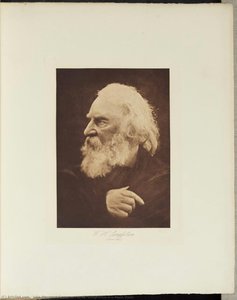
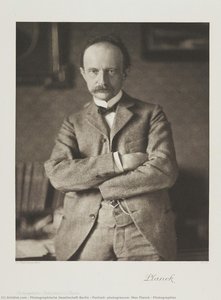
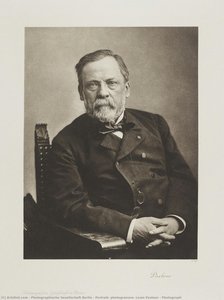
Über den Künstler
Die Photographische Gesellschaft Berlin: Ein Pionier der fotografischen Kunst und Technologie
- Ursprung: ArtsDot
- Geboren: Berlin, Deutschland (1862)
- Gestorben: 1927
Die Photographische Gesellschaft Berlin, auch bekannt als Photographic Society of Berlin, war eine bedeutende deutsche fotografische Gesellschaft, die 1862 in Berlin gegründet wurde. Sie sticht als eine der frühesten fotografischen Gesellschaften Deutschlands hervor und spielte eine entscheidende Rolle bei der Gestaltung der Entwicklung der Fotografie sowohl als künstlerisches Medium als auch als aufstrebende kommerzielle Industrie.
Frühe Jahre und Beiträge zur fotografischen Technologie
- Gründung & Früher Fokus: Die Gesellschaft wurde 1862 gegründet und erlangte schnell Anerkennung für ihr Engagement bei der Herstellung hochwertiger fotografischer Drucke.
- Technologischer Fortschritt: Die Photographische Gesellschaft Berlin war nicht nur ein künstlerisches Kollektiv; sie leistete aktiv Beiträge zur Weiterentwicklung der fotografischen Technologie in einer Zeit rascher Innovation auf diesem Gebiet.
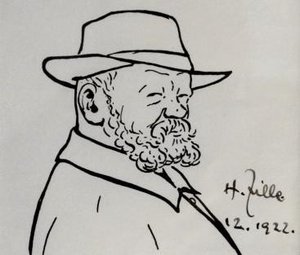
- Bemerkenswerte Persönlichkeit - Heinrich Zille: Eine bedeutende Figur, die mit der Gesellschaft verbunden war, war Heinrich Zille, der von 1877 bis 1907 als Techniker für die Organisation arbeitete. Zilles Beiträge waren entscheidend für die technischen Fähigkeiten der Gesellschaft, und seine Arbeit spiegelte die sich wandelnde Landschaft der Fotografie in Berlin wider.
Künstlerische Leistungen und fotografische Bildung
- Zentrum künstlerischer Erkundung: Die Photographische Gesellschaft Berlin förderte eine lebendige Umgebung für künstlerische Erkundungen innerhalb der Fotografie, ermutigte zum Experimentieren und sprengte kreative Grenzen.
- Fotografische Bildung: In der Erkenntnis der Notwendigkeit, Talent zu fördern, etablierte sich die Gesellschaft als Zentrum für fotografische Bildung. Sie bot Kurse und Workshops an, die angehende Fotografen sowohl in technischen Fähigkeiten als auch in künstlerischer Vision ausbildeten.
- Betonung auf Photogravur: Die Gesellschaft war besonders bekannt für ihr Fachwissen im Bereich der Photogravur-Drucktechnik, einer ausgeklügelten Technik, die eine hochwertige Reproduktion von Fotografien mit außergewöhnlichen Details und Tonwerten ermöglichte. Dies trug wesentlich zur Qualität ihrer Drucke bei.
Vermächtnis und Einfluss auf die Fotografie
- Einfluss auf nachfolgende Fotografen: Der Einfluss der Photographischen Gesellschaft Berlin reichte weit über ihre eigene Existenz hinaus. Viele Fotografen, die von der Arbeit der Gesellschaft inspiriert waren, erlangten später selbst Anerkennung und trugen die Traditionen künstlerischer Exzellenz und technischer Innovation fort, die von der Organisation begründet wurden.
- Förderung der Fotografie als Kunstform: Die Gesellschaft spielte eine entscheidende Rolle bei der Erhöhung des Status der Fotografie von einer rein wissenschaftlichen oder dokumentarischen Beschäftigung hin zu einer anerkannten Kunstform.
- Kommerzielle Bedeutung: Neben ihren künstlerischen Beiträgen leistete die Photographische Gesellschaft Berlin auch bedeutende Fortschritte bei der Etablierung der Fotografie als eine tragfähige kommerzielle Industrie und demonstrierte das Potenzial fotografischer Bilder, ein breites Publikum zu erreichen.
- Auflösung und bleibender Einfluss: Obwohl sich die Gesellschaft 1927 auflöste, wird ihr Werk bis heute gefeiert. Ihre Arbeiten sind in zahlreichen Museen und Galerien auf der ganzen Welt zu finden, darunter den Kunstsammlungen und Museen Augsburg.
Wichtige Werke & Bemerkenswerte Assoziationen
- Porträt-Photogravuren: Die Photographische Gesellschaft Berlin ist besonders für ihre Porträt-Photogravuren mit prominenten Persönlichkeiten wie Max Planck, William Thomson (Baron Kelvin), Ernst Heinrich Haeckel, Wilhelm Konrad Röntgen, Dmitri Mendeleev und Gustav Theodor Fechner bekannt. Diese Porträts veranschaulichen das technische Können und die künstlerische Vision der Gesellschaft.
- Kataloge & Ausstellungen: Die Gesellschaft produzierte zahlreiche Kataloge, in denen ihre Arbeit präsentiert wurde, und organisierte Ausstellungen, die dazu beitrugen, die Fotografie als Kunstform zu fördern. Beispiele hierfür sind "Katalog einer Ausstellung zeitgenössischer deutscher Graphik" und “Eine Auswahl der Veröffentlichungen der Berliner Photographischen Co.”
Die Photographische Gesellschaft Berlin stellt ein bedeutendes Kapitel in der Geschichte der Fotografie dar, das die Kraft von Zusammenarbeit, Innovation und künstlerischem Engagement demonstriert, um ein Medium zu gestalten, das sich ständig weiterentwickelt und weiterhin Publikum auf der ganzen Welt fesselt.
Photographische Gesellschaft Berlin
1862 - 1927 , Deutschland
Kurzinfos
- Artistic Movement Or Style: Fotografie
- Date Of Birth: 1862
- Date Of Death: 1927
- Full Name: Photographische Gesellschaft Berlin
- Nationality: Deutsch
- Notable Artworks:
- Portrait, Max Planck (Photogravur)
- Portrait, William Thomson (PG)
- Portrait, Ernst Heinrich Haeckel (PG)
- Place Of Birth: Berlin, Deutschland
Ähnliche Artikel
Max Ernsts Meisterwerke: Die Top 25 Kunstwerke für Ihr Zuhause | ArtsDot
Entdecken Sie die 25 bedeutendsten Kunstwerke von Max Ernst! Tauchen Sie ein in die Welt des Surrealismus, Dada und abstrakter Malerei. Hochwertige Kunstreproduktionen & Inspiration für Ihr Zuhause bei ArtsDot.com.

Monochrome Visions: Exploring the Aesthetic & Historical Significance of Black & White Photography
Explore the rich history & artistic power of black and white photography. From early techniques to iconic masters like Ansel Adams, discover why monochrome continues to captivate art lovers today. Expert insights for collectors.

Beyond the Lens: Photography's Enduring Influence on Modern & Contemporary Art
Explore photography's pivotal role in shaping modern & contemporary art. Discover key movements, influential artists like Stieglitz, and expert collecting advice from ArtsDot.

Pictorialism: A Search for Artistic Photography's Soul – Aesthetics, Techniques & Legacy
Explore the captivating world of Pictorialism – a pivotal movement that transformed photography into fine art. Discover key artists like Stieglitz & Käsebier, techniques, and collecting tips from experts.
Witnessing History Through Lens & Light: Documentary Photography's Enduring Legacy
Explore the powerful history of documentary photography – from its origins to contemporary masters like Gordon Parks & W. Eugene Smith. Discover how this art form shapes our understanding of society and witness pivotal moments in time.

