 Vorschau anzeigen
 Versenden
 Teilen
 Details anzeigen

 Herunterladen
 Ähnliche Objekte
 Röntgenaufnahme
 Diashow
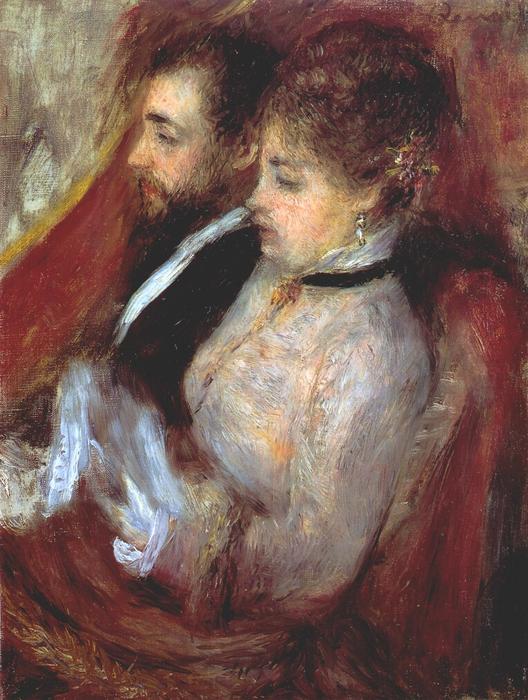
Das kleine Theaterhäuschen


 Weiterlesen
Handgefertigte Ölreproduktion
Handgemaltes Ölgemälde auf Leinwand in Ihrer Wunschgröße und mit Rahmen, auf Bestellung von unseren Künstlern angefertigt. ( Druck bestellen Bild kaufen)




P118B $10

P118H $10

P118W $10

P438Z $10

P508JH $12

P508YH $12

P805H $10

P805Z $10

P919BZ $10

P919G $10

P919XJ $10

P959ZH $10

P968JZ $12

W106C $8

W218G $10

W218JH $8

W218Y $10

W307PJ $10

W316G $10

W316PJ $8

W316Y $10

W398PJ $8

W4111J $10

W500HY $15

W500JH $15

W692G $12

W849H $8

W940BG $15

W953PJ $8




Wählen Sie aus unseren vordefinierten Formaten, die den ursprünglichen Proportionen des Kunstwerks entsprechen.

Sie können Ihre eigenen Maße eingeben, um einen bestimmten Rahmen oder Platz auszufüllen. Wenn die gewählte Größe nicht den Proportionen des Originalbildes entspricht, werden wir das Kunstwerk entweder beschneiden oder das Gemälde durch zusätzliche, handgemalte Elemente erweitern. Ein digitales Mockup wird Ihnen zur Genehmigung zugesandt, bevor die Produktion beginnt.
Bitte beachten Sie, dass die Bildschirmvorschau nicht die tatsächliche Beschneidung oder Erweiterung widerspiegelt. Nur das Mockup zeigt die endgültige Komposition exakt an.
Obwohl Sondermaße verfügbar sind, empfehlen wir, eine Größe aus der vordefinierten Liste zu wählen, um die ursprünglichen Proportionen beizubehalten.
Nach der Bestellung wird das ArtsDot.com-Team dem Kunden Anweisungen per E-Mail zusenden und eine Mockup-Vorschau bereitstellen.
Weltweiter Versand () in nur 3 bis 4 Wochen statt der üblichen 5 Wochen. (21 August). Keine Kompromisse bei der Qualität.

Kostenloser weltweiter Expressversand

Hochwertige Leinenleinwand

Umfassender Versicherungsschutz beim Versand

Zollgebühren-Rückerstattungsgarantie

Garantie für exakte Farbtreue

60 Tage Rückgaberecht (nur bei Mängeln)

100% Geld-zurück-Garantie

Mengenrabatt verfügbar
 Die Glasoption ist nur für Größen unter 110 cm verfügbar.

Das kleine Theaterhäuschen
Art der Reproduktion
Format der Reproduktion
-


Gesamtpreis
$ 263
Beschreibung des Kunstwerks
Das kleine Theaterhäuschen – Ein Moment der Intimität im Herzen des Impressionismus
Pierre-Auguste Renoir’s “Das kleine Theaterhäuschen” (The Little Theater Box) is more than just a depiction of a Parisian evening; it's a captivating snapshot of social interaction, a delicate dance of glances and unspoken desires within the opulent setting of a theater box. Painted in 1874, this work stands as a pivotal piece in Renoir’s development, marking his transition from the pragmatic world of porcelain painting to the vibrant, emotionally charged realm of Impressionism. The scene unfolds with remarkable intimacy – two figures, a man and a woman, nestled within a private box overlooking the stage, seemingly lost in their own world amidst the bustle of the performance below.
Renoir’s masterful technique is immediately apparent. He eschews meticulous detail in favor of capturing fleeting moments of light and atmosphere. Loose, visible brushstrokes create a sense of movement and immediacy, as if we are witnessing this scene unfold before our eyes. The color palette is rich and warm – deep reds, browns, and golds dominate the composition, reflecting the luxuriousness of the theater setting and the couple’s social standing. Notably, Renoir employs a technique he would later refine: a cropped composition that pulls the viewer into the intimate space of the box, creating a sense of voyeurism and drawing us directly into their private world. The background figures, blurred and indistinct, serve to emphasize the central focus on the couple’s interaction.
Die Bedeutung des Theaterhäuschens im Kontext der Zeit
The choice of subject matter itself is significant. In 1874, the theater box was not merely a place for viewing a performance; it represented a microcosm of Parisian society – a stage where social hierarchies were keenly observed and carefully navigated. It was a space to be seen, to be admired, and to make an impression. Renoir’s painting captures this perfectly, reflecting the fascination with fashion, social status, and the subtle games of courtship that characterized the era. The theater box became a symbol of wealth, influence, and the pursuit of social acceptance – all themes explored with remarkable sensitivity by Renoir.
Interestingly, the subject matter was relatively new to painting at the time. Previously, artists had primarily depicted grand theatrical productions or portraits of actors. Renoir’s decision to focus on a private moment within the theater box was a bold and innovative move, demonstrating his willingness to explore contemporary life and challenge traditional artistic conventions. The painting's inclusion in the first Impressionist group exhibition underscored its significance as a departure from academic realism and a celebration of modern Parisian culture.
Symbolik und Interpretation
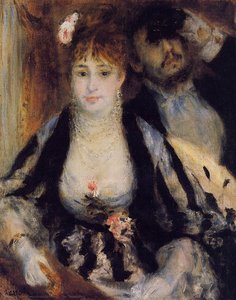
The composition is laden with symbolic meaning. The woman, dressed in a flamboyant gown adorned with bold stripes, commands attention – her gaze directed towards the man, while he uses his opera glasses to survey the audience. This subtle exchange suggests a dynamic interplay of attraction and observation, hinting at unspoken desires and social maneuvering. The contrast between the woman’s vibrant attire and the muted tones of the background further emphasizes her importance within the scene. The inclusion of the chair and the tie on one of the figures adds layers of detail, suggesting a shared experience and a sense of camaraderie.
Renoir's use of light is particularly noteworthy. He masterfully captures the interplay of artificial light from the stage with the soft glow emanating from the theater box, creating a warm and inviting atmosphere. The shadows cast by the drapery and the figures add depth and dimension to the composition, while also contributing to the overall sense of intimacy. The painting’s emotional impact is one of quiet elegance and understated sensuality – a testament to Renoir's ability to capture the essence of human connection within a fleeting moment.
Reproduktionen und Ihr Zuhause
ArtsDot offers meticulously crafted, hand-painted reproductions of “Das kleine Theaterhäuschen” that faithfully recreate Renoir’s original masterpiece. Each reproduction is created by skilled artists using archival-quality materials and techniques, ensuring exceptional detail and color accuracy. Whether you are an art collector, a design enthusiast, or simply seeking to add a touch of timeless elegance to your home, our reproductions provide a beautiful and authentic way to experience the magic of this iconic painting. Bring the captivating atmosphere of Renoir’s Parisian theater box into your space – a reminder of beauty, intimacy, and the enduring allure of Impressionism.
Ähnliche Kunstwerke

Über den Künstler
frühes Leben und Karriere
pierre-auguste renoir, ein prägender französischer Künstler, wurde am 25. Februar 1841 in Limoges, Frankreich, geboren. Er spielte eine entscheidende Rolle bei der Gestaltung des Impressionismus und war bekannt für sein lebendiges Licht und seine gesättigten Farben. Renoirs Werk feierte Schönheit, insbesondere weibliche Sinnlichkeit, und platzierte ihn in einer Linie von Künstlern, die von Rubens bis Watteau reicht.Künstlerisches Erbe
Renoirs Vermächtnis erstreckte sich über seine Leinwand hinaus, da er der Patriarche einer Familie war, in der Kunst in verschiedenen Formen blühte. Seine Kinder, pierre renoir (1885–1952), Filmemacher jean renoir (1894–1979) und Keramikkünstler claude renoir (1901–1969), leisteten alle bedeutende Beiträge in ihren jeweiligen Bereichen. Sein Enkel, Filmemacher claude renoir (1913–1993), vertiefte das künstlerische Erbe der Familie weiter.Bekannte Werke und Museen
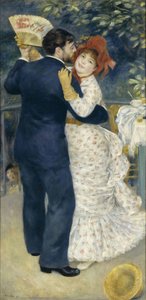
* Dance at Bougival, ein bemerkenswertes Gemälde von Renoir, zeigt seine Meisterschaft beim Festhalten der Essenz des Impressionismus. * Das Musée des Collettes, das sich in Cagnes-sur-Mer, Frankreich, befindet, ist ein Muss für Kunstliebhaber. Dieses Museum, das einst das Zuhause von Pierre-Auguste Renoir war, dient als Zeugnis seines Lebens und Werks und beherbergt fünfzehn seiner Gemälde. * Das Musée Maurice Denis, ein weiteres verstecktes Juwel in Frankreich, präsentiert eine beeindruckende Sammlung französischer Postimpressionistischer Gemälde aus dem späten 19. und frühen 20. Jahrhundert.Renoirs Kunst mit ArtsDot entdecken
- Entdecken Sie den Charme des Musée des Collettes (Frankreich) und seiner Impressionistenkunst bei ArtsDot: [https://ArtsDot.com/@@/a@d3aupf](https://ArtsDot.com/@@/a@d3aupf)
- Erkunden Sie die Wunder des Musée Maurice Denis (Frankreich) mit ArtsDot: /de/art/show/art-d3aue3-de/
- Ansehen Sie sich Renoirs Gemälde, einschließlich Dance at Bougival, bei ArtsDot: [https://ArtsDot.com/@/pierre-auguste renoir](https://ArtsDot.com/@/pierre-auguste%20renoir)
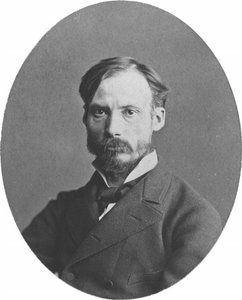
Pierre-Auguste Renoir
1841 - 1919 , Frankreich
Kurzinfos
- Beeinflusste Künstler:
- Rubens
- Watteau
- Bemerkenswerte Werke:
- Tanz im Moulin de la Galette
- Bootsfahrt-Mittagessen
- Nach dem Bad
- Tanz in Bougival
- Geburtsdatum: 25. Februar 1841
- Geburtsort: Limoges, Frankreich
- Künstlerischer Stil: Impressionismus
- Nationalität: Französisch
- Todatum: 3. Dezember 1919
- Vollständiger Name: Pierre-Auguste Renoir
- Von Künstlern Beeinflusst:
- Camille Pissarro
- Édouard Manet
Ähnliche Artikel

Pierre-Auguste Renoir: Die 25 Meisterwerke des Impressionismus für Ihr Zuhause | ArtsDot
Entdecken Sie die 25 schönsten Meisterwerke von Pierre-Auguste Renoir! Tauchen Sie ein in die Welt des Impressionismus, erleben Sie berühmte Gemälde wie 'Bal au moulin de la Galette' und finden Sie hochwertige Kunstdrucke für Ihr Zuhause. Jetzt auf ArtsDot.com!
The Luminous World of Pierre-Auguste Renoir: An Exploration of Impressionism's Sensuous Embrace
Explore the captivating world of Pierre-Auguste Renoir! Discover his life, iconic Impressionist masterpieces & enduring legacy with our expert guide. High-quality reproductions available.
Impressionismus: Die 10 Meisterwerke, die eine Kunstbewegung prägten | ArtsDot
Entdecken Sie die 10 Meisterwerke des Impressionismus! Von Monet bis Renoir – erfahren Sie die Geschichten hinter ikonischen Gemälden, Techniken & Farben. Hochwertige Reproduktionen auf ArtsDot.com.

Impressionismus: Die 10 Meisterwerke, die eine Kunstbewegung prägten | ArtsDot
Entdecken Sie die 10 Meisterwerke des Impressionismus! Von Monet bis Renoir – erleben Sie die Geschichten, Techniken & Farben berühmter Künstler. Kunstdrucke in Museumsqualiät auf ArtsDot.com.

Impressionismus Meisterwerke: Die Top 10 Kunstwerke für Ihr Zuhause | ArtsDot
Entdecken Sie die Top 10 Meisterwerke des Impressionismus! Von Monet bis Renoir – erfahren Sie die Geschichten hinter berühmten Gemälden, Techniken & Farben. Hochwertige Kunstdrucke auf ArtsDot.com.