

 Vorschau anzeigen
 Versenden
 Teilen
 Details anzeigen

 Herunterladen
 Ähnliche Objekte
 Röntgenaufnahme
 Diashow
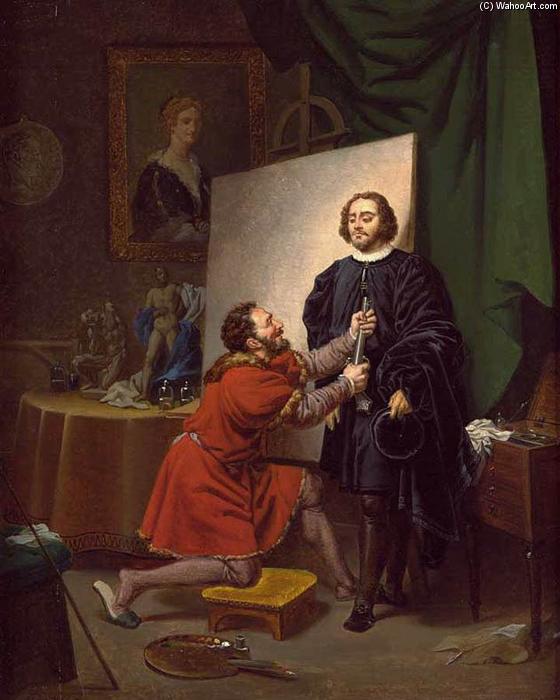
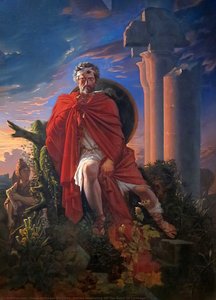
Aretino in the Studio of Tintoretto
 1822
1822 59.0 x 49.0 cm
 Weiterlesen
Handgefertigte Ölreproduktion
Handgemaltes Ölgemälde auf Leinwand in Ihrer Wunschgröße und mit Rahmen, auf Bestellung von unseren Künstlern angefertigt. ( Druck bestellen Bild kaufen)




































Wählen Sie aus unseren vordefinierten Formaten, die den ursprünglichen Proportionen des Kunstwerks entsprechen.

Sie können Ihre eigenen Maße eingeben, um einen bestimmten Rahmen oder Platz auszufüllen. Wenn die gewählte Größe nicht den Proportionen des Originalbildes entspricht, werden wir das Kunstwerk entweder beschneiden oder das Gemälde durch zusätzliche, handgemalte Elemente erweitern. Ein digitales Mockup wird Ihnen zur Genehmigung zugesandt, bevor die Produktion beginnt.
Bitte beachten Sie, dass die Bildschirmvorschau nicht die tatsächliche Beschneidung oder Erweiterung widerspiegelt. Nur das Mockup zeigt die endgültige Komposition exakt an.
Obwohl Sondermaße verfügbar sind, empfehlen wir, eine Größe aus der vordefinierten Liste zu wählen, um die ursprünglichen Proportionen beizubehalten.
Nach der Bestellung wird das ArtsDot.com-Team dem Kunden Anweisungen per E-Mail zusenden und eine Mockup-Vorschau bereitstellen.
Weltweiter Versand () in nur 3 bis 4 Wochen statt der üblichen 5 Wochen. (6 September). Keine Kompromisse bei der Qualität.

Kostenloser weltweiter Expressversand

Hochwertige Leinenleinwand

Umfassender Versicherungsschutz beim Versand

Zollgebühren-Rückerstattungsgarantie

Garantie für exakte Farbtreue

100 Tage Rückgaberecht (nur bei Mängeln)

100% Geld-zurück-Garantie

Mengenrabatt verfügbar
 Die Glasoption ist nur für Größen unter 110 cm verfügbar.

Aretino in the Studio of Tintoretto
Art der Reproduktion
Format der Reproduktion
-


Gesamtpreis
$ 263
Ähnliche Kunstwerke







Über den Künstler
John Sell Cotman: A Master of the Norwich School
Born in Norwich, England, on May 16th, 1782, John Sell Cotman’s life was a testament to the enduring power of observation and artistic dedication. The son of a silk merchant and lace dealer, his early upbringing seemed destined for a conventional path within the family business; however, from a remarkably young age, Cotman displayed an undeniable aptitude for art, a passion that ultimately steered him away from commerce and toward the captivating world of painting. His education at Norwich Grammar School provided a foundation, but it was his independent explorations of the surrounding countryside – the rolling hills of North Norfolk, the dramatic coastlines, and the serene landscapes of Wales – that truly ignited his artistic spirit.
Cotman’s early career mirrored that of many aspiring artists of the era: a period spent in London, absorbing the techniques and philosophies of established masters. He joined the sketching club led by J.M.W. Turner, Peter de Wint, and Thomas Girtin, immersing himself in the practice of plein air painting – capturing nature directly on location. These formative years instilled in him a deep appreciation for light, atmosphere, and the subtle nuances of the English landscape. Crucially, his travels with these influential figures exposed him to the burgeoning Romantic movement, which emphasized emotion, individualism, and the sublime beauty of the natural world.
The Norwich School and its Distinctive Style
Cotman’s return to Norwich marked a pivotal moment in his career and solidified his association with the Norwich School of painters. This group, centered around the city's art college, distinguished itself from the prevailing academic style by prioritizing atmospheric effects, loose brushwork, and a focus on regional landscapes. Unlike the polished, idealized scenes favored by some of their contemporaries, Cotman’s paintings possessed a remarkable immediacy and freshness, capturing the fleeting qualities of light and weather with exceptional skill.
His palette was often muted, dominated by greens, blues, and browns – colors that perfectly mirrored the subtle hues of the Norfolk countryside. He employed a broken brushstroke technique, layering thin washes of paint to create a sense of depth and atmospheric perspective. This approach wasn’t about meticulous detail; rather, it was an attempt to convey the *feeling* of a place—its mood, its character, its inherent beauty. His work frequently depicted scenes of rural life, capturing the dignity and simplicity of the working class alongside the grandeur of the natural world.
Key Works and Artistic Development
Cotman’s artistic journey spanned several decades, during which he produced a vast body of work encompassing landscapes, coastal scenes, and watercolors. His early works, such as *A Study of a River* (1803) and *The Mill at Walsey Hall* (1805), demonstrate his growing mastery of light and color. As the years progressed, his style evolved, becoming increasingly expressive and emotionally charged.
Notable paintings from this period include *Norfolk Coast* (c. 1823-24) – a breathtaking depiction of the North Norfolk coastline bathed in the golden light of sunset – and *The River Wensum at Barton Turf* (1836), which exemplifies his ability to capture the ephemeral qualities of water and atmosphere. His later works, particularly those created during his time in Wales, reveal a heightened sense of drama and intensity, reflecting the rugged beauty of the Welsh landscape.
Legacy and Historical Significance
Despite facing periods of relative obscurity, John Sell Cotman’s influence on subsequent generations of British landscape painters is undeniable. His work served as an inspiration for artists such as J.M.W. Turner and John Constable, both of whom admired his innovative approach to capturing the essence of the English countryside. Cotman's emphasis on direct observation, atmospheric effects, and emotional expression helped to shape the development of Romantic landscape painting in Britain.
Today, Cotman’s paintings are celebrated for their beauty, sensitivity, and profound connection to the natural world. His legacy as a leading figure of the Norwich School continues to resonate with art lovers and scholars alike, ensuring that his contribution to British art history remains firmly secure. He died on July 24th, 1842, leaving behind a rich artistic heritage that continues to captivate and inspire.
pierre nolasque bergeret
1782 - 1863 , France
Kurzinfos
- Artistic Movement Or Style: Norwich School
- Artists Or Movements Influenced By This Artist:
- Turner
- Constable
- Artists Who Influenced This Artist:
- J.M.W. Turner
- Peter de Wint
- Date Of Birth: 16 May 1782
- Date Of Death: 24 July 1842
- Full Name: John Sell Cotman
- Nationality: British
- Notable Artworks:
- A Study
- Norwich School
- Place Of Birth: Norwich, England