

 Versenden
 Teilen
 Details anzeigen

 Herunterladen
 Ähnliche Objekte
 Diashow
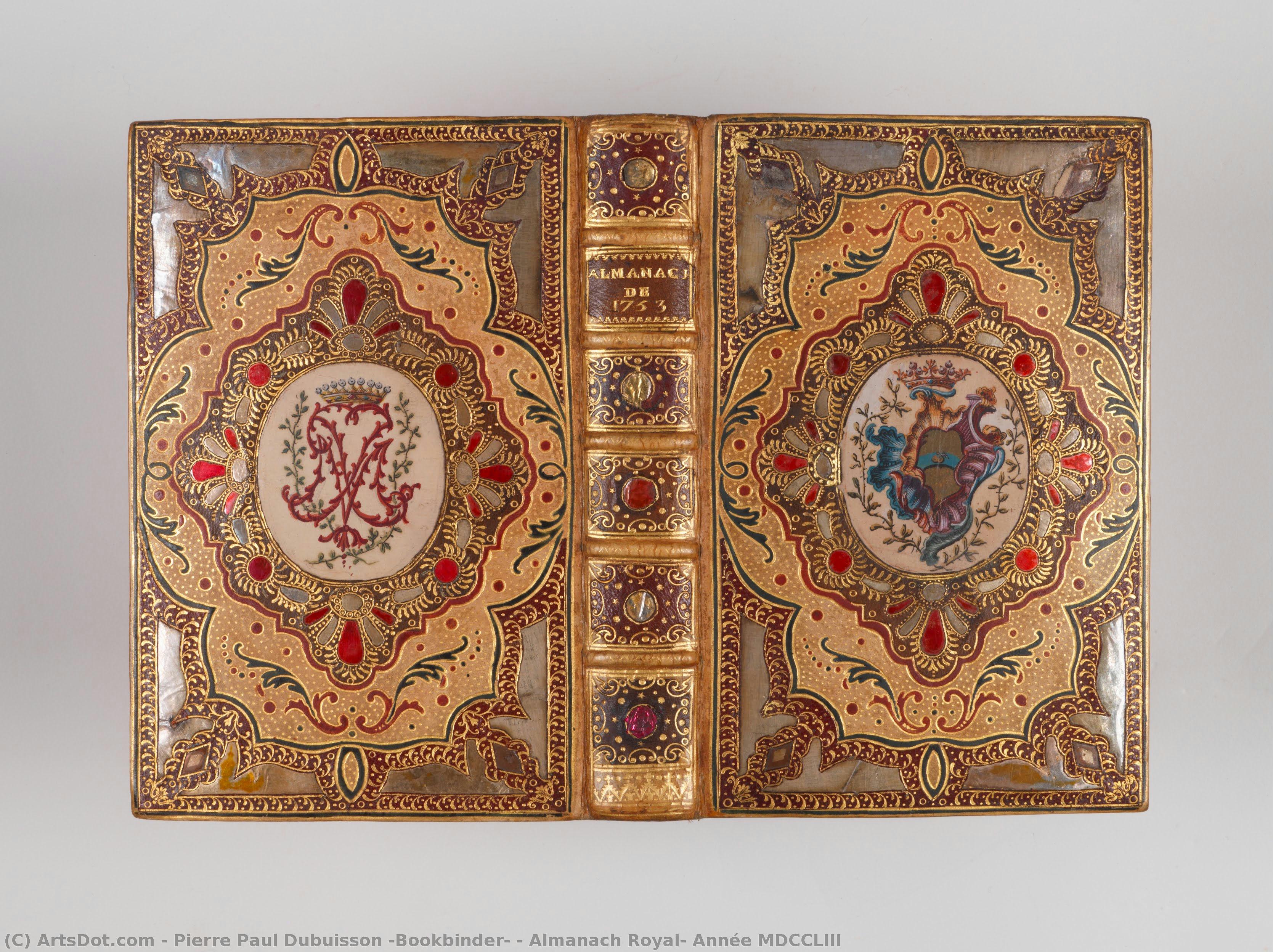
Almanach Royal, Année MDCCLIII
 Other-None
- Rococo
 1753
1753- Early Modern
 19.0 x 13.0 cm
 Calouste Gulbenkian Stiftung
 Weiterlesen
Handgefertigte Ölreproduktion
Handgemaltes Ölgemälde auf Leinwand in Ihrer Wunschgröße und mit Rahmen, auf Bestellung von unseren Künstlern angefertigt. ( Druck bestellen Bild kaufen)




































Wählen Sie aus unseren vordefinierten Formaten, die den ursprünglichen Proportionen des Kunstwerks entsprechen.

Sie können Ihre eigenen Maße eingeben, um einen bestimmten Rahmen oder Platz auszufüllen. Wenn die gewählte Größe nicht den Proportionen des Originalbildes entspricht, werden wir das Kunstwerk entweder beschneiden oder das Gemälde durch zusätzliche, handgemalte Elemente erweitern. Ein digitales Mockup wird Ihnen zur Genehmigung zugesandt, bevor die Produktion beginnt.
Bitte beachten Sie, dass die Bildschirmvorschau nicht die tatsächliche Beschneidung oder Erweiterung widerspiegelt. Nur das Mockup zeigt die endgültige Komposition exakt an.
Obwohl Sondermaße verfügbar sind, empfehlen wir, eine Größe aus der vordefinierten Liste zu wählen, um die ursprünglichen Proportionen beizubehalten.
Nach der Bestellung wird das ArtsDot.com-Team dem Kunden Anweisungen per E-Mail zusenden und eine Mockup-Vorschau bereitstellen.
Weltweiter Versand () in nur 3 bis 4 Wochen statt der üblichen 5 Wochen. (5 September). Keine Kompromisse bei der Qualität.

Kostenloser weltweiter Expressversand

Hochwertige Leinenleinwand

Umfassender Versicherungsschutz beim Versand

Zollgebühren-Rückerstattungsgarantie

Garantie für exakte Farbtreue

60 Tage Rückgaberecht (nur bei Mängeln)

100% Geld-zurück-Garantie

Mengenrabatt verfügbar
 Die Glasoption ist nur für Größen unter 110 cm verfügbar.

Almanach Royal, Année MDCCLIII
Art der Reproduktion
Format der Reproduktion
-


Gesamtpreis
$ 263
A Glimpse into the Golden Age of French Craftsmanship
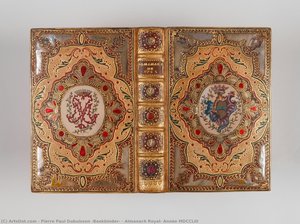
To hold a piece of history like the Almanach Royal, Année MDCCLIII is to touch the very pulse of the mid-18th century. This exquisite artifact, a masterpiece of bookbinding by the enigmatic Pierre Paul Dubuisson, serves as more than just a temporal record; it is a tactile symphony of gold and leather. The covers of these volumes are adorned with an intricate dance of gilded motifs, where delicate floral arrangements intertwine with graceful avian figures, creating a visual texture that feels both regal and deeply intimate. Every stroke of the binder's tool was designed to catch the light, reflecting the opulence of the French court and the meticulous attention to detail that defined the era of Louis XV.
The artistry of Dubuisson lies in his ability to transform a functional object into a decorative treasure. The technique employed here—a sophisticated method of gold tooling—requires immense precision and a steady hand, as each pattern is pressed into the leather with heated brass tools. This process creates a subtle relief that invites the viewer to trace the patterns with their eyes, discovering hidden layers of complexity within the gilded flora and fauna. In the background, the presence of a soft, painterly scene featuring a seated woman adds a layer of narrative depth, suggesting a world where literature and fine art were inextricably linked in the private sanctuaries of the aristocracy.
Symbolism and the Elegance of the Rococo Spirit
The aesthetic language of the 1753 Almanach is deeply rooted in the Rococo spirit, characterized by its love for organic forms, asymmetry, and a sense of lighthearted elegance. The birds and blossoms depicted on the cover are not merely decorative; they symbolize the fleeting beauty of nature and the prosperity of the French monarchy during this period. There is a profound sense of nostalgia embedded in these gilded pages, evoking a time when craftsmanship was a slow, meditative process of devotion. For the modern collector or interior designer, this piece offers a window into an age of unparalleled refinement, where even a simple almanac was treated as a canvas for high art.
Integrating a reproduction of such a magnificent work into a contemporary space provides an instant sense of historical weight and sophistication. Whether placed in a curated library, a grand study, or used as a focal point in a luxurious lounge, the Almanach Royal brings with it an aura of timelessness. It serves as a conversation piece that bridges the gap between the centuries, offering a touch of French grandeur to any environment. For those who appreciate the intersection of historical narrative and exquisite decorative detail, this work stands as a testament to the enduring power of the artisan's hand.
Ähnliche Kunstwerke


Über den Künstler
The Silent Artisan of Royal Bindings
Pierre Paul Dubuisson remains an enigmatic figure in the annals of French bookbinding history, a master whose name is whispered through the gilded halls of 18th-century craftsmanship. While his life lacks the sweeping biographical narratives of the era's great painters, his presence is felt in every delicate flourish of gold leaf and every meticulously pressed leather cover that has survived the centuries. Born around 1720 in France, Dubuisson emerged from the vibrant workshop culture of Paris to become a defining voice in the aesthetic standards of the mid-18th century. He was not merely a craftsman but a creator of tactile symphonies, transforming functional volumes into precious objects of art that reflected the opulence and grace of the French court.
His journey into mastery began under the tutelage of Nicolas Gaspard Fabri, a celebrated bookbinder whose innovative techniques provided the foundation for Dubuisson’s later brilliance. From Fabri, he inherited a profound dedication to the technical rigors of leatherworking—the precise cutting, the careful gluing, and the demanding art of tooling. Yet, Dubuisson possessed an additional layer of artistic vision that allowed him to transcend mere utility. He became a master of gilt tooling, a method where heated brass tools are pressed into leather to create subtle reliefs that catch the light, inviting the viewer to trace intricate patterns with their eyes.
A Legacy in Gold and Heraldry
The zenith of Dubuisson’s career was marked by his appointment as the royal binder, succeeding the renowned Antoine-Michel Padeloup. This prestigious position placed him at the heart of French cultural life, tasking him with the creation of bindings that would represent the prestige of the monarchy. His most enduring contribution to this era is perhaps found in his work on the Almanach Royal, particularly the magnificent 1753 edition. These volumes were more than simple records; they were masterpieces of the Rococo spirit, characterized by an organic love for asymmetry and lighthearted elegance. In these works, one finds a breathtaking dance of gilded motifs, where delicate floral arrangements intertwine with graceful avian figures, symbolizing the fleeting beauty of nature and the prosperity of the age.
Beyond the leather and gold, Dubuisson was a man of deep scholarly and heraldic interest. He was an accomplished héraldist, a skill that lent a unique authority to his decorative work. In 1757, he authored the Armorial des principales maisons et familles du Royaume, a significant undertaking that showcased his knowledge of lineage and symbolism. This expertise allowed him to infuse his bindings with a layer of narrative depth, where every crest and emblem was placed with historical precision. His workshop also pioneered efficient yet exquisite methods for decorating almanacs, utilizing well-designed engraved plaques to create complex patterns within a press, a technique that ensured consistency without sacrificing the breathtaking detail for which he was famed.
The Enduring Spirit of Craftsmanship
As the mid-18th century progressed, Dubuissimo’s work began to bridge the gap between the ornate Rococo style and the emerging neoclassical aesthetic. His ability to balance bold geometric patterns with delicate, flowing motifs suggests an artist who was acutely aware of the shifting tides of taste. Even as his personal history fades into the shadows of the past—with records indicating he remained active until around his death in 1762—his artistic fingerprints remain indelible.
To encounter a work by Pierre Paul Dubuisson today is to experience a direct connection to the Golden Age of French craftsmanship. His legacy is defined by several key pillars of artistry:
- Technical Precision: The mastery of gold tooling and the creation of intricate dentelles that rivaled the greatest binders of his time.
- Symbolic Depth: The integration of heraldic accuracy and naturalistic motifs to tell stories of power, nature, and nobility.
- Innovation: The development of specialized decorative plaques that allowed for high-level artistry in mass-produced royal publications.
- Historical Significance: His role as the Royal Binder, shaping the visual identity of French literature and prestige during the reign of Louis XV.
Ultimately, Dubuisson was an artisan of the quiet moment—the steady hand, the heated tool, and the silent application of gold. He transformed the act of binding a book into an act of preservation, ensuring that the elegance of his era would be captured not just in words, but in the very skin of the books themselves.
Kurzinfos
- Artistic Movement Or Style: Fine Bookbinding Art
- Artists Or Movements Influenced By This Artist: ['Neoclassical Sensibility']
- Full Name: Pierre Paul Dubuisson
- Nationality: French
- Notable Artworks: ['Almanach Royal, Année MDCCLIII']
- Place Of Birth: France
Ähnliche Artikel

Golden Glow: How to Use Metallic Gold Artworks to Elevate Your Home Decor with Timeless Luxury
Discover how to elevate your home with the timeless elegance of metallic gold artworks. From sculptural metal pieces to gilded oil paintings, learn expert interior design tips for integrating luxurious gold accents into your space with sophistication and grace.
The Allure of Gold in Art History: Symbolism, Technique & Cultural Significance
Explore the rich history of gold in art! Discover symbolism, techniques & cultural significance from ancient civilizations to Klimt's masterpieces. Expert insights for collectors at ArtsDot.
Gustav Klimt: Die 25 Meisterwerke des Wiener Jugendstils | ArtsDot
Entdecken Sie die 25 ikonischsten Gemälde von Gustav Klimt! Tauchen Sie ein in die Welt der Wiener Secession, des Jugendstils und der goldenen Phase. Hochwertige Reproduktionen & Inspiration für Ihr Zuhause auf ArtsDot.com.

Goldene Meisterwerke: Die Top 10 berühmtesten Gemälde mit Blattgold – ArtsDot
Entdecken Sie die Top 10 Gemälde, die von Blattgold verzaubern! Von Klimt bis zur Renaissance – erfahren Sie die Geschichten hinter ikonischen Kunstwerke & lassen Sie sich für Ihre Wohnraumgestaltung inspirieren. Hochwertige Reproduktionen auf ArtsDot.com.
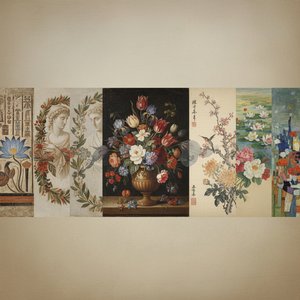
Blossoms of Time: A Historical & Aesthetic Exploration of Floral Painting Across Cultures
Explore the rich history of floral painting! Discover symbolism, techniques & masterpieces from Van Huysum to O'Keeffe. Expert insights for art lovers & collectors at ArtsDot.

