

 Vorschau anzeigen
 Versenden
 Teilen
 Details anzeigen

 Herunterladen
 Ähnliche Objekte
 Röntgenaufnahme
 Diashow
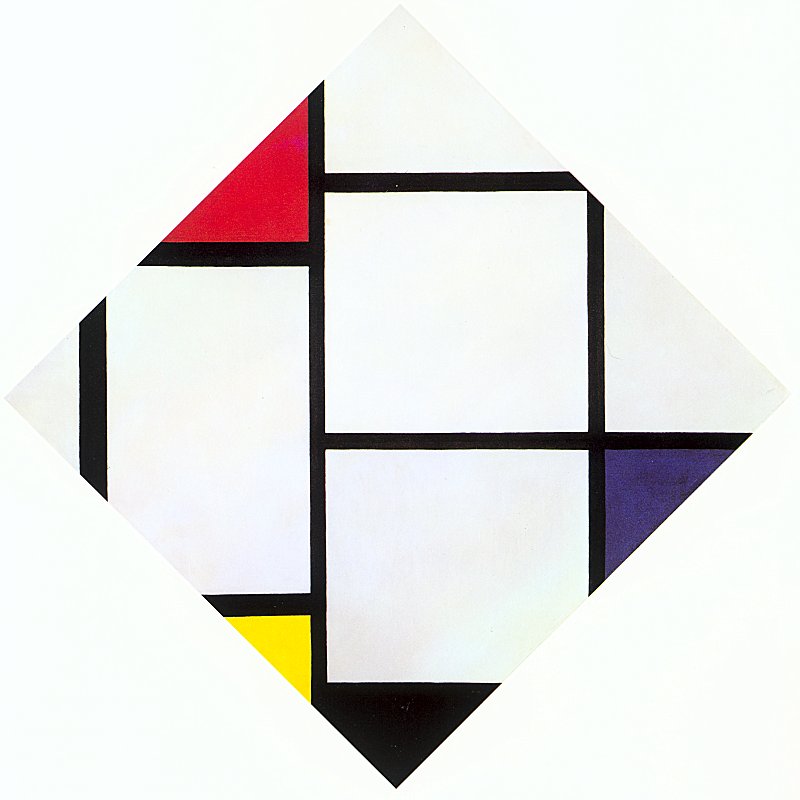
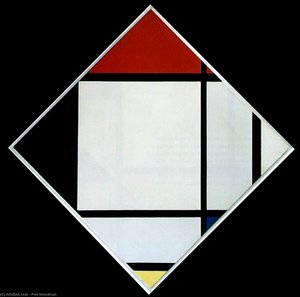
25 Lozenge Composition mit Rot, Grau, Blau, Gelb und Schwarz


 Weiterlesen
Erwerben Sie ein hochauflösendes, optimiertes digitales Bild, das der Online-Vorschau weit überlegen ist.
Jede Datei wird von unseren hauseigenen Spezialisten mit modernsten Werkzeugen und fachmännischer manueller Retusche sorgfältig vorbereitet. Wir stellen sicher, dass jedes Bild eine außergewöhnliche Klarheit, präzise Farbgenauigkeit und feinste Details aufweist.
Die endgültige Datei wird innerhalb von 72 Stunden per E-Mail zugestellt und ist für den sofortigen Einsatz in professionellen, redaktionellen und Druckumgebungen optimiert. Es handelt sich um dieselbe Qualität, der führende Designstudios, Verlage und Galerien vertrauen.
Digitales Bild
Laden Sie eine hochauflösende Datei für die persönliche Präsentation, den Druck und kreative Projekte herunter. ( Druck bestellen Handgemalte Reproduktion bestellen)
In jeder Bestellung digitaler Bilder enthalten
Professionelle digitale Bereitstellung, garantiert
Wenn Sie sich für ArtsDot.com entscheiden, erhalten Sie nicht nur ein Bild – Sie erhalten ein professionell aufbereitetes digitales Kunstwerk, das mit höchster Präzision erstellt und durch eine Zufriedenheitsgarantie abgesichert wird. Hier ist alles, was automatisch mit Ihrer Bestellung geliefert wird:

Schnelle E-Mail-Zustellung
Ihre hochauflösende digitale Bilddatei wird Ihnen innerhalb von 72 Stunden nach der Bestellung per E-Mail zugestellt – bereit zur sofortigen Verwendung.

KI-optimierte digitale Datei
Ihre Kunstwerke werden professionell mithilfe fortschrittlicher KI-Tools und manueller Bearbeitung optimiert, um maximale Detailtreue, Klarheit und Farbgenauigkeit zu gewährleisten.

Lebenslanger kostenloser Neudruckservice
Datei versehentlich gelöscht oder verloren? Keine Sorge – wir senden sie Ihnen jederzeit kostenlos erneut zu.

Keine Einfuhrgebühren – jemals
Genießen Sie Ihr Kunstwerk sofort ohne Zollgebühren, Einfuhrabgaben oder Versandkosten – digitale Downloads sind immer steuerfrei.

Garantierte Farbtreue
Wir garantieren, dass Ihr digitales Bild mithilfe professioneller Werkzeuge und Farbmanagement die Originalfarben so präzise wie möglich wiedergibt.

60-Tage-Zufriedenheitsgarantie
Sollten Sie mit Ihrem digitalen Bild nicht zufrieden sein, werden wir es überarbeiten oder Ihnen innerhalb von 60 Tagen 100% erstatten – ohne Wenn und Aber.

100% Geld-zurück-Garantie
Nicht zufrieden? Erhalten Sie innerhalb von 60 Tagen nach Erhalt Ihrer digitalen Datei eine vollständige Rückerstattung – ohne Angabe von Gründen.

Rabatte bei Großbestellungen
3 Bilder kaufen, 10% sparen – 5 Bilder kaufen, 15% sparen – Ab 10 Bildern 20% sparen. Ideal für kreative Projekte, Galerien und Agenturen.
Details zum Sammlerstück
A Universe in Geometry: Deconstructing Piet Mondrian’s ‘25 Lozenge Composition with Red, Gray, Blue, Yellow, and Black’
Piet Mondrian's ‘25 Lozenge Composition with Red, Gray, Blue, Yellow, and Black’ is not merely a painting; it is a visual manifesto. Emerging from the crucible of early 20th-century artistic experimentation, this work embodies the core tenets of Neoplasticism – an aesthetic philosophy that sought to distill reality down to its most fundamental components: straight lines, primary colors, and a harmonious balance achieved through asymmetrical arrangements. To gaze upon it is to enter a world stripped bare of representational pretense, a realm where color and form exist in pure, unadulterated expression.
The Genesis of an Aesthetic Revolution
Born from Mondrian’s profound spiritual quest and his engagement with the burgeoning avant-garde scene in Paris, particularly Cubism, Neoplasticism represented a radical departure from traditional artistic concerns. Mondrian wasn't simply interested in *what* he painted, but *how*. He believed that by reducing art to its essential elements, he could express universal harmonies and reveal underlying spiritual truths. The move towards abstraction was not arbitrary; it was a deliberate process of elimination, shedding the superfluous to arrive at a purer form of visual communication. His earlier explorations in landscapes and Impressionism served as crucial stepping stones, gradually leading him away from depicting the external world toward constructing an internal one governed by logic and balance. The lozenge format itself – a diamond shape rotated within the square canvas – was a deliberate choice, rejecting the conventional rectangular frame and introducing a dynamic tension that further destabilizes any sense of static order.
A Symphony of Lines and Color
The composition is deceptively simple yet profoundly complex. Black lines, precise and unwavering, carve out a grid-like structure across the canvas, defining rectangles and squares of varying sizes. Within these geometric boundaries reside blocks of primary colors – red, yellow, and blue – alongside areas of white, gray, and black. There’s no blending, no shading, no attempt to mimic naturalistic light or texture. Each color is applied flatly, boldly asserting its presence within the composition. This deliberate lack of modulation creates a sense of clarity and intellectual rigor. The arrangement isn't symmetrical; instead, Mondrian masterfully employs an asymmetrical balance, creating visual interest and preventing the work from feeling rigid or predictable. The eye dances across the canvas, guided by the interplay of lines and colors, constantly seeking equilibrium within the deliberate imbalance.
Beyond the Visual: Symbolism and Emotional Resonance
While seemingly devoid of subject matter in the traditional sense, ‘25 Lozenge Composition’ is rich with symbolic meaning. The horizontal and vertical lines are often interpreted as representing opposing forces – masculine and feminine, static and dynamic – striving for harmony. The primary colors, unmixed and pure, symbolize fundamental energies and universal truths. Mondrian believed that through this reduction to essentials, he could transcend the particular and access a realm of spiritual universality. The emotional impact is one of serene order, intellectual clarity, and quiet contemplation. It’s not a painting designed to evoke dramatic passion or narrative storytelling; rather, it invites viewers to engage in a meditative experience, to find peace within its carefully constructed geometry, and to contemplate the underlying principles that govern our world. The enduring appeal of Mondrian's work lies in its ability to offer a sense of calm amidst chaos, a visual sanctuary in an increasingly complex world.
Historical Context & Influence
Mondrian’s artistic journey began in Holland during the early years of the 20th century. Influenced by Impressionism and Post-Impressionism—particularly Cézanne and Gauguin—he initially experimented with landscapes and figurative compositions. However, he quickly recognized that these styles were incapable of conveying his vision of a harmonious universe. He turned to Cubism, admiring Picasso’s innovative use of fractured perspectives, but ultimately rejected its complexity as antithetical to his aesthetic goals. Recognizing the need for a more fundamental approach, Mondrian embraced Neoplasticism—a movement he founded alongside Theo van Doesburg—which sought to distill art down to its purest form.
Technique & Material Considerations
The execution of ‘25 Lozenge Composition’ exemplifies Mondrian's meticulous technique. He employed oil paints on a square canvas, applying them with unwavering precision using brushes and spatulas. The flatness of the surface is achieved through thin layers of paint—a deliberate choice that maximizes luminosity and minimizes textural variation. Importantly, Mondrian adhered to strict compositional rules: he utilized black lines to delineate rectangular areas filled with primary colors (red, yellow, blue) and white and gray. This geometric framework reflects his belief in universal harmony and represents a radical departure from representational art.
Symbolic Interpretation & Aesthetic Significance
More than just a visual spectacle, ‘25 Lozenge Composition’ carries profound symbolic weight. The orthogonal lines—horizontal and vertical—represent opposing forces striving for equilibrium, mirroring the cosmic order Mondrian envisioned. The primary colors embody fundamental energies and symbolize universal truths—a testament to his spiritual quest. Considered alongside other works of Neoplasticism, this painting stands as a cornerstone of modern art, demonstrating how abstraction can communicate complex ideas with remarkable clarity and elegance.
Contemporary Relevance & Artistic Legacy
Mondrian’s influence extends far beyond the realm of painting, shaping architectural designs, graphic design, and even fashion trends. His uncompromising commitment to geometric abstraction continues to inspire artists today who seek to explore new forms of visual expression—a legacy that underscores the enduring power of simplicity and intellectual rigor in art.
Ähnliche Kunstwerke
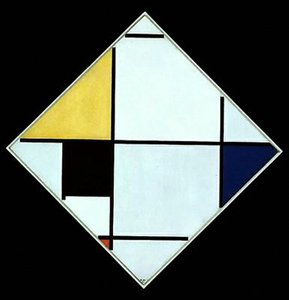
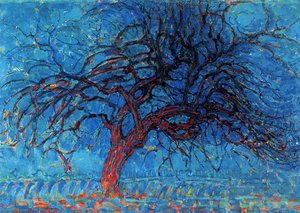
Biografie des Künstlers
**frühes Leben und Karriere in den Niederlanden (1872–1911)**
pieter cornelis mondriaan, bekannt ab 1911 als piet mondrian, war ein niederländischer Maler und Kunsttheoretiker, geboren am 7. März 1872 in Amersfoort, Niederlande. Er begann seine Karriere als Lehrer an der Grundschule und betrieb gleichzeitig Malerei, zunächst im Stil der Haag School des niederländischen Impressionismus.- Sein frühes Werk, das von naturalistischen Landschaften geprägt ist, kann in Gemälden wie the red mill und trees in moonrise zu sehen ist, die im kunstmuseum den haag ausgestellt wurden.
- Mondrians Suche nach einem persönlichen Stil führte ihn dazu, verschiedene künstlerische Bewegungen zu erkunden, darunter Pointillismus und Fauvismus.
- Seine erste Ausstellung im Jahr 1893 markierte den Beginn seiner produktiven Karriere.
**Die Entwicklung des Stils von Mondrian**
Von figurativ zu abstrakt Mondrians künstlerische Richtung verschob sich hin zu einem zunehmend abstrakten Stil, der in eine nicht-repräsentative Form mündete, die er Neoplasticismus nannte. Diese „reine plastische Kunst“ zielte darauf ab, „universelle Schönheit“ zu schaffen und seinen formalen Wortschatz auf Primärfarben (Rot, Blau und Gelb), Werte (Schwarz, Weiß und Grau) und Richtungen (horizontal und vertikal) zu beschränken.- Beispiele für diesen Stil lassen sich in Gemälden wie composition with yellow patch (46 x 46 cm, Neoplasticismus, Öl auf Leinwand) zu sehen sein.
- Mondrians Werk hatte einen enormen Einfluss auf die Kunst des 20. Jahrhunderts und beeinflusste nicht nur die abstrakte Malerei, sondern auch Design, Architektur und Mode.
**Vermächtnis und Einfluss**
Mondrians Vermächtnis erstreckt sich über sein eigenes Werk hinaus und beeinflusst wichtige Stile und Bewegungen wie Farbflächenmalerei, abstrakten Expressionismus und Minimalismus. Kunsthistoriker stephen bayley stellte fest, dass Mondrian zum Totem für alles geworden ist, was der Modernismus zu sein versuchte.- Entdecken Sie mehr von Mondrians Werk unter ArtsDot.com.
- Erfahren Sie mehr über die De Stijl-Bewegung und ihren Einfluss auf die moderne Kunst auf wikipedia.
- Entdecken Sie andere einflussreiche Künstler wie vincent van gogh und ihre Auswirkungen auf die Kunstwelt.
**Wichtige Werke und Ausstellungen**
* piet mondrian: apple blossom (Cubismus) (ansicht auf ArtsDot.com) * piet mondrian: still life with vase of spices ii (Cubismus) (ansicht auf ArtsDot.com) * piet mondrian: passionflower (73 x 48 cm, Kunstmuseum Den Haag, Postimpressionismus, Aquarell) (ansicht auf ArtsDot.com)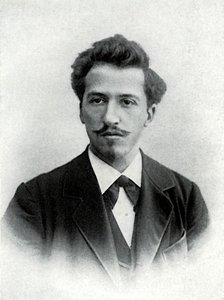
Piët Mondrian
1872 - 1944 , Niederlande
Kurzinfos
- Beeinflusste Künstler:
- Hague School
- Pointillismus
- Fauvismus
- Kubismus
- Bemerkenswerte Werke:
- Komposition mit Rot, Gelb und Blau
- Broadway Boogie Woogie
- Tableau Nr. 2 Komposition V
- Rhythmus der schwarzen Linien
- Geburtsdatum: 7. März 1872
- Geburtsort: Amersfoort, Niederlande
- Künstlerische Bewegung: De Stijl, Neoplasticismus
- Nationalität: Niederländisch
- Sterbedatum: 1944
- Vollständiger Name: Piët Mondriaan
- Von Künstlern Beeinflusst:
- Farbfeldmalerei
- Abstrakter Expressionismus
- Minimalismus

