 Vorschau anzeigen
 Versenden
 Teilen
 Details anzeigen

 Herunterladen
 Ähnliche Objekte
 Röntgenaufnahme
 Diashow
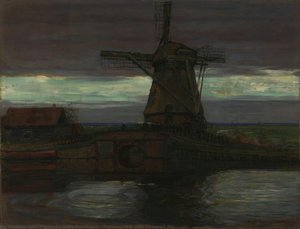
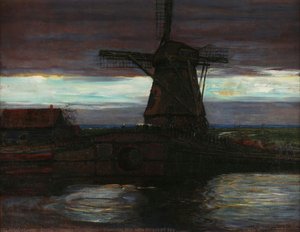
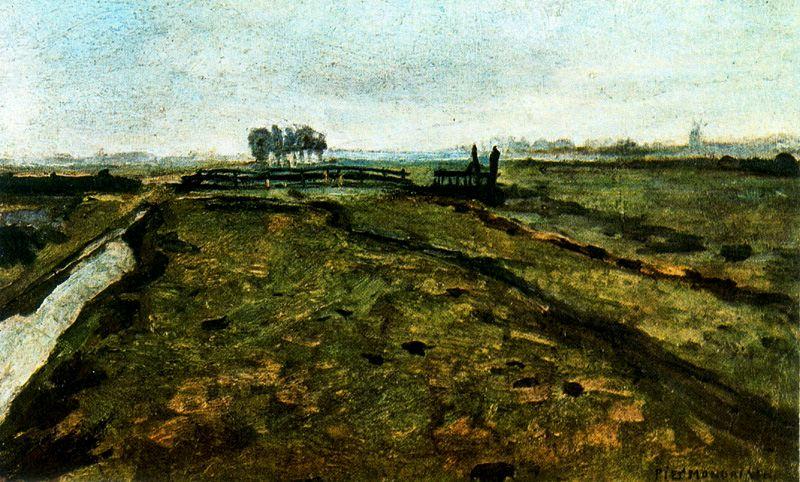
Landscape near Amsterdam

 Weiterlesen
Handgefertigte Ölreproduktion
Handgemaltes Ölgemälde auf Leinwand in Ihrer Wunschgröße und mit Rahmen, auf Bestellung von unseren Künstlern angefertigt. ( Druck bestellen Bild kaufen)




P118B $10

P118H $10

P118W $10

P438Z $10

P508JH $12

P508YH $12

P805H $10

P805Z $10

P919BZ $10

P919G $10

P919XJ $10

P959ZH $10

P968JZ $12

W106C $8

W218G $10

W218JH $8

W218Y $10

W307PJ $10

W316G $10

W316PJ $8

W316Y $10

W398PJ $8

W4111J $10

W500HY $15

W500JH $15

W692G $12

W849H $8

W940BG $15

W953PJ $8




Wählen Sie aus unseren vordefinierten Formaten, die den ursprünglichen Proportionen des Kunstwerks entsprechen.

Sie können Ihre eigenen Maße eingeben, um einen bestimmten Rahmen oder Platz auszufüllen. Wenn die gewählte Größe nicht den Proportionen des Originalbildes entspricht, werden wir das Kunstwerk entweder beschneiden oder das Gemälde durch zusätzliche, handgemalte Elemente erweitern. Ein digitales Mockup wird Ihnen zur Genehmigung zugesandt, bevor die Produktion beginnt.
Bitte beachten Sie, dass die Bildschirmvorschau nicht die tatsächliche Beschneidung oder Erweiterung widerspiegelt. Nur das Mockup zeigt die endgültige Komposition exakt an.
Obwohl Sondermaße verfügbar sind, empfehlen wir, eine Größe aus der vordefinierten Liste zu wählen, um die ursprünglichen Proportionen beizubehalten.
Nach der Bestellung wird das ArtsDot.com-Team dem Kunden Anweisungen per E-Mail zusenden und eine Mockup-Vorschau bereitstellen.
Weltweiter Versand () in nur 3 bis 4 Wochen statt der üblichen 5 Wochen. (21 August). Keine Kompromisse bei der Qualität.

Kostenloser weltweiter Expressversand

Hochwertige Leinenleinwand

Umfassender Versicherungsschutz beim Versand

Zollgebühren-Rückerstattungsgarantie

Garantie für exakte Farbtreue

60 Tage Rückgaberecht (nur bei Mängeln)

100% Geld-zurück-Garantie

Mengenrabatt verfügbar
 Die Glasoption ist nur für Größen unter 110 cm verfügbar.

Landscape near Amsterdam
Art der Reproduktion
Format der Reproduktion
-


Gesamtpreis
$ 263
Beschreibung des Kunstwerks
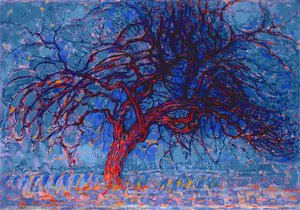
A Moment Frozen in Time: Piet Mondrian’s “Landscape near Amsterdam”
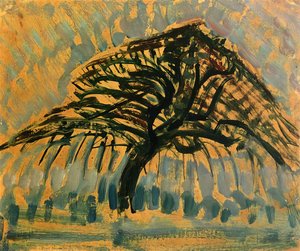
Piet Mondrian's "Landscape near Amsterdam," a deceptively simple yet profoundly resonant work, offers a glimpse into the artist’s evolving vision during a pivotal period of his career. Painted around 1908, this canvas isn’t merely a depiction of a Dutch countryside; it’s a carefully constructed exploration of form, color, and the nascent seeds of abstraction that would define Mondrian's groundbreaking style. Initially rooted in the Impressionistic traditions he’d honed – echoes of the Hague School are readily apparent in the atmospheric rendering of light and shadow – the painting quickly transcends mere representation, hinting at the geometric rigor to come.
The scene itself is familiar: a tranquil landscape dominated by rolling hills, punctuated by scattered trees and a meandering stream. However, Mondrian’s treatment of these elements is strikingly reductive. The forms are simplified, almost skeletal, dissolving into planes of color rather than meticulously rendered details. Notice the deliberate absence of shading; instead, variations in hue create depth and volume, suggesting a shift away from naturalistic observation towards an emphasis on pure visual experience. The composition feels balanced, yet subtly dynamic – a quiet tension between stillness and movement.
The Seeds of Neoplasticism
This painting represents a crucial stepping stone in Mondrian’s journey toward Neoplasticism, his revolutionary artistic philosophy that sought to distill art down to its essential elements. He believed that the world could be understood through fundamental geometric forms – lines and rectangles – and that these shapes, combined with primary colors (red, blue, yellow) and their opposites, could express universal truths. “Landscape near Amsterdam” isn’t fully realized Neoplasticism—it retains a connection to the natural world—but it demonstrates Mondrian's growing interest in reducing complex forms to their most basic components.
The use of muted earth tones – ochres, browns, and greens – creates a sense of groundedness, anchoring the composition. Yet, even within this palette, Mondrian introduces subtle shifts in color that suggest an underlying tension. The blues and yellows are not blended; they exist as distinct planes, creating visual separation and hinting at the formal arrangements he would later champion. This careful orchestration of color is a key element of his developing aesthetic.
Symbolism and Emotional Resonance
Beyond its purely formal qualities, “Landscape near Amsterdam” carries a quiet emotional weight. The scene evokes a sense of peaceful contemplation, inviting the viewer to slow down and appreciate the beauty of the natural world. The hazy atmosphere, reminiscent of early morning or late evening, contributes to this feeling of serenity. However, there’s also an underlying melancholy—a subtle awareness of transience and impermanence—that resonates deeply.
Mondrian himself described his artistic goals as seeking “universal harmony” through abstraction. While the landscape itself is recognizable, it's not meant to be a literal representation; rather, it’s an invitation to engage with fundamental principles of form and color. The painting becomes a visual meditation on order, balance, and the relationship between humanity and nature – themes that would continue to inform his work throughout his career.
A Legacy in Reproduction
Reproductions of “Landscape near Amsterdam” offer an accessible way to experience Mondrian’s artistic vision. The meticulous detail captured in high-quality reproductions allows viewers to appreciate the subtle nuances of color and form that define this pivotal work. Whether displayed as a statement piece in a modern interior or studied as a historical artifact, this painting remains a powerful testament to Mondrian's enduring influence on 20th-century art.
Ähnliche Kunstwerke


Über den Künstler
**frühes Leben und Karriere in den Niederlanden (1872–1911)**
pieter cornelis mondriaan, bekannt ab 1911 als piet mondrian, war ein niederländischer Maler und Kunsttheoretiker, geboren am 7. März 1872 in Amersfoort, Niederlande. Er begann seine Karriere als Lehrer an der Grundschule und betrieb gleichzeitig Malerei, zunächst im Stil der Haag School des niederländischen Impressionismus.- Sein frühes Werk, das von naturalistischen Landschaften geprägt ist, kann in Gemälden wie the red mill und trees in moonrise zu sehen ist, die im kunstmuseum den haag ausgestellt wurden.
- Mondrians Suche nach einem persönlichen Stil führte ihn dazu, verschiedene künstlerische Bewegungen zu erkunden, darunter Pointillismus und Fauvismus.
- Seine erste Ausstellung im Jahr 1893 markierte den Beginn seiner produktiven Karriere.
**Die Entwicklung des Stils von Mondrian**
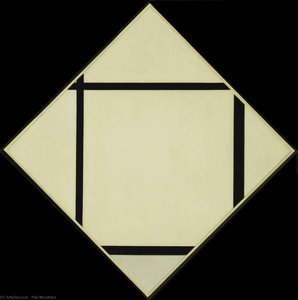
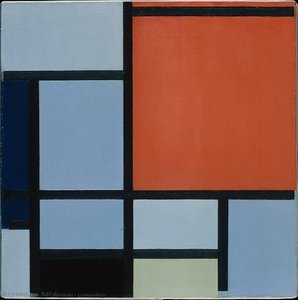
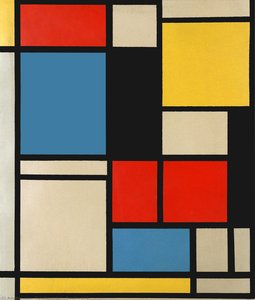
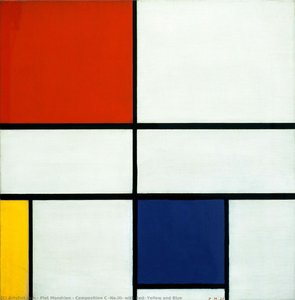
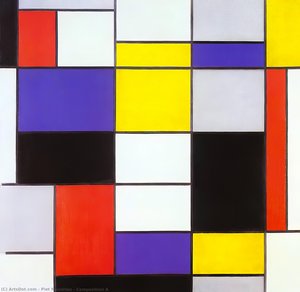
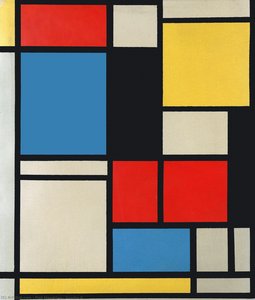
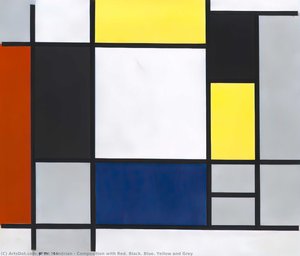
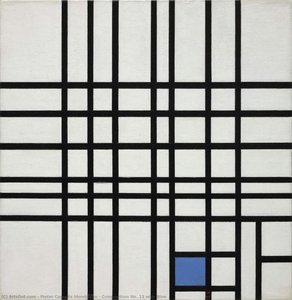
Von figurativ zu abstrakt Mondrians künstlerische Richtung verschob sich hin zu einem zunehmend abstrakten Stil, der in eine nicht-repräsentative Form mündete, die er Neoplasticismus nannte. Diese „reine plastische Kunst“ zielte darauf ab, „universelle Schönheit“ zu schaffen und seinen formalen Wortschatz auf Primärfarben (Rot, Blau und Gelb), Werte (Schwarz, Weiß und Grau) und Richtungen (horizontal und vertikal) zu beschränken.- Beispiele für diesen Stil lassen sich in Gemälden wie composition with yellow patch (46 x 46 cm, Neoplasticismus, Öl auf Leinwand) zu sehen sein.
- Mondrians Werk hatte einen enormen Einfluss auf die Kunst des 20. Jahrhunderts und beeinflusste nicht nur die abstrakte Malerei, sondern auch Design, Architektur und Mode.
**Vermächtnis und Einfluss**
Mondrians Vermächtnis erstreckt sich über sein eigenes Werk hinaus und beeinflusst wichtige Stile und Bewegungen wie Farbflächenmalerei, abstrakten Expressionismus und Minimalismus. Kunsthistoriker stephen bayley stellte fest, dass Mondrian zum Totem für alles geworden ist, was der Modernismus zu sein versuchte.- Entdecken Sie mehr von Mondrians Werk unter ArtsDot.com.
- Erfahren Sie mehr über die De Stijl-Bewegung und ihren Einfluss auf die moderne Kunst auf wikipedia.
- Entdecken Sie andere einflussreiche Künstler wie vincent van gogh und ihre Auswirkungen auf die Kunstwelt.
**Wichtige Werke und Ausstellungen**
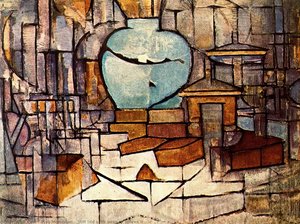
* piet mondrian: apple blossom (Cubismus) (ansicht auf ArtsDot.com) * piet mondrian: still life with vase of spices ii (Cubismus) (ansicht auf ArtsDot.com) * piet mondrian: passionflower (73 x 48 cm, Kunstmuseum Den Haag, Postimpressionismus, Aquarell) (ansicht auf ArtsDot.com)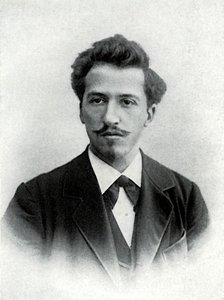
Piët Mondrian
1872 - 1944 , Niederlande
Kurzinfos
- Beeinflusste Künstler:
- Hague School
- Pointillismus
- Fauvismus
- Kubismus
- Bemerkenswerte Werke:
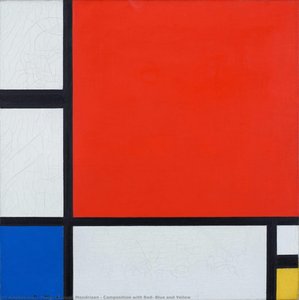
- Komposition mit Rot, Gelb und Blau
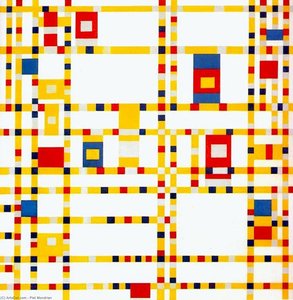
- Broadway Boogie Woogie
- Tableau Nr. 2 Komposition V
- Rhythmus der schwarzen Linien
- Geburtsdatum: 7. März 1872
- Geburtsort: Amersfoort, Niederlande
- Künstlerische Bewegung: De Stijl, Neoplasticismus
- Nationalität: Niederländisch
- Sterbedatum: 1944
- Vollständiger Name: Piët Mondriaan
- Von Künstlern Beeinflusst:
- Farbfeldmalerei
- Abstrakter Expressionismus
- Minimalismus
Ähnliche Artikel

Geometrische Abstraktion: Die 10 Meisterwerke, die Kunstgeschichte prägten | ArtsDot.com
Entdecken Sie die 10 Meisterwerke der geometrischen Abstraktion! Von Kandinsky bis Mondrian – erleben Sie die Geschichte, Farben & Formen dieser revolutionären Kunstrichtung. Hochwertige Kunstreproduktionen auf ArtsDot.com
Arboreal Echoes: A Historical & Artistic Exploration of Trees in Painting
Explore the rich history of trees in painting! Discover symbolism, Romantic masterpieces by Caspar David Friedrich & beyond. A curated journey for art enthusiasts.
Piet Mondrian: Dekonstruktion der Realität – Eine Studie zu Neo-Plastizismus und universeller Harmonie
Entdecken Sie die faszinierende Welt von Piet Mondrian und dem Neo-Plastizismus! Analysieren Sie mit uns Rasterkunst, Farbenlehre & den Einfluss auf moderne Kunst. Expertenwissen für Kunstliebhaber.

Kandinsky: Die 25 Meisterwerke des Abstrakten – Kunst für Ihr Zuhause | ArtsDot
Entdecken Sie die 25 bedeutendsten Gemälde von Wassily Kandinsky! Tauchen Sie ein in die Welt der abstrakten Kunst, des Expressionismus und der Farbkomposition. Hochwertige Kunstdrucke & Inspiration für Ihr Zuhause auf ArtsDot.com.

Romantische Landschaften: Die 10 Meisterwerke, die eine Epoche prägten | ArtsDot
Entdecken Sie die 10 Meisterwerke der Romantischen Landschaftsmalerei! Von Caspar David Friedrich bis Turner – erleben Sie die Kunst, Emotion & Natur. Hochwertige Reproduktionen auf ArtsDot.com