 Vorschau anzeigen
 Versenden
 Teilen
 Details anzeigen

 Herunterladen
 Ähnliche Objekte
 Röntgenaufnahme
 Diashow
Sea. starry sky above the sea

 Weiterlesen
Giclée / Kunstdruck
Giclée- oder Leinwanddruck in Museumsqualität mit schneller Produktion und flexiblen Veredelungsoptionen. ( Handgemalte Reproduktion bestellen Bild kaufen)




P118B $10

P118H $10

P118W $10

P438Z $10

P508JH $12

P508YH $12

P805H $10

P805Z $10

P919BZ $10

P919G $10

P919XJ $10

P959ZH $10

P968JZ $12

W106C $8

W218G $10

W218JH $8

W218Y $10

W307PJ $10

W316G $10

W316PJ $8

W316Y $10

W398PJ $8

W4111J $10

W500HY $15

W500JH $15

W692G $12

W849H $8

W940BG $15

W953PJ $8




Wählen Sie aus unseren vordefinierten Formaten, die den ursprünglichen Proportionen des Kunstwerks entsprechen.

Sie können Ihre eigenen Maße eingeben, um ein bestimmtes Format oder einen speziellen Platz einzupassen. Wenn das von Ihnen gewählte Format nicht den Proportionen des Originalbildes entspricht, werden wir das Kunstwerk entweder beschneiden oder das Bild mit einem gespiegelten oder einfarbigen Rand erweitern. Ein digitaler Entwurf wird Ihnen zur Genehmigung zugesandt, bevor die Produktion beginnt.
Bitte beachten Sie, dass die Vorschau auf dem Bildschirm nicht den tatsächlichen Zuschnitt oder die Erweiterung widerspiegelt. Nur der Entwurf zeigt die endgültige Komposition präzise an.
Obwohl Sondermaße verfügbar sind, empfehlen wir die Auswahl eines Maßes aus der vordefinierten Liste, um die ursprünglichen Proportionen zu bewahren.
Weltweiter Versand () innerhalb von 2 Wochen statt der üblichen 4/5 Wochen. (21 August)

Kostenloser weltweiter Expressversand

Hochwertige Leinenleinwand

Umfassender Versicherungsschutz beim Versand

Zollgebühren-Rückerstattungsgarantie

Garantie für exakte Farbtreue

60 Tage Rückgaberecht (nur bei Mängeln)

100% Geld-zurück-Garantie

Mengenrabatt verfügbar
 Die Glasoption ist nur für Größen unter 110 cm verfügbar.

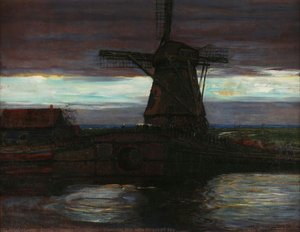
Sea. starry sky above the sea
Giclée / Kunstdruck
Format der Reproduktion
-


Gesamtpreis
$ 62
Sammlerstück-Beschreibung
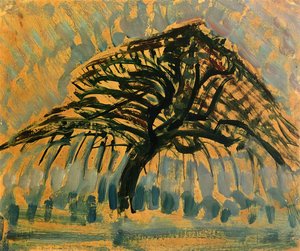
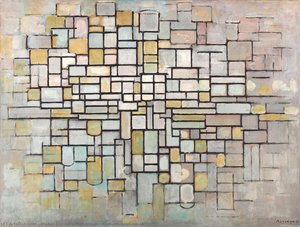
A Pioneer's Pursuit of Geometric Harmony: Exploring Piet Mondrian’s Sea
Piet Mondrian, born Pieter Cornelis Mondriaan in 1872, in Amersfoort, Netherlands, wasn’t a painter who burst onto the artistic scene with flamboyant declarations. Instead, his journey toward abstraction was marked by quiet observation and persistent experimentation—a process that ultimately yielded one of the most recognizable visual languages of the twentieth century.
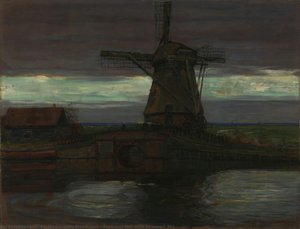
Initially drawn to landscape painting under the influence of the Hague School and Dutch Impressionism – notably *The Red Mill* – Mondrian diligently honed his skills capturing the beauty of nature. However, even amidst these meticulously rendered depictions, a fundamental dissatisfaction lingered. He recognized that mere imitation couldn’t convey the deeper truths he sought; he needed to transcend representation altogether.
Early explorations encompassed Pointillism and Fauvism, styles that allowed him to wrestle with color theory and form exploration. Yet, Mondrian remained unconvinced by these approaches. They offered valuable insights into artistic expression but didn’t align with his evolving vision of pure abstraction—a vision rooted in the belief that art should distill its essence.
The Birth of Neo-Plasticism
Around 1914, Mondrian embarked on a transformative path toward what would become known as Neo-Plasticism. Rejecting traditional perspective and illusionistic techniques, he embraced geometric forms—primarily horizontal and vertical lines—and rectangles and squares—to create compositions that prioritized clarity and balance.
This radical departure from convention wasn’t simply stylistic preference; it represented a profound philosophical stance. Mondrian believed that these fundamental shapes mirrored the underlying structure of the universe, reflecting the immutable laws governing existence. He sought to express this cosmic order through visual language devoid of emotional content—a deliberate effort to liberate art from subjective interpretation.
Analyzing Mondrian’s Sea
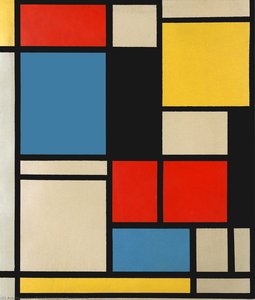
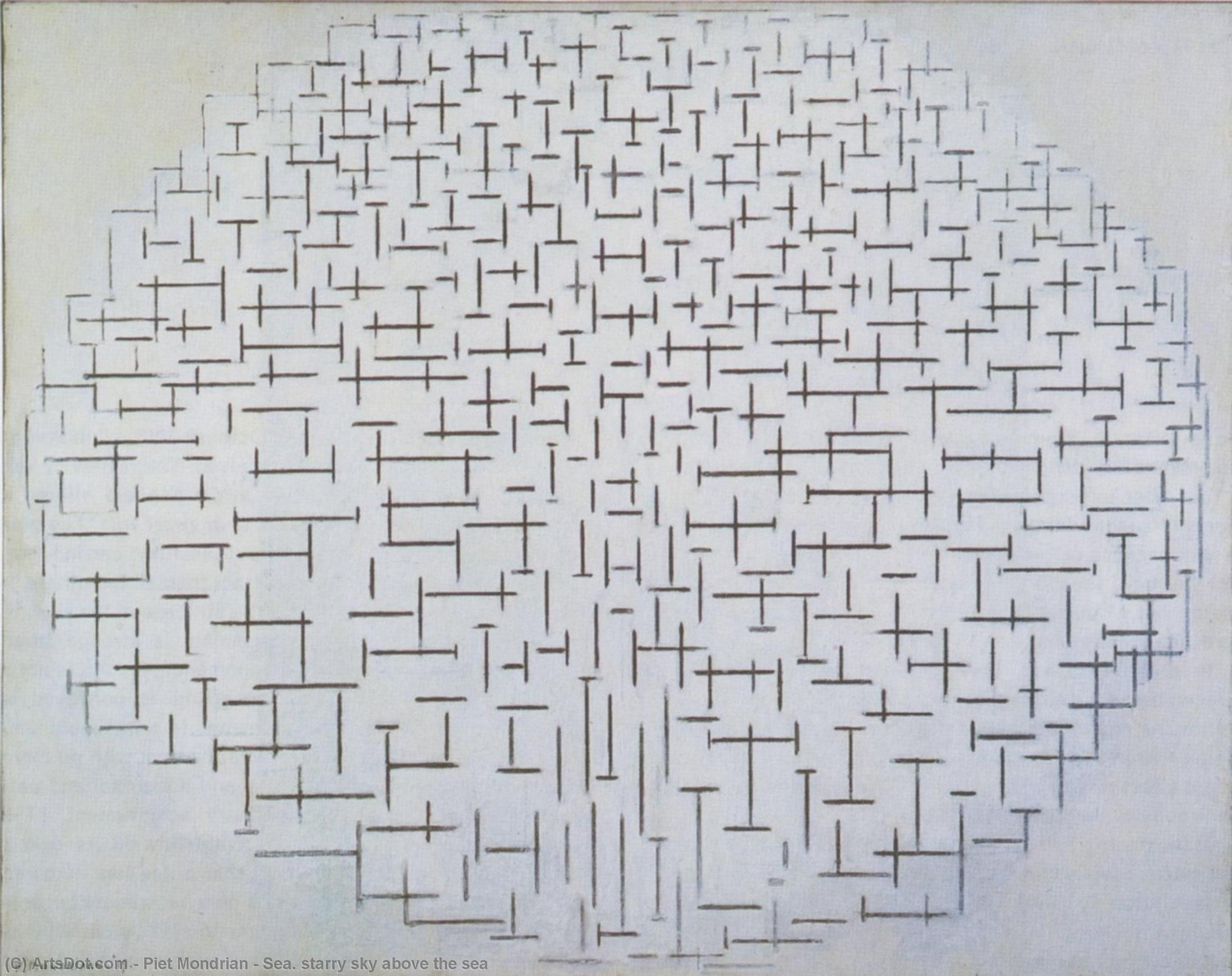
The artwork in question, *Sea*, exemplifies Mondrian's Neo-Plasticist principles with striking precision. The dominant element is a large rectangle positioned horizontally across the canvas, anchoring the composition and conveying stability. Above this rectangle are several smaller rectangles arranged vertically, creating a rhythmic interplay of lines that draws the eye upward.
The color palette is deliberately restrained—primarily black, white, and shades of gray—reflecting Mondrian’s commitment to eliminating chromatic distraction. These monochrome hues serve not as decorative embellishments but as conduits for conveying pure geometric form and structural harmony. The absence of color amplifies the visual impact of the lines and rectangles, emphasizing their essential role in communicating Mondrian's conceptual framework.
Symbolism Beyond Representation
While seemingly devoid of representational imagery—there’s no depiction of the sea itself—*Sea* is laden with symbolic significance. The horizontal line represents stability and grounding, mirroring the earth beneath the ocean surface. Conversely, the vertical lines symbolize aspiration and transcendence, reaching towards the heavens.
These geometric elements aren't merely aesthetically pleasing; they embody Mondrian’s metaphysical convictions about the cosmos—a conviction that art should aspire to capture not what is seen but what is felt—the underlying order of reality. By stripping away extraneous details, Mondrian aimed to reveal a deeper truth about human experience.
Emotional Resonance and Artistic Legacy
Despite its austere appearance, *Sea* possesses an undeniable emotional resonance. The simplicity of the composition invites contemplation and encourages viewers to engage with fundamental questions about perception and consciousness. It’s a testament to Mondrian's ability to communicate profound ideas through visual language—a legacy that continues to inspire artists and designers today.
Reproductions of *Sea*, crafted with meticulous attention to detail, offer an opportunity to appreciate the enduring beauty and intellectual depth of this iconic artwork. Its geometric harmony transcends time and culture, reminding us that art can illuminate the human condition while simultaneously reflecting the grandeur of the universe.
Ähnliche Kunstwerke
Über den Künstler
**frühes Leben und Karriere in den Niederlanden (1872–1911)**
pieter cornelis mondriaan, bekannt ab 1911 als piet mondrian, war ein niederländischer Maler und Kunsttheoretiker, geboren am 7. März 1872 in Amersfoort, Niederlande. Er begann seine Karriere als Lehrer an der Grundschule und betrieb gleichzeitig Malerei, zunächst im Stil der Haag School des niederländischen Impressionismus.- Sein frühes Werk, das von naturalistischen Landschaften geprägt ist, kann in Gemälden wie the red mill und trees in moonrise zu sehen ist, die im kunstmuseum den haag ausgestellt wurden.
- Mondrians Suche nach einem persönlichen Stil führte ihn dazu, verschiedene künstlerische Bewegungen zu erkunden, darunter Pointillismus und Fauvismus.
- Seine erste Ausstellung im Jahr 1893 markierte den Beginn seiner produktiven Karriere.
**Die Entwicklung des Stils von Mondrian**
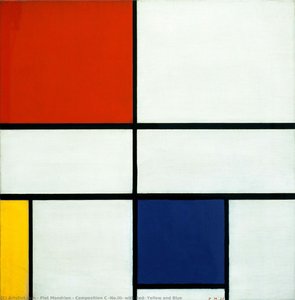
Von figurativ zu abstrakt Mondrians künstlerische Richtung verschob sich hin zu einem zunehmend abstrakten Stil, der in eine nicht-repräsentative Form mündete, die er Neoplasticismus nannte. Diese „reine plastische Kunst“ zielte darauf ab, „universelle Schönheit“ zu schaffen und seinen formalen Wortschatz auf Primärfarben (Rot, Blau und Gelb), Werte (Schwarz, Weiß und Grau) und Richtungen (horizontal und vertikal) zu beschränken.- Beispiele für diesen Stil lassen sich in Gemälden wie composition with yellow patch (46 x 46 cm, Neoplasticismus, Öl auf Leinwand) zu sehen sein.
- Mondrians Werk hatte einen enormen Einfluss auf die Kunst des 20. Jahrhunderts und beeinflusste nicht nur die abstrakte Malerei, sondern auch Design, Architektur und Mode.
**Vermächtnis und Einfluss**
Mondrians Vermächtnis erstreckt sich über sein eigenes Werk hinaus und beeinflusst wichtige Stile und Bewegungen wie Farbflächenmalerei, abstrakten Expressionismus und Minimalismus. Kunsthistoriker stephen bayley stellte fest, dass Mondrian zum Totem für alles geworden ist, was der Modernismus zu sein versuchte.- Entdecken Sie mehr von Mondrians Werk unter ArtsDot.com.
- Erfahren Sie mehr über die De Stijl-Bewegung und ihren Einfluss auf die moderne Kunst auf wikipedia.
- Entdecken Sie andere einflussreiche Künstler wie vincent van gogh und ihre Auswirkungen auf die Kunstwelt.
**Wichtige Werke und Ausstellungen**
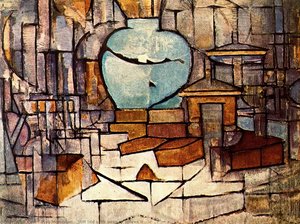
* piet mondrian: apple blossom (Cubismus) (ansicht auf ArtsDot.com) * piet mondrian: still life with vase of spices ii (Cubismus) (ansicht auf ArtsDot.com) * piet mondrian: passionflower (73 x 48 cm, Kunstmuseum Den Haag, Postimpressionismus, Aquarell) (ansicht auf ArtsDot.com)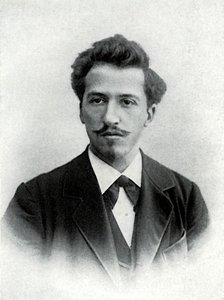
Piët Mondrian
1872 - 1944 , Niederlande
Kurzinfos
- Beeinflusste Künstler:
- Hague School
- Pointillismus
- Fauvismus
- Kubismus
- Bemerkenswerte Werke:
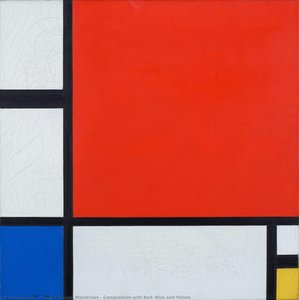
- Komposition mit Rot, Gelb und Blau
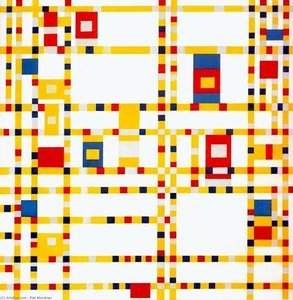
- Broadway Boogie Woogie
- Tableau Nr. 2 Komposition V
- Rhythmus der schwarzen Linien
- Geburtsdatum: 7. März 1872
- Geburtsort: Amersfoort, Niederlande
- Künstlerische Bewegung: De Stijl, Neoplasticismus
- Nationalität: Niederländisch
- Sterbedatum: 1944
- Vollständiger Name: Piët Mondriaan
- Von Künstlern Beeinflusst:
- Farbfeldmalerei
- Abstrakter Expressionismus
- Minimalismus
Ähnliche Artikel

Geometrische Abstraktion: Die 10 Meisterwerke, die Kunstgeschichte prägten | ArtsDot.com
Entdecken Sie die 10 Meisterwerke der geometrischen Abstraktion! Von Kandinsky bis Mondrian – erleben Sie die Geschichte, Farben & Formen dieser revolutionären Kunstrichtung. Hochwertige Kunstreproduktionen auf ArtsDot.com

Weiße Meisterwerke: Die Top 10 berühmtesten Gemälde und ihre zeitlose Eleganz
Entdecken Sie die Top 10 berühmter Gemälde, dominiert von Weiß! Von Malewitsch bis Rothko – erfahren Sie Geschichten hinter ikonischen Kunstwerke und lassen Sie sich für Ihre Wohnraumgestaltung inspirieren. Kunstreproduktionen in Museumsqualiät auf
Beyond Form & Color: Geometric Abstraction's Evolution in 20th/21st Century Art
Explore the evolution of geometric abstraction from Cubism to contemporary art. Discover key artists like Malevich & Mondrian, investment insights, and expert collecting advice at ArtsDot.

Kandinsky: Die 25 Meisterwerke des Abstrakten – Kunst für Ihr Zuhause | ArtsDot
Entdecken Sie die 25 bedeutendsten Gemälde von Wassily Kandinsky! Tauchen Sie ein in die Welt der abstrakten Kunst, des Expressionismus und der Farbkomposition. Hochwertige Kunstdrucke & Inspiration für Ihr Zuhause auf ArtsDot.com.
Beyond Form: Exploring the Philosophical Foundations of Geometric Abstraction
Explore the philosophical roots & artistic evolution of geometric abstraction with ArtsDot. Discover Mondrian, Malevich, De Stijl & more. Expert insights for collectors and art enthusiasts.