 Vorschau anzeigen
 Versenden
 Teilen
 Details anzeigen

 Herunterladen
 Ähnliche Objekte
 Röntgenaufnahme
 Diashow
 Statistiken
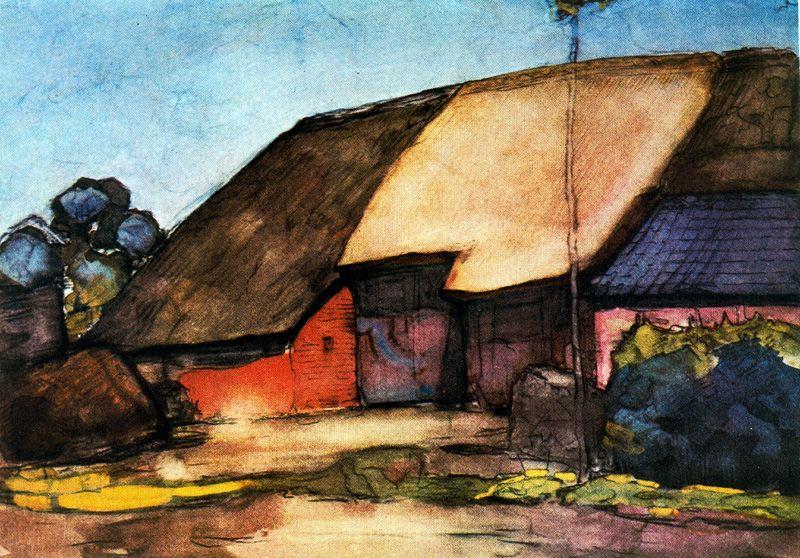
Small farm on Nistelrode


 Weiterlesen
Giclée / Kunstdruck
Giclée- oder Leinwanddruck in Museumsqualität mit schneller Produktion und flexiblen Veredelungsoptionen. ( Handgemalte Reproduktion bestellen Zum digitalen Bild wechseln)




P118B $10

P118H $10

P118W $10

P438Z $10

P508JH $12

P508YH $12

P805H $10

P805Z $10

P919BZ $10

P919G $10

P919XJ $10

P959ZH $10

P968JZ $12

W106C $8

W218G $10

W218JH $8

W218Y $10

W307PJ $10

W316G $10

W316PJ $8

W316Y $10

W398PJ $8

W4111J $10

W500HY $15

W500JH $15

W692G $12

W849H $8

W940BG $15

W953PJ $8




Wählen Sie aus unseren vordefinierten Formaten, die den ursprünglichen Proportionen des Kunstwerks entsprechen.

Sie können Ihre eigenen Maße eingeben, um ein bestimmtes Format oder einen speziellen Platz einzupassen. Wenn das von Ihnen gewählte Format nicht den Proportionen des Originalbildes entspricht, werden wir das Kunstwerk entweder beschneiden oder das Bild mit einem gespiegelten oder einfarbigen Rand erweitern. Ein digitaler Entwurf wird Ihnen zur Genehmigung zugesandt, bevor die Produktion beginnt.
Bitte beachten Sie, dass die Vorschau auf dem Bildschirm nicht den tatsächlichen Zuschnitt oder die Erweiterung widerspiegelt. Nur der Entwurf zeigt die endgültige Komposition präzise an.
Obwohl Sondermaße verfügbar sind, empfehlen wir die Auswahl eines Maßes aus der vordefinierten Liste, um die ursprünglichen Proportionen zu bewahren.
Weltweiter Versand () innerhalb von 2 Wochen statt der üblichen 4/5 Wochen. (10 September)

Kostenloser weltweiter Expressversand

Hochwertige Leinenleinwand

Umfassender Versicherungsschutz beim Versand

Zollgebühren-Rückerstattungsgarantie

Garantie für exakte Farbtreue

100-Tage-Rückgaberecht (nur bei Mängeln)

100% Geld-zurück-Garantie

Mengenrabatt verfügbar
 Die Glasoption ist nur für Größen unter 110 cm verfügbar.

Small farm on Nistelrode
Giclée / Kunstdruck
Format der Reproduktion
-


Gesamtpreis
$ 62
A Quiet Echo of Geometric Harmony
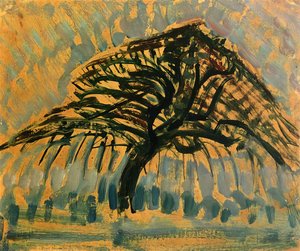
In the gentle landscape of 1904, Piet Mondrian captured a moment that feels both profoundly peaceful and subtly revolutionary. Small farm on Nistelrode is far more than a mere depiction of Dutch rural life; it is a window into the soul of an artist on the precipice of greatness. At first glance, the viewer is greeted by the idyllic charm of a countryside setting, where a small farmhouse with its warm, red-tiled roof sits nestled among the trees. A solitary horse stands near the center, providing a pulse of life and movement to an otherwise still scene. Yet, beneath this surface of pastoral tranquility lies the early stirrings of a radical new vision—a precursor to the geometric precision that would eventually define the modern era.
The painting serves as a fascinating bridge between the traditions of Dutch Impressionism and the burgeoning movement of Neo-Plasticism. While Mondrian’s later works are famous for their strict adherence to primary colors and black grids, this early masterpiece still retains a deep connection to the natural world. He employs a technique that honors the textures of the earth—the weight of the thatched roof and the organic silhouettes of the trees—yet one can already sense his desire to distill reality into its most essential components. The composition is deceptively simple, utilizing horizontal and vertical elements to create a balanced framework that guides the eye with a rhythmic, almost musical, stability.
The Genesis of Abstraction and Form
To look upon this work is to witness the evolution of a master. During this period, Mondrian was experimenting with the vibrant energy of Pointillism and the bold palettes of Fauvism, yet in Small farm on Nistelrode, he finds a unique middle ground. The technique is disciplined and meticulous, creating a surface that feels structured and intentional. There is an underlying order emerging from the landscape; the trees are not merely foliage but vertical anchors, and the farmhouse is not just a building but a geometric presence within the frame. This subtle deconstruction of nature suggests that Mondrian was already searching for the universal truths hidden beneath the visible world.
For the discerning collector or interior designer, this piece offers a sophisticated layer of depth to any space. It possesses the rare ability to evoke a sense of calm and nostalgia while simultaneously sparking intellectual curiosity about the history of modern art. The inclusion of the horse adds an element of organic warmth, preventing the composition from feeling too austere, making it an ideal centerpiece for a room that seeks to balance classical elegance with avant-garde inspiration. It is a painting of profound emotional resonance, inviting the viewer to linger in its quietude and contemplate the beautiful intersection of nature and structure.
Ähnliche Kunstwerke
Über den Künstler
**frühes Leben und Karriere in den Niederlanden (1872–1911)**
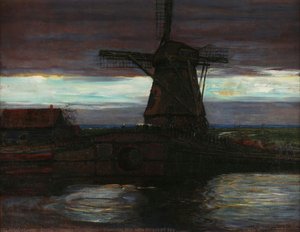
pieter cornelis mondriaan, bekannt ab 1911 als piet mondrian, war ein niederländischer Maler und Kunsttheoretiker, geboren am 7. März 1872 in Amersfoort, Niederlande. Er begann seine Karriere als Lehrer an der Grundschule und betrieb gleichzeitig Malerei, zunächst im Stil der Haag School des niederländischen Impressionismus.- Sein frühes Werk, das von naturalistischen Landschaften geprägt ist, kann in Gemälden wie the red mill und trees in moonrise zu sehen ist, die im kunstmuseum den haag ausgestellt wurden.
- Mondrians Suche nach einem persönlichen Stil führte ihn dazu, verschiedene künstlerische Bewegungen zu erkunden, darunter Pointillismus und Fauvismus.
- Seine erste Ausstellung im Jahr 1893 markierte den Beginn seiner produktiven Karriere.
**Die Entwicklung des Stils von Mondrian**
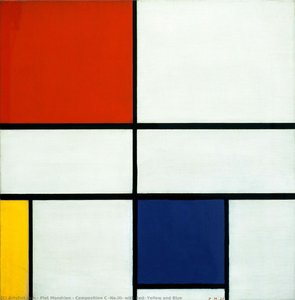
Von figurativ zu abstrakt Mondrians künstlerische Richtung verschob sich hin zu einem zunehmend abstrakten Stil, der in eine nicht-repräsentative Form mündete, die er Neoplasticismus nannte. Diese „reine plastische Kunst“ zielte darauf ab, „universelle Schönheit“ zu schaffen und seinen formalen Wortschatz auf Primärfarben (Rot, Blau und Gelb), Werte (Schwarz, Weiß und Grau) und Richtungen (horizontal und vertikal) zu beschränken.- Beispiele für diesen Stil lassen sich in Gemälden wie composition with yellow patch (46 x 46 cm, Neoplasticismus, Öl auf Leinwand) zu sehen sein.
- Mondrians Werk hatte einen enormen Einfluss auf die Kunst des 20. Jahrhunderts und beeinflusste nicht nur die abstrakte Malerei, sondern auch Design, Architektur und Mode.
**Vermächtnis und Einfluss**
Mondrians Vermächtnis erstreckt sich über sein eigenes Werk hinaus und beeinflusst wichtige Stile und Bewegungen wie Farbflächenmalerei, abstrakten Expressionismus und Minimalismus. Kunsthistoriker stephen bayley stellte fest, dass Mondrian zum Totem für alles geworden ist, was der Modernismus zu sein versuchte.- Entdecken Sie mehr von Mondrians Werk unter ArtsDot.com.
- Erfahren Sie mehr über die De Stijl-Bewegung und ihren Einfluss auf die moderne Kunst auf wikipedia.
- Entdecken Sie andere einflussreiche Künstler wie vincent van gogh und ihre Auswirkungen auf die Kunstwelt.
**Wichtige Werke und Ausstellungen**
* piet mondrian: apple blossom (Cubismus) (ansicht auf ArtsDot.com) * piet mondrian: still life with vase of spices ii (Cubismus) (ansicht auf ArtsDot.com) * piet mondrian: passionflower (73 x 48 cm, Kunstmuseum Den Haag, Postimpressionismus, Aquarell) (ansicht auf ArtsDot.com)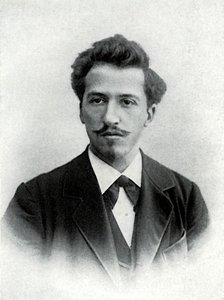
Piët Mondrian
1872 - 1944 , Niederlande
Kurzinfos
- Beeinflusste Künstler:
- Hague School
- Pointillismus
- Fauvismus
- Kubismus
- Bemerkenswerte Werke:
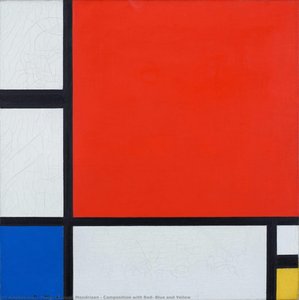
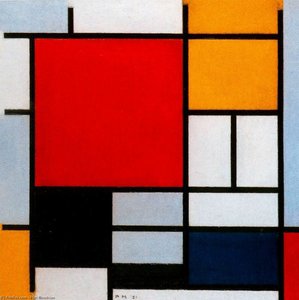
- Komposition mit Rot, Gelb und Blau
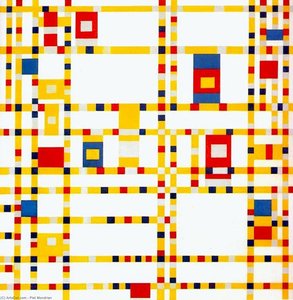
- Broadway Boogie Woogie
- Tableau Nr. 2 Komposition V
- Rhythmus der schwarzen Linien
- Geburtsdatum: 7. März 1872
- Geburtsort: Amersfoort, Niederlande
- Künstlerische Bewegung: De Stijl, Neoplasticismus
- Nationalität: Niederländisch
- Sterbedatum: 1944
- Vollständiger Name: Piët Mondriaan
- Von Künstlern Beeinflusst:
- Farbfeldmalerei
- Abstrakter Expressionismus
- Minimalismus
Ähnliche Artikel
Theo van Doesburg: Pionier des De Stijl und die Evolution des Neo-Plastizismus
Entdecken Sie die faszinierende Welt des De Stijl! Erfahren Sie mehr über Theo van Doesburg, Piet Mondrian und die revolutionäre Ästhetik des Neo-Plastizismus. Expertenwissen & historische Einblicke.
Piet Mondrian: Dekonstruktion der Realität – Eine Studie zu Neo-Plastizismus und universeller Harmonie
Entdecken Sie die faszinierende Welt von Piet Mondrian und dem Neo-Plastizismus! Analysieren Sie mit uns Rasterkunst, Farbenlehre & den Einfluss auf moderne Kunst. Expertenwissen für Kunstliebhaber.
Kandinsky: Die 25 Meisterwerke des Abstrakten – Kunst für Ihr Zuhause | ArtsDot
Entdecken Sie die 25 bedeutendsten Gemälde von Wassily Kandinsky! Tauchen Sie ein in die Welt der abstrakten Kunst, des Expressionismus und der Farbkomposition. Hochwertige Kunstdrucke & Inspiration für Ihr Zuhause auf ArtsDot.com.

Geometrische Abstraktion: Die 10 Meisterwerke, die Kunstgeschichte prägten | ArtsDot.com
Entdecken Sie die 10 Meisterwerke der geometrischen Abstraktion! Von Kandinsky bis Mondrian – erleben Sie die Geschichte, Farben & Formen dieser revolutionären Kunstrichtung. Hochwertige Kunstreproduktionen auf ArtsDot.com
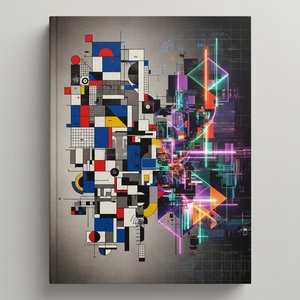
Beyond Form & Color: Geometric Abstraction's Evolution in 20th/21st Century Art
Explore the evolution of geometric abstraction from Cubism to contemporary art. Discover key artists like Malevich & Mondrian, investment insights, and expert collecting advice at ArtsDot.