 Vorschau anzeigen
 Versenden
 Teilen
 Details anzeigen

 Herunterladen
 Ähnliche Objekte
 Röntgenaufnahme
 Diashow
Market for the country


 Weiterlesen
Giclée / Kunstdruck
Giclée- oder Leinwanddruck in Museumsqualität mit schneller Produktion und flexiblen Veredelungsoptionen. ( Handgemalte Reproduktion bestellen Bild kaufen)




P118B $10

P118H $10

P118W $10

P438Z $10

P508JH $12

P508YH $12

P805H $10

P805Z $10

P919BZ $10

P919G $10

P919XJ $10

P959ZH $10

P968JZ $12

W106C $8

W218G $10

W218JH $8

W218Y $10

W307PJ $10

W316G $10

W316PJ $8

W316Y $10

W398PJ $8

W4111J $10

W500HY $15

W500JH $15

W692G $12

W849H $8

W940BG $15

W953PJ $8




Wählen Sie aus unseren vordefinierten Formaten, die den ursprünglichen Proportionen des Kunstwerks entsprechen.

Sie können Ihre eigenen Maße eingeben, um ein bestimmtes Format oder einen speziellen Platz einzupassen. Wenn das von Ihnen gewählte Format nicht den Proportionen des Originalbildes entspricht, werden wir das Kunstwerk entweder beschneiden oder das Bild mit einem gespiegelten oder einfarbigen Rand erweitern. Ein digitaler Entwurf wird Ihnen zur Genehmigung zugesandt, bevor die Produktion beginnt.
Bitte beachten Sie, dass die Vorschau auf dem Bildschirm nicht den tatsächlichen Zuschnitt oder die Erweiterung widerspiegelt. Nur der Entwurf zeigt die endgültige Komposition präzise an.
Obwohl Sondermaße verfügbar sind, empfehlen wir die Auswahl eines Maßes aus der vordefinierten Liste, um die ursprünglichen Proportionen zu bewahren.
Weltweiter Versand () innerhalb von 2 Wochen statt der üblichen 4/5 Wochen. (4 September)

Kostenloser weltweiter Expressversand

Hochwertige Leinenleinwand

Umfassender Versicherungsschutz beim Versand

Zollgebühren-Rückerstattungsgarantie

Garantie für exakte Farbtreue

60 Tage Rückgaberecht (nur bei Mängeln)

100% Geld-zurück-Garantie

Mengenrabatt verfügbar
 Die Glasoption ist nur für Größen unter 110 cm verfügbar.

Market for the country
Giclée / Kunstdruck
Format der Reproduktion
-


Gesamtpreis
$ 62
Market for the Country – A Window into Northern Renaissance Life
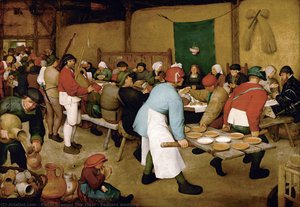
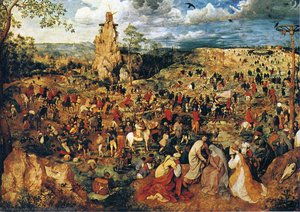
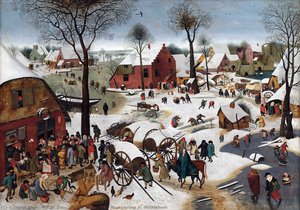
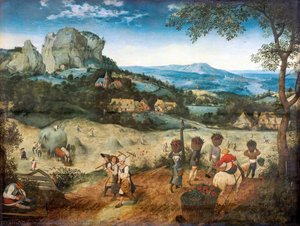
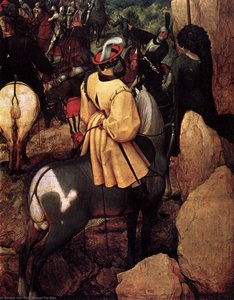
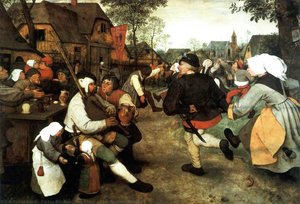
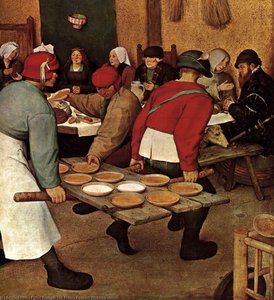
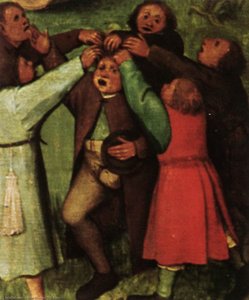
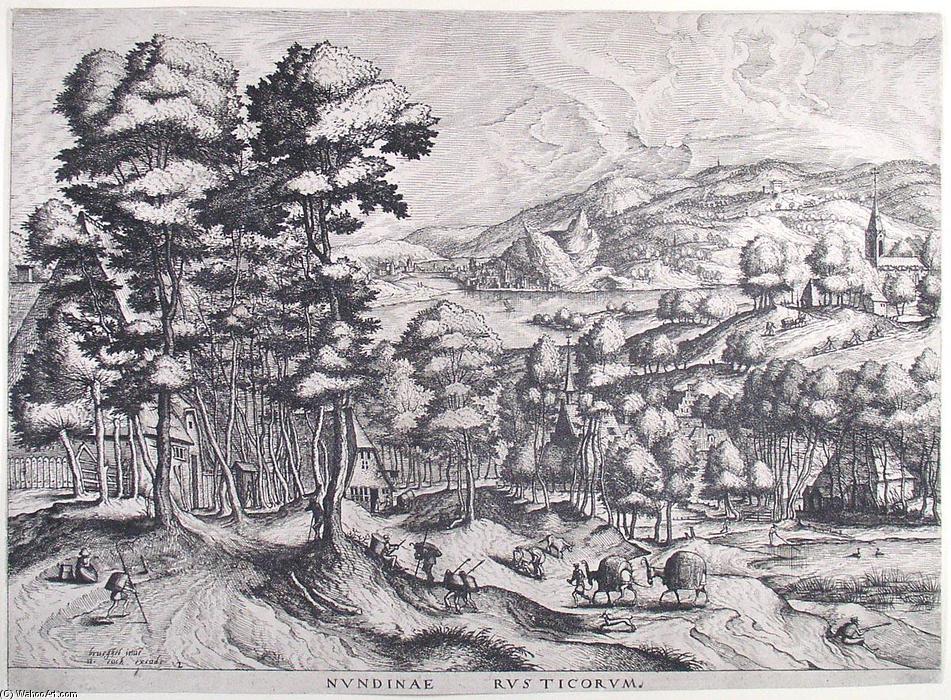
Pieter Bruegel the Elder’s “Market for the Country” is more than just an engraving; it's a vibrant snapshot of daily life in 16th-century rural Flanders, rendered with a meticulous realism that continues to captivate viewers centuries later. This remarkable work, created around 1560-66, offers a profound glimpse into the rhythms of community, labor, and the simple pleasures of existence – themes that resonate deeply within Bruegel’s oeuvre and cemented his place as one of the most important artists of the Northern Renaissance.
The scene unfolds with remarkable complexity. A bustling market square dominates the foreground, teeming with figures engaged in a multitude of activities: farmers hawking their wares, children chasing stray dogs, merchants negotiating prices, and women tending to household tasks. Bruegel’s genius lies not just in depicting this activity but in capturing the *feeling* of it – the energy, the chaos, and the inherent social connections that bound these individuals together. The composition itself is a masterclass in layered perspective, drawing the eye from the immediate action into the rolling hills and distant village beyond, creating an immersive experience for the viewer.
The Language of Line: Technique and Style
What truly distinguishes “Market for the Country” is Bruegel’s masterful use of engraving technique. Created through a painstaking process of cutting lines into a copper plate – a method known as etching – the image emerges from the darkness with astonishing detail. The engraver, likely working under Bruegel's direction, employed a dense network of fine lines and intricate cross-hatching to build up tonal values and create a remarkable sense of volume and texture. Notice how the rough bark of the trees is rendered through closely spaced parallel lines, while the smoother surfaces of buildings are achieved with broader strokes. This technique wasn’t merely decorative; it was fundamental to Bruegel's ability to convey realism and depth.
The monochromatic palette – a deliberate choice reflecting the limitations of the engraving process – amplifies the impact of this textural approach. The varying densities of lines create an illusion of light and shadow, giving form and substance to every element within the scene. It’s a testament to Bruegel's skill that he could achieve such dramatic effects solely through line work, without the aid of color pigments.
Symbolism and Emotional Resonance
Beyond its technical brilliance, “Market for the Country” is rich in symbolic meaning. Bruegel was deeply interested in portraying everyday life, often focusing on the lives of peasants and laborers – a departure from the more idealized subjects favored by many of his contemporaries. The scene isn’t simply a record of commerce; it's an observation of human nature, capturing moments of joy, frustration, and social interaction. The inclusion of religious elements, such as the distant church steeple, subtly reinforces the importance of faith within this community.
There is a quiet dignity in the scene, a sense of harmony between humanity and the natural world. Bruegel’s work evokes a feeling of nostalgia for a simpler time, reminding us of the enduring values of community, hard work, and connection to one's surroundings. It’s this emotional resonance that continues to make “Market for the Country” such a powerful and enduring image.
A Legacy of Observation
Pieter Bruegel the Elder’s legacy extends far beyond his individual works. He was a pioneer in elevating the status of genre painting, demonstrating that scenes of everyday life could be worthy of artistic attention. His influence can be seen in the work of countless artists who followed him, and his innovative approach to subject matter continues to inspire artists today. A hand-painted reproduction of “Market for the Country” offers a unique opportunity to experience this masterpiece firsthand, bringing its remarkable detail and emotional depth into your home or studio.
Ähnliche Kunstwerke

Über den Künstler
frühes Leben und Ausbildung
Pieter Bruegel der Ältere, eine zentrale Figur in der Renaissance-Malerei, wurde zwischen 1525 und 1530 in Breda, Belgien, geboren. Sein Meister, Pieter Coecke van Aelst, war ein Antwerper Maler, der Bruegels frühe künstlerische Entwicklung leitete. Nach seiner Ausbildung bei Coecke wurde Bruegel 1551 freier Meister in der Antwerpener Malergilde.Künstlerische Beiträge und Stil
Bruegels Werk ist bekannt für seine innovativen Themenwahl, die sich auf Landschaften und Bauernszenen konzentriert. Seine Gemälde, wie zum Beispiel Landschaft mit der Flucht nach Ägypten (37 x 55 cm, Courtauld Institute Galleries, London), zeigten seine Meisterschaft im Öl auf Holz. Bruegels Stil, der durch die Verwendung von Chiaroscuro gekennzeichnet ist, erzeugte ein Gefühl von Tiefe und Realismus und ließ seine Gemälde immersiv wirken.Bekannte Werke und Museen
* Landschaft der Alpen (Musée du Louvre, Paris), ein herausragendes Werk, das Bruegels Landschaftsfähigkeiten demonstriert. * Triptychon (Nordische Renaissance, Öl), ein bemerkenswertes Beispiel für Bruegels Verwendung von Öl auf Holz. * Die Königlichen Museen Schönen Künste in Brüssel beherbergen eine beeindruckende Sammlung von über 20.000 Kunstwerken, darunter Werke von Bruegel.Vermächtnis und Einfluss
Bruegels Einfluss auf die niederländische Goldene Ära der Malerei und spätere künstlerische Entwicklungen ist unbestreitbar. Sein Werk hat Künstler in den literarischen Künsten und im Kino inspiriert, wobei Referenzen zu seinen Gemälden in Filmen wie Solaris (1972) und Melancholia (2011) zu finden sind. Entdecken Sie mehr von Bruegels Werken auf ArtsDot.com: [https://ArtsDot.com/@/pieter-bruegel-the-elder](https://ArtsDot.com/@/pieter-bruegel-the-elder)- Entdecken Sie die Meisterwerke der Königlichen Museen Schönen Künste (Brüssel, Belgien): /de/art/show/art-d3cf2d-de/
- Erfahren Sie mehr über die frühe niederländische Malerei auf Wikipedia: [https://en.wikipedia.org/wiki/early_netherlandish_painting](https://en.wikipedia.org/wiki/early_netherlandish_painting)
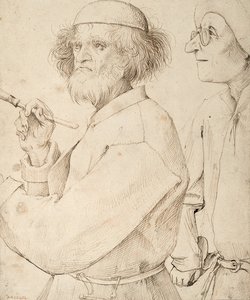
Pieter Bruegel der Ältere
1525 - 1569 , Belgien
Kurzinfos
- Beeinflusste Künstler:
- Isaac van Ostade
- Adriaen Brouwer
- Bemerkenswerte Werke:
- Landschaft mit Flucht nach Ägypten
- Alpenlandschaft
- Bauernhochzeit
- Triumph des Todes
- Jäger im Schnee
- Geburtsdatum: ca. 1525-1530
- Geburtsort: Brügge, Belgien
- Künstlerische Bewegung: Nordeuropäische Renaissance
- Künstlerische Einflüsse:
- Hieronymus Bosch
- Pieter Coecke van Aelst
- Nationalität: Belgisch
- Todatum: 1569
- Vollständiger Name: Pieter Bruegel der Ältere
Ähnliche Artikel
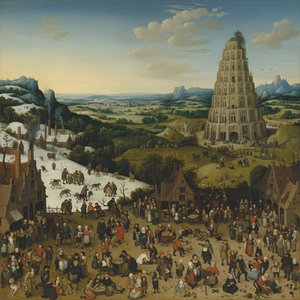
Pieter Bruegel der Ältere: Meister der Genremalerei und Gesellschaftskritik
Entdecken Sie das faszinierende Werk Pieter Bruegels des Älteren! Analysen zu seinen Genremalereien, Landschaftsdarstellungen und Gesellschaftskritik. Expertenwissen für Kunstliebhaber & Sammler.
Die 10 legendärsten Radierungen: Meisterwerke, die Kunstgeschichte schrieben | ArtsDot
Entdecken Sie die 10 legendärsten Radierungen von Dürer, Rembrandt & Goya! Erfahren Sie die Geschichten hinter diesen Meisterwerken der Kunstgeschichte und lassen Sie sich von Druckgrafik inspirieren. Hochwertige Kunstdrucke auf ArtsDot.com – für Ihr Zuhause.

John Constable: Die 25 Meisterwerke des englischen Landschaftsgenies – ArtsDot
Entdecken Sie die 25 Meisterwerke von John Constable! Erleben Sie englische Landschaftsmalerei vom Hay Wain bis zur Stour Valley. Hochwertige Reproduktionen & Kunst für Ihr Zuhause auf ArtsDot.com.
Cultivating Visions: A Historical Journey Through Rural Landscapes in Art
Explore the rich history of rural landscape painting with ArtsDot. Discover Impressionist masterpieces, key artists & movements. Find your perfect serene artwork and bring nature's beauty home.
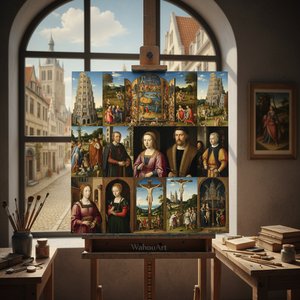
Die 10 Meisterwerke der Nordischen Renaissance: Kunst für Ihr Zuhause |
Entdecken Sie die 10 prägendsten Meisterwerke der Nordischen Renaissance! Von Jan van Eyck bis Dürer – Kunstgeschichte, Techniken & Geschichten. Hochwertige Reproduktionen für Ihr Zuhause auf