 Vorschau anzeigen
 Versenden
 Teilen
 Details anzeigen

 Herunterladen
 Ähnliche Objekte
 Röntgenaufnahme
 Diashow
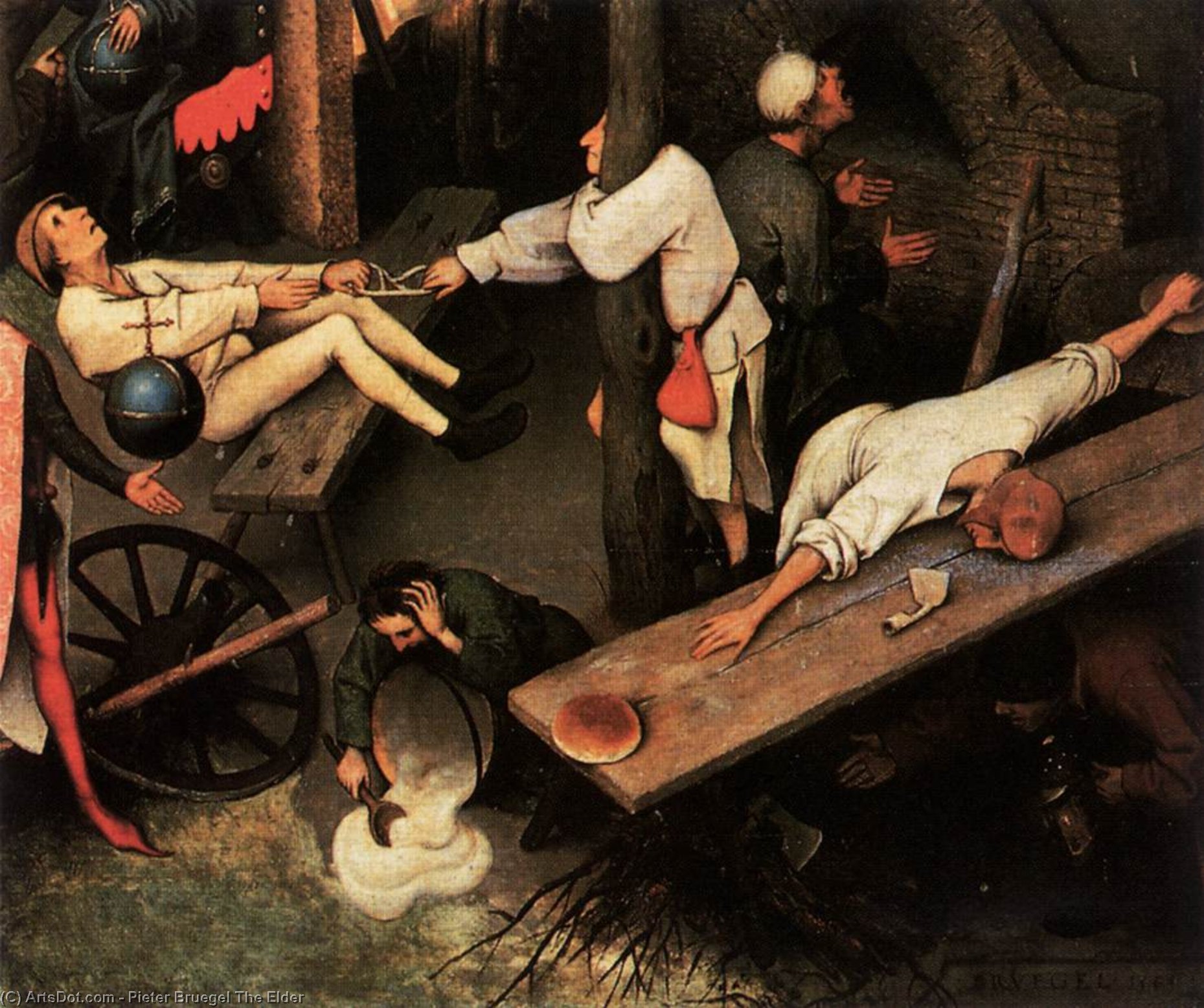
Netherlandish Proverbs (detail)


 Weiterlesen
Handgefertigte Ölreproduktion
Handgemaltes Ölgemälde auf Leinwand in Ihrer Wunschgröße und mit Rahmen, auf Bestellung von unseren Künstlern angefertigt. ( Druck bestellen Bild kaufen)




P118B $10

P118H $10

P118W $10

P438Z $10

P508JH $12

P508YH $12

P805H $10

P805Z $10

P919BZ $10

P919G $10

P919XJ $10

P959ZH $10

P968JZ $12

W106C $8

W218G $10

W218JH $8

W218Y $10

W307PJ $10

W316G $10

W316PJ $8

W316Y $10

W398PJ $8

W4111J $10

W500HY $15

W500JH $15

W692G $12

W849H $8

W940BG $15

W953PJ $8




Wählen Sie aus unseren vordefinierten Formaten, die den ursprünglichen Proportionen des Kunstwerks entsprechen.

Sie können Ihre eigenen Maße eingeben, um einen bestimmten Rahmen oder Platz auszufüllen. Wenn die gewählte Größe nicht den Proportionen des Originalbildes entspricht, werden wir das Kunstwerk entweder beschneiden oder das Gemälde durch zusätzliche, handgemalte Elemente erweitern. Ein digitales Mockup wird Ihnen zur Genehmigung zugesandt, bevor die Produktion beginnt.
Bitte beachten Sie, dass die Bildschirmvorschau nicht die tatsächliche Beschneidung oder Erweiterung widerspiegelt. Nur das Mockup zeigt die endgültige Komposition exakt an.
Obwohl Sondermaße verfügbar sind, empfehlen wir, eine Größe aus der vordefinierten Liste zu wählen, um die ursprünglichen Proportionen beizubehalten.
Nach der Bestellung wird das ArtsDot.com-Team dem Kunden Anweisungen per E-Mail zusenden und eine Mockup-Vorschau bereitstellen.
Weltweiter Versand () in nur 3 bis 4 Wochen statt der üblichen 5 Wochen. (28 August). Keine Kompromisse bei der Qualität.

Kostenloser weltweiter Expressversand

Hochwertige Leinenleinwand

Umfassender Versicherungsschutz beim Versand

Zollgebühren-Rückerstattungsgarantie

Garantie für exakte Farbtreue

60 Tage Rückgaberecht (nur bei Mängeln)

100% Geld-zurück-Garantie

Mengenrabatt verfügbar
 Die Glasoption ist nur für Größen unter 110 cm verfügbar.

Netherlandish Proverbs (detail)
Art der Reproduktion
Format der Reproduktion
-


Gesamtpreis
$ 263
A Window Into Flemish Life: Pieter Bruegel’s “Netherlandish Proverbs”
The painting "Netherlandish Proverbs," executed by Pieter Bruegel the Elder in 1559, stands as a cornerstone of Northern Renaissance art—a vibrant snapshot of everyday life rendered with meticulous detail and imbued with layers of symbolic meaning. More than just a depiction of rural Flemish society, it’s an invitation to contemplate the wisdom embedded within seemingly absurd sayings and traditions that continue to resonate centuries later. Bruegel's genius lies not merely in his technical prowess but in his ability to transform observation into profound commentary on human nature.The Landscape as Narrative
Bruegel meticulously crafted a panoramic landscape—a quintessential Flemish vista dominated by rolling hills, scattered trees, and a meandering stream—that serves as the backdrop for an astonishing array of figures engaged in diverse activities. This isn’t simply scenery; it's deliberately chosen to amplify the narrative power of the scene. The artist skillfully employs atmospheric perspective—the gradual blurring of distant objects due to haze—to create depth and convey a sense of vastness, mirroring the scope of human experience itself. Notice how the positioning of the figures against the horizon reinforces their roles within the larger social tapestry.Technique: Oil Paintsmanship and Anatomical Precision
Bruegel’s mastery of oil paintsmanship is evident in every brushstroke. He achieved remarkable realism by layering thin glazes of pigment upon each other—a technique that allowed him to capture subtle tonal variations and create luminous surfaces. Furthermore, Bruegel demonstrated a keen understanding of human anatomy, accurately portraying the postures and expressions of his subjects with impressive precision. This anatomical accuracy wasn’t merely stylistic; it reflected the humanist influence prevalent during his time, emphasizing the importance of observing and representing the human form faithfully. The artist's attention to detail extends beyond mere likeness—it communicates a palpable sense of presence and immediacy.Historical Context: Reformation and Societal Change
“Netherlandish Proverbs” emerged during a period of significant upheaval in Europe – namely, the Protestant Reformation. This religious fervor permeated artistic circles, prompting artists like Bruegel to grapple with questions of faith, morality, and social responsibility. The painting reflects anxieties about societal stability amidst doctrinal disputes and subtly critiques conventional wisdom—a characteristic trait of Renaissance thinkers who questioned established authority. The inclusion of figures hanging from a cross is particularly noteworthy, referencing the crucifixion of Jesus Christ but also serving as a visual metaphor for enduring hardship and accepting fate with dignity.Symbolism: Proverbs Embodied
The painting’s title itself encapsulates its central theme—the exploration of proverbial sayings that encapsulate common beliefs and behaviors. Each figure embodies a particular proverb, ranging from the practical (“A fool and his money are soon parted”) to the philosophical (“Better late than never”). Bruegel doesn't simply depict these sayings; he dramatizes them, transforming them into tangible representations of human folly and wisdom. The artist’s use of visual symbolism elevates the painting beyond mere representation—it invites viewers to contemplate the deeper implications of these enduring expressions of cultural heritage.Emotional Impact: Humor Amidst Reflection
Despite its depiction of challenging circumstances – poverty, illness, and death – “Netherlandish Proverbs” possesses a remarkable quality of humor. Bruegel’s masterful composition captures the absurdity of human behavior while simultaneously prompting viewers to consider profound questions about life's journey. The painting evokes a bittersweet blend of amusement and contemplation—a reminder that even amidst hardship, there is always room for laughter and reflection. It remains an enduring testament to Bruegel’s ability to transform observation into artful expression—a timeless masterpiece that continues to captivate audiences worldwide.Ähnliche Kunstwerke
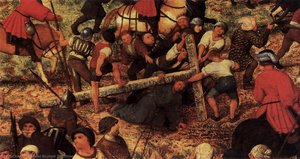
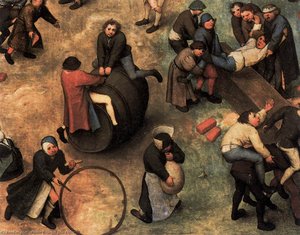
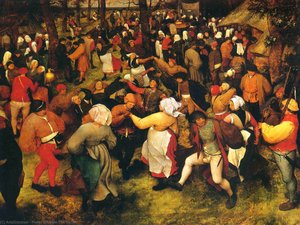
Über den Künstler
frühes Leben und Ausbildung
Pieter Bruegel der Ältere, eine zentrale Figur in der Renaissance-Malerei, wurde zwischen 1525 und 1530 in Breda, Belgien, geboren. Sein Meister, Pieter Coecke van Aelst, war ein Antwerper Maler, der Bruegels frühe künstlerische Entwicklung leitete. Nach seiner Ausbildung bei Coecke wurde Bruegel 1551 freier Meister in der Antwerpener Malergilde.Künstlerische Beiträge und Stil
Bruegels Werk ist bekannt für seine innovativen Themenwahl, die sich auf Landschaften und Bauernszenen konzentriert. Seine Gemälde, wie zum Beispiel Landschaft mit der Flucht nach Ägypten (37 x 55 cm, Courtauld Institute Galleries, London), zeigten seine Meisterschaft im Öl auf Holz. Bruegels Stil, der durch die Verwendung von Chiaroscuro gekennzeichnet ist, erzeugte ein Gefühl von Tiefe und Realismus und ließ seine Gemälde immersiv wirken.Bekannte Werke und Museen
* Landschaft der Alpen (Musée du Louvre, Paris), ein herausragendes Werk, das Bruegels Landschaftsfähigkeiten demonstriert. * Triptychon (Nordische Renaissance, Öl), ein bemerkenswertes Beispiel für Bruegels Verwendung von Öl auf Holz. * Die Königlichen Museen Schönen Künste in Brüssel beherbergen eine beeindruckende Sammlung von über 20.000 Kunstwerken, darunter Werke von Bruegel.Vermächtnis und Einfluss
Bruegels Einfluss auf die niederländische Goldene Ära der Malerei und spätere künstlerische Entwicklungen ist unbestreitbar. Sein Werk hat Künstler in den literarischen Künsten und im Kino inspiriert, wobei Referenzen zu seinen Gemälden in Filmen wie Solaris (1972) und Melancholia (2011) zu finden sind. Entdecken Sie mehr von Bruegels Werken auf ArtsDot.com: [https://ArtsDot.com/@/pieter-bruegel-the-elder](https://ArtsDot.com/@/pieter-bruegel-the-elder)- Entdecken Sie die Meisterwerke der Königlichen Museen Schönen Künste (Brüssel, Belgien): /de/art/show/art-d3cf2d-de/
- Erfahren Sie mehr über die frühe niederländische Malerei auf Wikipedia: [https://en.wikipedia.org/wiki/early_netherlandish_painting](https://en.wikipedia.org/wiki/early_netherlandish_painting)
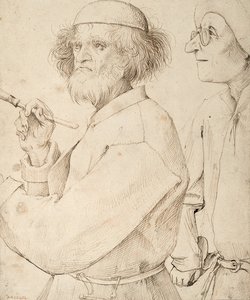
Pieter Bruegel der Ältere
1525 - 1569 , Belgien
Kurzinfos
- Beeinflusste Künstler:
- Isaac van Ostade
- Adriaen Brouwer
- Bemerkenswerte Werke:
- Landschaft mit Flucht nach Ägypten
- Alpenlandschaft
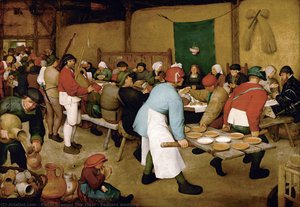
- Bauernhochzeit
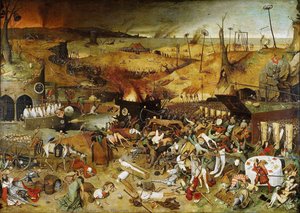
- Triumph des Todes
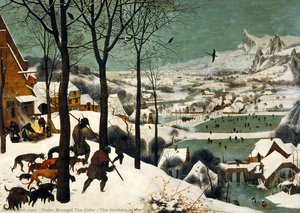
- Jäger im Schnee
- Geburtsdatum: ca. 1525-1530
- Geburtsort: Brügge, Belgien
- Künstlerische Bewegung: Nordeuropäische Renaissance
- Künstlerische Einflüsse:
- Hieronymus Bosch
- Pieter Coecke van Aelst
- Nationalität: Belgisch
- Todatum: 1569
- Vollständiger Name: Pieter Bruegel der Ältere
Ähnliche Artikel
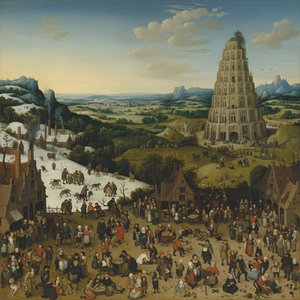
Pieter Bruegel der Ältere: Meister der Genremalerei und Gesellschaftskritik
Entdecken Sie das faszinierende Werk Pieter Bruegels des Älteren! Analysen zu seinen Genremalereien, Landschaftsdarstellungen und Gesellschaftskritik. Expertenwissen für Kunstliebhaber & Sammler.
Jan Brueghel der Ältere: Innovation und Einfluss am Scheideweg von Renaissance und Barock
Entdecken Sie das faszinierende Werk von Jan Brueghel der Ältere! Erfahren Sie mehr über seine Innovationen, den Einfluss auf Rubens und die Bedeutung für die Barockmalerei. Kunstexperten-Analyse & hochwertige Reproduktionen.
Meisterwerke Wiens: Die Top 25 Kunstschätze im Kunsthistorischen Museum | ArtsDot
Entdecken Sie die 25 bedeutendsten Kunstwerke im Kunsthistorischen Museum Wien! Von Raphael über Rembrandt bis Vermeer – erleben Sie Meisterwerke der Renaissance & Barockmalerei. Finden Sie hochwertige Reproduktionen und Inspiration für Ihr Zuhause auf ArtsDot.com.

Evocations of Place: A Historical Journey Through Landscape Art
Explore the rich history of landscape art with ArtsDot. Discover renowned artists, movements like Impressionism & Romanticism, and expert guidance for collecting timeless pieces. Find your perfect serene escape today!

Romantische Landschaften: Die 10 Meisterwerke, die eine Epoche prägten | ArtsDot
Entdecken Sie die 10 Meisterwerke der Romantischen Landschaftsmalerei! Von Caspar David Friedrich bis Turner – erleben Sie die Kunst, Emotion & Natur. Hochwertige Reproduktionen auf ArtsDot.com