

 Vorschau anzeigen
 Versenden
 Teilen
 Details anzeigen

 Herunterladen
 Ähnliche Objekte
 Röntgenaufnahme
 Diashow
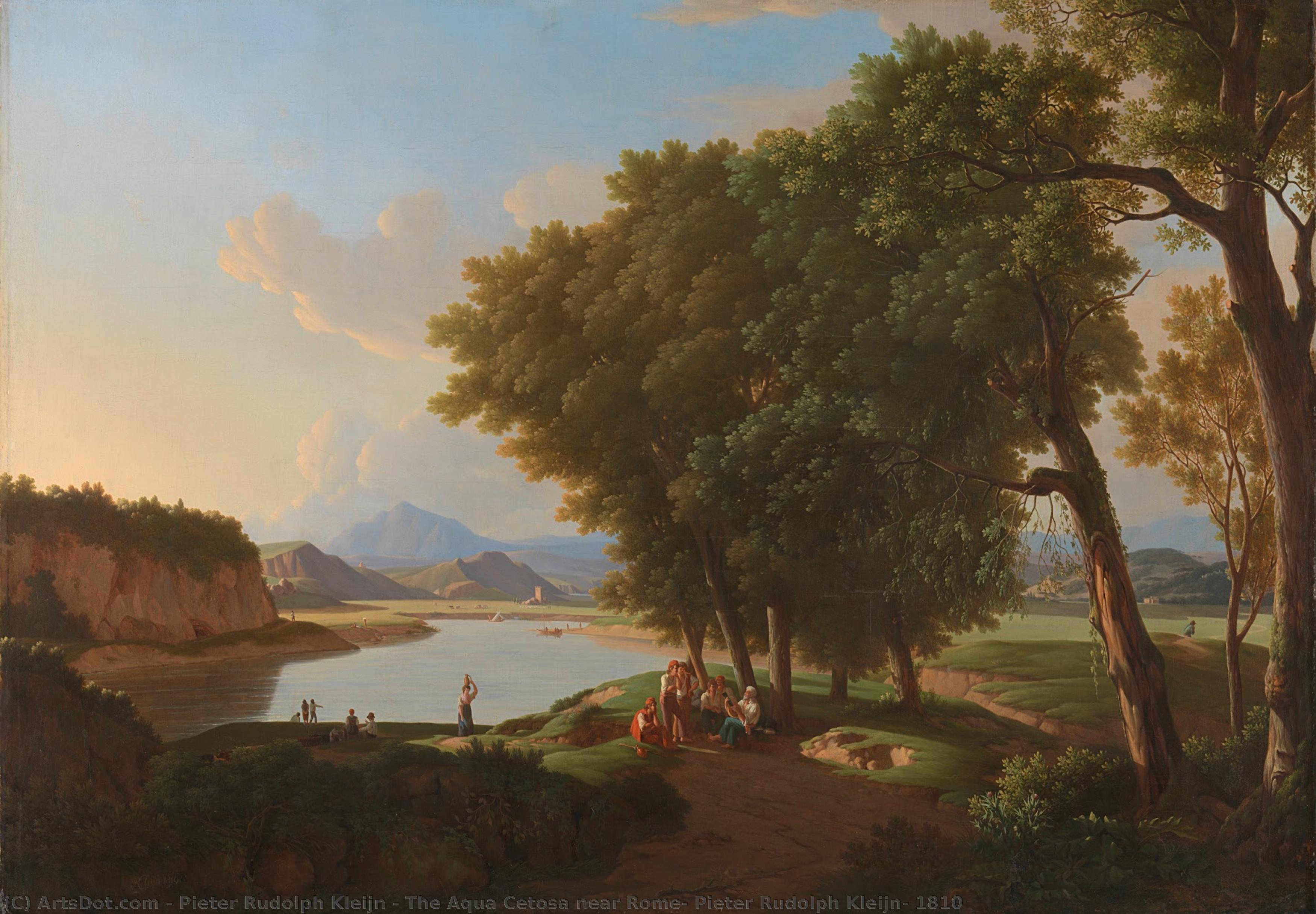
The Aqua Cetosa near Rome, Pieter Rudolph Kleijn, 1810
 1810
1810 93.0 x 130.0 cm
 Weiterlesen
Erwerben Sie ein hochauflösendes, optimiertes digitales Bild, das der Online-Vorschau weit überlegen ist.
Jede Datei wird von unseren hauseigenen Spezialisten mit modernsten Werkzeugen und fachmännischer manueller Retusche sorgfältig vorbereitet. Wir stellen sicher, dass jedes Bild eine außergewöhnliche Klarheit, präzise Farbgenauigkeit und feinste Details aufweist.
Die endgültige Datei wird innerhalb von 72 Stunden per E-Mail zugestellt und ist für den sofortigen Einsatz in professionellen, redaktionellen und Druckumgebungen optimiert. Es handelt sich um dieselbe Qualität, der führende Designstudios, Verlage und Galerien vertrauen.
Digitales Bild
Laden Sie eine hochauflösende Datei für die persönliche Präsentation, den Druck und kreative Projekte herunter. ( Druck bestellen Handgemalte Reproduktion bestellen)
In jeder Bestellung digitaler Bilder enthalten
Professionelle digitale Bereitstellung, garantiert
Wenn Sie sich für ArtsDot.com entscheiden, erhalten Sie nicht nur ein Bild – Sie erhalten ein professionell aufbereitetes digitales Kunstwerk, das mit höchster Präzision erstellt und durch eine Zufriedenheitsgarantie abgesichert wird. Hier ist alles, was automatisch mit Ihrer Bestellung geliefert wird:

Schnelle E-Mail-Zustellung
Ihre hochauflösende digitale Bilddatei wird Ihnen innerhalb von 72 Stunden nach der Bestellung per E-Mail zugestellt – bereit zur sofortigen Verwendung.

KI-optimierte digitale Datei
Ihre Kunstwerke werden professionell mithilfe fortschrittlicher KI-Tools und manueller Bearbeitung optimiert, um maximale Detailtreue, Klarheit und Farbgenauigkeit zu gewährleisten.

Lebenslanger kostenloser Neudruckservice
Datei versehentlich gelöscht oder verloren? Keine Sorge – wir senden sie Ihnen jederzeit kostenlos erneut zu.

Keine Einfuhrgebühren – jemals
Genießen Sie Ihr Kunstwerk sofort ohne Zollgebühren, Einfuhrabgaben oder Versandkosten – digitale Downloads sind immer steuerfrei.

Garantierte Farbtreue
Wir garantieren, dass Ihr digitales Bild mithilfe professioneller Werkzeuge und Farbmanagement die Originalfarben so präzise wie möglich wiedergibt.

60-Tage-Zufriedenheitsgarantie
Sollten Sie mit Ihrem digitalen Bild nicht zufrieden sein, werden wir es überarbeiten oder Ihnen innerhalb von 60 Tagen 100% erstatten – ohne Wenn und Aber.

100% Geld-zurück-Garantie
Nicht zufrieden? Erhalten Sie innerhalb von 60 Tagen nach Erhalt Ihrer digitalen Datei eine vollständige Rückerstattung – ohne Angabe von Gründen.

Rabatte bei Großbestellungen
3 Bilder kaufen, 10% sparen – 5 Bilder kaufen, 15% sparen – Ab 10 Bildern 20% sparen. Ideal für kreative Projekte, Galerien und Agenturen.
Ähnliche Kunstwerke









Biografie des Künstlers
A Brief Life Etched in Landscape
Pieter Rudolph Kleijn, or Kleyn as he was sometimes known, remains a poignant figure in the annals of 19th-century Dutch painting—a talent blossoming briefly before being tragically cut short. Born in 1785 in Hooge Zwaluwe, nestled within the Northern Netherlands, Kleijn’s life unfolded against a backdrop of shifting political landscapes and burgeoning Romantic sensibilities. He was one of seven children born to Johannes Petrus Kleyn, a man of considerable standing as both mayor and lawyer, but also a poet, and Antoinette Ockerse, herself a woman of letters. This environment undoubtedly fostered an appreciation for beauty and expression that would shape the young artist’s path.
Kleijn's formal artistic training began in Dordrecht under the tutelage of Abraham and Jacob van Strij, brothers renowned for their landscape work. These early lessons provided him with a solid foundation in technique and observation, but it was his selection for the prestigious Prix de Rome in 1808 that truly propelled his career forward. Under the patronage of Lodewijk Napoleon, Kleijn embarked on an extended period of study in Paris, spending two and a half years immersed in the artistic heart of Europe under the guidance of Jacques-Louis David—a master of Neoclassical form. This experience was transformative, exposing him to a different aesthetic vocabulary than that of his Dutch predecessors.
Paris, Rome, and the Seeds of a Unique Style
Following Paris, Kleijn continued his artistic journey in Rome for another two years. While David’s influence is discernible in some of his earlier works—a precision of line and form—Kleijn began to develop a distinctly personal style during his Italian sojourn. He wasn't merely replicating the classical ideals he encountered; instead, he was absorbing them and filtering them through his own Dutch sensibility, creating scenes that were both grand in scope and intimate in feeling. His landscapes from this period often feature a luminous quality of light and a subtle emotional resonance that sets him apart.
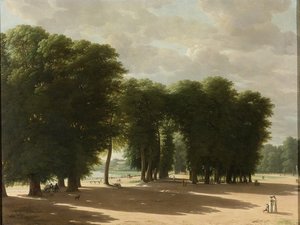
The works produced during these formative years reveal an artist captivated by the interplay of nature and human presence. He wasn’t interested in purely idyllic depictions; rather, he sought to capture the atmosphere of a place—the feeling of being *within* the landscape, observing its nuances and complexities. De ingang van het park van Saint-Cloud in Parijs (The Entrance of Park Saint-Cloud in Paris), painted in 1809, exemplifies this approach. The painting is not simply a record of a location but an evocation of a specific moment—a sunny day filled with leisurely activity and the quiet beauty of the Parisian countryside. It’s a work that hints at Kleijn's growing ability to imbue his scenes with narrative depth.
Allegiance, Loss, and a Tragic End
Kleijn returned to the Netherlands in 1815, coinciding with the restoration of the monarchy. Driven by a strong sense of patriotism, he enlisted as a second lieutenant in the Dutch army—a surprising turn for an artist who had spent years honing his craft in the cultural capitals of Europe. This decision proved fateful. He was wounded at the Battle of Quatre Bras, a brutal engagement fought shortly before the decisive Battle of Waterloo. Though awarded the Military William Order for his bravery, Kleijn never fully recovered from his injuries.
He died in 1816, just thirty-one years old, succumbing to his wounds in the arms of his mother. His untimely death robbed the Dutch art world of a promising talent. The poignancy of his story—an artist dedicated to beauty and expression who ultimately sacrificed himself for his country—has only added to the mystique surrounding his work.
A Lasting Legacy, Though Fleeting
While Kleijn’s oeuvre is relatively small due to his short career, his paintings offer a fascinating glimpse into the transition between Neoclassicism and Romanticism in Dutch art. He wasn't a revolutionary figure; he didn't seek to overturn established conventions. Instead, he synthesized influences—the precision of David, the atmospheric qualities of Italian landscapes, and the inherent Dutch love for natural observation—to create scenes that are uniquely his own.
His work resonates today not only for its aesthetic merit but also for the story it tells—a tale of ambition, dedication, and tragic loss. Pieter Rudolph Kleijn remains a reminder that artistic genius can flourish even in the face of adversity, and that sometimes, the most profound beauty is found in the fleeting moments of life itself.
pieter rudolph kleijn
1785 - 1816

