

 Vorschau anzeigen
 Versenden
 Teilen
 Details anzeigen

 Herunterladen
 Ähnliche Objekte
 Röntgenaufnahme
 Diashow
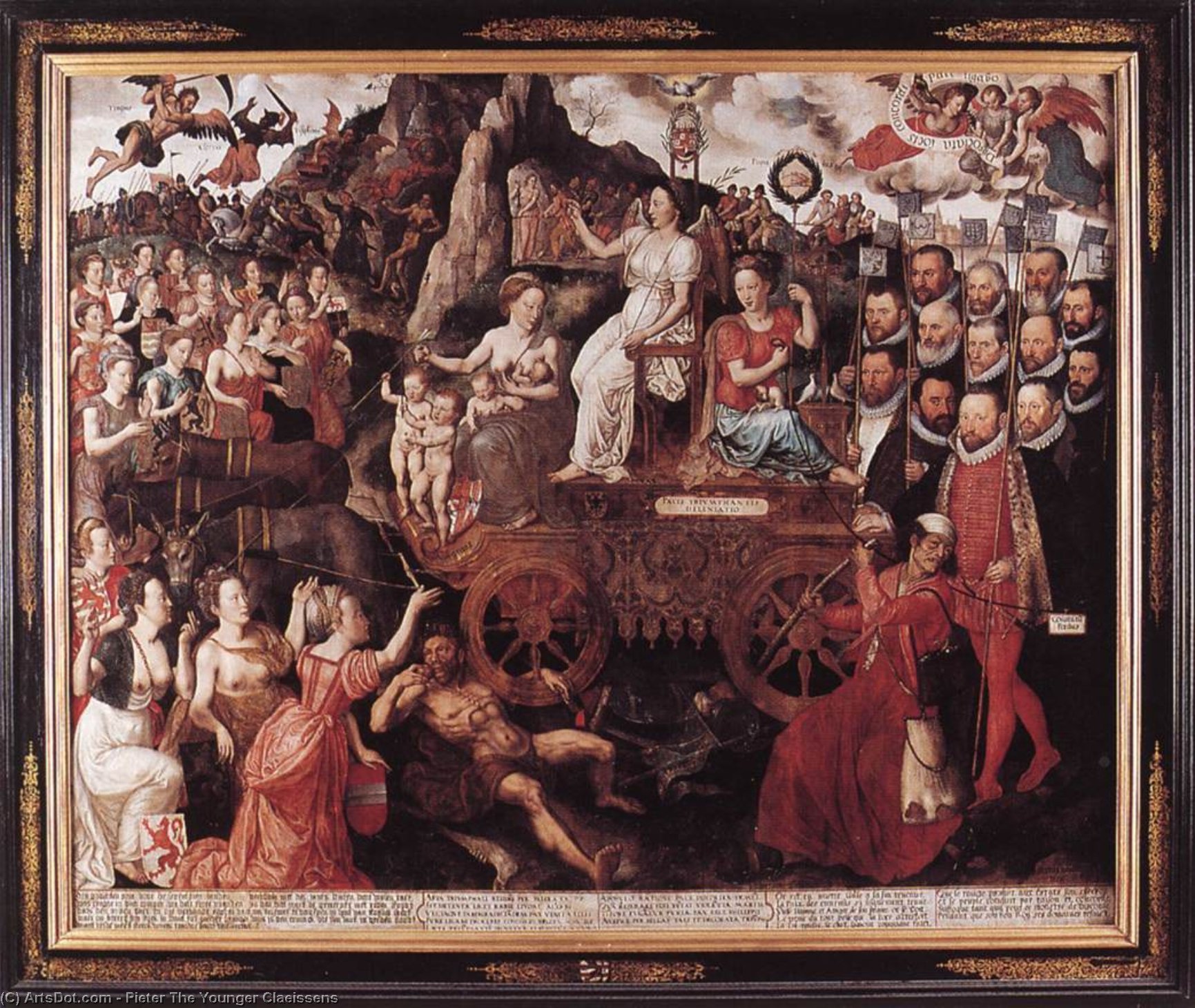
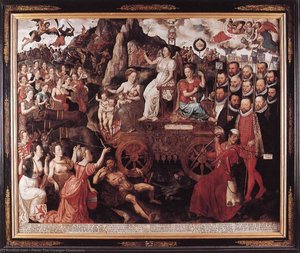
Allegory of the 1577 Peace in the Low Countries
 Oil On Panel
- Northern Renaissance
 1577
1577- Early Modern
 159.0 x 198.0 cm
 Groeningemuseum
 Weiterlesen
Erwerben Sie ein hochauflösendes, optimiertes digitales Bild, das der Online-Vorschau weit überlegen ist.
Jede Datei wird von unseren hauseigenen Spezialisten mit modernsten Werkzeugen und fachmännischer manueller Retusche sorgfältig vorbereitet. Wir stellen sicher, dass jedes Bild eine außergewöhnliche Klarheit, präzise Farbgenauigkeit und feinste Details aufweist.
Die endgültige Datei wird innerhalb von 72 Stunden per E-Mail zugestellt und ist für den sofortigen Einsatz in professionellen, redaktionellen und Druckumgebungen optimiert. Es handelt sich um dieselbe Qualität, der führende Designstudios, Verlage und Galerien vertrauen.
Digitales Bild
Laden Sie eine hochauflösende Datei für die persönliche Präsentation, den Druck und kreative Projekte herunter. ( Druck bestellen Handgemalte Reproduktion bestellen)
In jeder Bestellung digitaler Bilder enthalten
Professionelle digitale Bereitstellung, garantiert
Wenn Sie sich für ArtsDot.com entscheiden, erhalten Sie nicht nur ein Bild – Sie erhalten ein professionell aufbereitetes digitales Kunstwerk, das mit höchster Präzision erstellt und durch eine Zufriedenheitsgarantie abgesichert wird. Hier ist alles, was automatisch mit Ihrer Bestellung geliefert wird:

Schnelle E-Mail-Zustellung
Ihre hochauflösende digitale Bilddatei wird Ihnen innerhalb von 72 Stunden nach der Bestellung per E-Mail zugestellt – bereit zur sofortigen Verwendung.

KI-optimierte digitale Datei
Ihre Kunstwerke werden professionell mithilfe fortschrittlicher KI-Tools und manueller Bearbeitung optimiert, um maximale Detailtreue, Klarheit und Farbgenauigkeit zu gewährleisten.

Lebenslanger kostenloser Neudruckservice
Datei versehentlich gelöscht oder verloren? Keine Sorge – wir senden sie Ihnen jederzeit kostenlos erneut zu.

Keine Einfuhrgebühren – jemals
Genießen Sie Ihr Kunstwerk sofort ohne Zollgebühren, Einfuhrabgaben oder Versandkosten – digitale Downloads sind immer steuerfrei.

Garantierte Farbtreue
Wir garantieren, dass Ihr digitales Bild mithilfe professioneller Werkzeuge und Farbmanagement die Originalfarben so präzise wie möglich wiedergibt.

60-Tage-Zufriedenheitsgarantie
Sollten Sie mit Ihrem digitalen Bild nicht zufrieden sein, werden wir es überarbeiten oder Ihnen innerhalb von 60 Tagen 100% erstatten – ohne Wenn und Aber.

100% Geld-zurück-Garantie
Nicht zufrieden? Erhalten Sie innerhalb von 60 Tagen nach Erhalt Ihrer digitalen Datei eine vollständige Rückerstattung – ohne Angabe von Gründen.

Rabatte bei Großbestellungen
3 Bilder kaufen, 10% sparen – 5 Bilder kaufen, 15% sparen – Ab 10 Bildern 20% sparen. Ideal für kreative Projekte, Galerien und Agenturen.
A Vision of Harmony: The Allegory of the 1577 Peace
In the grand tapestry of Flemish art history, few works capture the delicate tension between political upheaval and the yearning for stability as poignantly as Pieter the Younger Claeissens’s Allegory of the 1577 Peace in the Low Countries. This monumental oil on panel, measuring an impressive 159 x 198 cm, serves as more than just a historical record; it is a profound psychological study of a society caught in the throes of transition. At the heart of this intricate composition sits a central female figure atop a cart, acting as the luminous anchor for a diverse assembly of souls. Claeissulence masterfully directs the viewer's eye through a crowded landscape of figures—some kneeling in reverence, others standing in contemplative silence—creating a sense of communal breath held in anticipation of a lasting truce.
The technique employed by Claeissens reflects the pinnacle of the Flemish tradition, characterized by an almost tactile approach to oil painting. Every fold of heavy fabric, every weathered expression on a laborer's face, and the subtle play of light across the central figure are rendered with a meticulousness inherited from his father’s tutelage. The artist utilizes the luminosity of the oil medium to breathe life into the skin tones and the textures of the surrounding environment, ensuring that the scene feels less like a static tableau and more like a living, breathing moment in time. For the discerning collector or interior designer, this piece offers a rich, multi-layered visual experience where the depth of the brushwork invites prolonged contemplation.
Symbolism and the Spirit of an Era
To gaze upon this allegory is to engage with the complex political landscape of the late 16th-century Low Countries. The year 1577 was a pivotal moment of fragile hope, and Claeissens weaves this historical weight into every symbolic gesture within the frame. The central figure on the cart serves as an embodiment of Peace itself, emerging amidst a sea of varied social classes to remind the viewer of the shared human cost of conflict. The interaction between the thirteen visible figures—ranging from those in positions of power to the humble onlookers in the foreground—creates a narrative of unity. Through these carefully choreographed postures, the artist suggests that peace is not merely a political treaty, but a collective spiritual and social endeavor.
For those looking to integrate such a masterpiece into a curated space, the painting offers an unparalleled emotional resonance. It brings a sense of gravitas and historical continuity to any room, acting as a conversation piece that speaks of resilience and the enduring human spirit. Whether placed in a formal gallery setting or as a focal point in a sophisticated study, the Allegory of the 1577 Peace provides an atmosphere of intellectual depth and classical elegance. It is a work that does not merely decorate a wall; it commands the space, inviting all who behold it to reflect on the delicate balance between chaos and order.
Ähnliche Kunstwerke


Biografie des Künstlers
A Legacy of Light and Devotion: The Life of Pieter the Younger Claeissens
In the heart of Bruges, a city where the echoes of the Middle Ages met the burgeoning intellectual light of the Renaissance, Pieter the Younger Claes Jansz. Claeissens emerged as a master of profound visual storytelling. Born around 1540, his very existence was woven into the rich tapestry of the Flemish artistic tradition. As the son of the esteemed painter Pieter Claes Jansz., Claeissens did not merely learn a trade; he inherited a lineage of meticulous precision and a deep-seated reverence for the oil medium. This early tutelage under his father provided him with the technical foundation necessary to master the subtle luminosity and tactile realism that would become the hallmarks of his mature style, allowing him to breathe life into skin, fabric, and the very atmosphere of his compositions.
The world Claeissens inhabited was one of intense transition, marked by the humanist revival and the complex political shifts of the Low Countries. His career flourished during the reign of Philip II, a period where art served as both a tool for religious devotion and a mirror for political identity. Claeissens rose to significant prominence within the Guild of St. Luke in Bruges, eventually serving as its dean on multiple occasions between 1587 and 1606. His professional ascent was further solidified by his appointment as the official painter to Bruges, a prestigious mantle he held from 1581 until 1621, succeeding his brother Antoon. This position allowed him to shape the visual identity of his home city, producing works that resonated with both the local citizenry and the ruling elite.
The Mastery of Allegory and Sacred Imagery
While Claeissens was a gifted portraitist capable of capturing the psychological depth of his subjects, it is in his religious and allegorical works that his true genius resides. He possessed a rare ability to marry the earthly with the divine, using the dramatic interplay of chiaroscuro to evoke a sense of spiritual awe. In his depictions of the Virgin and Child, such as those set within elegant Gothic frames, he moved beyond simple iconography. Through the careful placement of figures—like the presence of Joseph working in the background—he transformed static devotional panels into living narratives of the Holy Family, inviting the viewer into a moment of quiet, domestic sanctity.
Beyond the sacred, Claeissens was a master of the complex political allegory. His monumental work, Allegory of the 1577 Peace in the Low Countries, stands as a testament to his ability to translate the turbulent sociopolitical climate of his era into a cohesive visual language. In this sweeping composition, he utilizes a central female figure atop a cart to act as an anchor for a diverse assembly of souls, capturing the collective breath of a society yearning for stability amidst upheaval. Through these works, Claeisspecens demonstrated that painting could serve as much more than decoration; it could function as a profound psychological study of a nation in transition.
The enduring significance of Pieter the Younger Claeissens lies in his role as a bridge between eras. His work embodies the following essential elements of the Flemish tradition:
- Technical Precision: A commitment to the meticulous detail and luminous textures inherited from the great Flemish masters.
- Symbolic Depth: The use of humanist symbolism to convey complex theological and political truths.
- Narrative Emotion: An ability to utilize light and shadow to heighten the emotional impact of both sacred and secular scenes.
- Civic Importance: A career deeply embedded in the institutional and cultural life of Bruges, serving as a guardian of the city's artistic heritage.
As we look back upon his prolific career, Claeissens remains a pivotal figure of the Northern Renaissance. His ability to navigate the delicate balance between the meticulous realism of his Flemish roots and the grand, symbolic ambitions of the Renaissance era ensures that his works continue to captivate the modern eye, offering a window into a world where every brushstroke was an act of faith and every shadow held a story.
pieter the younger claeissens
1540 - 1623 , Belgium
Kurzinfos
- Artistic Movement Or Style: Renaissance Painting
- Artists Or Movements Influenced By This Artist: ['Northern Renaissance']
- Artists Who Influenced This Artist: ['Jan Bruegel the Elder']
- Date Of Birth: ca. 1540
- Date Of Death: 1623
- Full Name: Pieter Claeissens
- Nationality: Flemish
- Notable Artworks: ['Virgin and Child']
- Place Of Birth: Bruges, Belgium

