

 Vorschau anzeigen
 Versenden
 Teilen
 Details anzeigen

 Herunterladen
 Ähnliche Objekte
 Röntgenaufnahme
 Diashow
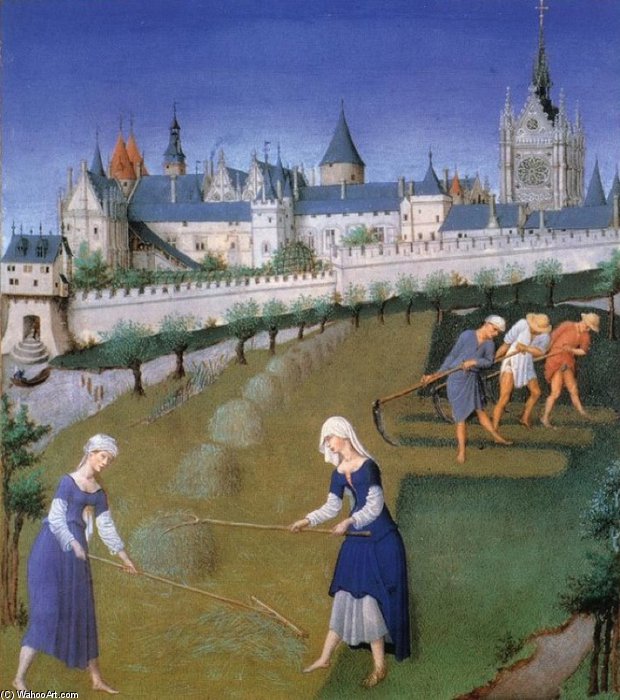
Tres Riches Heures Du Duc De Berry

 Weiterlesen
Erwerben Sie ein hochauflösendes, optimiertes digitales Bild, das der Online-Vorschau weit überlegen ist.
Jede Datei wird von unseren hauseigenen Spezialisten mit modernsten Werkzeugen und fachmännischer manueller Retusche sorgfältig vorbereitet. Wir stellen sicher, dass jedes Bild eine außergewöhnliche Klarheit, präzise Farbgenauigkeit und feinste Details aufweist.
Die endgültige Datei wird innerhalb von 72 Stunden per E-Mail zugestellt und ist für den sofortigen Einsatz in professionellen, redaktionellen und Druckumgebungen optimiert. Es handelt sich um dieselbe Qualität, der führende Designstudios, Verlage und Galerien vertrauen.
Digitales Bild
Laden Sie eine hochauflösende Datei für die persönliche Präsentation, den Druck und kreative Projekte herunter. ( Druck bestellen Handgemalte Reproduktion bestellen)
In jeder Bestellung digitaler Bilder enthalten
Professionelle digitale Bereitstellung, garantiert
Wenn Sie sich für ArtsDot.com entscheiden, erhalten Sie nicht nur ein Bild – Sie erhalten ein professionell aufbereitetes digitales Kunstwerk, das mit höchster Präzision erstellt und durch eine Zufriedenheitsgarantie abgesichert wird. Hier ist alles, was automatisch mit Ihrer Bestellung geliefert wird:

Schnelle E-Mail-Zustellung
Ihre hochauflösende digitale Bilddatei wird Ihnen innerhalb von 72 Stunden nach der Bestellung per E-Mail zugestellt – bereit zur sofortigen Verwendung.

KI-optimierte digitale Datei
Ihre Kunstwerke werden professionell mithilfe fortschrittlicher KI-Tools und manueller Bearbeitung optimiert, um maximale Detailtreue, Klarheit und Farbgenauigkeit zu gewährleisten.

Lebenslanger kostenloser Neudruckservice
Datei versehentlich gelöscht oder verloren? Keine Sorge – wir senden sie Ihnen jederzeit kostenlos erneut zu.

Keine Einfuhrgebühren – jemals
Genießen Sie Ihr Kunstwerk sofort ohne Zollgebühren, Einfuhrabgaben oder Versandkosten – digitale Downloads sind immer steuerfrei.

Garantierte Farbtreue
Wir garantieren, dass Ihr digitales Bild mithilfe professioneller Werkzeuge und Farbmanagement die Originalfarben so präzise wie möglich wiedergibt.

60-Tage-Zufriedenheitsgarantie
Sollten Sie mit Ihrem digitalen Bild nicht zufrieden sein, werden wir es überarbeiten oder Ihnen innerhalb von 60 Tagen 100% erstatten – ohne Wenn und Aber.

100% Geld-zurück-Garantie
Nicht zufrieden? Erhalten Sie innerhalb von 60 Tagen nach Erhalt Ihrer digitalen Datei eine vollständige Rückerstattung – ohne Angabe von Gründen.

Rabatte bei Großbestellungen
3 Bilder kaufen, 10% sparen – 5 Bilder kaufen, 15% sparen – Ab 10 Bildern 20% sparen. Ideal für kreative Projekte, Galerien und Agenturen.
Ähnliche Kunstwerke
Biografie des Künstlers
Pol de Limbourg: Weaver of Light and Life in Medieval Burgundy
The name Pol de Limbourg resonates through the annals of late medieval art, inextricably linked to one of the most breathtaking achievements in illuminated manuscript production: the Très Riches Heures du Duc de Berry. More than just a book of hours—a devotional compilation designed for private prayer—this masterpiece stands as a testament to the Limbourg brothers’ extraordinary skill, their deep understanding of human experience, and their pivotal role in shaping the visual language of the 15th century. Born in Nijmegen around 1385, Pol de Limbourg, alongside his brothers Herman and Jean, emerged from a family steeped in craftsmanship—a lineage that combined goldsmithing with the burgeoning art of miniature painting. Their story is one of unexpected opportunity, perilous captivity, and ultimately, unparalleled artistic triumph.
The early lives of the Limbourgs were intertwined with the political machinations of Burgundy. Their uncle, Jean Malouel, a skilled heraldic painter employed by the Duke of Burgundy, Philip the Bold, provided them with an initial foothold in the royal court. This connection led to apprenticeships in Paris, where young Herman and Jean honed their skills under the tutelage of a Parisian goldsmith. However, fate intervened dramatically when, amidst a period of conflict between Brabant and Guelders, the brothers were captured in Brussels around 1398. Their mother’s inability to secure their release through ransom—a staggering sum of 55 gold escus—resulted in an extraordinary act of royal patronage. Philip the Bold, recognizing the artistic talent within his family, intervened, paying the ransom and securing a future for his nephews.
This intervention marked a turning point. In February 1402, Paul and Jean were formally contracted by Philip to dedicate four years exclusively to illuminating a Bible—a monumental undertaking that would define their careers. While the precise nature of this initial commission remains debated among scholars, it’s widely believed to be closely related to the later Bible Moralisée (Ms. fr. 166), housed in the Bibliothèque Nationale de France. The brothers' meticulous approach and burgeoning reputation quickly brought them into the orbit of Jean de Berry, Duke of Berry, a renowned collector of art and a generous patron. It was for the Duke that they created the Belles Heures de Jean de France, a stunning book of hours now residing in the Metropolitan Museum of Art in New York City—a work considered alongside the *Très Riches Heures* as a pinnacle of their artistic achievement.
The International Gothic Style and Limbourg’s Innovation
To fully appreciate the significance of the Limbourg brothers' work, it is essential to understand the artistic context in which they operated: the International Gothic style. Emerging from Paris in the late 14th century, this style represented a synthesis of French elegance with influences from Italy and Flanders. Characterized by refined detail, vibrant colors, and a heightened sense of realism, it sought to capture both the beauty and the drama of the world. However, the Limbourg brothers pushed the boundaries of this established style, introducing innovations that would profoundly impact subsequent generations of artists.
Their most notable contribution was their masterful depiction of landscape—a radical departure from the stylized backgrounds prevalent in earlier illuminated manuscripts. They rendered fields, forests, and rivers with astonishing accuracy, employing atmospheric perspective to create a sense of depth and distance. This wasn’t merely decorative; it served to ground the narrative scenes within believable environments, imbuing them with a remarkable sense of immediacy. Furthermore, they skillfully integrated human figures into these landscapes, creating dynamic compositions that captured the rhythms of daily life—harvesting crops, tending livestock, celebrating festivals. The *Très Riches Heures* and *Belles Heures* are replete with scenes of rural activity, offering an unparalleled glimpse into the lives of people in 15th-century Burgundy.
Beyond landscape, the Limbourg brothers demonstrated a remarkable understanding of human psychology. Their figures possess a palpable sense of emotion—joy, sorrow, contemplation—expressed through subtle gestures and facial expressions. They captured not just outward appearances but also inner states, creating characters that feel remarkably alive. Their use of color was equally sophisticated, employing a rich palette of pigments to create luminous effects and evoke specific moods.
The *Très Riches Heures du Duc de Berry*: A Masterpiece Unveiled
The Très Riches Heures du Duc de Berry stands as the brothers’ most celebrated achievement—a monumental work that exemplifies their artistic prowess and innovative spirit. Comprising 700 full-page illustrations, it is a lavish celebration of the Christian year, depicting scenes from the Bible, liturgical events, and secular life. The manuscript's pages are filled with intricate details—heraldic emblems, floral borders, miniature portraits, and meticulously rendered landscapes.
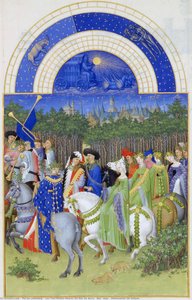
The calendar pages, in particular, are remarkable for their depiction of seasonal activities. From planting seeds to harvesting crops, from celebrating religious holidays to engaging in everyday pursuits, these scenes offer a vibrant portrayal of the rhythms of rural life. The Limbourg brothers’ ability to capture both the beauty and the laboriousness of this work is truly astonishing.
The *Très Riches Heures* also showcases the brothers' mastery of perspective and their innovative use of color. They employed techniques such as aerial perspective—reducing detail and lightening colors in the distance—to create a sense of depth and realism. The manuscript’s vibrant palette, achieved through the careful selection and blending of pigments, contributes to its overall luminosity and visual impact.
Legacy and Historical Significance
The Limbourg brothers' work had a profound and lasting influence on the development of European art. Their innovative approach to landscape, their sophisticated understanding of human psychology, and their masterful use of color set new standards for illuminated manuscript production. They were among the first artists to render landscape scenes with such accuracy and detail, paving the way for later developments in perspective and realism in painting.
Their influence can be seen in the work of subsequent generations of artists, including Jan van Eyck and Rogier van der Weyden. The *Très Riches Heures* remains a cornerstone of book art—a testament to the Limbourg brothers’ extraordinary skill, their artistic vision, and their enduring legacy.
pol de limbourg
1385 - 1416
Kurzinfos
- Artistic Movement Or Style: International Gothic
- Artists Or Movements Influenced By This Artist:
- Van Eyck
- Van der Weyden
- Artists Who Influenced This Artist: ['Jean Malouel']
- Date Of Birth: 1385
- Date Of Death: 1416
- Full Name: Pol de Limbourg
- Nationality: Dutch
- Notable Artworks:
- Très Riches Heures du Duc de Berry
- Belles Heures de Jean de France
- Place Of Birth: Nijmegen, Netherlands

