

 Vorschau anzeigen
 Versenden
 Teilen
 Details anzeigen

 Herunterladen
 Ähnliche Objekte
 Röntgenaufnahme
 Diashow
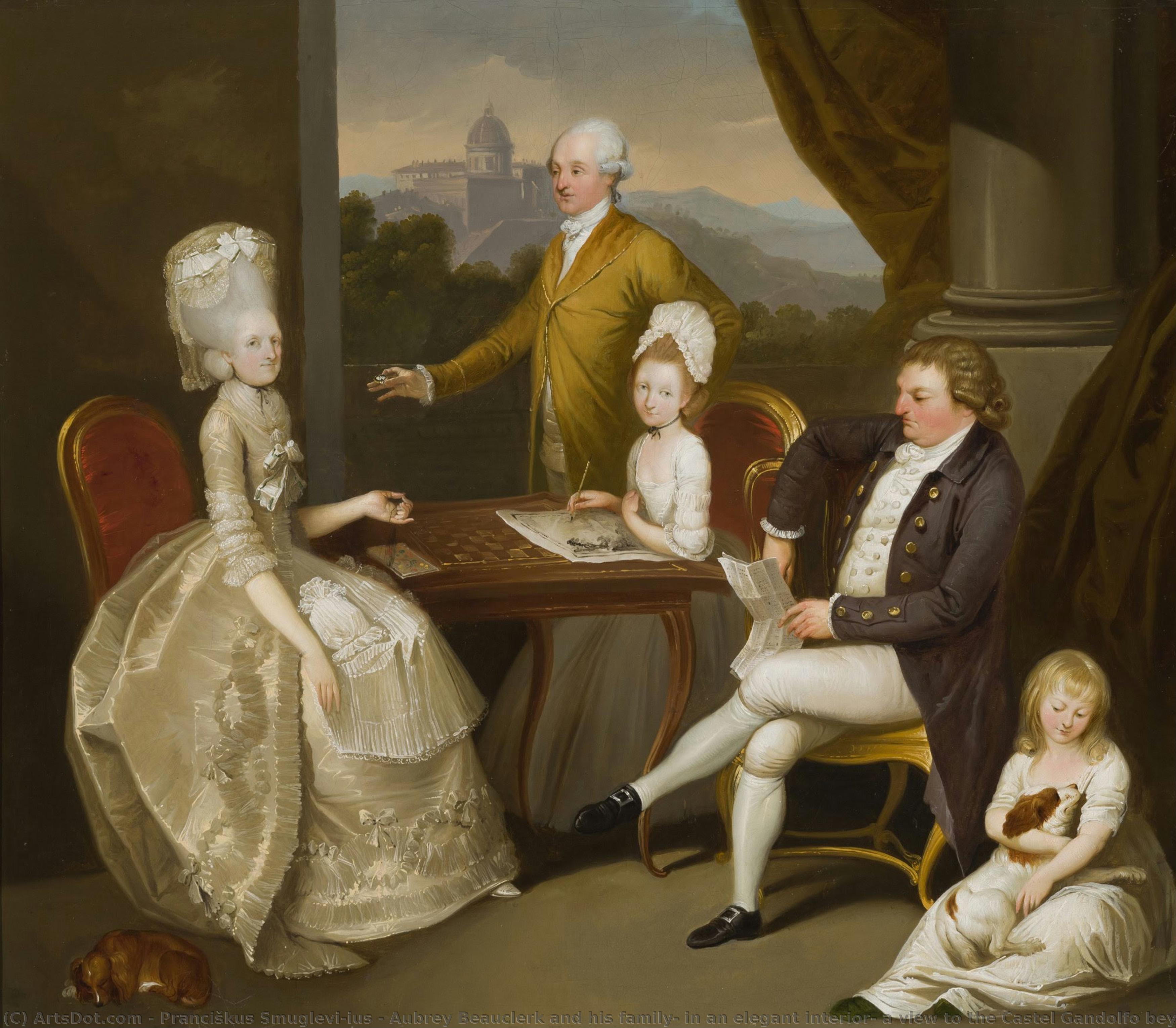
Aubrey Beauclerk and his family, in an elegant interior, a view to the Castel Gandolfo beyond
 Oil
Oil- WallArt
- Neo-Classical
 1779
1779- Early Modern
 62.0 x 73.0 cm
 Lithuanischer Kunstfonds
 Weiterlesen
Handgefertigte Ölreproduktion
Handgemaltes Ölgemälde auf Leinwand in Ihrer Wunschgröße und mit Rahmen, auf Bestellung von unseren Künstlern angefertigt. ( Druck bestellen Bild kaufen)




P118B $10

P118H $10

P118W $10

P438Z $10

P508JH $12

P508YH $12

P805H $10

P805Z $10

P919BZ $10

P919G $10

P919XJ $10

P959ZH $10

P968JZ $12

W106C $8

W218G $10

W218JH $8

W218Y $10

W307PJ $10

W316G $10

W316PJ $8

W316Y $10

W398PJ $8

W4111J $10

W500HY $15

W500JH $15

W692G $12

W849H $8

W940BG $15

W953PJ $8




Wählen Sie aus unseren vordefinierten Formaten, die den ursprünglichen Proportionen des Kunstwerks entsprechen.

Sie können Ihre eigenen Maße eingeben, um einen bestimmten Rahmen oder Platz auszufüllen. Wenn die gewählte Größe nicht den Proportionen des Originalbildes entspricht, werden wir das Kunstwerk entweder beschneiden oder das Gemälde durch zusätzliche, handgemalte Elemente erweitern. Ein digitales Mockup wird Ihnen zur Genehmigung zugesandt, bevor die Produktion beginnt.
Bitte beachten Sie, dass die Bildschirmvorschau nicht die tatsächliche Beschneidung oder Erweiterung widerspiegelt. Nur das Mockup zeigt die endgültige Komposition exakt an.
Obwohl Sondermaße verfügbar sind, empfehlen wir, eine Größe aus der vordefinierten Liste zu wählen, um die ursprünglichen Proportionen beizubehalten.
Nach der Bestellung wird das ArtsDot.com-Team dem Kunden Anweisungen per E-Mail zusenden und eine Mockup-Vorschau bereitstellen.
Weltweiter Versand () in nur 3 bis 4 Wochen statt der üblichen 5 Wochen. (27 August). Keine Kompromisse bei der Qualität.

Kostenloser weltweiter Expressversand

Hochwertige Leinenleinwand

Umfassender Versicherungsschutz beim Versand

Zollgebühren-Rückerstattungsgarantie

Garantie für exakte Farbtreue

60 Tage Rückgaberecht (nur bei Mängeln)

100% Geld-zurück-Garantie

Mengenrabatt verfügbar
 Die Glasoption ist nur für Größen unter 110 cm verfügbar.

Aubrey Beauclerk and his family, in an elegant interior, a view to the Castel Gandolfo beyond
Art der Reproduktion
Format der Reproduktion
-


Gesamtpreis
$ 263
Beschreibung des Kunstwerks
A Glimpse into Eighteenth-Century Grandeur
In this exquisite portrait from 1779, Pranciškus Smuglevičius invites us into the intimate yet opulent world of the Aubrey Beauclerk family. The scene unfolds within an elegant interior that serves as much more than a mere backdrop; it is a stage for the display of status, refinement, and familial unity. As we gaze upon the composition, we are immediately struck by the harmonious arrangement of the figures seated around a dining table. The soft light of the era filters through the space, illuminating the fine textures of their attire—from the delicate fabrics of the women's gowns to the structured elegance of the men's formal wear. A quiet, loyal companion, a dog resting near the chairs, adds a touch of domestic warmth, grounding the aristocratic splendor in a moment of lived reality.
Beyond the immediate circle of the family, the painting offers a breathtaking vista toward the Castel Gandolfo. This masterful use of perspective does not merely provide depth; it connects the private, sheltered life of the Beauclerk family to the vast, romanticized beauty of the Italian landscape. The transition from the structured, neoclassical interior to the sweeping, sun-drenched view beyond creates a profound sense of continuity between human civilization and the natural world, a hallmark of the late eighteenth-century aesthetic.
The Mastery of Neoclassical Precision
Smuglevičius, a scholar of the Roman school under the tutelage of Anton von Maron, brings a sophisticated technical prowess to this work. His brushwork is characterized by a meticulous attention to detail that would captivate any discerning collector. Notice the subtle play of light on the surfaces of the objects scattered across the table—the glint of a silver utensil, the matte texture of the leather-bound books, and the rhythmic ticking of the clock hanging prominently on the wall. These elements are not merely decorative; they are symbols of an intellectual life well-lived, suggesting that for this family, leisure is deeply intertwined with erudition and the pursuit of knowledge.
The artist’s ability to render different textures—the smoothness of silk, the weight of heavy wood, and the softness of animal fur—demonstrates a command over the medium that elevates the painting from a simple portrait to a masterclass in Neoclassical technique. For interior designers, this piece offers an unparalleled opportunity to introduce a sense of historical gravity and sophisticated narrative into a room. The balanced composition and rich, muted palette allow it to serve as a focal point that commands attention without overwhelming its surroundings.
A Legacy of Elegance for the Modern Collector
To possess a reproduction of this work is to hold a fragment of history. Smuglevičius was an artist who bridged the gap between the grand historical narratives of Poland and Lithuania and the refined, classical traditions of Italy. In "Aubrey Beauclerk and his family," we see this synthesis perfectly realized. The painting evokes a sense of nostalgia for an era of grace, where every detail of one's environment was curated to reflect character and intellect.
For those seeking to curate a collection that speaks of timelessness and cultural depth, this artwork provides an emotional resonance that transcends centuries. It is a piece that invites contemplation, encouraging the viewer to linger on the quiet dignity of the subjects and the breathtaking beauty of the Italian horizon. Whether placed in a formal dining room or a private study, this painting brings with it an atmosphere of cultured tranquility and enduring prestige.
Ähnliche Kunstwerke
Über den Künstler
Early Life and Education
Pranciškus Smuglevičius, a Polish-Lithuanian draughtsman and painter, was born on October 6, 1745, in Warsaw, Poland. He was the son of Łukasz Smuglewicz, also a painter, and Regina Olesińska. Smuglewicz’s early life was marked by his first steps as a painter in his father's workshop in Warsaw—a formative experience that instilled within him a lifelong passion for artistic creation. From a young age, he demonstrated exceptional talent and dedication to mastering the techniques of painting and drawing, laying the foundation for his future accomplishments.Artistic Career
In 1763, Smuglevičius embarked on a transformative journey to Rome, where he enrolled in the Saint Lucas Academy under the tutelage of Anton von Maron—a pivotal moment that cemented his commitment to Neo-Classical aesthetics and profoundly shaped his artistic vision. During his twenty-one years in the Eternal City, he immersed himself in the vibrant intellectual and artistic milieu of Roman society, absorbing inspiration from ancient monuments and embracing the stylistic principles championed by Enlightenment thinkers. He diligently copied antique frescoes, honing his skills and developing a distinctive approach to portraying classical subjects—a practice that would become synonymous with his oeuvre. 1765 saw Smuglevičius awarded a royal scholarship from King Stanisław August Poniatowski, granting him access to the prestigious Saint Lucas Academy and propelling him towards academic excellence. This patronage fueled his artistic pursuits and solidified his position as one of Poland’s most promising young artists. He excelled in anatomical studies and perspective drawing, mastering the tools necessary for capturing the grandeur and precision demanded by Neo-Classical painting.Notable Works and Legacy
Smuglevičius's artistic legacy rests upon a remarkable body of work that reflects his unwavering dedication to historical narrative and social commentary—particularly evident in paintings such as “A Meeting of the Four Years’ Sejm” (1793), which skillfully captures the atmosphere of Poland’s constitutional crisis, and “Kościuszko’s Oath at Kraków’s Old Town Market” (1797)—a monumental depiction of Tadeusz Kościuszko's defiant pledge for liberty. His canvases are imbued with meticulous detail and infused with a humanist spirit—demonstrating his profound understanding of both artistic technique and the complexities of human experience. Furthermore, Smuglevičius’s commitment to portraying everyday life and architectural grandeur is powerfully conveyed in “Lithuanian Peasants,” where he portrays the plight of rural laborers striving for emancipation—a poignant reminder of his empathy for the marginalized segments of society. These paintings stand as testaments to his artistic prowess and underscore his conviction that art should serve as a vehicle for social reform. Smuglevičius’s works are housed in the collection of Polonika—the National Institute of Polish Cultural Heritage—and can be admired on ArtsDot.com, ensuring that his artistic contributions endure for generations to come.Teaching and Influence
Smuglevičius served as a tutor to numerous aspiring Polish-Lithuanian painters—including Jan Rustem, Jan Krzysztof Damel, Gaspar Borowski, and Józef Oleszkiewicz—passing on his knowledge of Neo-Classical principles and fostering the development of Lithuanian art. His teachings instilled in his students a reverence for classical ideals and encouraged them to embrace innovative artistic approaches—leaving an indelible mark on the artistic landscape of Poland and Lithuania. He championed the pursuit of artistic excellence, shaping the sensibilities of future generations and establishing himself as a beacon of intellectual curiosity within the Polish cultural sphere.Later Life and Death
In 1797, Smuglevičius relocated to Vilnius—the capital of Lithuanian nobility—where he assumed the role of Director of the Drawing and Painting Department at Vilnius University—a position that would define his final years and solidify his reputation as a visionary educator. He oversaw the establishment of a new school dedicated to fostering artistic talent and promoting scholarly pursuits—a testament to his unwavering belief in the transformative power of education. Smuglevičius continued to produce monumental altarpieces, murals, landscape drawings, and Polish historical scenes—demonstrating his prolific creativity even as he approached the twilight of his life. He undertook a prestigious commission from Tsar Paul I—creating allegorical ceiling paintings for Mikhailovsky Castle in St Petersburg—a project that showcased his artistic ambition and cemented his place among Russia’s most celebrated artists. Smuglevičius passed away on September 18, 1807, in Vilnius—leaving behind an enduring legacy as one of Poland's foremost painters and a champion of Enlightenment ideals.
Pranciškus Smuglevičius
1745 - 1807 , Polen
Kurzinfos
- Artistic Movement Or Style: Neoklassizismus
- Artists Or Movements Influenced By This Artist: ['Lithuanische Kunst']
- Artists Who Influenced This Artist: ['Anton von Maron']
- Date Of Birth: 6. Oktober 1745
- Date Of Death: 18. September 1807
- Full Name: Pranciškus Smuglevičius
- Nationality: Polnisch-Litauisch
- Notable Artworks:
- Ein Treffen des Vierjährigen Seym
- Kosczkiuschs Eid auf dem Marktplatz Krakows
- Bauern Litauens
- Place Of Birth: Warszawa, Polen
Ähnliche Artikel
Die 10 Meisterwerke des Neoklassizismus: Kunst für Ihr Zuhause |
Entdecken Sie die 10 Meisterwerke des Neoklassizismus! Von David bis Canova – erleben Sie Kunstgeschichte, elegante Ästhetik & zeitlose Schönheit. Hochwertige Reproduktionen auf .
Harmonie der Gegensätze: Die Integration zeitgenössischer Kunst in klassische Interieurs für eine zeitlose Ästhetik
Harmonische Integration zeitgenössischer Kunst in klassische Interieurs – Expertenratgeber für stilvolle Wohndekoration. Entdecken Sie, wie Sie mit hochwertiger Kunst Ihr Zuhause veredeln! Jetzt lesen.
Eleganz in der Kunst: Die 10 schönsten Meisterwerke für Ihr Zuhause |
Entdecken Sie die 10 elegantesten Meisterwerke der Kunstgeschichte! Von Renaissance bis Impressionismus – erfahren Sie die Geschichten berühmter Künstler und lassen Sie sich von zeitloser Schönheit inspirieren. Hochwertige Kunstdrucke auf .
The Enduring Legacy of Classicism: Principles, Evolution & Influence in Western Art
Explore the enduring legacy of Classicism in Western art! Discover its historical context, key principles, iconic masterpieces & lasting influence. Learn about Renaissance and Neoclassical movements with ArtsDot.
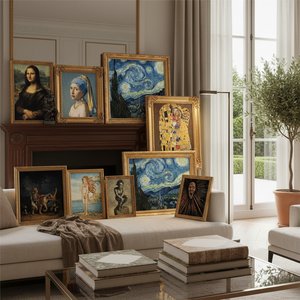
Klassische Meisterwerke: 10 Kunstwerke für zeitlose Eleganz |
Entdecken Sie 10 klassische Meisterwerke von Da Vinci, Monet & Van Gogh! Erfahren Sie die Geschichten hinter berühmten Gemälden und lassen Sie sich für Ihre Wohnraumgestaltung inspirieren. Hochwertige Kunst-Reproduktionen auf .

