 Vorschau anzeigen
 Versenden
 Teilen
 Details anzeigen

 Herunterladen
 Ähnliche Objekte
 Röntgenaufnahme
 Diashow
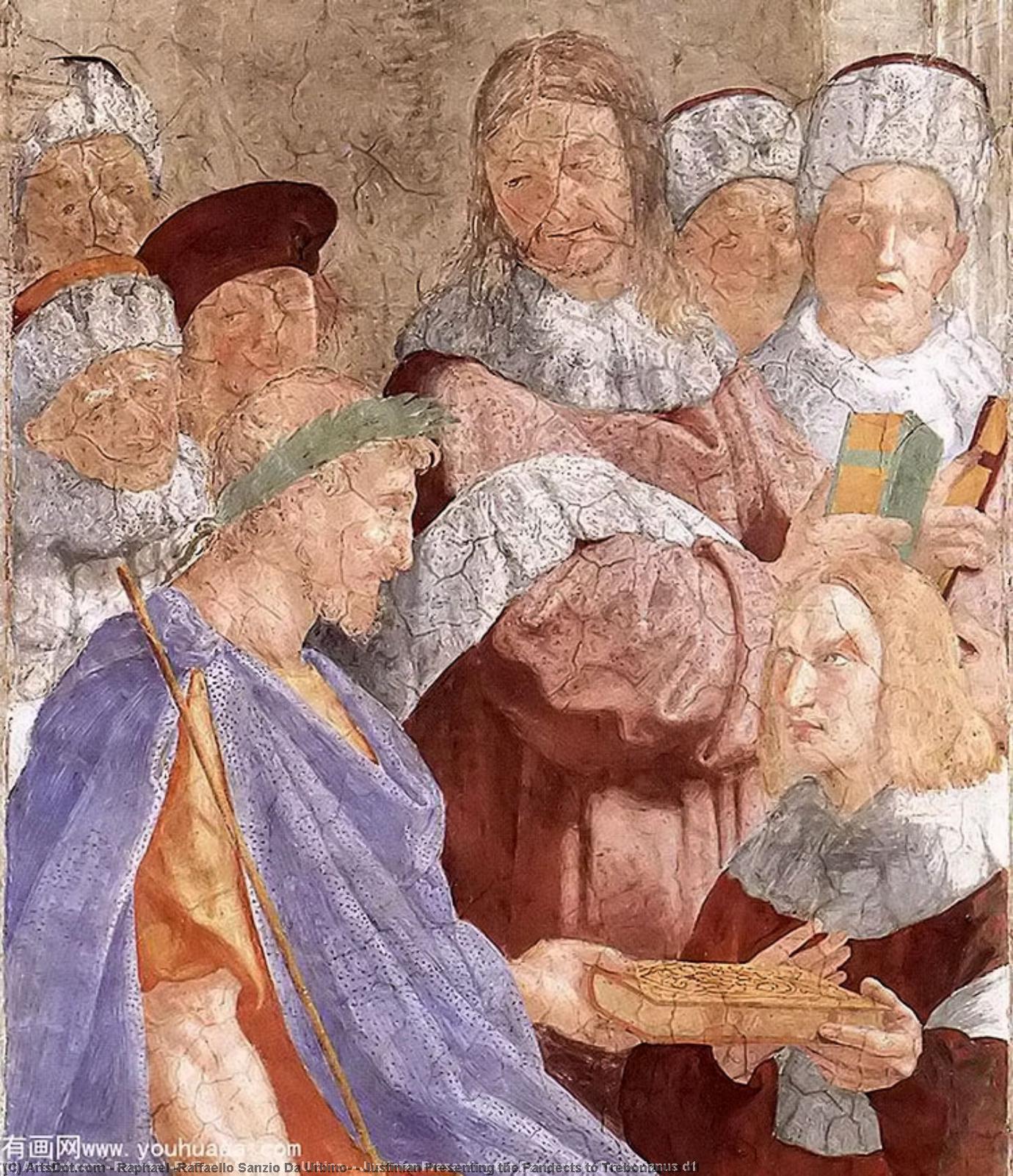
Justinian überreicht die Pandekten an Trebonian d1

 Weiterlesen
Handgefertigte Ölreproduktion
Handgemaltes Ölgemälde auf Leinwand in Ihrer Wunschgröße und mit Rahmen, auf Bestellung von unseren Künstlern angefertigt. ( Druck bestellen Bild kaufen)




P118B $10

P118H $10

P118W $10

P438Z $10

P508JH $12

P508YH $12

P805H $10

P805Z $10

P919BZ $10

P919G $10

P919XJ $10

P959ZH $10

P968JZ $12

W106C $8

W218G $10

W218JH $8

W218Y $10

W307PJ $10

W316G $10

W316PJ $8

W316Y $10

W398PJ $8

W4111J $10

W500HY $15

W500JH $15

W692G $12

W849H $8

W940BG $15

W953PJ $8




Wählen Sie aus unseren vordefinierten Formaten, die den ursprünglichen Proportionen des Kunstwerks entsprechen.

Sie können Ihre eigenen Maße eingeben, um einen bestimmten Rahmen oder Platz auszufüllen. Wenn die gewählte Größe nicht den Proportionen des Originalbildes entspricht, werden wir das Kunstwerk entweder beschneiden oder das Gemälde durch zusätzliche, handgemalte Elemente erweitern. Ein digitales Mockup wird Ihnen zur Genehmigung zugesandt, bevor die Produktion beginnt.
Bitte beachten Sie, dass die Bildschirmvorschau nicht die tatsächliche Beschneidung oder Erweiterung widerspiegelt. Nur das Mockup zeigt die endgültige Komposition exakt an.
Obwohl Sondermaße verfügbar sind, empfehlen wir, eine Größe aus der vordefinierten Liste zu wählen, um die ursprünglichen Proportionen beizubehalten.
Nach der Bestellung wird das ArtsDot.com-Team dem Kunden Anweisungen per E-Mail zusenden und eine Mockup-Vorschau bereitstellen.
Weltweiter Versand () in nur 3 bis 4 Wochen statt der üblichen 5 Wochen. (23 August). Keine Kompromisse bei der Qualität.

Kostenloser weltweiter Expressversand

Hochwertige Leinenleinwand

Umfassender Versicherungsschutz beim Versand

Zollgebühren-Rückerstattungsgarantie

Garantie für exakte Farbtreue

60 Tage Rückgaberecht (nur bei Mängeln)

100% Geld-zurück-Garantie

Mengenrabatt verfügbar
 Die Glasoption ist nur für Größen unter 110 cm verfügbar.

Justinian überreicht die Pandekten an Trebonian d1
Art der Reproduktion
Format der Reproduktion
-


Gesamtpreis
$ 263
Beschreibung des Kunstwerks
Die Pracht des Römischen Reiches: Raffael’s Darstellung von Justinian und Trebonianus
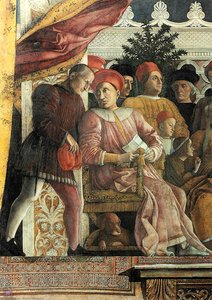
Raffael’s “Justinianus Pandectas Triboniánui Domiculano Donans” – Justinian Presenting the Pandects to Trebonianus – is more than simply a portrait; it's a meticulously crafted tableau vivant, a frozen moment of political and intellectual exchange within the heart of the late 15th-century Roman Empire. Painted in Urbino, the birthplace of the artist, this work embodies the Renaissance ideal of humanist learning and the enduring fascination with classical antiquity that defined the era. The painting captures a scene of dignified formality, yet beneath its surface lies a complex web of political maneuvering and philosophical debate. The figures are not merely individuals; they represent the weight of history and the pursuit of knowledge itself.
Ein Fenster in die Welt der Pandekten
At the center of the composition stands Justinian I, the powerful emperor who oversaw a period of immense expansion for the Byzantine Empire. He holds aloft a copy of the *Pandects*, a collection of Roman law compiled under Emperor Justinian himself – a deliberate act of homage and a symbol of continuity between the ancient world and the burgeoning Christian empire. His posture is one of authority, yet there’s also an air of thoughtful consideration in his gaze. Across from him stands Trebonianus Gallus, a prominent senator and consul, representing the established senatorial class. The inclusion of this figure highlights the delicate balance of power between imperial decree and traditional Roman institutions – a dynamic that was constantly shifting during Justinian's reign.
Raffael’s Meisterschaft: Technik und Komposition
- Der Einfluss der Renaissance-Porträtmalerei: Raffael masterfully employs the conventions of Renaissance portraiture, prioritizing naturalism and a sense of three-dimensionality. The figures are rendered with remarkable detail, from the texture of their clothing to the subtle expressions on their faces.
- Harmonische Komposition: The painting’s composition is carefully balanced, drawing the viewer's eye towards Justinian and Trebonianus while simultaneously showcasing the surrounding entourage. The use of pyramidal structure creates a sense of stability and order.
- Farben und Licht: Raffael utilizes a restrained yet sophisticated palette, dominated by rich reds, blues, and golds – colors associated with imperial power and wealth. Light is employed strategically to highlight key figures and create depth within the scene. The subtle gradations of tone contribute to the overall sense of realism.
Symbolik und historische Bedeutung
Beyond its immediate depiction, the painting is laden with symbolic meaning. The *Pandects* itself represents the preservation and transmission of knowledge – a cornerstone of Renaissance humanism. Justinian’s gesture signifies his commitment to legal reform and the codification of Roman law, while Trebonianus's attentive posture suggests an appreciation for this intellectual endeavor. The presence of other figures in the background—including attendants and officials—underscores the importance of political patronage and the intricate web of relationships that characterized courtly life. The setting itself, reminiscent of a Roman atrium, further reinforces the painting’s connection to classical antiquity. This work isn't just about two men; it’s a visual testament to the enduring legacy of Rome and its profound influence on Western civilization.
ArtsDot offers exquisite, hand-painted reproductions of this iconic masterpiece, allowing you to bring the grandeur and intellectual depth of Raffael’s “Justinianus Pandectas Triboniánui Domiculano Donans” into your home or office. Each reproduction is created with meticulous attention to detail, capturing the nuances of color, texture, and composition that make this painting a timeless treasure.
Ähnliche Kunstwerke


Über den Künstler
**frühes Leben und Ausbildung**
Raphael (Raffaello Sanzio da Urbino), ein renommierter italienischer Maler und Architekt, wurde zwischen dem 28. März und dem 6. April 1483 in der kleinen, aber kulturell bedeutenden Stadt Urbino geboren. Sein Vater, Giovanni Santi, war Hofmaler des Herzogs und vermittelte Raphael von Anfang an eine frühe Auseinandersetzung mit der künstlerischen Welt. Nach dem Tod seines Vaters im Alter von elf Jahren betrieb Raphael wahrscheinlich die Familienwerkstatt weiter, was seine künstlerische Grundlage festigte.**Künstlerischer Werdegang und Einflüsse**
Raphaels künstlerischer Weg lässt sich in drei verschiedene Phasen einteilen, jede mit einem einzigartigen Stil gekennzeichnet:- Frühe Jahre in Umbrien: Charakterisiert durch den Einfluss seines Vaters und die kulturelle Atmosphäre von Urbino.
- Florentinische Periode (1504-1508): Aufnahme der künstlerischen Traditionen Florenz, die seinen Stil maßgeblich prägte.
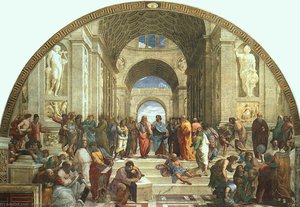
- Römische Periode (1508-1520): Arbeitete für zwei Päpste und ihre Mitarbeiter und schuf einige seiner bekanntesten Werke, darunter die Schule der Athene in der Vatikanische Stanza della Segnatura.
**Bekannte Werke und Vermächtnis**
Einige der bekannten Werke von Raphael sind:- Das Urteil des Salomon (ansicht auf ArtsDot)
- Die Esterházy-Madonna (ansicht auf ArtsDot)
- Vatikanische Stanzen - Ansicht der Stanza della Segnatura (ansicht auf ArtsDot)
- St. Sebastian (ansicht auf ArtsDot)
- La Donna Velata (ansicht auf ArtsDot)
**Einfluss und Vermächtnis**
Raphaels Einfluss auf die Kunst ist tiefgreifend, wobei sein Werk ein Eckpfeiler der Hochrenaissance darstellt. Sein ruhiger und harmonischer Stil war ein Vorbild für die neoklassische Malerei, wie von Kunsthistoriker Johann Joachim Winckelmann bemerkt. Trotz des späteren Einflusses von Michelangelos Stil bleibt Raphael einer der verehrtesten Künstler in der Geschichte. ansicht des Profils von Raphael auf ArtsDot
Raffael
1483 - 1520 , Italien
Kurzinfos
- Beeinflusste Künstler:
- Giovanni Santi
- Pietro Perugino
- Bemerkenswerte Werke:
- Das Urteil des Salomon
- Esterházy-Madonna
- Die Schule der Athener
- St. Sebastian
- La Donna Velata
- Einfluss Auf Kunst: Neoklassische Malerei
- Geburtsdatum: 1483
- Geburtsort: Urbino, Italien
- Künstlerischer Stil: Hochrenaissance
- Nationalität: Italienisch
- Todatum: 1520
- Vollständiger Name: Raffaello Sanzio da Urbino
- Von Künstlern Beeinflusst:
- Leonardo da Vinci
- Michelangelo
Ähnliche Artikel

Raphael: Die 25 Meisterwerke des Renaissance-Genies – Kunst für Ihr Zuhause
Entdecken Sie die 25 schönsten Meisterwerke von Raphael! Tauchen Sie ein in die Welt der Renaissance-Kunst, erfahren Sie faszinierende Geschichten und lassen Sie sich von den Farben und Kompositionen inspirieren. Hochwertige Reproduktionen auf ArtsDot.com.
The Enduring Legacy of Formal Portraiture: Power, Identity & Artistic Exploration
Explore the rich history of formal portraiture & its enduring power to capture identity and shape perception. Discover investment-worthy artworks, expert appraisals, and custom reproduction services at ArtsDot.
The Grandeur of Presence: Exploring Representations of Stately Bearing in Western Portraiture
Explore the art of stately bearing in Western portraiture with expert analysis of Renaissance & Baroque masterpieces. Discover symbolism, techniques, and the legacy of iconic portraits – a guide for discerning collectors.
The Enduring Gaze: Classical Portraiture & Societal Values
Explore the rich history of classical portraiture & its reflection of societal values. Discover artistic techniques, symbolism, and enduring influence on art collecting with ArtsDot.
The Enduring Gaze: A Historical & Artistic Exploration of Portraiture Across Movements
Explore the rich history of portraiture with ArtsDot.com! Discover iconic masterpieces, influential artists & movements. Expert analysis for collectors and enthusiasts. Find your perfect artwork today.