 Vorschau anzeigen
 Versenden
 Teilen
 Details anzeigen

 Herunterladen
 Ähnliche Objekte
 Röntgenaufnahme
 Diashow
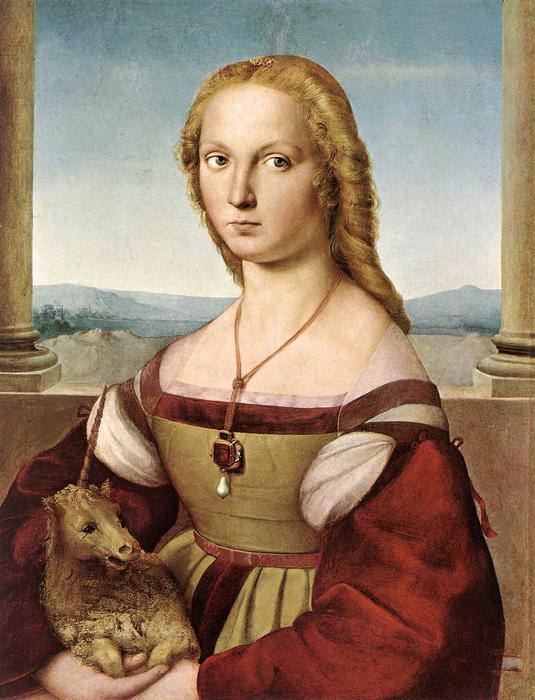
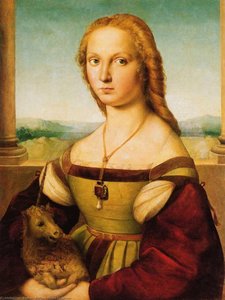
Portrait of a Lady with a Unicorn
 Öl auf Leinwand
- Wandkunst
- Hochrenaissance
 1506
1506- Renaissance
 67.0 x 53.0 cm
 Weiterlesen
Handgefertigte Ölreproduktion
Handgemaltes Ölgemälde auf Leinwand in Ihrer Wunschgröße und mit Rahmen, auf Bestellung von unseren Künstlern angefertigt. ( Druck bestellen Bild kaufen)




P118B $10

P118H $10

P118W $10

P438Z $10

P508JH $12

P508YH $12

P805H $10

P805Z $10

P919BZ $10

P919G $10

P919XJ $10

P959ZH $10

P968JZ $12

W106C $8

W218G $10

W218JH $8

W218Y $10

W307PJ $10

W316G $10

W316PJ $8

W316Y $10

W398PJ $8

W4111J $10

W500HY $15

W500JH $15

W692G $12

W849H $8

W940BG $15

W953PJ $8




Wählen Sie aus unseren vordefinierten Formaten, die den ursprünglichen Proportionen des Kunstwerks entsprechen.

Sie können Ihre eigenen Maße eingeben, um einen bestimmten Rahmen oder Platz auszufüllen. Wenn die gewählte Größe nicht den Proportionen des Originalbildes entspricht, werden wir das Kunstwerk entweder beschneiden oder das Gemälde durch zusätzliche, handgemalte Elemente erweitern. Ein digitales Mockup wird Ihnen zur Genehmigung zugesandt, bevor die Produktion beginnt.
Bitte beachten Sie, dass die Bildschirmvorschau nicht die tatsächliche Beschneidung oder Erweiterung widerspiegelt. Nur das Mockup zeigt die endgültige Komposition exakt an.
Obwohl Sondermaße verfügbar sind, empfehlen wir, eine Größe aus der vordefinierten Liste zu wählen, um die ursprünglichen Proportionen beizubehalten.
Nach der Bestellung wird das ArtsDot.com-Team dem Kunden Anweisungen per E-Mail zusenden und eine Mockup-Vorschau bereitstellen.
Weltweiter Versand () in nur 3 bis 4 Wochen statt der üblichen 5 Wochen. (21 August). Keine Kompromisse bei der Qualität.

Kostenloser weltweiter Expressversand

Hochwertige Leinenleinwand

Umfassender Versicherungsschutz beim Versand

Zollgebühren-Rückerstattungsgarantie

Garantie für exakte Farbtreue

60 Tage Rückgaberecht (nur bei Mängeln)

100% Geld-zurück-Garantie

Mengenrabatt verfügbar
 Die Glasoption ist nur für Größen unter 110 cm verfügbar.

Portrait of a Lady with a Unicorn
Art der Reproduktion
Format der Reproduktion
-


Gesamtpreis
$ 263
Beschreibung des Kunstwerks
Portrait of a Lady with a Unicorn: A Renaissance Vision
Raphael’s “Portrait of a Lady with a Unicorn,” completed in 1506, stands as an emblem of the High Renaissance—a period defined by humanist ideals and unparalleled artistic achievement. More than just a depiction of a noblewoman, it's a meticulously crafted meditation on beauty, purity, and spiritual contemplation, reflecting the cultural fervor of Florence under Lorenzo de Medici.
The Painting’s Composition: Harmony and Symbolism
The artwork immediately captivates with its balanced composition. A woman dominates the central space, positioned gracefully against a backdrop of a serene landscape—a deliberate choice mirroring Leonardo da Vinci's “Mona Lisa,” demonstrating Raphael’s mastery of artistic influences. Her gaze directs towards the viewer, conveying an air of quiet dignity and introspection. Notably, she cradles a unicorn in her arms – a creature steeped in medieval symbolism representing innocence, chastity, and divine grace.
Artistic Technique: Oil on Panel—A Legacy of Brilliance
Raphael employed the traditional oil on panel technique, a cornerstone of Renaissance painting. This method allowed for unparalleled color vibrancy and textural richness, achieved through layering thin glazes of pigment onto a wooden substrate. The meticulous attention to detail – from the delicate folds of her dress to the subtle shading of the unicorn’s fur—underscores Raphael's exceptional skill in capturing the essence of his subject matter.
Historical Context: Florence and Humanism
Created during Lorenzo de Medici’s reign, “Portrait of a Lady with a Unicorn” embodies the humanist spirit that permeated Florentine culture. Humanists championed reason and observation alongside classical learning, influencing artists to strive for idealized representations of human form and emotion. The painting reflects this fascination with beauty and harmony—values central to Renaissance aesthetics.
Symbolism: Beyond Mere Representation
The unicorn itself transcends mere visual depiction; it embodies profound spiritual significance. In medieval folklore, the unicorn symbolized purity and grace, often associated with virginity and divine favor. Its presence in the lady’s arms elevates the portrait beyond a simple likeness, transforming it into an emblem of moral virtue—a testament to Raphael's ability to infuse his art with layers of meaning.
Conclusion: An Enduring Masterpiece
"Portrait of a Lady with a Unicorn" continues to inspire admiration for its exquisite beauty and intellectual depth. It remains a cornerstone of Renaissance art history, demonstrating Raphael’s unparalleled talent and cementing his place among the greatest painters of all time. For those seeking a connection to this timeless vision, reproductions crafted by ArtsDot offer an opportunity to experience the grandeur of Raphael's legacy.
Ähnliche Kunstwerke
Über den Künstler
**frühes Leben und Ausbildung**
Raphael (Raffaello Sanzio da Urbino), ein renommierter italienischer Maler und Architekt, wurde zwischen dem 28. März und dem 6. April 1483 in der kleinen, aber kulturell bedeutenden Stadt Urbino geboren. Sein Vater, Giovanni Santi, war Hofmaler des Herzogs und vermittelte Raphael von Anfang an eine frühe Auseinandersetzung mit der künstlerischen Welt. Nach dem Tod seines Vaters im Alter von elf Jahren betrieb Raphael wahrscheinlich die Familienwerkstatt weiter, was seine künstlerische Grundlage festigte.**Künstlerischer Werdegang und Einflüsse**
Raphaels künstlerischer Weg lässt sich in drei verschiedene Phasen einteilen, jede mit einem einzigartigen Stil gekennzeichnet:- Frühe Jahre in Umbrien: Charakterisiert durch den Einfluss seines Vaters und die kulturelle Atmosphäre von Urbino.
- Florentinische Periode (1504-1508): Aufnahme der künstlerischen Traditionen Florenz, die seinen Stil maßgeblich prägte.
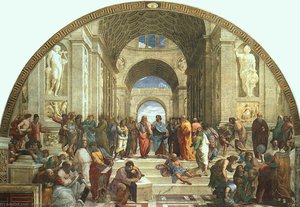
- Römische Periode (1508-1520): Arbeitete für zwei Päpste und ihre Mitarbeiter und schuf einige seiner bekanntesten Werke, darunter die Schule der Athene in der Vatikanische Stanza della Segnatura.
**Bekannte Werke und Vermächtnis**
Einige der bekannten Werke von Raphael sind:- Das Urteil des Salomon (ansicht auf ArtsDot)
- Die Esterházy-Madonna (ansicht auf ArtsDot)
- Vatikanische Stanzen - Ansicht der Stanza della Segnatura (ansicht auf ArtsDot)
- St. Sebastian (ansicht auf ArtsDot)
- La Donna Velata (ansicht auf ArtsDot)
**Einfluss und Vermächtnis**
Raphaels Einfluss auf die Kunst ist tiefgreifend, wobei sein Werk ein Eckpfeiler der Hochrenaissance darstellt. Sein ruhiger und harmonischer Stil war ein Vorbild für die neoklassische Malerei, wie von Kunsthistoriker Johann Joachim Winckelmann bemerkt. Trotz des späteren Einflusses von Michelangelos Stil bleibt Raphael einer der verehrtesten Künstler in der Geschichte. ansicht des Profils von Raphael auf ArtsDot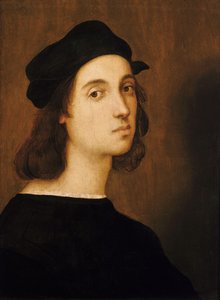
Raffael
1483 - 1520 , Italien
Kurzinfos
- Beeinflusste Künstler:
- Giovanni Santi
- Pietro Perugino
- Bemerkenswerte Werke:
- Das Urteil des Salomon
- Esterházy-Madonna
- Die Schule der Athener
- St. Sebastian
- La Donna Velata
- Einfluss Auf Kunst: Neoklassische Malerei
- Geburtsdatum: 1483
- Geburtsort: Urbino, Italien
- Künstlerischer Stil: Hochrenaissance
- Nationalität: Italienisch
- Todatum: 1520
- Vollständiger Name: Raffaello Sanzio da Urbino
- Von Künstlern Beeinflusst:
- Leonardo da Vinci
- Michelangelo
Ähnliche Artikel
Raphael: Die 25 Meisterwerke des Renaissance-Genies – Kunst für Ihr Zuhause
Entdecken Sie die 25 schönsten Meisterwerke von Raphael! Tauchen Sie ein in die Welt der Renaissance-Kunst, erfahren Sie faszinierende Geschichten und lassen Sie sich von den Farben und Kompositionen inspirieren. Hochwertige Reproduktionen auf ArtsDot.com.
Die 10 Meisterwerke der Hochrenaissance: Kunstgeschichte für Ihr Zuhause |
Entdecken Sie die 10 prägendsten Meisterwerke der Hochrenaissance! Erfahren Sie die Geschichten von Leonardo da Vinci, Michelangelo & Raffael. Finden Sie Ihre perfekte Kunst für Zuhause bei – Museumqualität und exklusive Reproduktionen online entdecken.
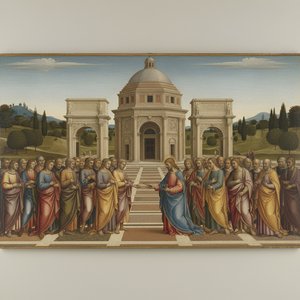
Pietro Perugino: Umbrian Master of Serenity & Precursor to Raphael's High Renaissance
Explore the life & art of Pietro Perugino, a pivotal Renaissance master and Raphael’s influential teacher. Discover his serene compositions, Sistine Chapel frescoes, and lasting legacy with ArtsDot.
Die Hochrenaissance: Künstlerische Innovation und Humanismus im Spiegel der Meisterwerke
Entdecken Sie die Hochrenaissance! Expertenwissen über Leonardo, Michelangelo & Raffael. Analysen berühmter Werke, Hintergründe zum Humanismus und Inspiration für Ihre Kunstsammlung – jetzt bei ArtsDot.
The Flourishing of Humanism: A Comprehensive Exploration of the Italian Renaissance Art Movement
Explore the Italian Renaissance! Discover humanist ideals, iconic masterpieces by Leonardo, Michelangelo & Raphael, and lasting artistic innovations. A comprehensive guide for art enthusiasts.