 Vorschau anzeigen
 Versenden
 Teilen
 Details anzeigen

 Herunterladen
 Ähnliche Objekte
 Röntgenaufnahme
 Diashow
 Statistiken
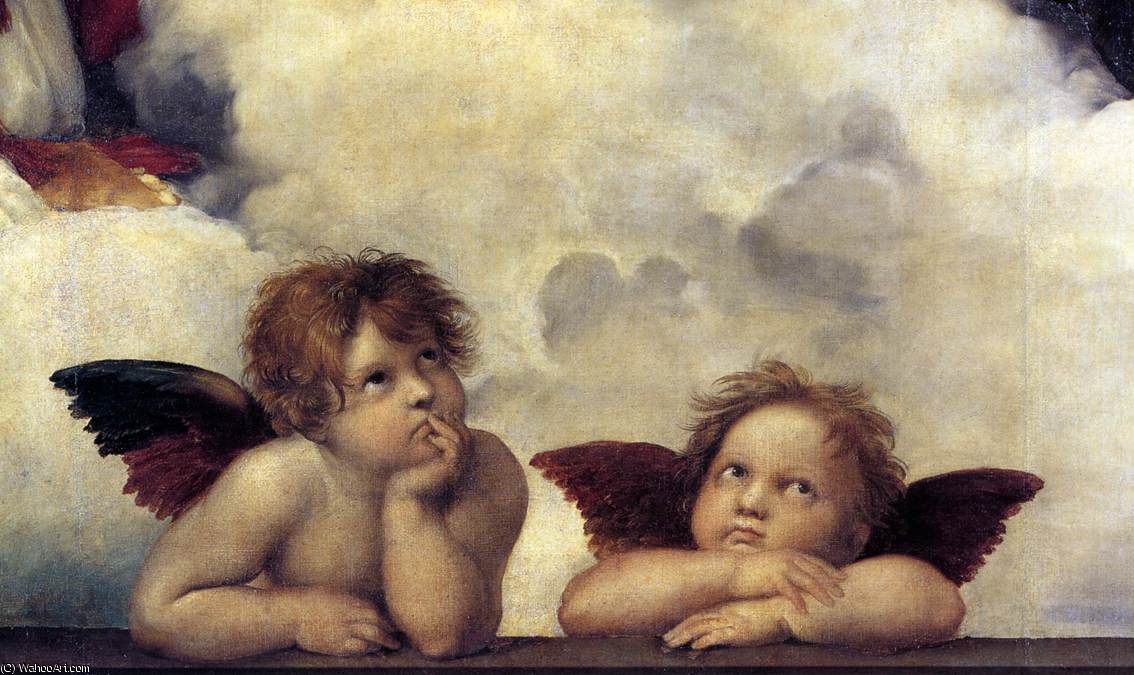
The sistine madonna (detail)2

 Weiterlesen
Handgefertigte Ölreproduktion
Handgemaltes Ölgemälde auf Leinwand in Ihrer Wunschgröße und mit Rahmen, auf Bestellung von unseren Künstlern angefertigt. ( Zu Druck wechseln Zum digitalen Bild wechseln)




P118B $10

P118H $10

P118W $10

P438Z $10

P508JH $12

P508YH $12

P805H $10

P805Z $10

P919BZ $10

P919G $10

P919XJ $10

P959ZH $10

P968JZ $12

W106C $8

W218G $10

W218JH $8

W218Y $10

W307PJ $10

W316G $10

W316PJ $8

W316Y $10

W398PJ $8

W4111J $10

W500HY $15

W500JH $15

W692G $12

W849H $8

W940BG $15

W953PJ $8




Wählen Sie aus unseren vordefinierten Formaten, die den ursprünglichen Proportionen des Kunstwerks entsprechen.

Sie können Ihre eigenen Maße eingeben, um einen bestimmten Rahmen oder Platz auszufüllen. Wenn die gewählte Größe nicht den Proportionen des Originalbildes entspricht, werden wir das Kunstwerk entweder beschneiden oder das Gemälde durch zusätzliche, handgemalte Elemente erweitern. Ein digitales Mockup wird Ihnen zur Genehmigung zugesandt, bevor die Produktion beginnt.
Bitte beachten Sie, dass die Bildschirmvorschau nicht die tatsächliche Beschneidung oder Erweiterung widerspiegelt. Nur das Mockup zeigt die endgültige Komposition exakt an.
Obwohl Sondermaße verfügbar sind, empfehlen wir, eine Größe aus der vordefinierten Liste zu wählen, um die ursprünglichen Proportionen beizubehalten.
Nach der Bestellung wird das ArtsDot.com-Team dem Kunden Anweisungen per E-Mail zusenden und eine Mockup-Vorschau bereitstellen.
Weltweiter Versand () in nur 3 bis 4 Wochen statt der üblichen 5 Wochen. (11 September). Keine Kompromisse bei der Qualität.

Kostenloser weltweiter Expressversand

Hochwertige Leinenleinwand

Umfassender Versicherungsschutz beim Versand

Zollgebühren-Rückerstattungsgarantie

Garantie für exakte Farbtreue

100-Tage-Rückgaberecht (nur bei Mängeln)

100% Geld-zurück-Garantie

Mengenrabatt verfügbar
 Die Glasoption ist nur für Größen unter 110 cm verfügbar.

The sistine madonna (detail)2
Art der Reproduktion
Format der Reproduktion
-


Gesamtpreis
$ 263
The Sistine Madonna: A Celestial Encounter
Raphael’s *Sistine Madonna*, painted between 1512 and 1514 for the Basilica of San Sisto in Piacenza, Italy, is far more than a depiction of the Virgin Mary and Child; it's an immersive experience, a carefully orchestrated dialogue between heaven and earth. Commissioned by Pope Julius II as an altarpiece honoring his deceased uncle, Pope Sixtus IV, the painting transcends its initial purpose to become one of the most iconic images in Western art history – a testament to Raphael’s mastery of composition, color, and the profound beauty of Renaissance ideals. The scene unfolds within a hazy, cloud-filled expanse, suggesting an ethereal realm where earthly concerns momentarily recede. The figures themselves are bathed in a soft, diffused light, creating a sense of serenity and timelessness that draws the viewer into their world.
Raphael’s genius lies not just in his technical skill – though it is undeniably exceptional – but also in his ability to imbue the painting with layers of meaning. The composition is meticulously balanced, guiding the eye from the central Madonna and Child towards the flanking saints, Saint Sixtus and Saint Barbara. These figures, chosen for their association with the church of San Sisto, represent a connection between the earthly realm and the divine. The putti, cherubic figures dancing amongst the clouds, add a touch of playful innocence and reinforce the painting’s theme of grace and spiritual elevation. Notice how Raphael subtly incorporates elements of classical antiquity – the drapery echoes ancient Roman sculpture, while the overall structure reflects Renaissance architectural principles.
A Symphony of Color and Technique
The *Sistine Madonna* is a prime example of Raphael's mastery of sfumato, a technique developed by Leonardo da Vinci that employs subtle gradations of light and shadow to create an atmospheric effect. This blurring of outlines softens the figures’ features, lending them an almost dreamlike quality. The colors are rich and luminous – deep blues and purples dominate the background, contrasted with the warm tones of the Madonna's robes and the delicate pinks and yellows of the Child Jesus. Raphael employed a meticulous layering technique, applying thin glazes of paint to build up depth and luminosity. This painstaking process is evident in the intricate details of the drapery, the delicate folds of the angels’ wings, and the subtle variations in color throughout the painting.
The use of gold leaf – particularly in the halos surrounding the figures – further enhances the painting's splendor and reinforces its sacred nature. Raphael’s attention to detail is remarkable; every element, from the smallest fold in a garment to the expression on the Madonna’s face, has been carefully considered and executed with precision. The painting was created using oil paints on a poplar wood panel, a common medium for Renaissance artists. This choice of material contributed to the richness and vibrancy of the colors.
Symbolism and Spiritual Resonance
Beyond its technical brilliance, the *Sistine Madonna* is laden with symbolism. The cloud-filled background represents the heavens, suggesting that the Virgin Mary is ascending to meet Christ. The presence of Saint Sixtus and Saint Barbara underscores the painting’s connection to the church and its history. The two putti, often interpreted as representing innocence and divine grace, symbolize the promise of salvation. Many art historians believe Raphael intended the painting to evoke a sense of awe and reverence, inviting viewers to contemplate the mysteries of faith and redemption.
The image’s enduring appeal lies in its ability to resonate with viewers on an emotional level. The serene beauty of the Madonna and Child, combined with the ethereal atmosphere of the background, creates a feeling of peace and tranquility. It's a scene that speaks to our deepest hopes and aspirations – a reminder of the divine presence in our lives and the promise of eternal salvation. The *Sistine Madonna* continues to captivate audiences centuries after its creation, solidifying Raphael’s legacy as one of the greatest artists of all time.
Bringing the Masterpiece Home
Reproductions of the *Sistine Madonna* offer a stunning way to bring this iconic artwork into your home or office. ArtsDot offers high-quality hand-painted reproductions that faithfully capture the painting’s beauty and detail, using archival materials for lasting preservation. Whether you're an art enthusiast, a collector, or simply seeking to add a touch of timeless elegance to your space, a *Sistine Madonna* reproduction is a beautiful and meaningful addition to any collection. Explore our selection today and experience the magic of Raphael’s masterpiece firsthand.
Ähnliche Kunstwerke
Über den Künstler
**frühes Leben und Ausbildung**
Raphael (Raffaello Sanzio da Urbino), ein renommierter italienischer Maler und Architekt, wurde zwischen dem 28. März und dem 6. April 1483 in der kleinen, aber kulturell bedeutenden Stadt Urbino geboren. Sein Vater, Giovanni Santi, war Hofmaler des Herzogs und vermittelte Raphael von Anfang an eine frühe Auseinandersetzung mit der künstlerischen Welt. Nach dem Tod seines Vaters im Alter von elf Jahren betrieb Raphael wahrscheinlich die Familienwerkstatt weiter, was seine künstlerische Grundlage festigte.**Künstlerischer Werdegang und Einflüsse**
Raphaels künstlerischer Weg lässt sich in drei verschiedene Phasen einteilen, jede mit einem einzigartigen Stil gekennzeichnet:- Frühe Jahre in Umbrien: Charakterisiert durch den Einfluss seines Vaters und die kulturelle Atmosphäre von Urbino.
- Florentinische Periode (1504-1508): Aufnahme der künstlerischen Traditionen Florenz, die seinen Stil maßgeblich prägte.
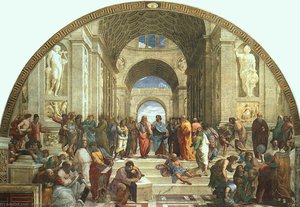
- Römische Periode (1508-1520): Arbeitete für zwei Päpste und ihre Mitarbeiter und schuf einige seiner bekanntesten Werke, darunter die Schule der Athene in der Vatikanische Stanza della Segnatura.
**Bekannte Werke und Vermächtnis**
Einige der bekannten Werke von Raphael sind:- Das Urteil des Salomon (ansicht auf ArtsDot)
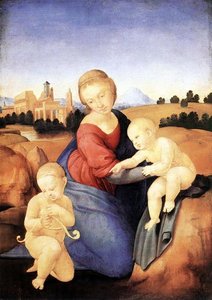
- Die Esterházy-Madonna (ansicht auf ArtsDot)
- Vatikanische Stanzen - Ansicht der Stanza della Segnatura (ansicht auf ArtsDot)
- St. Sebastian (ansicht auf ArtsDot)
- La Donna Velata (ansicht auf ArtsDot)
**Einfluss und Vermächtnis**
Raphaels Einfluss auf die Kunst ist tiefgreifend, wobei sein Werk ein Eckpfeiler der Hochrenaissance darstellt. Sein ruhiger und harmonischer Stil war ein Vorbild für die neoklassische Malerei, wie von Kunsthistoriker Johann Joachim Winckelmann bemerkt. Trotz des späteren Einflusses von Michelangelos Stil bleibt Raphael einer der verehrtesten Künstler in der Geschichte. ansicht des Profils von Raphael auf ArtsDot
Raffael
1483 - 1520 , Italien
Kurzinfos
- Beeinflusste Künstler:
- Giovanni Santi
- Pietro Perugino
- Bemerkenswerte Werke:
- Das Urteil des Salomon
- Esterházy-Madonna
- Die Schule der Athener
- St. Sebastian
- La Donna Velata
- Einfluss Auf Kunst: Neoklassische Malerei
- Geburtsdatum: 1483
- Geburtsort: Urbino, Italien
- Künstlerischer Stil: Hochrenaissance
- Nationalität: Italienisch
- Todatum: 1520
- Vollständiger Name: Raffaello Sanzio da Urbino
- Von Künstlern Beeinflusst:
- Leonardo da Vinci
- Michelangelo
Ähnliche Artikel
Raphael: Die 25 Meisterwerke des Renaissance-Genies – Kunst für Ihr Zuhause
Entdecken Sie die 25 schönsten Meisterwerke von Raphael! Tauchen Sie ein in die Welt der Renaissance-Kunst, erfahren Sie faszinierende Geschichten und lassen Sie sich von den Farben und Kompositionen inspirieren. Hochwertige Reproduktionen auf ArtsDot.com.
Fra Angelico: Die 25 Meisterwerke des italienischen Frührenaissance-Malers | ArtsDot
Entdecken Sie die 25 schönsten Meisterwerke von Fra Angelico! Erleben Sie religiöse Kunst der italienischen Renaissance, himmlische Fresken & Panelgemälde. Finden Sie hochwertige Kunstdrucke und Reproduktionen für Ihr Zuhause auf ArtsDot.com.
Die 25 Meisterwerke der Uffizien: Kunstgeschichte für Ihr Zuhause | ArtsDot
Entdecken Sie die 25 berühmtesten Meisterwerke der Uffizien, Florenz! Von Botticelli bis Leonardo da Vinci – Kunstgeschichte erleben. Hochwertige Reproduktionen & Inspiration für Ihr Zuhause auf ArtsDot.com.
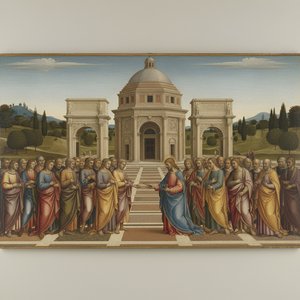
Pietro Perugino: Umbrian Master of Serenity & Precursor to Raphael's High Renaissance
Explore the life & art of Pietro Perugino, a pivotal Renaissance master and Raphael’s influential teacher. Discover his serene compositions, Sistine Chapel frescoes, and lasting legacy with ArtsDot.
Alte Pinakothek München: Die 25 Meisterwerke für Ihr Zuhause | ArtsDot
Entdecken Sie die 25 Meisterwerke der Alten Pinakothek München! Von Dürer bis Rembrandt – erleben Sie Kunstgeschichte hautnah. Hochwertige Kunstdrucke & Leinwandbilder für Ihr Zuhause bei ArtsDot.com.