

 Vorschau anzeigen
 Versenden
 Teilen
 Details anzeigen

 Herunterladen
 Ähnliche Objekte
 Röntgenaufnahme
 Diashow
Der Traum des Josef, Berlin


 Weiterlesen
Erwerben Sie ein hochauflösendes, optimiertes digitales Bild, das der Online-Vorschau weit überlegen ist.
Jede Datei wird von unseren hauseigenen Spezialisten mit modernsten Werkzeugen und fachmännischer manueller Retusche sorgfältig vorbereitet. Wir stellen sicher, dass jedes Bild eine außergewöhnliche Klarheit, präzise Farbgenauigkeit und feinste Details aufweist.
Die endgültige Datei wird innerhalb von 72 Stunden per E-Mail zugestellt und ist für den sofortigen Einsatz in professionellen, redaktionellen und Druckumgebungen optimiert. Es handelt sich um dieselbe Qualität, der führende Designstudios, Verlage und Galerien vertrauen.
Digitales Bild
Laden Sie eine hochauflösende Datei für die persönliche Präsentation, den Druck und kreative Projekte herunter. ( Druck bestellen Handgemalte Reproduktion bestellen)
In jeder Bestellung digitaler Bilder enthalten
Professionelle digitale Bereitstellung, garantiert
Wenn Sie sich für ArtsDot.com entscheiden, erhalten Sie nicht nur ein Bild – Sie erhalten ein professionell aufbereitetes digitales Kunstwerk, das mit höchster Präzision erstellt und durch eine Zufriedenheitsgarantie abgesichert wird. Hier ist alles, was automatisch mit Ihrer Bestellung geliefert wird:

Schnelle E-Mail-Zustellung
Ihre hochauflösende digitale Bilddatei wird Ihnen innerhalb von 72 Stunden nach der Bestellung per E-Mail zugestellt – bereit zur sofortigen Verwendung.

KI-optimierte digitale Datei
Ihre Kunstwerke werden professionell mithilfe fortschrittlicher KI-Tools und manueller Bearbeitung optimiert, um maximale Detailtreue, Klarheit und Farbgenauigkeit zu gewährleisten.

Lebenslanger kostenloser Neudruckservice
Datei versehentlich gelöscht oder verloren? Keine Sorge – wir senden sie Ihnen jederzeit kostenlos erneut zu.

Keine Einfuhrgebühren – jemals
Genießen Sie Ihr Kunstwerk sofort ohne Zollgebühren, Einfuhrabgaben oder Versandkosten – digitale Downloads sind immer steuerfrei.

Garantierte Farbtreue
Wir garantieren, dass Ihr digitales Bild mithilfe professioneller Werkzeuge und Farbmanagement die Originalfarben so präzise wie möglich wiedergibt.

60-Tage-Zufriedenheitsgarantie
Sollten Sie mit Ihrem digitalen Bild nicht zufrieden sein, werden wir es überarbeiten oder Ihnen innerhalb von 60 Tagen 100% erstatten – ohne Wenn und Aber.

100% Geld-zurück-Garantie
Nicht zufrieden? Erhalten Sie innerhalb von 60 Tagen nach Erhalt Ihrer digitalen Datei eine vollständige Rückerstattung – ohne Angabe von Gründen.

Rabatte bei Großbestellungen
3 Bilder kaufen, 10% sparen – 5 Bilder kaufen, 15% sparen – Ab 10 Bildern 20% sparen. Ideal für kreative Projekte, Galerien und Agenturen.
Details zum Sammlerstück
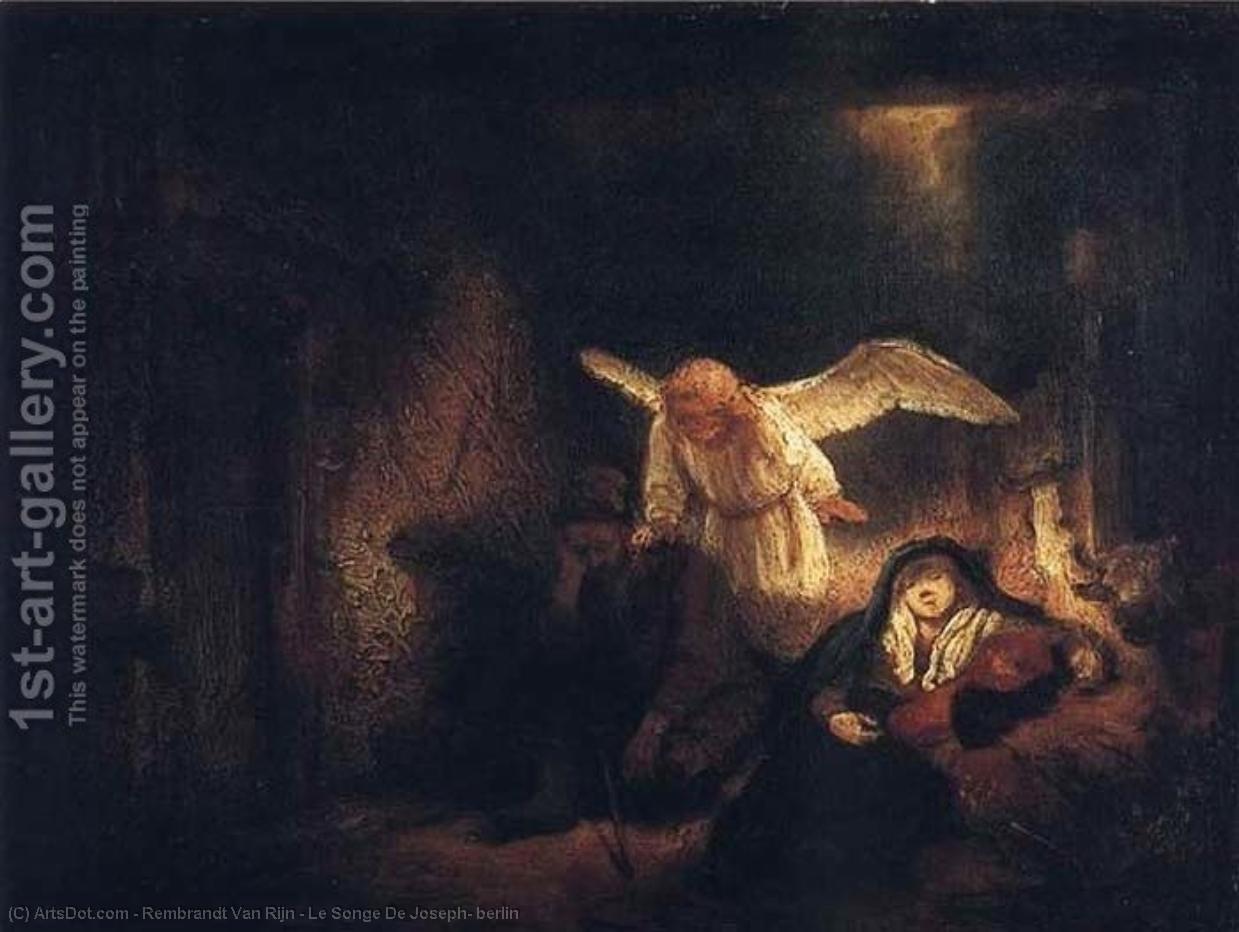
Le Songe De Joseph, berlin
Rembrandt van Rijn's *Le Songe de Joseph*, painted in 1645, is a deeply moving and intimate depiction of a pivotal moment from the life of Saint Joseph. This small-scale oil painting (20 x 27 cm) currently resides within the esteemed Staatliche Museen, Berlin, offering viewers a glimpse into Rembrandt’s masterful storytelling and profound understanding of human emotion. The scene portrays the second dream foretelling the impending Massacre of the Innocents orchestrated by King Herod – a divine warning delivered to Joseph in slumber.Biblical Narrative & Historical Context
The painting draws from the Gospel of Matthew, where an angel appears to Joseph in a dream, instructing him to flee with Mary and the infant Jesus to Egypt to save Him from Herod’s decree. Painted during the Dutch Golden Age – a period of immense artistic flourishing in the Netherlands – *Le Songe de Joseph* reflects the era's growing interest in biblical narratives and their personal resonance. Rembrandt, unlike many of his contemporaries focused on grand historical scenes, consistently chose to portray these stories with an emphasis on psychological realism and quiet contemplation. This work exemplifies that approach, moving away from dramatic spectacle towards a more internalized experience of faith and fear. The painting’s context is inextricably linked to the broader intellectual currents of its time – the burgeoning humanist movement challenged traditional dogma, fostering a desire for artistic representations that explored human psychology alongside religious themes. Rembrandt skillfully captures this spirit, prioritizing emotional truth over mere visual grandeur.Rembrandt’s Signature Style & Technique
*Le Songe de Joseph* is quintessential Rembrandt. The artist's renowned use of chiaroscuro – the dramatic interplay of light and shadow – dominates the composition, focusing our attention on Joseph and the ethereal angel. A single, powerful beam illuminates their faces, while the surrounding space dissolves into darkness, creating a sense of mystery and heightened spiritual tension. Rembrandt’s brushwork is characteristically loose and expressive, particularly evident in the folds of fabric and the modeling of forms. He employs impasto – thick layers of paint – to create texture and depth, lending a tactile quality to the scene. This technique wasn't merely aesthetic; it served to emphasize the materiality of the divine encounter, grounding the spiritual within the physical realm. The artist’s meticulous attention to detail—particularly in rendering Joseph’s face—reveals his mastery of anatomical observation and psychological portraiture.Symbolism & Emotional Resonance
The symbolism within the painting is subtle yet potent. The angel’s downward gaze and gentle gesture convey a message of both urgency and reassurance. Joseph's expression – a mixture of concern, apprehension, and acceptance – speaks volumes about his faith and willingness to obey God’s command. The darkness surrounding them isn’t simply atmospheric; it represents the looming threat of Herod’s violence and the uncertainty of the future. Rembrandt skillfully utilizes color—primarily muted browns and golds—to reinforce these thematic concerns. The subdued palette contributes to the painting's contemplative mood, inviting viewers to contemplate the profound implications of divine providence. It is a portrait not just of a man facing adversity but also of an inner struggle – a testament to Rembrandt’s ability to convey complex emotions with remarkable sensitivity.A Masterpiece for Collectors & Interior Design
*Le Songe de Joseph, Berlin*, is more than just a historical artifact; it’s a powerful expression of faith, fear, and divine intervention. Its subdued palette and intimate scale make it an ideal piece for collectors seeking works with profound emotional depth. For interior designers, a reproduction of this painting can introduce a sense of quiet contemplation and timeless elegance to any space – particularly bedrooms, studies, or contemplative corners. The rich textures and dramatic lighting will add visual interest and sophistication, creating a focal point that invites reflection and inspires awe. Consider framing it in a dark wood frame to accentuate the chiaroscuro effect and enhance its overall impact.- Style: Dutch Golden Age, Baroque
- Subject: Biblical Scene – Saint Joseph’s Dream
- Technique: Oil on Canvas, Chiaroscuro, Impasto
- Emotional Impact: Introspective, Reverent, Dramatic
A Life Illuminated: The World of Rembrandt van Rijn
Rembrandt Harmenszoon van Rijn, a name synonymous with the Dutch Golden Age and the mastery of light and shadow, was born on July 15, 1606 in Leiden, Netherlands, as the ninth child born to Harmen Gerritszoon van Rijn and Neeltgen Willemsdochter van Zuijtbrouck. His family was quite well-to-do; his father was a miller and his mother was a baker's daughter. Rembrandt received an education at Leiden’s Latin School, providing him with a foundation in classical learning that would later subtly inform his artistic narratives. His early artistic inclinations led to apprenticeships – first with Jacob van Swanenburg in Leiden around 1620, and then, crucially, a six-month period of study under Pieter Lastman in Amsterdam beginning in 1624. It was Lastman’s dramatic use of light and shadow, his dynamic compositions filled with historical and..."
Ähnliche Kunstwerke
Biografie des Künstlers
Rembrandt van Rijn: Leben & Erbe
Frühes Leben und Ausbildung (1606-1625)
- Rembrandt Harmenszoon van Rijn wurde am 15. Juli 1606 in Leiden, Niederlande – einem geschäftigen Zentrum der Holländischen Republik im Goldenen Zeitalter – geboren.
- Sein Vater, Harmen Gerritszoon van Rijn, war Müller, und seine Mutter, Neeltgen Willemsdochter van Zuytbrouck, stammte aus einer Familie von Bäckerinnen. Dies ermöglichte Rembrandt den Zugang zur Bildung an der Lateinschule in Leiden.
- Um 1620 begann er eine Lehre bei Jacob van Swanenburg in Leiden.
- Ein entscheidender sechsmonatiger Zeitraum (1624) wurde unter Pieter Lastman in Amsterdam verbracht, dessen dramatische Verwendung von Licht und Schatten Rembrandts frühe Arbeit nachhaltig beeinflusste.
- Nach seiner Rückkehr nach Leiden gründete er um 1625 sein eigenes Atelier, das er mit dem Künstler Jan Lievens teilte.
Früher Karriere und Umzug nach Amsterdam (1625-1642)
- Rembrandt erlangte schnell in Leiden Anerkennung für seine historischen Gemälde und Porträts.
- Im Jahr 1629 profitierte er vom Gönnertum von Constantijn Huygens und erhielt Aufträge vom Haagischen Hof – ein Wendepunkt in seiner Karriere.
- Er zog 1631 nach Amsterdam und wurde als erfolgreicher Porträtist tätig, der wohlhabende Kunden anzog.
- Im Jahr 1634 heiratete er Saskia van Uylenburgh, die Tochter eines einflussreichen Juristen und Bürgermeisters, wodurch er gesellschaftlichen Einfluss und anfängliche finanzielle Stabilität erlangte.
Künstlerische Entwicklung und Stil
- Rembrandts künstlerische Entwicklung war durch ständige Experimente gekennzeichnet. Er ging von idealisierten Formen ab zu realistischen und emotional ausdrucksstarken Darstellungen.
- Frühes Zeitalter (ca. 1625-1635): Geprägt von detaillierter Realismus und dem Einfluss von Lastman.
- Reifes Zeitalter (ca. 1635-1650er): Charakterisiert durch die meisterhafte Verwendung von *Chiaroscuro* – dramatischem Licht und Schatten, das psychische Tiefe erzeugt. Seine Pinselstrichführung wurde lockerer und vermittelte Textur und Emotion.
- Spätes Zeitalter (ca. 1650er-1669): Eine Rückkehr zu einer gedämpfteren Farbpalette, die sich auf intime Porträts und biblische Szenen konzentrierte, die persönliche Kämpfe und spirituelle Reflexionen widerspiegeln.
Wichtige Werke und Leistungen
- Die Anatomie-Vorlesung von Dr. Nicolaes Tulp (1632): Pionierhaftes Gruppenporträt, das menschliche Anatomie und Persönlichkeit zeigt.
- Belshazzars Festmahl (1635): Dramatische biblische Szene, die meisterhafte Verwendung von Licht, Schatten und Komposition demonstriert.
- Die Wache (1642) – offiziell Militärkompanie des Bezirks II unter dem Kommando von Kapitän Frans Banninck Cocq: Ein dynamisches Gruppenporträt, das das Genre mit innovativer Komposition und Beleuchtung neu definierte.
- Selbstporträts: Ungefähr 40 Selbstporträts, die ein einzigartiges visuelles Zeugnis seines Alterns und seiner künstlerischen Vision bieten.
Einflüsse und Vermächtnis
- Italienische Meister: Studierte Werke von Titian, Caravaggio durch Drucke und Reproduktionen.
- Caravaggio: Die dramatische Verwendung von Licht und Schatten hatte einen tiefgreifenden Einfluss auf Rembrandts Stil.
- Niederländische und flämische Künstler: Von zeitgenössischen Künstlern beeinflusst, die in der Holländischen Republik und Flandern wirkten.
- Rembrandt revolutionierte das Porträtmalerei, erhob die Radierung zu einer Kunstform von Rang und erforschte tiefgründige psychologische Themen.
- Trotz persönlicher Tragödien und finanzieller Schwierigkeiten dauerte sein Ruf an. Er gilt heute als Eckpfeiler der holländischen Kunst und als universelles Symbol des künstlerischen Genies.
Historische Bedeutung
- Rembrandts Werk spiegelt den Geist der Holländischen Goldenen Zeit wider – wirtschaftliche Prosperität, intellektuelles Aufblühen und künstlerische Innovation.
- Er erfasste die Essenz dieser Epoche durch Porträts, biblische Szenen, die bei den Zuschauern Anklang fanden, und die Erforschung universeller menschlicher Emotionen.
- Seine Lebensgeschichte – geprägt von Erfolg und Widrigkeiten – hat ihn zu einer faszinierenden Figur in der Kunstgeschichte gemacht. Er bleibt ein dauerhaftes Symbol für Hingabe zum Handwerk, selbst inmitten persönlicher Herausforderungen. Rembrandts Einfluss auf nachfolgende Generationen von Künstlern ist unermesslich.
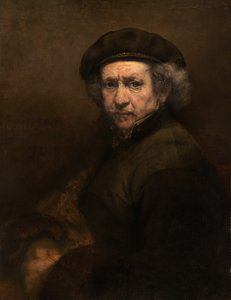
Rembrandt van Rijn
1606 - 1669 , Niederlande
Kurzinfos
- Beeinflusste Künstler:
- Pieter Lastman
- Caravaggio
- Italienische Meister
- Bemerkenswerte Werke:
- Anatomie-Vorlesung Dr. Tulp
- Belshazzars Festmahl
- Die Nachtwache
- Selbstporträts
- Geburtsdatum: 15. Juli 1606
- Geburtsort: Leiden, Niederlande
- Künstlerische Richtung: Barockmalerei
- Nationalität: Niederländisch
- Sterbedatum: 1669
- Vollständiger Name: Rembrandt van Rijn

