 Vorschau anzeigen
 Versenden
 Teilen
 Details anzeigen

 Herunterladen
 Ähnliche Objekte
 Röntgenaufnahme
 Diashow
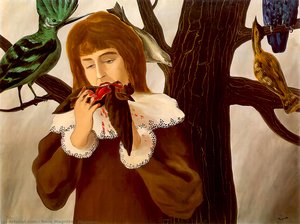
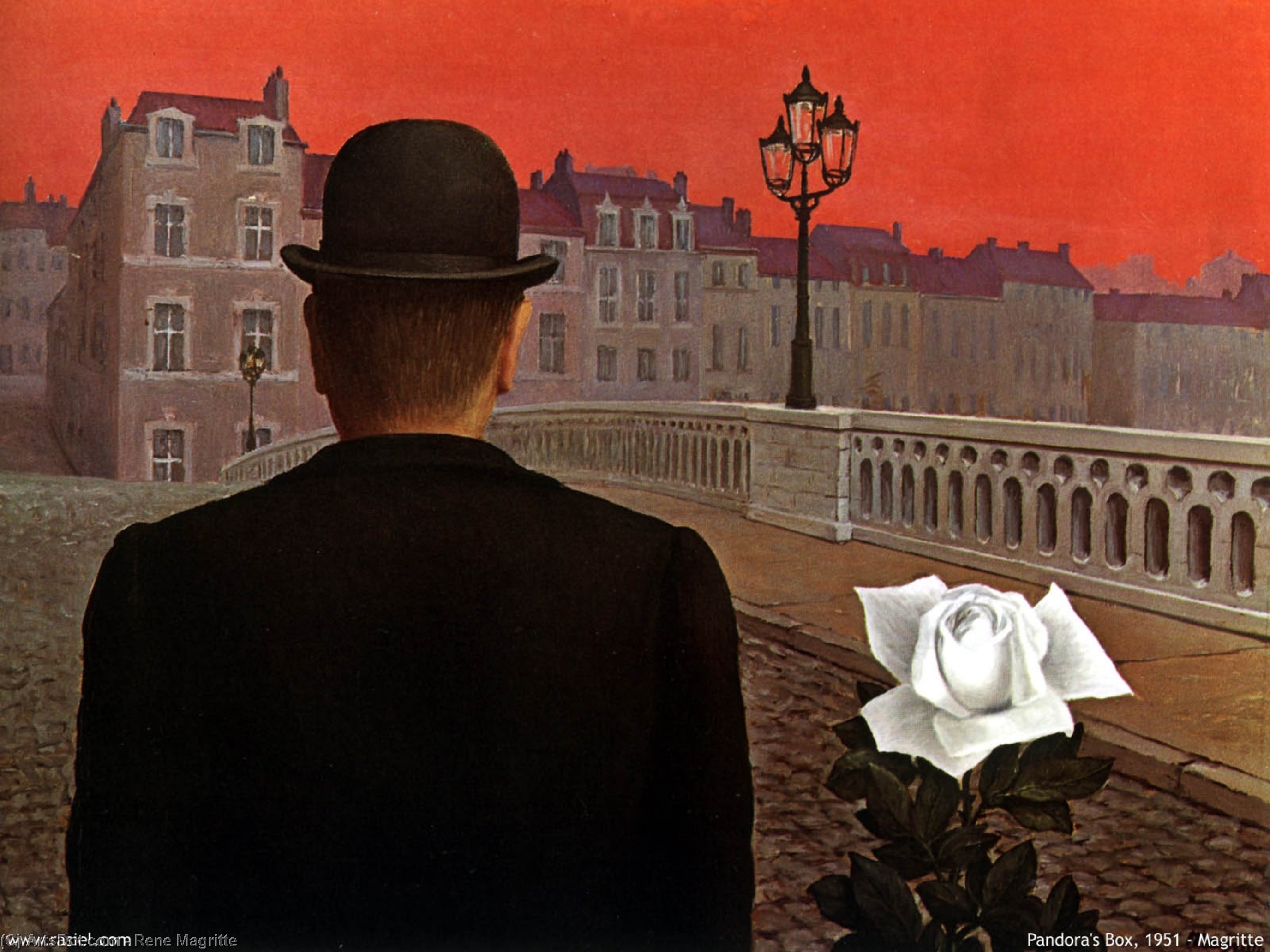
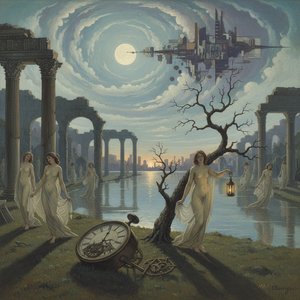
Pandora's Box
 Öl auf Leinwand
- Wandkunst
- Surrealism
 1951
1951- Moderne
 45.0 x 55.0 cm
 Weiterlesen
Handgefertigte Ölreproduktion
Handgemaltes Ölgemälde auf Leinwand in Ihrer Wunschgröße und mit Rahmen, auf Bestellung von unseren Künstlern angefertigt. ( Druck bestellen Bild kaufen)




P118B $10

P118H $10

P118W $10

P438Z $10

P508JH $12

P508YH $12

P805H $10

P805Z $10

P919BZ $10

P919G $10

P919XJ $10

P959ZH $10

P968JZ $12

W106C $8

W218G $10

W218JH $8

W218Y $10

W307PJ $10

W316G $10

W316PJ $8

W316Y $10

W398PJ $8

W4111J $10

W500HY $15

W500JH $15

W692G $12

W849H $8

W940BG $15

W953PJ $8




Wählen Sie aus unseren vordefinierten Formaten, die den ursprünglichen Proportionen des Kunstwerks entsprechen.

Sie können Ihre eigenen Maße eingeben, um einen bestimmten Rahmen oder Platz auszufüllen. Wenn die gewählte Größe nicht den Proportionen des Originalbildes entspricht, werden wir das Kunstwerk entweder beschneiden oder das Gemälde durch zusätzliche, handgemalte Elemente erweitern. Ein digitales Mockup wird Ihnen zur Genehmigung zugesandt, bevor die Produktion beginnt.
Bitte beachten Sie, dass die Bildschirmvorschau nicht die tatsächliche Beschneidung oder Erweiterung widerspiegelt. Nur das Mockup zeigt die endgültige Komposition exakt an.
Obwohl Sondermaße verfügbar sind, empfehlen wir, eine Größe aus der vordefinierten Liste zu wählen, um die ursprünglichen Proportionen beizubehalten.
Nach der Bestellung wird das ArtsDot.com-Team dem Kunden Anweisungen per E-Mail zusenden und eine Mockup-Vorschau bereitstellen.
Weltweiter Versand () in nur 3 bis 4 Wochen statt der üblichen 5 Wochen. (7 September). Keine Kompromisse bei der Qualität.

Kostenloser weltweiter Expressversand

Hochwertige Leinenleinwand

Umfassender Versicherungsschutz beim Versand

Zollgebühren-Rückerstattungsgarantie

Garantie für exakte Farbtreue

100-Tage-Rückgaberecht (nur bei Mängeln)

100% Geld-zurück-Garantie

Mengenrabatt verfügbar
 Die Glasoption ist nur für Größen unter 110 cm verfügbar.

Pandora's Box
Art der Reproduktion
Format der Reproduktion
-


Gesamtpreis
$ 263
Pandora's Box by René Magritte
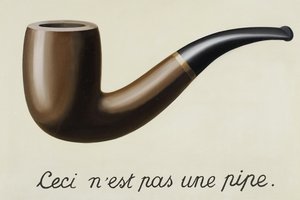
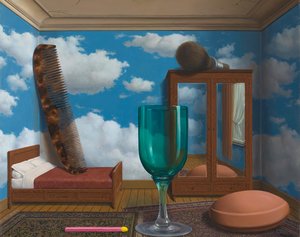
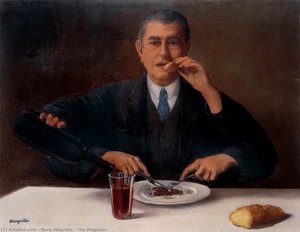
René Magritte, a Belgian Surrealist artist whose work continues to fascinate and provoke contemplation decades after its creation, gifted us with *Pandora’s Box* in 1951. This oil on canvas masterpiece measures precisely 45 x 55 cm and embodies the core tenets of Surrealism—a genre Magritte championed during his return to artistic exploration following a brief hiatus from the movement spurred by the anxieties of World War II. More than just an image, it’s a carefully constructed puzzle designed to unsettle our perceptions of reality and invite us into a dialogue with profound questions about human existence. ### Contextualizing Surrealism: A Return to Imagination Magritte's artistic journey wasn't linear; he initially distanced himself from Surrealism due to the pervasive fear and disillusionment of the war years. However, recognizing the need for solace and creative renewal, he decisively embraced the movement’s rebellious spirit—a refusal to accept conventional representations and a fervent belief in the power of dreams and subconscious thought. *Pandora's Box* stands as testament to this pivotal moment, representing Magritte’s determination to recapture beauty amidst chaos and to confront existential anxieties through artistic expression. The painting directly responds to the pervasive atmosphere of uncertainty that gripped Europe during the period. ### Artistic Elements: Composition and Symbolism The artwork depicts a solitary gentleman dressed in a bowler hat standing beside a white rose on a sidewalk. His gaze is directed upwards, seemingly absorbed by something beyond our immediate view—perhaps a building or another person—creating an instant sense of distance and intrigue. The backdrop consists of urban architecture, adding depth to the scene and subtly reinforcing the idea that we are observing a fragment of everyday life viewed through a surreal lens. Notably, a clock hangs on one of the buildings, hinting at the passage of time and suggesting either dawn or dusk—a deliberate choice by Magritte to introduce temporal ambiguity into his composition. The white rose itself is laden with symbolic significance. Traditionally representing purity and innocence, it contrasts sharply with the stark urban environment, highlighting the artist’s preoccupation with reconciling idealism and reality. Furthermore, Magritte's masterful use of color contributes to the painting's overall mood—the muted tones of gray and beige underscore the seriousness of the subject matter while simultaneously emphasizing the unsettling stillness of the scene. ### René Magritte’s Surrealist Style: Humor and Enigma Combined René Magritte was a pioneer in Surrealism, renowned for his ability to infuse seemingly mundane subjects with an element of surprise and absurdity. Like *The Treachery of Images*, another iconic work by Magritte—a depiction of a pipe alongside a written caption stating “This is not a pipe”—his art consistently challenges our assumptions about visual representation. He skillfully employs optical illusions and paradoxical juxtapositions to disrupt conventional thought processes, prompting viewers to question what they see and consider alternative interpretations. Magritte’s approach wasn't merely decorative; it was fundamentally intellectual—a deliberate attempt to provoke contemplation and expose the hidden complexities of human consciousness. ### Relevance in Modern Art: A Masterpiece Revisited *Pandora’s Box* remains a cornerstone of modern art history, securing its place as one of Magritte’s most celebrated achievements. Its enduring fascination stems from its ability to resonate across generations—a testament to Magritte's profound understanding of the human condition and his unwavering commitment to artistic innovation. Critics and scholars alike continue to analyze the painting’s intricate symbolism and stylistic nuances, recognizing it as a seminal work that exemplifies the Surrealist movement’s ambition to explore the subconscious mind and challenge accepted notions of reality. It continues to inspire artists and designers today who seek to capture the elusive beauty of unsettling contemplation.Ähnliche Kunstwerke
Über den Künstler
frühes Leben und künstlerische Anfänge
René François Ghislain Magritte, ein renommierter belgischer Surrealist, wurde am 21. November 1898 in Lessines, Provinz Hainaut, Belgien, geboren. Sein frühes Leben ist bisweilen rätselhaft und wenig bekannt. Es ist jedoch dokumentiert, dass er 1910 Zeichenunterricht nahm.Künstlerische Entwicklung und Einflüsse
Magrittes künstlerischer Stil entwickelte sich im Laufe der Jahre erheblich weiter und wurde von verschiedenen Strömungen wie Impressionismus, Futurismus und Kubismus beeinflusst. Seine frühesten Gemälde, die aus etwa 1915 stammen, waren **im Stil des Impressionismus**. Von 1916 bis 1918 studierte er an der Académie Royale des Beaux-Arts in Brüssel unter Constant Montald.Surrealistische Periode und bemerkenswerte Werke
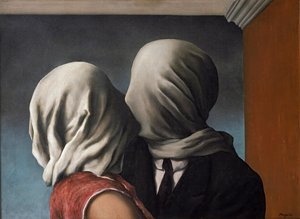
Im Jahr 1926 schuf Magritte seine erste surrealistische Malerei, "Der verlorene Jockey (Le jockey perdu)", das den Beginn seiner Verbindung mit der Surrealistenbewegung markierte. Seine Werke sind durch nachdenkliche Bilder gekennzeichnet, die oft alltägliche Gegenstände in ungewöhnlichen Kontexten darstellen und Betrachter dazu auffordern, ihre Wahrnehmung von Realität zu hinterfragen.- "Les Amants" (1927-1928), eine Reihe von Gemälden mit Personen, deren Gesichter durch Stoffe verhüllt sind, wird vermutet, von der Geschichte des Todes seiner Mutter inspiriert zu sein.
- "Die Liebenden", ein weiteres ikonisches Werk, zeigt ein Paar, das sich küsst, wobei ihre Gesichter von weißen Stoffen bedeckt sind, und lädt den Betrachter ein, über Liebe und Identität nachzudenken. (Verfügbar als handgefertigte Ölgemälde-Reproduktion oder Druck auf Leinwand unter ArtsDot.com)
Spätere Jahre und Vermächtnis
Magrittes Werke wurden in den Vereinigten Staaten 1936 und erneut in zwei retrospektiven Ausstellungen, eine im Museum of Modern Art im Jahr 1965 und die andere im Metropolitan Museum of Art im Jahr 1992, gezeigt. Er blieb dem politischen Linken verpflichtet, befürwortete aber die künstlerische Autonomie. Bekannte Museen, in denen Magrittes Werke ausgestellt sind:- Musées royaux des beaux-arts de Belgique, Brüssel, Belgien (Entdecken Sie die Meisterwerke der Musées royaux des beaux-aarts de belgique unter ArtsDot.com)
- Magritte Museum, Teil der Musées royaux des beaux-arts de Belgique, das die weltweit größte Sammlung von Magrittes Werken beherbergt.
Fazit
René Magrittes Vermächtnis als surrealistischer Meister hält an, wobei seine nachdenklichen Bilder weiterhin inspirieren und faszinieren. Seine Werke, die durch ihre einzigartige Mischung aus Gewöhnlichem und Unerwartetem gekennzeichnet sind, gelten als Eckpfeiler der Surrealistenkunst. Mehr über René Magritte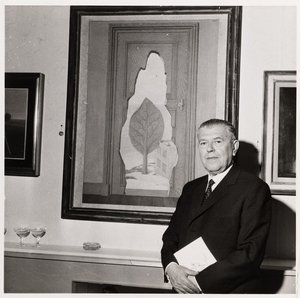
René Magritte
1898 - 1967 , Belgien
Kurzinfos
- Beeinflusste Künstler:
- Impressionismus
- Futurismus
- Kubismus
- Bemerkenswerte Werke:
- Der verlorene Jockey
- Les Amants
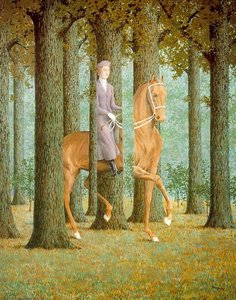
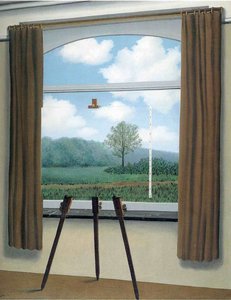
- Die menschliche Bedingung
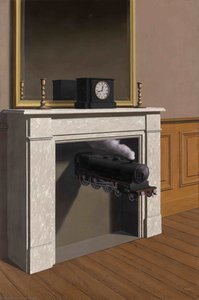
- Zeit erstarrt
- Geburtsdatum: 21. November 1898
- Geburtsort: Lessines, Belgien
- Künstlerischer Stil: Surrealismus
- Nationalität: Belgisch
- Sterbedatum: 1967
- Vollständiger Name: René Magritte
Ähnliche Artikel
Surrealismus: Die 10 Meisterwerke, die eine Kunstbewegung prägten |
Entdecken Sie die 10 prägendsten Meisterwerke des Surrealismus! Von Dalí bis Magritte – erfahren Sie die Geschichten hinter ikonischen Gemälde und lassen Sie sich von traumhaften Welten inspirieren. Hochwertige Art Reproduktionen auf .
Dreamscapes & Disrupted Realities: Exploring Surrealism's Enduring Influence
Explore the fascinating world of Surrealism! Discover its origins, key artists like Dalí & Magritte, and enduring influence on art & culture. Expert insights & high-quality reproductions at ArtsDot.
Joseph Cornell: Assemblagen, Schattenschachteln und die Poetik gefundener Objekte – Eine künstlerische Vision
Entdecken Sie das faszinierende Werk von Joseph Cornell! Erfahren Sie mehr über seine einzigartigen Assemblagen und Schattenschachteln, Einflüsse des Surrealismus & Dada. Kunstgeschichte für Sammler und Liebhaber – jetzt bei ArtsDot.
Surrealismus: Die 10 Meisterwerke, die eine Kunstbewegung prägten | ArtsDot
Entdecken Sie die 10 Meisterwerke des Surrealismus! Von Dalí bis Magritte – erfahren Sie die Geschichten hinter ikonischen Gemälde und lassen Sie sich von traumartigen Bildern inspirieren. Hochwertige Art Reproduktionen auf ArtsDot.com.
Paul Delvaux: Surrealismus, Erinnerung und die Poetik der Unruhe
Entdecken Sie die faszinierende Welt Paul Delvaux'! Analysen zu Leben, Werk und Ikonographie des belgischen Surrealisten. Expertenwissen & tiefe Einblicke in seine Traumlandschaften.