 Vorschau anzeigen
 Versenden
 Teilen
 Details anzeigen

 Herunterladen
 Ähnliche Objekte
 Röntgenaufnahme
 Diashow
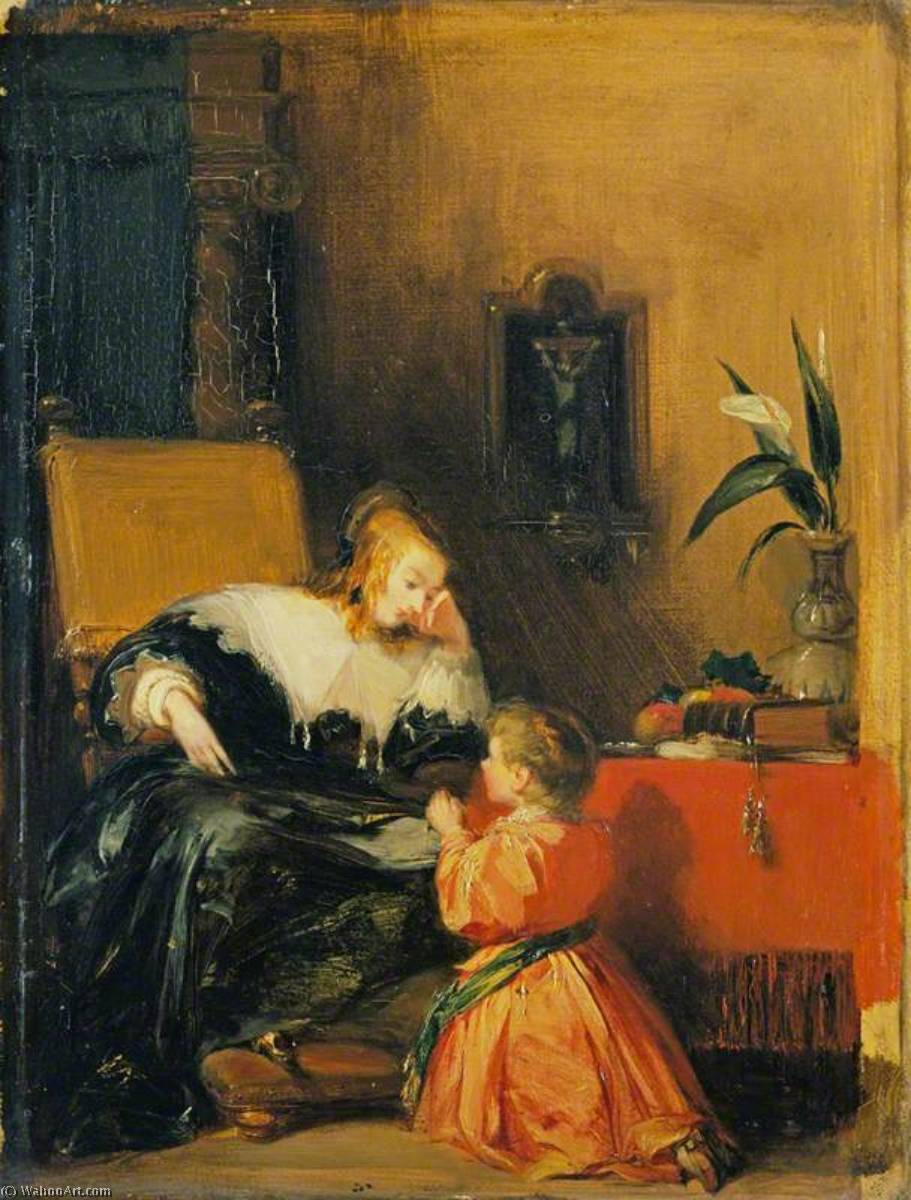
Child at Prayer
 Acrylic On Canvas
- WallArt
- Romanticism
 1827
1827 36.0 x 28.0 cm
 Die Wallace Collection
 Weiterlesen
Handgefertigte Ölreproduktion
Handgemaltes Ölgemälde auf Leinwand in Ihrer Wunschgröße und mit Rahmen, auf Bestellung von unseren Künstlern angefertigt. ( Druck bestellen Bild kaufen)




P118B $10

P118H $10

P118W $10

P438Z $10

P508JH $12

P508YH $12

P805H $10

P805Z $10

P919BZ $10

P919G $10

P919XJ $10

P959ZH $10

P968JZ $12

W106C $8

W218G $10

W218JH $8

W218Y $10

W307PJ $10

W316G $10

W316PJ $8

W316Y $10

W398PJ $8

W4111J $10

W500HY $15

W500JH $15

W692G $12

W849H $8

W940BG $15

W953PJ $8




Wählen Sie aus unseren vordefinierten Formaten, die den ursprünglichen Proportionen des Kunstwerks entsprechen.

Sie können Ihre eigenen Maße eingeben, um einen bestimmten Rahmen oder Platz auszufüllen. Wenn die gewählte Größe nicht den Proportionen des Originalbildes entspricht, werden wir das Kunstwerk entweder beschneiden oder das Gemälde durch zusätzliche, handgemalte Elemente erweitern. Ein digitales Mockup wird Ihnen zur Genehmigung zugesandt, bevor die Produktion beginnt.
Bitte beachten Sie, dass die Bildschirmvorschau nicht die tatsächliche Beschneidung oder Erweiterung widerspiegelt. Nur das Mockup zeigt die endgültige Komposition exakt an.
Obwohl Sondermaße verfügbar sind, empfehlen wir, eine Größe aus der vordefinierten Liste zu wählen, um die ursprünglichen Proportionen beizubehalten.
Nach der Bestellung wird das ArtsDot.com-Team dem Kunden Anweisungen per E-Mail zusenden und eine Mockup-Vorschau bereitstellen.
Weltweiter Versand () in nur 3 bis 4 Wochen statt der üblichen 5 Wochen. (25 August). Keine Kompromisse bei der Qualität.

Kostenloser weltweiter Expressversand

Hochwertige Leinenleinwand

Umfassender Versicherungsschutz beim Versand

Zollgebühren-Rückerstattungsgarantie

Garantie für exakte Farbtreue

60 Tage Rückgaberecht (nur bei Mängeln)

100% Geld-zurück-Garantie

Mengenrabatt verfügbar
 Die Glasoption ist nur für Größen unter 110 cm verfügbar.

Child at Prayer
Art der Reproduktion
Format der Reproduktion
-


Gesamtpreis
$ 263
Beschreibung des Kunstwerks
Child at Prayer by Richard Parkes Bonington: A Fragment of Romantic Idealism
The painting “Child at Prayer” by Richard Parkes Bonington, completed circa 1827, stands as a poignant emblem of the Romantic era’s preoccupation with innocence and spiritual contemplation. Executed in watercolor on ivory paper, it captures a tender tableau – a young girl kneeling before her mother, bathed in soft light emanating from two potted plants strategically positioned within the composition. This seemingly simple scene belies a profound exploration of faith and maternal devotion, reflecting the broader artistic currents of its time. Bonington’s masterful technique—characterized by delicate washes of color and meticulous detail—demonstrates his unwavering commitment to capturing atmospheric effects with unparalleled precision. He skillfully employs glazing techniques, layering translucent pigments over initial washes to achieve luminous hues and subtle tonal variations that imbue the artwork with an ethereal quality.- Style: Romanticism – Bonington’s work embodies the movement's emphasis on emotion, imagination, and idealized depictions of nature and human experience.
- Technique: Watercolor Glazing – The artist utilized watercolor combined with glazing to create a luminous surface texture and capture the subtleties of light and shadow.
- Composition: Balanced Symmetry – Bonington’s careful arrangement contributes to the painting's serene mood, highlighting the central figures against a backdrop of tranquil greenery.
Ähnliche Kunstwerke
Über den Künstler
Frühes Leben und Ausbildung
Richard Parkes Bonington, eine bedeutende Figur der britischen Romantik, wurde am 25. Oktober 1802 in Arnold, Nottinghamshire, Großbritannien, geboren. Sein Vater, ebenfalls Richard genannt, war ein vielseitiger Mensch, der als Gefängnisverwalter, Zeichenlehrer und Spitzenmacher arbeitete. Dieser vielfältige Hintergrund beeinflusste wahrscheinlich Boningtons frühe künstlerische Neigungen. https://ArtsDot.com/@/richardparkesbonington, die Online-Plattform für Kunstliebhaber, bietet eine umfangreiche Sammlung von Boningtons Werken, die seine Meisterschaft in Landschaften und historischen Szenen zeigt.Künstlerische Entwicklung und Einflüsse
Boningtons künstlerischer Weg begann mit der Aquarellmalerei, die ihm sein Vater beibrachte. Bereits im Alter von elf Jahren stellte er auf der Liverpool Academy aus. 1817 zog seine Familie nach Calais, Frankreich, wo er bei François Louis Thomas Francia Unterricht erhielt, der ihn in die englische Aquarelltechnik einführte.- Francias Einfluss ist in Boningtons frühen Werken sichtbar, die durch eine Mischung aus englischen und französischen Stilen gekennzeichnet sind.
- Seine Begegnung mit Eugène Delacroix https://ArtsDot.com/@/eugenedelacroix, einem französischen Romantikmaler, prägte seinen künstlerischen Ansatz weiter.
- Boningtons Zeit an der École des Beaux-Arts in Paris unter Antoine-Jean, Baron Gros, festigte seine Fähigkeiten.
Bemerkenswerte Werke und Leistungen
Wichtige Gemälde:- Rouen, Normandie, um 1823 (verfügbar auf /de/art/show/art-8xyhdc-de/
- Blick auf die Lagune in der Nähe von Venedig, 1827 (Louvre)
- Karl V. besucht Franz I. nach der Schlacht von Pavia, um 1827
- Goldmedaille beim Pariser Salon im Jahr 1824, zusammen mit John Constable und Anthony Vandyke Copley Fielding.
- Delacroix' Tribut an Boningtons Werk in einem Brief an Théophile Thoré im Jahr 1861, der seine Leichtigkeit des Stils hervorhob.
Vermächtnis und Erinnerung
Boningtons Leben wurde durch Tuberkulose verkürzt, die ihn am 23. September 1828 im Alter von 25 Jahren forderte. Trotz seiner kurzen Karriere hinterließ er einen bleibenden Eindruck auf den britischen Romanticismus.- Eine Statue in der Nottingham School of Art, errichtet von Watson Fothergill.
- Ein Theater und eine Grundschule in seinem Heimatort Arnold, die nach ihm benannt sind.
- Die Wallace Collection beherbergt eine bedeutende Gruppe von 35 Werken, die sowohl seine Landschafts- als auch seine Historiengemälde zeigen.
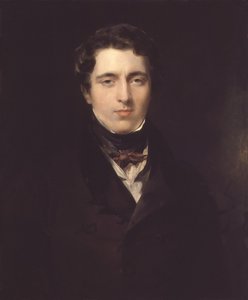
Richard Parkes Bonington
1802 - 1828 , Vereinigtes Königreich
Kurzinfos
- Beeinflusste Künstler: ['Eugène Delacroix']
- Bemerkenswerte Werke:
- Rouen, Normandie
- Blick auf die Lagune bei Venedig
- Karl V. besucht Franz I.
- Geburtsdatum: 25. Oktober 1802
- Geburtsort: Arnold, Vereinigtes Königreich
- Künstlerische Bewegung: Britischer Romantik
- Nationalität: Britisch
- Todatum: 23. September 1828
- Vollständiger Name: Richard Parkes Bonington
- Von Künstlern Beeinflusst:
- François Louis Thomas Francia
- Thomas Girtin
Ähnliche Artikel

Die 10 legendärsten Aquarellwerke der Kunstgeschichte – Meisterwerke für Ihr Zuhause
Entdecken Sie die 10 legendärsten Aquarellwerke der Kunstgeschichte! Von Turner bis Monet – erleben Sie die Geschichten, Techniken & Farben dieser Meisterwerke. Finden Sie hochwertige Kunstdrucke auf ArtsDot.com und gestalten Sie Ihr Zuhause mit zeitloser Eleganz.
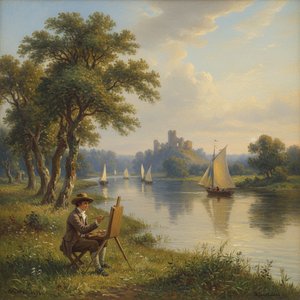
Richard Parkes Bonington: Ein kurzes Leben für die Romantik und die Plein-Air-Malerei
Entdecken Sie das faszinierende Leben und Werk von Richard Parkes Bonington, einem Pionier der Plein-Air-Malerei! Erfahren Sie mehr über seine romantischen Landschaften, seinen Einfluss und wo Sie seine Meisterwerke finden können.

Romantische Landschaften: Die 10 Meisterwerke, die eine Epoche prägten | ArtsDot
Entdecken Sie die 10 Meisterwerke der Romantischen Landschaftsmalerei! Von Caspar David Friedrich bis Turner – erleben Sie die Kunst, Emotion & Natur. Hochwertige Reproduktionen auf ArtsDot.com

Ephemeral Visions: Exploring the Artistic Legacy & Contemporary Practice of Watercolor Painting
Explore the captivating world of watercolor painting! Discover its rich history, essential techniques, influential artists & collecting tips. A comprehensive guide for art enthusiasts from ArtsDot.

Flüchtige Visionen: Die Geschichte und emotionale Resonanz der Aquarellmalerei
Entdecken Sie die faszinierende Welt der Aquarellmalerei! Von historischen Ursprüngen bis zu modernen Techniken – wir bieten Expertenwissen, Inspiration und Tipps für Anfänger & Fortgeschrittene.