

 Vorschau anzeigen
 Versenden
 Teilen
 Details anzeigen

 Herunterladen
 Ähnliche Objekte
 Röntgenaufnahme
 Diashow
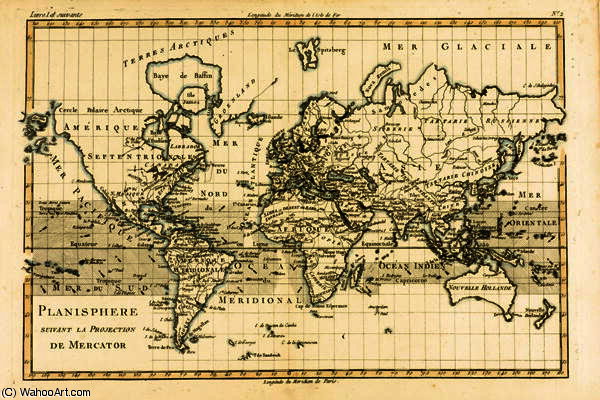
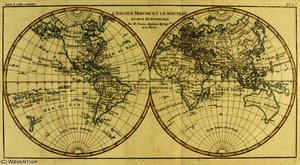
Map of the world using the mer hi
 Weiterlesen
Giclée / Kunstdruck
Giclée- oder Leinwanddruck in Museumsqualität mit schneller Produktion und flexiblen Veredelungsoptionen. ( Handgemalte Reproduktion bestellen Bild kaufen)




































Wählen Sie aus unseren vordefinierten Formaten, die den ursprünglichen Proportionen des Kunstwerks entsprechen.

Sie können Ihre eigenen Maße eingeben, um ein bestimmtes Format oder einen speziellen Platz einzupassen. Wenn das von Ihnen gewählte Format nicht den Proportionen des Originalbildes entspricht, werden wir das Kunstwerk entweder beschneiden oder das Bild mit einem gespiegelten oder einfarbigen Rand erweitern. Ein digitaler Entwurf wird Ihnen zur Genehmigung zugesandt, bevor die Produktion beginnt.
Bitte beachten Sie, dass die Vorschau auf dem Bildschirm nicht den tatsächlichen Zuschnitt oder die Erweiterung widerspiegelt. Nur der Entwurf zeigt die endgültige Komposition präzise an.
Obwohl Sondermaße verfügbar sind, empfehlen wir die Auswahl eines Maßes aus der vordefinierten Liste, um die ursprünglichen Proportionen zu bewahren.
Weltweiter Versand () innerhalb von 2 Wochen statt der üblichen 4/5 Wochen. (28 August)

Kostenloser weltweiter Expressversand

Hochwertige Leinenleinwand

Umfassender Versicherungsschutz beim Versand

Zollgebühren-Rückerstattungsgarantie

Garantie für exakte Farbtreue

60 Tage Rückgaberecht (nur bei Mängeln)

100% Geld-zurück-Garantie

Mengenrabatt verfügbar
 Die Glasoption ist nur für Größen unter 110 cm verfügbar.

Map of the world using the mer hi
Giclée / Kunstdruck
Format der Reproduktion
-


Gesamtpreis
$ 62
Ähnliche Kunstwerke

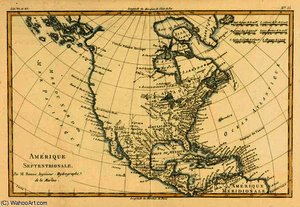
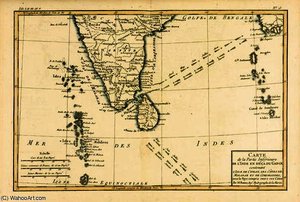
Über den Künstler
The Architect of the Earth: The Life and Legacy of Rigobert Bonne
In the luminous era of the Enlightenment, where the pursuit of scientific truth danced alongside a burgeoning appreciation for aesthetic elegance, Rigobert Bonne emerged as a master of both realms. Born on October 6, 1727, in the quiet Ardennes region of Raucourt, Bonne’s journey was one of profound intellectual transformation. He began not as a scholar of the academy, but as a self-taught mathematician whose innate curiosity drove him to decode the complexities of the physical world. This early period of independent study laid the foundation for a career that would eventually bridge the gap between rigorous mathematical precision and the evocative beauty of cartographic art.
His path was significantly shaped by the discipline of military service during the War of Austrian Succession. Serving as an engineer at Berg-op-Zoom, Bonne developed a meticulous eye for detail and an observational aptitude that would become his hallmark. The rigors of military engineering instilled in him a respect for accuracy and structural integrity—qualities that were later translated into the delicate lines and precise measurements of his maps. When he eventually relocated to Paris, he transitioned from the battlefield to the classroom, establishing himself as a respected educator for the Parisian elite, a role that allowed him to weave scientific discovery into the cultural fabric of the French capital.
A Revolution in Perspective: The Bonne Projection
The true genius of Bonne lies in his ability to solve the fundamental paradox of cartography: how to represent a spherical world upon a flat surface without losing its essence. His most enduring contribution, the Bonne Projection, stands as a testament to his visionary intellect. By devising a method that utilized a heart-shaped configuration to represent the globe, he achieved a revolutionary improvement in geographic proportions. This was not merely a technical triumph; it was an artistic one. The projection minimized the distortions that plagued traditional flat maps, offering a visual representation that felt both more natural and more truthful to the human eye.
This innovation fundamentally altered the trajectory of cartographic history. Through his work, the map ceased to be a mere utilitarian tool and became a sophisticated piece of scientific art. His ability to balance the mathematical necessity of scale with the aesthetic demand for clarity allowed him to create works that were as captivating to look at as they were essential for navigation. This period of his career saw him rise to the prestigious position of Royal Hydrographer, a title that reflected his status as one of France's most vital scientific minds.
The Artistry of Exploration and Historical Significance
Beyond the technicalities of projection, Bonne’s work serves as a breathtaking window into the 18th-century worldview. His detailed engravings, often featured in monumental collections such as Guillaume Raynal’s 'Atlas de Toutes les Parties Connues du Globe Terrestre', capture a moment in time when the world was being rapidly rediscovered and redefined. Each map—whether depicting the vast expanses of the Russian Empire, the intricate coastlines of South America, or the dense landscapes of Asia—is a masterpiece of hand-drawn precision.
The historical significance of Bonne’s output cannot be overstated. His maps were more than just geographic records; they were symbols of human progress and the expansion of global knowledge. To study his work today is to witness the intersection of Enlightenment science and classical artistry. He left behind a legacy where every line, every border, and every shaded terrain serves as a tribute to the era of exploration. Through his eyes, we see a world being measured, mapped, and ultimately, understood with a beauty that remains timeless.
rigobert bonne (charles marie rigobert bonne)
1727 - 1795
Kurzinfos
- Artistic Movement Or Style: Cartography
- Artists Or Movements Influenced By This Artist: ['Rococo']
- Artists Who Influenced This Artist: ['Jacques-Nicolas Bellin']
- Date Of Birth: October 6, 1727
- Date Of Death: September 2, 1794
- Full Name: Rigobert Bonne
- Nationality: French
- Notable Artworks:
- The Chinese Empire
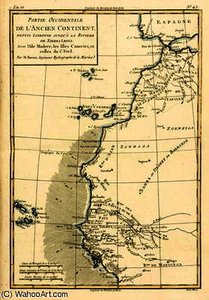
- West Coast of Africa
- The Canary Islands
- Place Of Birth: Raucourt, Ardennes (France)

