

 Vorschau anzeigen
 Versenden
 Teilen
 Details anzeigen

 Herunterladen
 Ähnliche Objekte
 Röntgenaufnahme
 Diashow
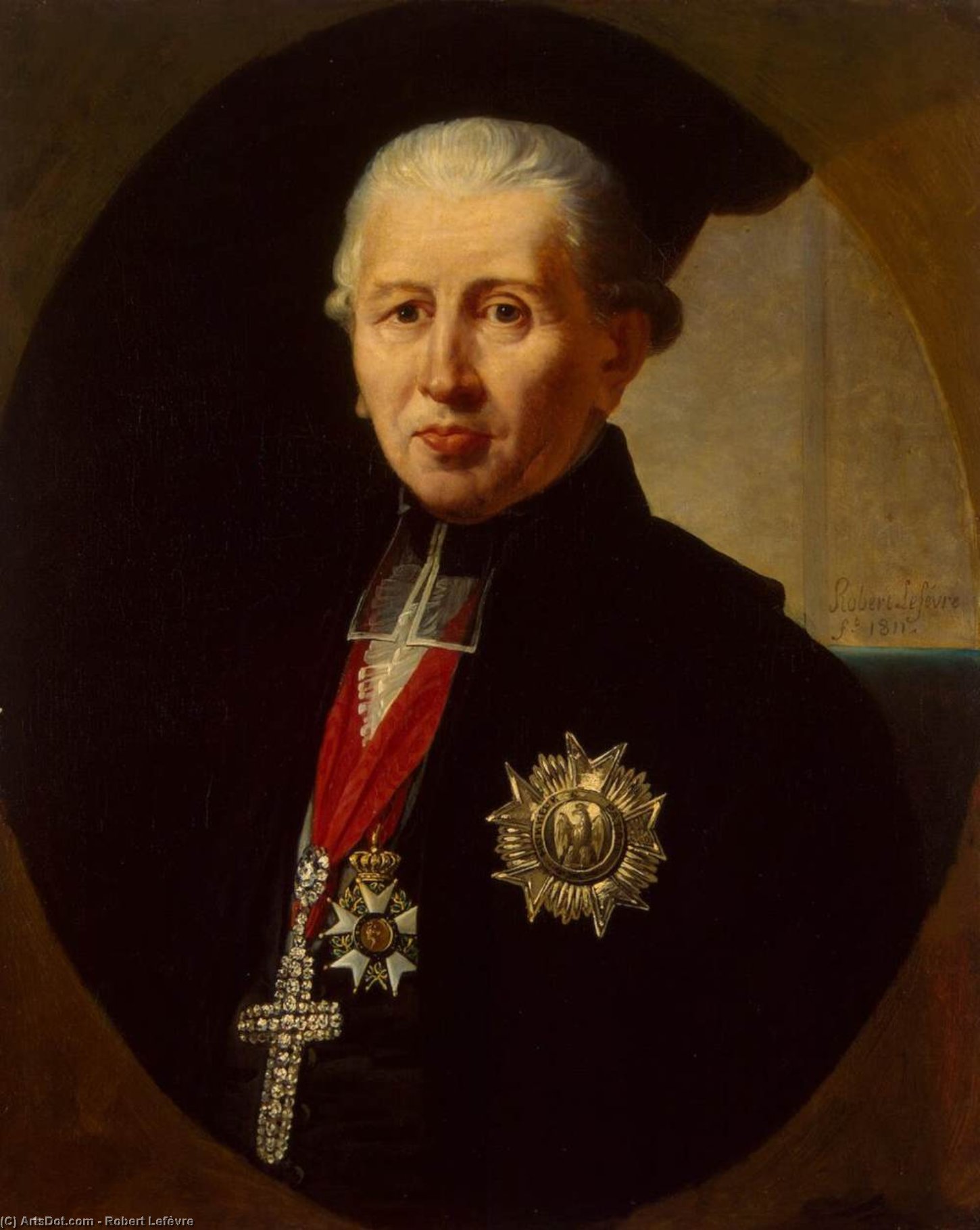
Portrait of Karl Theodor von Dalberg
 1811
1811 74.0 x 60.0 cm
 Eremitage Museum
 Weiterlesen
Erwerben Sie ein hochauflösendes, optimiertes digitales Bild, das der Online-Vorschau weit überlegen ist.
Jede Datei wird von unseren hauseigenen Spezialisten mit modernsten Werkzeugen und fachmännischer manueller Retusche sorgfältig vorbereitet. Wir stellen sicher, dass jedes Bild eine außergewöhnliche Klarheit, präzise Farbgenauigkeit und feinste Details aufweist.
Die endgültige Datei wird innerhalb von 72 Stunden per E-Mail zugestellt und ist für den sofortigen Einsatz in professionellen, redaktionellen und Druckumgebungen optimiert. Es handelt sich um dieselbe Qualität, der führende Designstudios, Verlage und Galerien vertrauen.
Digitales Bild
Laden Sie eine hochauflösende Datei für die persönliche Präsentation, den Druck und kreative Projekte herunter. ( Druck bestellen Handgemalte Reproduktion bestellen)
In jeder Bestellung digitaler Bilder enthalten
Professionelle digitale Bereitstellung, garantiert
Wenn Sie sich für ArtsDot.com entscheiden, erhalten Sie nicht nur ein Bild – Sie erhalten ein professionell aufbereitetes digitales Kunstwerk, das mit höchster Präzision erstellt und durch eine Zufriedenheitsgarantie abgesichert wird. Hier ist alles, was automatisch mit Ihrer Bestellung geliefert wird:

Schnelle E-Mail-Zustellung
Ihre hochauflösende digitale Bilddatei wird Ihnen innerhalb von 72 Stunden nach der Bestellung per E-Mail zugestellt – bereit zur sofortigen Verwendung.

KI-optimierte digitale Datei
Ihre Kunstwerke werden professionell mithilfe fortschrittlicher KI-Tools und manueller Bearbeitung optimiert, um maximale Detailtreue, Klarheit und Farbgenauigkeit zu gewährleisten.

Lebenslanger kostenloser Neudruckservice
Datei versehentlich gelöscht oder verloren? Keine Sorge – wir senden sie Ihnen jederzeit kostenlos erneut zu.

Keine Einfuhrgebühren – jemals
Genießen Sie Ihr Kunstwerk sofort ohne Zollgebühren, Einfuhrabgaben oder Versandkosten – digitale Downloads sind immer steuerfrei.

Garantierte Farbtreue
Wir garantieren, dass Ihr digitales Bild mithilfe professioneller Werkzeuge und Farbmanagement die Originalfarben so präzise wie möglich wiedergibt.

60-Tage-Zufriedenheitsgarantie
Sollten Sie mit Ihrem digitalen Bild nicht zufrieden sein, werden wir es überarbeiten oder Ihnen innerhalb von 60 Tagen 100% erstatten – ohne Wenn und Aber.

100% Geld-zurück-Garantie
Nicht zufrieden? Erhalten Sie innerhalb von 60 Tagen nach Erhalt Ihrer digitalen Datei eine vollständige Rückerstattung – ohne Angabe von Gründen.

Rabatte bei Großbestellungen
3 Bilder kaufen, 10% sparen – 5 Bilder kaufen, 15% sparen – Ab 10 Bildern 20% sparen. Ideal für kreative Projekte, Galerien und Agenturen.
Ähnliche Kunstwerke









Biografie des Künstlers
Robert Lefèvre: The Shadowy Master of the Imperial Court
Robert Lefèvre, a name often whispered in the annals of 18th-century French art, remains an enigmatic figure despite his undeniable impact on portraiture and historical painting. Born in Bayeux in 1755, Lefèvre’s career unfolded against the backdrop of dramatic political shifts – from the waning years of the Ancien Régime to the turbulent reign of Napoleon Bonaparte. He wasn't a flamboyant personality, preferring the quiet intensity of his studio to the limelight, yet his work profoundly shaped the visual language of the French court and left an enduring legacy on Neoclassical art.
Lefèvre’s early artistic development was unconventional. Rather than pursuing a formal apprenticeship, he embarked on a solitary journey to Paris at the tender age of eighteen, abandoning a planned legal career to immerse himself in the works of the Old Masters. This self-directed education proved pivotal, instilling in him a deep appreciation for classical forms and a meticulous approach to technique. He found mentorship with Jean-Baptiste Regnault, a respected painter to the King, but it was within Regnault’s studio that he encountered Charles Paul Landon, a fellow student who would become a lifelong collaborator. This partnership fostered a shared artistic vision and contributed significantly to Lefèvre's distinctive style – characterized by its crisp detail, subtle modeling, and an almost photographic realism.
The Rise of a Court Painter
Lefèvre’s reputation began to solidify with his exhibition at the 1791 Salon, where his painting *Dame en velours noir* (Lady in Velvet) immediately captivated audiences. The work's striking composition and masterful handling of light and shadow established him as a rising star within the Parisian art world. He quickly gained commissions from prominent figures, including members of the aristocracy and officials within the burgeoning revolutionary government. Lefèvre’s ability to capture both the outward appearance and inner character of his subjects made him exceptionally sought after.
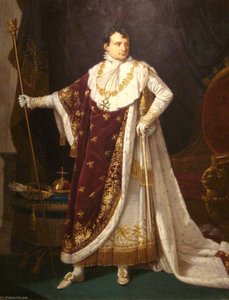
The Napoleonic era marked the zenith of Lefèvre's career. He was entrusted with painting portraits of some of the most important figures in France – Napoleon Bonaparte himself, Empress Joséphine, Marie Louise, and numerous members of the royal family. The portrait of Napoleon in coronation attire, now housed in Aachen City Hall, stands as a testament to his skill and understanding of power. These works weren’t merely likenesses; they were carefully constructed narratives designed to project an image of authority and grandeur. Lefèvre's meticulous attention to detail – from the folds of Napoleon’s uniform to the subtle expression on his face – conveyed both strength and intelligence.
A Style Defined by Neoclassicism
Lefèvre’s artistic style is often categorized as Neoclassical, though it transcends simple labels. He was deeply influenced by Jacques-Louis David, particularly in his use of clear lines, balanced compositions, and a restrained palette. However, Lefèvre possessed a unique sensibility that set him apart. His paintings are imbued with a sense of quiet dignity and psychological depth, qualities often lacking in the more overtly dramatic works of David. He was also influenced by antiquity, evident in his careful study of classical sculpture and architecture.
His technique involved painstaking preparation – extensive sketching, detailed studies of anatomy, and meticulous layering of paint. Lefèvre’s approach to portraiture was remarkably modern for its time, prioritizing the accurate representation of individual features and expressions. He employed a technique known as “pointillé,” using small, precise brushstrokes to build up form and texture, creating an illusion of remarkable realism.
Legacy and Lasting Influence
Despite his considerable talent and success, Lefèvre’s career was tragically cut short. Following the Bourbon Restoration, he lost his official positions and struggled financially. In 1830, disillusioned and impoverished, he took his own life. His death marked the end of an era in French portraiture.
However, Lefèvre's influence endured. His meticulous technique and psychological insight profoundly impacted subsequent generations of artists. He is remembered as a master of Neoclassical portraiture, whose works continue to be admired for their beauty, realism, and subtle power. The portraits he created during the Napoleonic era remain iconic representations of an age of grandeur and ambition, offering a valuable glimpse into the lives and personalities of some of history’s most influential figures. His legacy is not one of flamboyant spectacle, but rather of quiet mastery—a testament to the enduring power of observation, skill, and artistic vision.
robert jacques françois lefèvre
1755 - 1830
Kurzinfos
- Artistic Movement Or Style: Neoclassical, Portraiture
- Artists Who Influenced This Artist: ['Jacques-Louis David],\n "Artists or movements influenced by this artist": ["Neoclassical art"]\n}']
- Date Of Birth: September 24, 1755
- Date Of Death: October 3, 1830
- Full Name: Robert Jacques François Faust Lefèvre
- Nationality: French
- Notable Artworks:
- Dame en velours noir
- Joséphine Bonaparte
- Napoleon I (coronation)
- Place Of Birth: Bayeux, France

