

 Vorschau anzeigen
 Versenden
 Teilen
 Details anzeigen

 Herunterladen
 Ähnliche Objekte
 Röntgenaufnahme
 Diashow
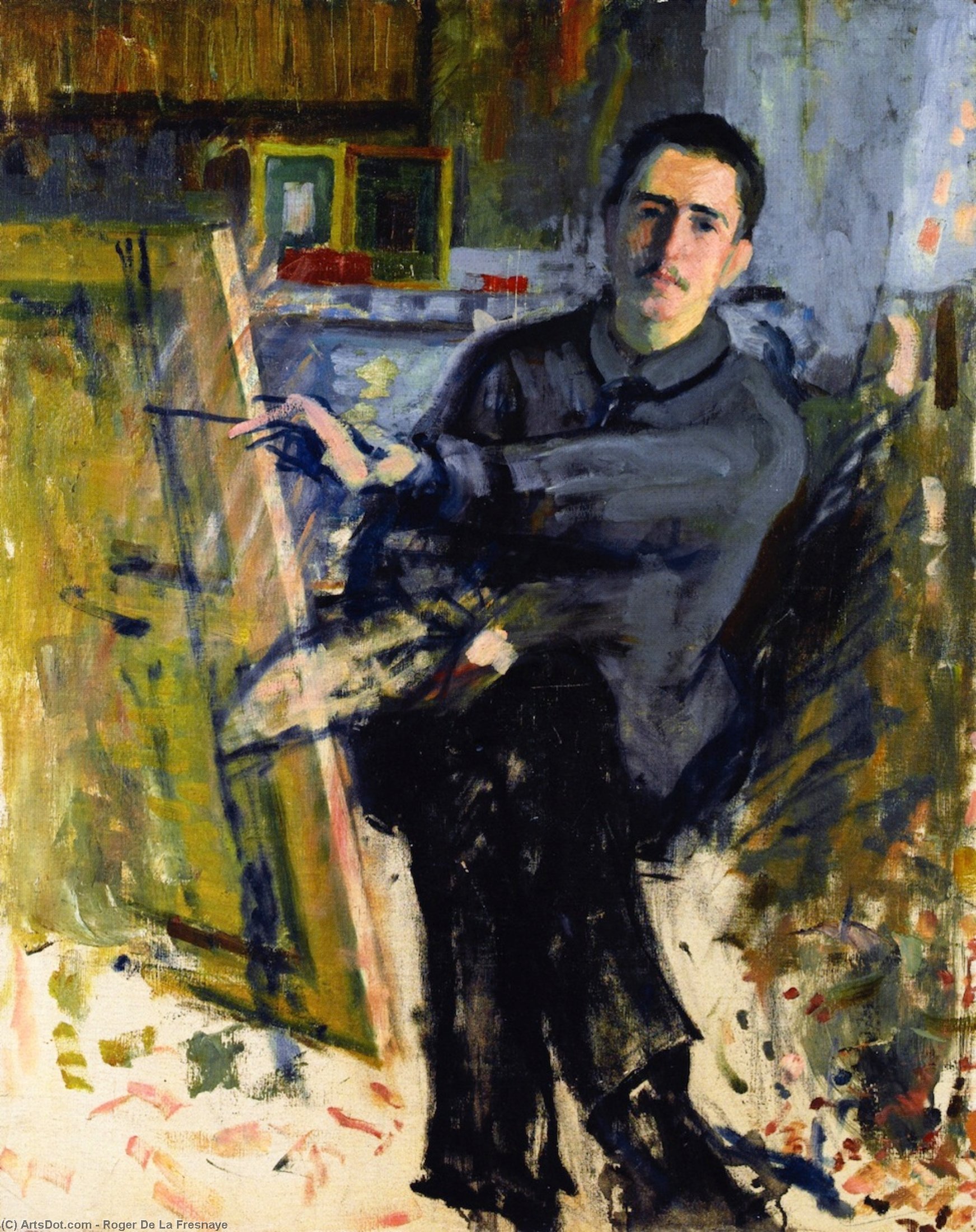
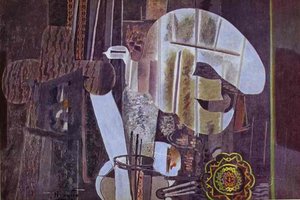
Self-Portrait at the Easel
 Acrylic On Canvas
- WallArt
- Cubist Style
 1907
1907 81.0 x 65.0 cm
 Musée National d'Art Moderne Centre Georges Pompidou
 Weiterlesen
Erwerben Sie ein hochauflösendes, optimiertes digitales Bild, das der Online-Vorschau weit überlegen ist.
Jede Datei wird von unseren hauseigenen Spezialisten mit modernsten Werkzeugen und fachmännischer manueller Retusche sorgfältig vorbereitet. Wir stellen sicher, dass jedes Bild eine außergewöhnliche Klarheit, präzise Farbgenauigkeit und feinste Details aufweist.
Die endgültige Datei wird innerhalb von 72 Stunden per E-Mail zugestellt und ist für den sofortigen Einsatz in professionellen, redaktionellen und Druckumgebungen optimiert. Es handelt sich um dieselbe Qualität, der führende Designstudios, Verlage und Galerien vertrauen.
Digitales Bild
Laden Sie eine hochauflösende Datei für die persönliche Präsentation, den Druck und kreative Projekte herunter. ( Druck bestellen Handgemalte Reproduktion bestellen)
In jeder Bestellung digitaler Bilder enthalten
Professionelle digitale Bereitstellung, garantiert
Wenn Sie sich für ArtsDot.com entscheiden, erhalten Sie nicht nur ein Bild – Sie erhalten ein professionell aufbereitetes digitales Kunstwerk, das mit höchster Präzision erstellt und durch eine Zufriedenheitsgarantie abgesichert wird. Hier ist alles, was automatisch mit Ihrer Bestellung geliefert wird:

Schnelle E-Mail-Zustellung
Ihre hochauflösende digitale Bilddatei wird Ihnen innerhalb von 72 Stunden nach der Bestellung per E-Mail zugestellt – bereit zur sofortigen Verwendung.

KI-optimierte digitale Datei
Ihre Kunstwerke werden professionell mithilfe fortschrittlicher KI-Tools und manueller Bearbeitung optimiert, um maximale Detailtreue, Klarheit und Farbgenauigkeit zu gewährleisten.

Lebenslanger kostenloser Neudruckservice
Datei versehentlich gelöscht oder verloren? Keine Sorge – wir senden sie Ihnen jederzeit kostenlos erneut zu.

Keine Einfuhrgebühren – jemals
Genießen Sie Ihr Kunstwerk sofort ohne Zollgebühren, Einfuhrabgaben oder Versandkosten – digitale Downloads sind immer steuerfrei.

Garantierte Farbtreue
Wir garantieren, dass Ihr digitales Bild mithilfe professioneller Werkzeuge und Farbmanagement die Originalfarben so präzise wie möglich wiedergibt.

60-Tage-Zufriedenheitsgarantie
Sollten Sie mit Ihrem digitalen Bild nicht zufrieden sein, werden wir es überarbeiten oder Ihnen innerhalb von 60 Tagen 100% erstatten – ohne Wenn und Aber.

100% Geld-zurück-Garantie
Nicht zufrieden? Erhalten Sie innerhalb von 60 Tagen nach Erhalt Ihrer digitalen Datei eine vollständige Rückerstattung – ohne Angabe von Gründen.

Rabatte bei Großbestellungen
3 Bilder kaufen, 10% sparen – 5 Bilder kaufen, 15% sparen – Ab 10 Bildern 20% sparen. Ideal für kreative Projekte, Galerien und Agenturen.
Details zum Sammlerstück
A Window into Artistic Thought: Exploring Roger de La Fresnaye’s “Self-Portrait at the Easel”
Roger de la Fresnaye's "Self-Portrait at the Easel," painted in 1907, stands as a cornerstone of Cubist aesthetics and a poignant reflection on the artist’s inner world. More than just a depiction of an easel and brushes—though those elements are undeniably significant—this artwork embodies Symbolism’s quest to convey abstract ideas through tangible imagery, cementing De La Fresnaye's place within the vanguard of European art at the turn of the century.The Language of Cubism: Fragmentation and Perception
De La Fresnaye’s stylistic approach aligns perfectly with the burgeoning influence of Cubism, spearheaded by Picasso and Braque. Unlike traditional portraiture which strives for idealized representation, Cubism dismantles form into geometric planes—a technique brilliantly executed here. The artist doesn't aim to capture a single viewpoint but rather presents multiple perspectives simultaneously, mirroring the complexities of visual perception itself. Notice how De La Fresnaye fractures his own face and hands into angular shards, subtly disrupting our conventional understanding of anatomy and emphasizing the fragmented nature of experience. This deliberate distortion isn’t merely stylistic; it speaks to the Cubist preoccupation with challenging established conventions and exploring new ways of seeing.Symbolism's Quiet Resonance: The Studio as Canvas for Emotion
Despite its geometric rigor, “Self-Portrait at the Easel” retains a palpable sense of Symbolism. The inclusion of two chairs—one positioned slightly off-center—and a clock hanging on the wall isn’t merely decorative; they serve as anchors to the artist's environment and subtly convey themes of time passing and contemplation. These objects are imbued with symbolic weight, representing not just physical spaces but also psychological states – the stillness of focused creativity and the inevitable march forward of life itself. The muted palette—primarily browns and ochres—further contributes to this atmosphere of quiet introspection, mirroring De La Fresnaye’s gaze as he wrestles with his artistic endeavors.A Legacy Preserved: Influence and Recognition
Roger de La Fresnaye's contribution to modern art is undeniable. His exploration of Cubist principles alongside Symbolist sensibilities established him as a pivotal figure in the artistic dialogue of his era. The painting resides within the Musée National d’Art Moderne Centre Georges Pompidou in Paris, where it continues to inspire admiration and scholarly study. Alongside “Self-Portrait at the Easel,” De La Fresnaye produced other notable works like "Mademoiselle Maria Zimmern" and "The Romanian," demonstrating his versatility as an artist and solidifying his reputation as a visionary of his time. Reproductions of this masterpiece offer collectors and interior designers alike the opportunity to experience firsthand the profound beauty and intellectual depth of early 20th-century art—a testament to De La Fresnaye’s enduring legacy.Ähnliche Kunstwerke
Biografie des Künstlers
Roger de La Fresnaye: Bridging Tradition and Revolution
Roger de la Fresnaye (1885-1925) stands as a singular figure in the constellation of early 20th-century French painting, embodying a fascinating paradox: he was born into aristocratic privilege yet embraced artistic innovation with unwavering conviction. His life’s trajectory—from classical education to fervent engagement with Symbolism and Cubism—represents a pivotal moment in modern art history, demonstrating how tradition could be reinvigorated through radical experimentation. The Château de la Fresnaye, ancestral home to his family steeped in military heritage, provided an early backdrop for a young man destined to forge his own path amidst the turbulent currents of artistic change.Early Influences and Artistic Formation
Roger’s formative years were characterized by a grounding in classical scholarship—a tradition upheld by his parents—yet he swiftly recognized the limitations of formal study when confronted with the burgeoning aesthetic landscape of Paris. He enrolled at the Académie Julian and subsequently the École des Beaux-Arts, institutions where he absorbed the stylistic precepts championed by Maurice Denis and Paul Sérusier – artists who profoundly shaped his artistic sensibilities. These mentors instilled in him a deep appreciation for Symbolist aesthetics—characterized by dreamlike imagery and evocative color palettes—evident in early works such as *Woman with Chrysanthemums*. This piece exemplifies the Nabis philosophy that art should be subjective (rather than realist) and should pursue a spiritual resonance beyond mere visual representation. The influence of Sérusier’s distinctive style, particularly his exploration of tonal harmonies and textural surfaces, would prove enduring throughout de la Fresnaye’s artistic career.The Embrace of Cubism: A Revolutionary Shift
Around 1912, Roger de la Fresnaye decisively embraced the revolutionary ideas emanating from Cubism—a movement spearheaded by Georges Braque and Pablo Picasso. This marked a transformative juncture in his artistic journey, propelling him beyond the decorative conventions of Symbolism toward geometric abstraction. He joined the Section d’Or group, aligning himself with fellow artists who sought to dismantle traditional perspectival representations and explore new visual languages. The resulting canvases—such as *The Conquest of the Air*—burst forth with prismatic colors and fragmented forms, reflecting both Braque’s pioneering explorations of simultaneity and Picasso’s groundbreaking innovations in compositional structure. De la Fresnaye wasn't merely imitating; he was actively responding to the intellectual ferment of his time, synthesizing diverse influences into a singular artistic vision. This bold stylistic choice signaled a rejection of academic conventions and an embrace of experimental techniques—a hallmark of the modernist ethos.War Service and Artistic Transformation
The outbreak of World War I profoundly impacted Roger’s life and artistic output. He enlisted in the French army, documenting the realities of trench warfare with poignant depictions of soldiers' daily lives. These paintings—executed during a period of intense physical strain—demonstrate his unwavering patriotism and capture the psychological complexities inherent in confronting the horrors of conflict. However, the war also inflicted grievous wounds upon his health, culminating in tuberculosis and subsequent discharge from military service. This debilitating illness dramatically curtailed his creative endeavors, prompting him to abandon the dynamic geometric style of Cubism for a more contemplative aesthetic—characterized by linear precision and subdued color palettes. The shift reflected not merely physical limitations but also an introspective reckoning with mortality—a quest for beauty amidst fragility that resonated deeply within his artistic sensibility.Legacy and Enduring Influence
Roger de la Fresnaye died prematurely in 1925 at the age of forty, leaving behind a relatively modest yet remarkably influential body of work. Despite the brevity of his career, he secured a prominent place within the annals of modern art history—a testament to his ability to synthesize disparate artistic traditions into a cohesive and compelling visual language. His paintings reside in prestigious museums across Europe, including the Musée d’Art Moderne de Troyes and the Centre Pompidou in Paris, ensuring that his distinctive style continues to inspire artists and captivate audiences worldwide. The record-breaking sale of *La Conquête de l’Air* at Christie’s in 2017 served as a powerful affirmation of his artistic merit—a symbol of enduring beauty and innovation within the broader context of modernist art. De la Fresnaye remains an artist whose legacy transcends stylistic boundaries, embodying the spirit of experimentation and intellectual curiosity that defined the era—a beacon illuminating the path toward artistic progress.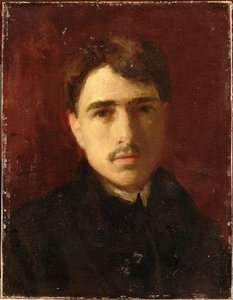
Roger de La Fresnaye
1885 - 1925 , Frankreich
Kurzinfos
- Artistic Movement Or Style: Kubismus, Symbolismus
- Artists Or Movements Influenced By This Artist: ['Cubismus']
- Artists Who Influenced This Artist:
- Maurice Denis
- Paul Sérusier
- Georges Braque
- Date Of Birth: 11 Juli 1885
- Date Of Death: 27 Novembr 1925
- Full Name: Roger de La Fresnaye
- Nationality: Französisch
- Notable Artworks:
- Die Eroberung der Luft
- La Madelon
- Der Kavallerieritt
- Place Of Birth: Le Mans, Frankreich

