 Vorschau anzeigen
 Versenden
 Teilen
 Details anzeigen

 Herunterladen
 Ähnliche Objekte
 Röntgenaufnahme
 Diashow
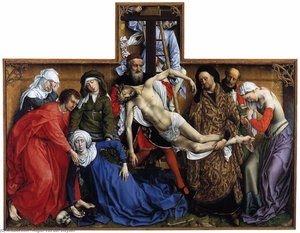
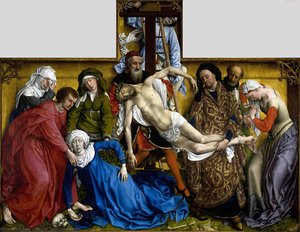
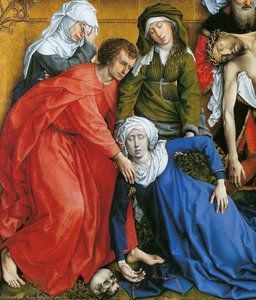
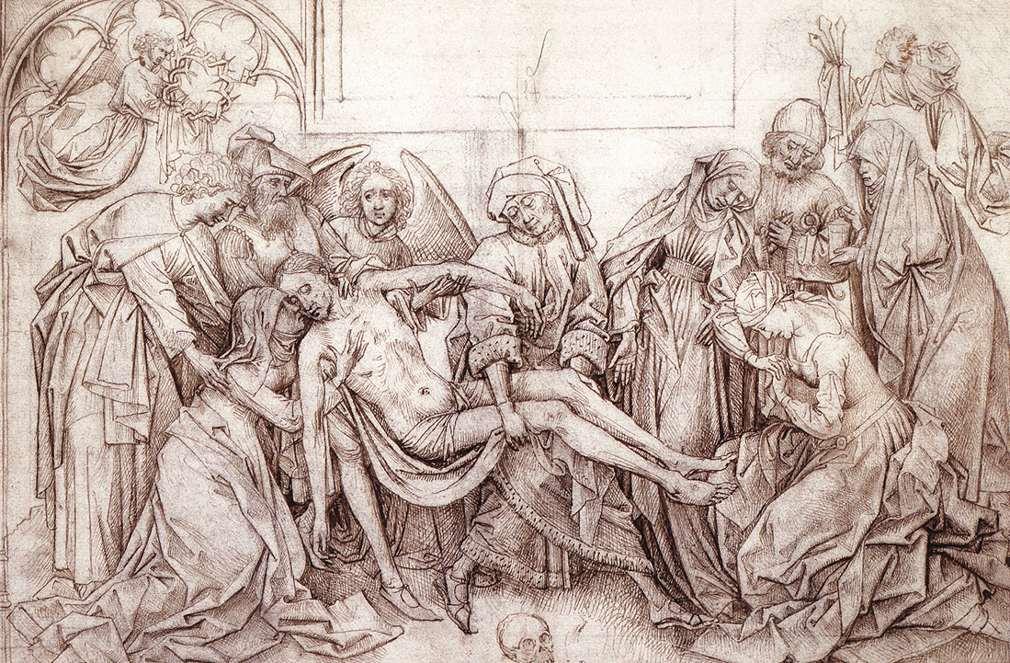
Christ carried to the Tomb

 Weiterlesen
Giclée / Kunstdruck
Giclée- oder Leinwanddruck in Museumsqualität mit schneller Produktion und flexiblen Veredelungsoptionen. ( Handgemalte Reproduktion bestellen Bild kaufen)




P118B $10

P118H $10

P118W $10

P438Z $10

P508JH $12

P508YH $12

P805H $10

P805Z $10

P919BZ $10

P919G $10

P919XJ $10

P959ZH $10

P968JZ $12

W106C $8

W218G $10

W218JH $8

W218Y $10

W307PJ $10

W316G $10

W316PJ $8

W316Y $10

W398PJ $8

W4111J $10

W500HY $15

W500JH $15

W692G $12

W849H $8

W940BG $15

W953PJ $8




Wählen Sie aus unseren vordefinierten Formaten, die den ursprünglichen Proportionen des Kunstwerks entsprechen.

Sie können Ihre eigenen Maße eingeben, um ein bestimmtes Format oder einen speziellen Platz einzupassen. Wenn das von Ihnen gewählte Format nicht den Proportionen des Originalbildes entspricht, werden wir das Kunstwerk entweder beschneiden oder das Bild mit einem gespiegelten oder einfarbigen Rand erweitern. Ein digitaler Entwurf wird Ihnen zur Genehmigung zugesandt, bevor die Produktion beginnt.
Bitte beachten Sie, dass die Vorschau auf dem Bildschirm nicht den tatsächlichen Zuschnitt oder die Erweiterung widerspiegelt. Nur der Entwurf zeigt die endgültige Komposition präzise an.
Obwohl Sondermaße verfügbar sind, empfehlen wir die Auswahl eines Maßes aus der vordefinierten Liste, um die ursprünglichen Proportionen zu bewahren.
Weltweiter Versand () innerhalb von 2 Wochen statt der üblichen 4/5 Wochen. (22 August)

Kostenloser weltweiter Expressversand

Hochwertige Leinenleinwand

Umfassender Versicherungsschutz beim Versand

Zollgebühren-Rückerstattungsgarantie

Garantie für exakte Farbtreue

60 Tage Rückgaberecht (nur bei Mängeln)

100% Geld-zurück-Garantie

Mengenrabatt verfügbar
 Die Glasoption ist nur für Größen unter 110 cm verfügbar.

Christ carried to the Tomb
Giclée / Kunstdruck
Format der Reproduktion
-


Gesamtpreis
$ 62
Sammlerstück-Beschreibung
The Heart of Sorrow: Unveiling Rogier van der Weyden’s “Christ Carried to the Tomb”
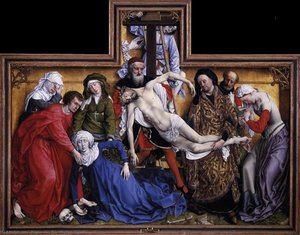
Rogier van der Weyden's "Christ Carried to the Tomb," a work shrouded in the quiet reverence of Early Netherlandish painting, is more than just a depiction of a solemn event; it’s a profound meditation on grief, compassion, and the weight of sacrifice. Painted around 1460, this oil-on-oak panel transcends mere representation, achieving an almost unbearable emotional intensity that continues to resonate with viewers centuries later. The painting captures a pivotal moment – the journey of Jesus' body to its final resting place – yet it’s not merely a historical record; it’s a deeply human experience rendered with unparalleled sensitivity and technical mastery.
Van der Weyden, born in Tournai around 1400, was a master of his craft, inheriting a goldsmith's meticulous eye for detail. This training is evident in every carefully rendered fold of fabric, the subtle variations in skin tone, and the almost sculptural quality of the figures involved. He wasn’t interested in simply recreating reality; he sought to imbue it with life, emotion, and spiritual significance. The painting’s power lies not just in its visual accuracy but in its ability to evoke a visceral response – a sense of shared sorrow and profound empathy for the suffering Christ.
A Symphony of Figures: Composition and Technique
The scene unfolds within a dimly lit, enclosed space, emphasizing the vulnerability of Jesus and the gravity of his journey. Twelve figures surround him, a diverse group united by their concern and grief. Angels, rendered with ethereal grace, assist in carrying the body on a simple wooden stretcher – a stark contrast to the elaborate garments worn by the mourners. The composition is remarkably balanced, utilizing diagonal lines created by the figures and the stretcher to draw the viewer’s eye towards Christ's central position. Van der Weyden’s mastery of oil paint allows for an astonishing level of detail; observe the individual strands of hair, the texture of the robes, and the subtle expressions on each face – all rendered with painstaking precision.
The artist’s use of light is particularly noteworthy. It's not a dramatic illumination but rather a soft, diffused glow that casts long shadows and highlights key features, creating an atmosphere of solemnity and introspection. The muted color palette—dominated by browns, blues, and greys—further enhances the painting’s somber mood. Van der Weyden employed a technique known as “sfumato,” subtly blurring edges and softening forms to create a sense of depth and realism, contributing significantly to the emotional impact of the scene.
Symbolism and Spiritual Resonance
Beyond its technical brilliance, "Christ Carried to the Tomb" is rich in symbolic meaning. The act of carrying Christ represents humanity’s shared responsibility for his suffering and death. The angels, often interpreted as messengers of God's compassion, offer assistance, symbolizing divine support during times of hardship. The mourners, representing a diverse cross-section of society, underscore the universality of grief and the profound impact of Christ’s sacrifice on all humankind.
The tomb itself, rendered with understated dignity, serves as a potent reminder of mortality and the promise of resurrection. The scene is not simply about death; it's about hope—the belief that even in darkness, there is light. Van der Weyden’s ability to convey such complex theological ideas through simple visual elements is a testament to his artistic genius.
A Timeless Masterpiece: Reproduction and Beyond
ArtsDot offers meticulously crafted hand-painted reproductions of “Christ Carried to the Tomb,” allowing you to experience the profound beauty and emotional depth of this iconic painting in your own home or office. Our artists replicate Van der Weyden’s techniques with the utmost care, ensuring that every detail—from the subtle nuances of color to the delicate rendering of textures—is faithfully reproduced. Whether you are an art enthusiast, a collector, or simply seeking a piece of timeless beauty, our reproduction captures the essence of this masterpiece and brings it into a new era.
Ähnliche Kunstwerke
Über den Künstler
Leben und Karriere
Rogier van der Weyden, auch bekannt als Roger de la Pasture, war ein bedeutender niederländischer Maler des frühen 15. Jahrhunderts. Er wurde um 1400 in Belgien geboren und entwickelte sich zu einem der einflussreichsten Künstler seiner Zeit, wobei seine Werke in den Niederlanden, Italien und Spanien großen Anklang fanden.Künstlerischer Stil und Technik
Van der Weydens künstlerischer Stil war durch eine reiche Farbgebung, mitfühlende Ausdrucksweise und einen einzigartigen Ansatz für Pathos und Naturalismus geprägt. Seine Figuren wirkten oft statuarisch, insbesondere in seinen Altäfern, die detaillierte Ausarbeitungen und idealisierte Gesichtszüge aufwiesen. Er setzte ein vielfältiges Farbspektrum ein, um sicherzustellen, dass kein einzelner Ton wiederholt wurde, was Tiefe und Komplexität zu seinen Kompositionen hinzufügte.Bekannte Werke
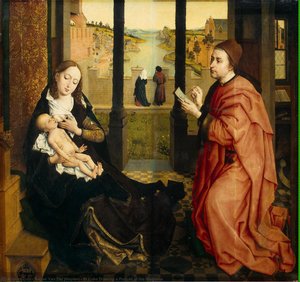
* St. Lukas zeichnet ein Porträt der Jungfrau Maria (Museum of Fine Arts, Boston): Dieses Gemälde zeigt Van der Weydens Meisterschaft in der Ölmalerei auf Holz mit einer beeindruckenden Darstellung von St. Lukas. * Lamentation (Musée des Beaux-Arts Tournai, Belgien): Dieses kleine, aber kraftvolle Gemälde demonstriert Van der Weydens Fähigkeit, durch Chiaroscuro emotionale Intensität auszudrücken.Museen und Sammlungen
* Musée des Beaux-Arts Tournai, Belgien: Bietet eine beeindruckende Sammlung von Werken van der Weydens, darunter das Porträtdiptychon von Jean de Gros. * Musées royaux des Beaux-Arts (Brüssel, Belgien): Beherbergt eine bedeutende Sammlung früher niederländischer Gemälde, darunter Werke von van der Weyden und anderen namhaften Künstlern.Vermächtnis
Van der Weydens Einfluss auf den nördlichen Renässanz ist unbestreitbar. Er stand zusammen mit Robert Campin und Jan van Eyck als einer der drei großen frühen flämischen Künstler, bekannt für seinen innovativen Stil und seine Technik. Obwohl sein Ruhm im 17. Jahrhundert nachließ, wurden seine Werke im 19. Jahrhundert wiederentdeckt, und er gilt heute als eine wichtige Figur in der Geschichte der frühen niederländischen Malerei.- Weitere Werke von Rogier van der Weyden auf ArtsDot.com ansehen
- Die Sammlung des Musée des Beaux-Arts Tournai entdecken unter Entdecken Sie die Meisterwerke des Musée des Beaux-Arts Tournai, Belgien
- Mehr über frühe niederländische Malerei auf Wikipedia erfahren
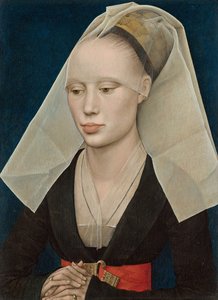
Rogier van der Weyden
1400 - 1464 , Belgien
Kurzinfos
- Beeinflusste Künstler: ['Goswijn van der Weyden']
- Bemerkenswerte Werke:
- St. Lukas malt Maria
- Lamentation
- Deposition
- Bladelin Triptychon
- Einfluss Auf Künstler: ['Italienische Renaissance']
- Geburtsdatum: ca. 1400
- Geburtsort: Tournai, Belgien
- Künstlerischer Stil: Frühflämische Malerei
- Nationalität: Belgisch
- Sterbedatum: 1464
- Vollständiger Name: Rogier van der Weyden
Ähnliche Artikel
Frühniederländische Renaissance: 10 Meisterwerke für Ihr Zuhause | ArtsDot
Entdecken Sie die 10 prägendsten Meisterwerke der Frühniederländischen Renaissance! Erfahren Sie mehr über Jan van Eyck, Rogier van der Weyden & Co. und ihre ikonischen Gemälde. Hochwertige Reproduktionen für Ihr Zuhause – jetzt auf ArtsDot.com!
Rogier van der Weyden: Emotion, Innovation und die Frührenaissance der Niederlande
Entdecken Sie Rogier van der Weydens revolutionäre Kunst! Erfahren Sie mehr über seine Technik, ikonische Werke und den Einfluss der Frührenaissance auf die niederländische Malerei. Expertenanalyse & tiefe Einblicke.

Frühniederländische Meisterwerke: 10 Gemälde, die eine Epoche prägten | ArtsDot
Entdecken Sie die 10 prägendsten Meisterwerke der Frühniederländischen Malerei! Von Jan van Eyck bis Rogier van der Weyden – erleben Sie Kunstgeschichte hautnah. Hochwertige Reproduktionen & Inspiration für Ihr Interieur auf ArtsDot.com.
Hugo van der Goes: Andacht, Innovation und die psychologische Tiefe der frühen niederländischen Malerei
Entdecken Sie die revolutionäre Kunst von Hugo van der Goes! Tiefgründige Analyse seiner Werke, bahnbrechende Technik und bleibender Einfluss auf die frühe niederländische Malerei. Für Kunstexperten & Sammler.

Rembrandts Meisterwerke: Die Top 25 Kunstwerke für Ihr Zuhause | ArtsDot
Entdecken Sie Rembrandts 25 berühmteste Kunstwerke! Tauchen Sie ein in die Welt des Barock, Licht und Schatten & historischer Porträts. Hochwertige Reproduktionen für Ihr Zuhause – jetzt auf ArtsDot.com!