 Vorschau anzeigen
 Versenden
 Teilen
 Details anzeigen

 Herunterladen
 Ähnliche Objekte
 Röntgenaufnahme
 Diashow
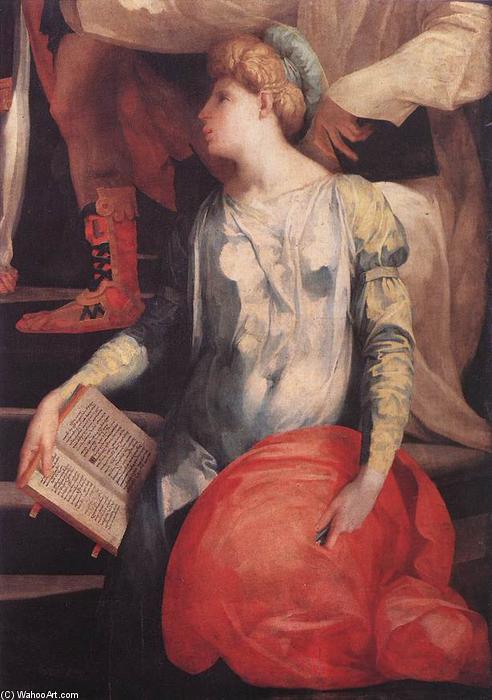
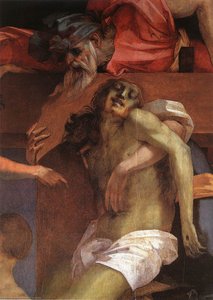
Marriage of the Virgin (detail)


 Weiterlesen
Handgefertigte Ölreproduktion
Handgemaltes Ölgemälde auf Leinwand in Ihrer Wunschgröße und mit Rahmen, auf Bestellung von unseren Künstlern angefertigt. ( Druck bestellen Bild kaufen)




P118B $10

P118H $10

P118W $10

P438Z $10

P508JH $12

P508YH $12

P805H $10

P805Z $10

P919BZ $10

P919G $10

P919XJ $10

P959ZH $10

P968JZ $12

W106C $8

W218G $10

W218JH $8

W218Y $10

W307PJ $10

W316G $10

W316PJ $8

W316Y $10

W398PJ $8

W4111J $10

W500HY $15

W500JH $15

W692G $12

W849H $8

W940BG $15

W953PJ $8




Wählen Sie aus unseren vordefinierten Formaten, die den ursprünglichen Proportionen des Kunstwerks entsprechen.

Sie können Ihre eigenen Maße eingeben, um einen bestimmten Rahmen oder Platz auszufüllen. Wenn die gewählte Größe nicht den Proportionen des Originalbildes entspricht, werden wir das Kunstwerk entweder beschneiden oder das Gemälde durch zusätzliche, handgemalte Elemente erweitern. Ein digitales Mockup wird Ihnen zur Genehmigung zugesandt, bevor die Produktion beginnt.
Bitte beachten Sie, dass die Bildschirmvorschau nicht die tatsächliche Beschneidung oder Erweiterung widerspiegelt. Nur das Mockup zeigt die endgültige Komposition exakt an.
Obwohl Sondermaße verfügbar sind, empfehlen wir, eine Größe aus der vordefinierten Liste zu wählen, um die ursprünglichen Proportionen beizubehalten.
Nach der Bestellung wird das ArtsDot.com-Team dem Kunden Anweisungen per E-Mail zusenden und eine Mockup-Vorschau bereitstellen.
Weltweiter Versand () in nur 3 bis 4 Wochen statt der üblichen 5 Wochen. (31 August). Keine Kompromisse bei der Qualität.

Kostenloser weltweiter Expressversand

Hochwertige Leinenleinwand

Umfassender Versicherungsschutz beim Versand

Zollgebühren-Rückerstattungsgarantie

Garantie für exakte Farbtreue

60 Tage Rückgaberecht (nur bei Mängeln)

100% Geld-zurück-Garantie

Mengenrabatt verfügbar
 Die Glasoption ist nur für Größen unter 110 cm verfügbar.

Marriage of the Virgin (detail)
Art der Reproduktion
Format der Reproduktion
-


Gesamtpreis
$ 263
The Marriage of the Virgin: A Dance of Shadow and Light in Florentine Mannerism
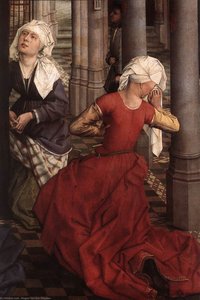
Rosso Fiorentino’s “Marriage of the Virgin,” painted circa 1523, isn't merely a depiction of a biblical scene; it’s a profound exploration of human emotion and spiritual transformation, rendered with the unsettling beauty characteristic of Florentine Mannerism. This intimate panel, once part of the magnificent cycle adorning the chapel of San Lorenzo in Florence, captures a pivotal moment – not the grand ceremony itself, but the quiet contemplation that precedes it. The painting’s power lies not in idealized perfection, but in its deliberate ambiguity and masterful manipulation of light and shadow, creating an atmosphere thick with psychological depth.
The scene unfolds within a richly detailed interior, reminiscent of a Florentine palazzo rather than a sacred space. Columns, arches, and a receding perspective draw the eye into the room, while the muted palette – dominated by ochres, browns, and deep reds – contributes to a sense of subdued drama. The central figure, a young woman seated on a crimson cushion, is not overtly pious but possesses an air of thoughtful melancholy. Her gaze is directed downwards, lost in her own thoughts as she holds an open book—a subtle symbol of knowledge and contemplation, yet also hinting at the weight of expectation and perhaps even sorrow. Her attire, a simple blue garment adorned with delicate white flowers, speaks to both humility and grace.
The Language of Mannerism: Distortion and Emotion
Rosso Fiorentino’s style is deeply rooted in the principles of Mannerism, a movement that emerged in Florence during the High Renaissance. Unlike the classical harmony and balance favored by Leonardo da Vinci and Raphael, Mannerist artists prioritized emotional intensity, stylized forms, and an exploration of psychological states. In “Marriage of the Virgin,” this manifests in several ways. The figures are elongated and distorted, their proportions subtly skewed to heighten their expressiveness. The drapery is rendered with a theatrical flair, swirling and cascading around the figures as if caught in a perpetual dance. This deliberate distortion isn’t intended to deceive; rather, it serves to amplify the emotional impact of the scene.
The use of *chiaroscuro*, the dramatic contrast between light and shadow, is particularly striking. Rosso Fiorentino masterfully employs this technique to sculpt the figures, creating a sense of volume and depth while simultaneously obscuring details and suggesting hidden emotions. The strong directional lighting focuses attention on the central figure, drawing the viewer into her inner world. Notice how the shadows cling to her face, hinting at a quiet sadness or perhaps a premonition of future challenges.
Symbolism and Context: A Window into Renaissance Thought
The painting’s symbolism is layered and complex, inviting multiple interpretations. The open book represents not just learning but also faith—a call to contemplation and spiritual understanding. The presence of the male figure in the background, dressed in yellow and red, suggests a paternal role, perhaps representing Joseph or another guardian figure. However, his detached expression and averted gaze hint at a certain distance, reflecting the complexities of familial relationships within Renaissance society.
“Marriage of the Virgin” was created during a period of significant political and religious upheaval in Florence. The Medici family’s power was waning, and the city was grappling with the challenges posed by the Reformation. Rosso Fiorentino's work reflects this atmosphere of uncertainty and anxiety, capturing a sense of vulnerability and introspection that resonates deeply with viewers today. It is believed to have been commissioned as part of a larger cycle depicting scenes from the life of Mary, intended to adorn the chapel of San Lorenzo – a space central to Florentine religious life.
A Legacy of Emotional Resonance
Despite its relatively small size, “Marriage of the Virgin” possesses an extraordinary emotional resonance. Rosso Fiorentino’s masterful use of light, shadow, and distorted forms creates a world that is both beautiful and unsettling, inviting viewers to contemplate the complexities of human experience. The painting's enduring appeal lies in its ability to capture not just a biblical narrative but also the universal themes of love, loss, faith, and doubt—themes that continue to resonate with audiences centuries later. Reproductions of this captivating work offer a powerful connection to the artistic genius of the Renaissance, allowing us to experience firsthand the profound emotional depth of Rosso Fiorentino’s vision.
Ähnliche Kunstwerke

Über den Künstler
Rosso Fiorentino: Eine Biografie
- Name: Rosso Fiorentino (Giovanni Battista di Jacopo)
- Geboren: 8. März 1495, Florenz, Italien
- Gestorben: 14. November 1540, Fontainebleau, Frankreich
Frühes Leben und Ausbildung
- Rosso Fiorentino, dessen Name sich auf „Roter Florentiner“ bezieht, aufgrund seiner charakteristischen roten Haare, begann seine künstlerische Reise in Florenz.
- Er erhielt seine anfängliche Ausbildung im angesehenen Atelier von Andrea del Sarto, einer führenden Figur der florentinischen Renaissance-Malerei.
- Diese Zeit brachte ihn neben einem anderen bedeutenden Künstler seiner Zeit, Pontormo zusammen und förderte ein gemeinsames Umfeld künstlerischer Erkundung und Entwicklung.
- Der Einfluss der Florentiner Kunstschule während dieser prägenden Jahre prägte maßgeblich seinen zukünftigen Stil.
Künstlerischer Stil und Einflüsse
- Rosso Fiorentinos Werk zeichnet sich durch seine dramatische Intensität, den kühnen Einsatz von Farbe und den eindringlichen emotionalen Ausdruck aus.
- Er integrierte häufig Selbstporträts in seine Kompositionen und stellte sich oft als eine Schlüsselfigur innerhalb der Erzählung dar.
- Der Künstler wurde stark von den Werken Michelangelos und Raffaels beeinflusst, was insbesondere in seiner Beherrschung des chiaroscuro – der Technik, starke Kontraste zwischen Licht und Schatten zu nutzen, um Tiefe und Volumen zu erzeugen – deutlich wird.
- Sein Stil gilt als Teil der Manierismus-Bewegung, die im 16. Jahrhundert als Reaktion auf den Schwerpunkt des Hochrenaissancestils auf Ausgewogenheit und Harmonie entstand. Der Manierismus bevorzugte langgestreckte Formen, verzerrte Perspektiven und gesteigerte Emotionalität.
Bemerkenswerte Werke und Leistungen
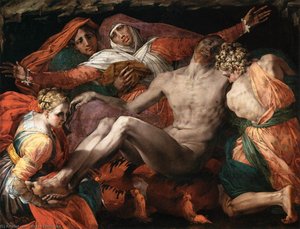
- Die Kreuzabnahme: Dieses Gemälde gilt als eines der Meisterwerke Rosso Fiorentinos und veranschaulicht seinen einzigartigen Stil durch seine dramatische Beleuchtung und die emotional aufgeladene Darstellung der Szene.
- Elefant, Schloss Fontainebleau: Diese Arbeit zeigt seine Fähigkeit, das Wesen seiner Motive mit bemerkenswerter Detailtreue und Realismus einzufangen. Sie unterstreicht auch seine spätere Karriere in Frankreich.
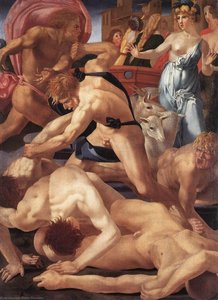
- Moses und die Töchter Jethros: Demonstriert eine komplexe Komposition und emotionale Tiefe, die für seinen reifen Stil charakteristisch sind.
- Seine Beiträge zur Dekoration des Schlosses Fontainebleau waren bedeutend, obwohl sie durch seinen frühen Tod tragisch verkürzt wurden.
Vermächtnis und historische Bedeutung
- Rosso Fiorentinos Einfluss erstreckte sich über sein Leben hinaus und beeinflusste nachfolgende Generationen von Künstlern.
- Francesco Primaticcio, der ihm als führender Künstler im Schloss Fontainebleau folgte, wurde maßgeblich von Rosso's Stil beeinflusst.
- Seine Arbeit spielte eine entscheidende Rolle bei der Entwicklung und Popularisierung des Manierismus und trug zu dessen Betonung von dramatischem Ausdruck und künstlerischer Innovation bei.
- Rosso Fiorentinos Gemälde sind in verschiedenen Museen und Sammlungen auf der ganzen Welt zu finden, darunter die Galleria Nazionale d'Arte Moderna e Contemporanea in Rom.
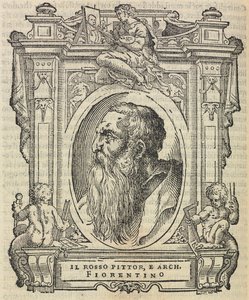
Rosso Fiorentino
1495 - 1540 , Italien
Kurzinfos
- Beeinflusste Künstler:
- Michelangelo
- Raphael
- Andrea del Sarto
- Bemerkenswerte Werke:
- Die Absetzung
- Elefant, Fontainebleau
- Moses und Jethros Töchter
- Geburtsdatum: 8. März 1495
- Geburtsort: Florenz, Italien
- Künstlerischer Stil: Manierismus
- Nationalität: Italienisch
- Sterbedatum: 14. November 1540
- Vollständiger Name: Rosso Fiorentino
- Von Ihm Beeinflusste Künstler: ['Francesco Primaticcio']
Ähnliche Artikel
Mannerism: Bridging Renaissance Harmony & Baroque Drama – A Study of Style & Affectation
Explore the fascinating world of Mannerism! Discover its key characteristics, pioneering artists like Pontormo & Bronzino, and its pivotal role in bridging Renaissance harmony to Baroque drama. A comprehensive guide for art enthusiasts.
Renaissance Mannerism: Style, Subtlety & the Transition from Harmony to Artifice
Explore the captivating world of Renaissance Mannerism! Discover its key characteristics, pioneering artists like Pontormo & Bronzino, and its pivotal role in art history. Expert insights & museum-quality reproductions at ArtsDot.
Mannerismus Meisterwerke: Die Top 10, die Kunstgeschichte prägten | ArtsDot
Entdecken Sie die Top 10 Meisterwerke des Mannerismus! Pontormo, Rosso Fiorentino & Co. prägten eine neue Eleganz in der Kunst. Erfahren Sie mehr über Künstler, Techniken und bestellen Sie hochwertige Reproduktionen auf ArtsDot.com.
The Dramatic Dialogue: Baroque Mannerism & the Synthesis of Emotion, Form, and Artistic Rebellion
Explore the dramatic world of Baroque Mannerism! Discover its history, iconic artists like Rubens & El Greco, and lasting influence on art. Expert insights for collectors & enthusiasts at ArtsDot.
Domenico Beccafumi: Ein sizilianischer Meister zwischen Manierismus und der Vorahnung des Barock
Entdecken Sie das faszinierende Werk von Domenico Beccafumi, einem Meister des Manierismus. Expertenanalyse seiner Fresken, Einflüsse und Sammlerstücke. Wertvolle Einblicke für Kunstliebhaber und Investoren.