 Vorschau anzeigen
 Versenden
 Teilen
 Details anzeigen

 Herunterladen
 Ähnliche Objekte
 Röntgenaufnahme
 Diashow
 Statistiken
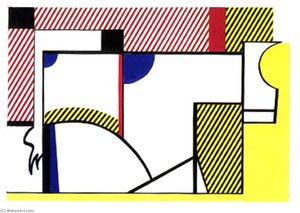
Bull Head III


 Weiterlesen
Giclée / Kunstdruck
Giclée- oder Leinwanddruck in Museumsqualität mit schneller Produktion und flexiblen Veredelungsoptionen. ( Handgemalte Reproduktion bestellen Zum digitalen Bild wechseln)




P118B $10

P118H $10

P118W $10

P438Z $10

P508JH $12

P508YH $12

P805H $10

P805Z $10

P919BZ $10

P919G $10

P919XJ $10

P959ZH $10

P968JZ $12

W106C $8

W218G $10

W218JH $8

W218Y $10

W307PJ $10

W316G $10

W316PJ $8

W316Y $10

W398PJ $8

W4111J $10

W500HY $15

W500JH $15

W692G $12

W849H $8

W940BG $15

W953PJ $8




Wählen Sie aus unseren vordefinierten Formaten, die den ursprünglichen Proportionen des Kunstwerks entsprechen.

Sie können Ihre eigenen Maße eingeben, um ein bestimmtes Format oder einen speziellen Platz einzupassen. Wenn das von Ihnen gewählte Format nicht den Proportionen des Originalbildes entspricht, werden wir das Kunstwerk entweder beschneiden oder das Bild mit einem gespiegelten oder einfarbigen Rand erweitern. Ein digitaler Entwurf wird Ihnen zur Genehmigung zugesandt, bevor die Produktion beginnt.
Bitte beachten Sie, dass die Vorschau auf dem Bildschirm nicht den tatsächlichen Zuschnitt oder die Erweiterung widerspiegelt. Nur der Entwurf zeigt die endgültige Komposition präzise an.
Obwohl Sondermaße verfügbar sind, empfehlen wir die Auswahl eines Maßes aus der vordefinierten Liste, um die ursprünglichen Proportionen zu bewahren.
Weltweiter Versand () innerhalb von 2 Wochen statt der üblichen 4/5 Wochen. (12 September)

Kostenloser weltweiter Expressversand

Hochwertige Leinenleinwand

Umfassender Versicherungsschutz beim Versand

Zollgebühren-Rückerstattungsgarantie

Garantie für exakte Farbtreue

100-Tage-Rückgaberecht (nur bei Mängeln)

100% Geld-zurück-Garantie

Mengenrabatt verfügbar
 Die Glasoption ist nur für Größen unter 110 cm verfügbar.

Bull Head III
Giclée / Kunstdruck
Format der Reproduktion
-


Gesamtpreis
$ 62
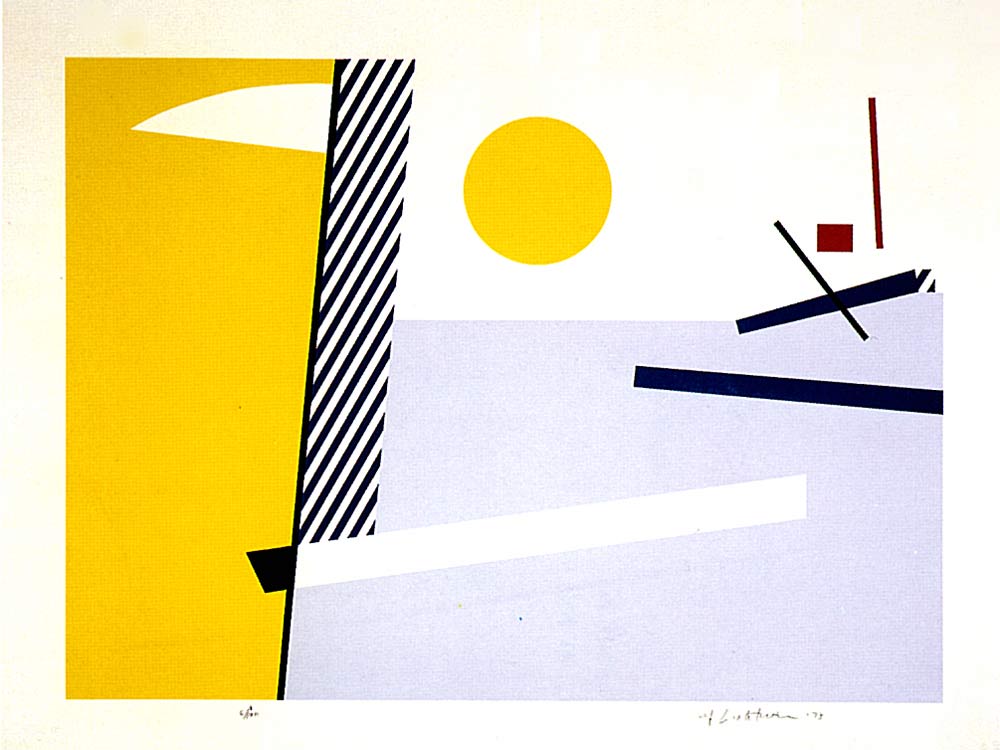
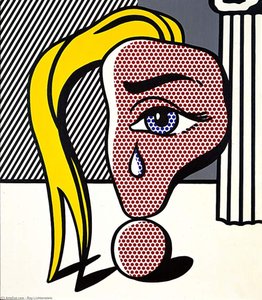
A Visual Paradox: The Striking Geometry of Bull Head III
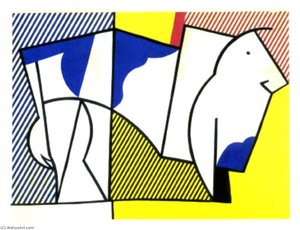
In the vibrant landscape of twentieth-century art, few images command attention with such immediate, graphic authority as Roy Lichtenstein’s Bull Head III. At first glance, the viewer is met with a striking visual paradox: a stylized depiction of a bull's head set against a deceptively simple yellow background, punctuated by bold, rhythmic blue stripes. This juxtaposition establishes what has become Lichtenstein’s signature approach—the ability to elevate the mundane to the monumental through meticulous detail and deliberate abstraction. The composition does not strive for the heavy, textured realism of traditional portraiture; instead, it invites the eye into a world of flattened planes and sharp contrasts, where every line serves a purpose in creating a sense of modern, industrial beauty.
The brilliance of this piece lies in its ability to transform a singular, powerful subject into a playground of color and pattern. The yellow field acts as a luminous stage, while the blue stripes provide a structural cadence that guides the viewer's gaze across the canvas. It is an artwork that feels both incredibly modern and timelessly bold, making it an ideal centerpiece for those looking to inject a sense of curated energy into a contemporary interior.
The Alchemy of Pop: Technique and the Ben-Day Revolution
To truly appreciate Bull Head III, one must look closer at the surface, where the artist’s technical mastery reveals itself through the illusion of mechanical reproduction. Lichtenstein was a pioneer in employing the Ben-Day printing technique, a method famously used in commercial advertising and comic books to create shading and secondary colors. By painstakingly applying halftone dots, he simulated the look of mass-produced screen printing, effectively blurring the line between "high art" and "low culture."
This meticulous application of dots creates a fascinating texture that defies conventional painting techniques. While the overall effect appears flat and graphic, there is a hidden depth found in the subtle variations of hue and the precision of the outlines. For the collector or designer, this technique offers a unique tactile quality; even in a high-quality reproduction, the interplay of these dots captures the rhythmic, mechanical heartbeat of the Pop Art movement. It is a celebration of the industrial age, rendered with the hand of a master who found poetry in the precision of the printing press.
Strength and Subversion: Symbolism in a Changing World
Created in 1973, Bull Head III emerged during a period of profound cultural upheaval. As the art world moved away from the raw, emotional intensity of Abstract Expressionism, Lichtenstein championed accessibility and engagement with popular culture. The bull itself is an ancient symbol of strength, virility, and unyielding power. However, by rendering this powerful creature in a flattened, stylized manner, Lichtenstein subtly undermines its inherent grandeur. He strips the subject of its organic ferocity and replaces it with a calculated, aestheticized version of power.
This subversion is where the emotional impact of the work truly resides. There is a playful tension between the "tough" subject matter and the "soft," commercialized execution. For an art lover, this piece serves as a profound interrogation of how we consume images in a modern, media-saturated age. It challenges us to find meaning in the fragments of our visual landscape—the advertisements, the comics, and the mass-produced icons that surround us daily. Owning such a piece is not merely about decoration; it is about possessing a fragment of a revolution that forever changed how we perceive the boundaries of fine art.
Ähnliche Kunstwerke
Über den Künstler
frühes Leben und Ausbildung
Roy Fox Lichtenstein, ein prominenter amerikanischer Pop-Künstler, wurde am 27. Oktober 1923 in New York City geboren. Er wuchs in einer wohlhabenden jüdischen Familie auf, mit seinem Vater als Immobilienmakler und seiner Mutter als Hausfrau. Lichtensteins Interesse an Kunst und Design begann während seiner Schulzeit als Hobby.Künstlerische Karriere
Nach Abschluss seiner Schulausbildung am Dwight School im Jahr 1940 besuchte Lichtenstein die Art Students League of New York unter der Anleitung von Reginald Marsh. Er studierte anschließend einen Abschluss in Fine Arts an der Ohio State University, der durch eine dreijährige Verlegung in das Militär während des Zweiten Weltkriegs unterbrochen wurde.- Look Mickey (1961, National Gallery of Art, Washington, D.C.), eines von Lichtensteins frühesten Pop-Kunstwerke, markierte den Beginn seiner einflussreichen Karriere.
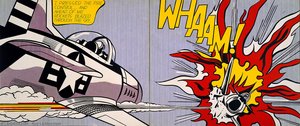
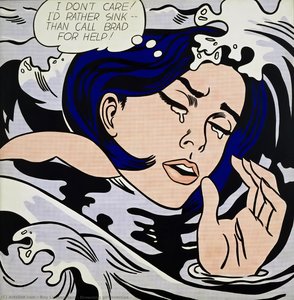
- Seine Arbeit war stark von Werbe- und Comic-Stilen beeinflusst, darunter bedeutende Werke wie Wham!, Drowning Girl und Oh, Jeff...I Love You Too...But...
- Lichtensteins teuerstes Werk, Masterpiece, wurde im Januar 2017 für 165 Millionen Dollar verkauft.
Lehre und Einflüsse
Lichtenstein lehrte an verschiedenen Institutionen, darunter die State University of New York at Oswego und die Rutgers University. Seine Arbeit war von Allan Kaprow beeinflusst, einem Kollegen an der Rutgers University, der sein Interesse an proto-Pop-Bildern wiederbelebte. Bekannte Ausstellungen:- The Museum Chambre de Commerce (Toulouse, Frankreich), das verschiedene Kunstwerke aus der Pop-Art-Bewegung zeigte.
- Lichtensteins Werk wurde in der Leo Castelli Gallery in New York City ausgestellt, wobei seine erste Einzelausstellung 1962 vor der Eröffnung vollständig von einflussreichen Sammlern gekauft wurde.
Vermächtnis und Einfluss
Roy Lichtenstein starb am 29. September 1997 und hinterließ ein Vermächtnis als eine führende Figur in der Pop-Art-Bewegung. Seine Arbeit wird weiterhin für ihre innovative Verschmelzung von Hoch- und Populärkultur gefeiert, wodurch sie einem breiteren Publikum zugänglich gemacht wird.- Entdecken Sie mehr von Lichtensteins Kunstwerke auf ArtsDot.com
- Erfahren Sie die Welt der Pop-Art und ihrer einflussreichen Künstler auf Pop Art und darüber hinaus: Navigieren Sie mit ArtsDot.com durch zeitgenössische Stile

Roy Lichtenstein
1923 - 1997 , Vereinigte Staaten von Amerika
Kurzinfos
- Beeinflusste Künstler:
- Reginald Marsh
- Allan Kaprow
- Bemerkenswerte Werke:
- Look Mickey
- Whaam!
- Drowning Girl
- Masterpiece
- Geburtsdatum: 27. Oktober 1923
- Geburtsort: Manhattan, USA
- Künstlerische Richtung: Pop Art
- Nationalität: Amerikanisch
- Todatum: 29. September 1997
- Vollständiger Name: Roy Lichtenstein
Ähnliche Artikel

Giclée Prints: Archival Quality & Aesthetic Nuances for the Discerning Collector
Explore the world of giclée prints with ArtsDot. Learn about archival quality, aesthetic nuances & investment potential. Expert guidance for discerning art collectors seeking museum-quality reproductions and lasting value.
Roy Lichtenstein: Die 25 Meisterwerke des Pop Art – Kunst für Ihr Zuhause | ArtsDot
Entdecken Sie die 25 ikonischsten Meisterwerke von Roy Lichtenstein! Tauchen Sie ein in die Welt der Pop Art, lernen Sie die Geschichten hinter den berühmten Gemälden und finden Sie perfekte Kunstreproduktionen für Ihr Zuhause. Jetzt auf ArtsDot.com entdecken!
Pop Art Ikonen: Die 10 Meisterwerke, die eine Kunstrevolution auslösten –
Entdecken Sie die 10 Meisterwerke der Pop Art! Von Warhol bis Lichtenstein – erfahren Sie die Geschichten hinter ikonischen Gemälden, Techniken & Farben. Museumsgalerie-Qualität bei entdecken.

The Enduring Legacy of Fine Art Prints: Technique, History & Aesthetic Impact
Explore the rich history & techniques of fine art prints. Discover investment potential, assess authenticity, and learn how to preserve your collection with expert guidance. Trusted insights for discerning collectors.
Chromgelb in der Kunstgeschichte: Die 10 berühmtesten Gemälde & ihre Meister
Entdecken Sie die 10 berühmtesten Gemälde, dominiert von der leuchtenden Farbe Chromgelb! Von Van Gogh bis Monet – erfahren Sie Geschichten hinter Meisterwerken & finden Sie Ihre perfekte Kunst-Reproduktion auf ArtsDot.com.